Enterprise trends for the new year: Four forces reshaping grocery

NewsResourcesSponsored

The new year is off to a promising start, laying the groundwork for meaningful progress in retail. Yet 2026 will also bring sharper expectations and challenges that are becoming increasingly acute. The priority for retailers is unmistakeable: modernise at a pace that meets customer demand while protecting profitability.

Retailers now face rising expectations to streamline operations, reduce cost, personalise experiences and build new revenue streams, all while delivering affordability for customers who are, as we know, watching every penny. In today’s environment, doing what worked last year, unfortunately, isn’t good enough. 

As Ryan Hamburger, Vice President of Commercial Partnerships at Instacart, puts it: “This moment is pivotal for grocers because everything is happening at once.”

“Consumers are laser-focused on affordability, but they also expect a digitally enabled experience that fits their lives. People don’t plan their day around shopping anymore. They expect retail to adapt around them.”

In that landscape, four enterprise trends stand out. And, each represents a significant opportunity to strengthen market position and better serve customers.

  1. Digital is the new growth engine

Grocery once viewed ecommerce as an extension of the store. Today, digital is becoming the growth engine that powers everything else, from how customers discover products to how retailers run inventory, promotions and loyalty.

Online demand keeps rising. According to the Office for National Statistics (ONS), ecommerce currently accounts for around 28 per cent of overall retail sales. Ten years ago, this number sat at around 15 per cent, demonstrating just how exponential this growth has been [Source: Retail Sales, Great Britain: October 2025]

However, the real shift is not simply investing more in online, but understanding the strategic nuance of bringing online shopping and in-store experiences together. Not treating them as separate businesses. When a physical store, an app and a fulfilment system operate as one ecosystem, customers shop more frequently and spend more each time, and a retailer’s challenge in understanding their audience in a holistic way becomes a lot simpler. 

And, the numbers are clear. When retailers launch new services with Instacart, they grow nearly twice as fast as those who don’t. That’s a direct signal that today’s most cutting-edge digital tools are no longer optional.

“We tend to see two types of grocers,” Hamburger explains.

“Some invested early and built complex, costly homegrown systems, and others scrambled during the pandemic with off-the-shelf solutions that weren’t designed for grocery. Instacart took a different approach – we built a purpose-built platform from the ground up – everything from merchandising and search, to the fulfilment systems that power pickup, delivery, and dark stores. The potential here is huge.”

  1. Ambitions to scale meet a moving target

Every retailer wants to scale efficiently. More stores, more customers, more fulfilment capacity, more digital capabilities. But scaling is now a moving target. The challenge isn’t just growth, as much as it’s growth without friction.

That means smarter forecasting, better automation, unified inventory and technology that works reliably across every store, not just the flagship locations. It also means building systems that evolve with consumer expectations instead of constantly playing catch-up. For those who have their technology in check, AI is an obvious efficiency multiplier here.

Yet Hamburger believes that AI will collapse innovation cycles: “That’s going to make it very difficult for retailers to keep pace unless they work with specialised partners who live and breathe grocery technology.”

Around the world, many grocers don’t have legacy infrastructure to modernise; they need it built from scratch. Instacart is actively helping retailers develop that foundation, exporting a playbook that enables consistent, connected, and scalable operations across markets.

“Some retailers are reluctant to replatform because their existing systems ‘work’. But ‘working’ isn’t the same as keeping pace,” Hamburger adds. “For example, we’ve reduced the deployment time of Instacart’s Storefront Pro enterprise system to under ten weeks. Most of the integration work is handled by our team so the burden on the retailer is minimal.”

  1. From insight to impact

Grocers have had rich customer insights for years. What they’ve lacked, until now, is the ability to turn that data into real-time action.

“Retailers rarely lack data,” Hamburger explains. “What they often lack is the ability to turn it into action. Our platform helps them interpret what really drives growth and engagement so they can act quickly .”

The next phase of analytics, according to Hamburger, is about decisions, not dashboards. Retailers are using data to personalise offers, localise assortments, reduce out-of-stocks and strengthen loyalty. And, the more connected the ecosystem, the more powerful the impact.
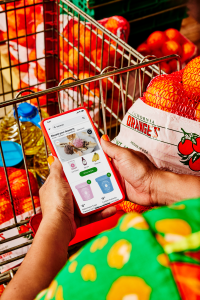
This is where Instacart’s platform advantage matters. From front-end experience to back-end operations, a single data cycle powers everything, helping retailers move from insight to impact with speed precision.

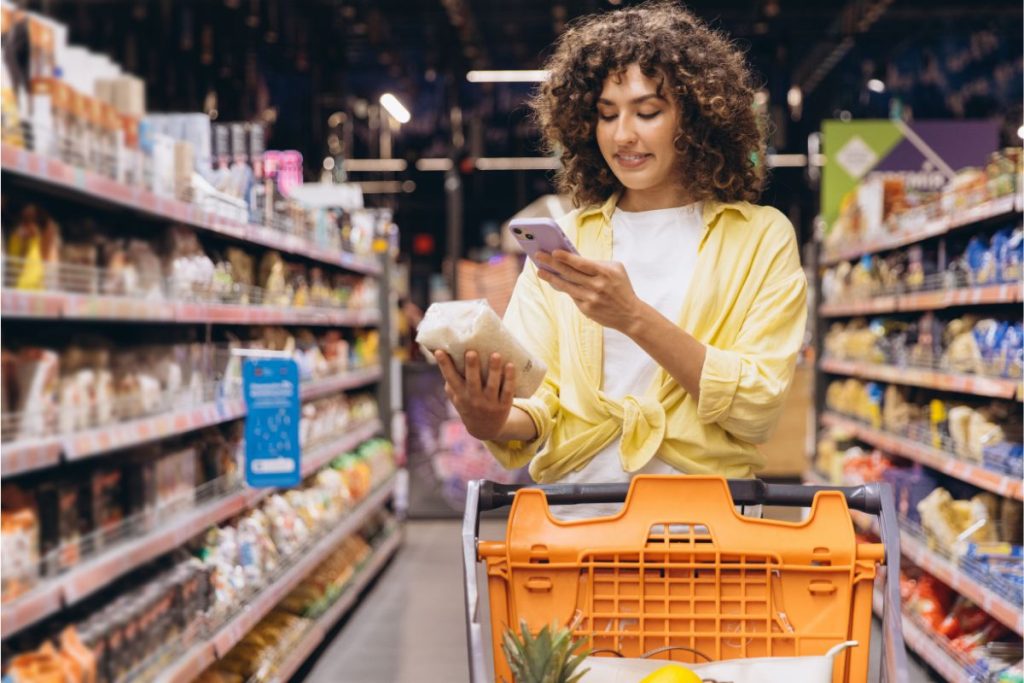
“Our technology can tell a store manager exactly which items are most frequently out of stock,” he added. “And, our in-store systems, like Instacart’s AI-powered smart trolleys, Caper Carts, can scan shelves automatically, giving real-time stock data that helps retailers make proactive decisions.”

  1. Retail media offsets margin pressure

With rising labour, energy and supply chain costs, retailers need new profit lines that don’t rely solely on simply selling more products. Retail media has become the answer, and one of the fastest-growing revenue streams in grocery.

Brands are demanding better targeting, more reliable measurement and higher-quality signals. Retailers want media solutions that enhance the shopper experience, rather than  interrupt it. Instacart sits at the intersection of both needs, enabling personalised promotions and high-performing ad placements across digital and physical touchpoints.

And, here’s the real shift. In many markets, there is no established retail media infrastructure. Instacart is helping to build it from the ground up, giving retailers a revenue engine they’ve never had before.

“Most networks follow a standard playbook; search placements, sponsored listings. But, what drives real ROI is understanding which customers should see which ads,” Hamburger says.

“We use advanced models  to avoid showing ads to people who already buy a product. It’s about effectiveness, not excess, and that matters in a business where every percentage point of margin counts.”

A stronger, more connected global grocery economy

The world’s most innovative grocers share a common mindset. They’re future-proofing. They’re investing in technology that drives efficiency today and resilience tomorrow. Innovative grocers are creating shopping experiences that are faster, more personal, more affordable and more consistent across channels. And, they’re diversifying. 

Instacart’s role is simple; provide the infrastructure, intelligence and tools that make that transformation and diversification possible, whether a retailer is modernising an existing network or building one from scratch.

“We’ve been active in Europe for more than a year now,” says Hamburger. “Our goal is to help retailers bridge the gap between in-store and online experiences. When a retailer makes a customer truly omnichannel, they typically see a 30 to 35 per cent lift in share of wallet and lifetime value. That’s huge.”

As this insight shows, the true exemplars of 2026 and beyond, are already instilling the right behaviours across their organisations. They’re leading the pack with not only the latest technology, but with a laser focus on real outcomes. They are those who wield these factors to serve customers better, in every store, in every market,  and on every journey. For those with a forward-facing mindset, 2026 looks to be a very exciting year. 

For more information on Instacart’s Connected Stores technology click here

Click here to sign up to Retail Gazette‘s free daily email newsletter

NewsResourcesSponsored

Leave a Reply

Your email address will not be published. Required fields are marked *

Fill out this field
Fill out this field
Please enter a valid email address.

Enterprise trends for the new year: Four forces reshaping grocery

Social


SUBSCRIBE TO OUR DAILY NEWSLETTER

  • This field is for validation purposes and should be left unchanged.

The new year is off to a promising start, laying the groundwork for meaningful progress in retail. Yet 2026 will also bring sharper expectations and challenges that are becoming increasingly acute. The priority for retailers is unmistakeable: modernise at a pace that meets customer demand while protecting profitability.

Retailers now face rising expectations to streamline operations, reduce cost, personalise experiences and build new revenue streams, all while delivering affordability for customers who are, as we know, watching every penny. In today’s environment, doing what worked last year, unfortunately, isn’t good enough. 

As Ryan Hamburger, Vice President of Commercial Partnerships at Instacart, puts it: “This moment is pivotal for grocers because everything is happening at once.”

“Consumers are laser-focused on affordability, but they also expect a digitally enabled experience that fits their lives. People don’t plan their day around shopping anymore. They expect retail to adapt around them.”

In that landscape, four enterprise trends stand out. And, each represents a significant opportunity to strengthen market position and better serve customers.

  1. Digital is the new growth engine

Grocery once viewed ecommerce as an extension of the store. Today, digital is becoming the growth engine that powers everything else, from how customers discover products to how retailers run inventory, promotions and loyalty.

Online demand keeps rising. According to the Office for National Statistics (ONS), ecommerce currently accounts for around 28 per cent of overall retail sales. Ten years ago, this number sat at around 15 per cent, demonstrating just how exponential this growth has been [Source: Retail Sales, Great Britain: October 2025]

However, the real shift is not simply investing more in online, but understanding the strategic nuance of bringing online shopping and in-store experiences together. Not treating them as separate businesses. When a physical store, an app and a fulfilment system operate as one ecosystem, customers shop more frequently and spend more each time, and a retailer’s challenge in understanding their audience in a holistic way becomes a lot simpler. 

And, the numbers are clear. When retailers launch new services with Instacart, they grow nearly twice as fast as those who don’t. That’s a direct signal that today’s most cutting-edge digital tools are no longer optional.

“We tend to see two types of grocers,” Hamburger explains.

“Some invested early and built complex, costly homegrown systems, and others scrambled during the pandemic with off-the-shelf solutions that weren’t designed for grocery. Instacart took a different approach – we built a purpose-built platform from the ground up – everything from merchandising and search, to the fulfilment systems that power pickup, delivery, and dark stores. The potential here is huge.”

  1. Ambitions to scale meet a moving target

Every retailer wants to scale efficiently. More stores, more customers, more fulfilment capacity, more digital capabilities. But scaling is now a moving target. The challenge isn’t just growth, as much as it’s growth without friction.

That means smarter forecasting, better automation, unified inventory and technology that works reliably across every store, not just the flagship locations. It also means building systems that evolve with consumer expectations instead of constantly playing catch-up. For those who have their technology in check, AI is an obvious efficiency multiplier here.

Yet Hamburger believes that AI will collapse innovation cycles: “That’s going to make it very difficult for retailers to keep pace unless they work with specialised partners who live and breathe grocery technology.”

Around the world, many grocers don’t have legacy infrastructure to modernise; they need it built from scratch. Instacart is actively helping retailers develop that foundation, exporting a playbook that enables consistent, connected, and scalable operations across markets.

“Some retailers are reluctant to replatform because their existing systems ‘work’. But ‘working’ isn’t the same as keeping pace,” Hamburger adds. “For example, we’ve reduced the deployment time of Instacart’s Storefront Pro enterprise system to under ten weeks. Most of the integration work is handled by our team so the burden on the retailer is minimal.”

  1. From insight to impact

Grocers have had rich customer insights for years. What they’ve lacked, until now, is the ability to turn that data into real-time action.

“Retailers rarely lack data,” Hamburger explains. “What they often lack is the ability to turn it into action. Our platform helps them interpret what really drives growth and engagement so they can act quickly .”

The next phase of analytics, according to Hamburger, is about decisions, not dashboards. Retailers are using data to personalise offers, localise assortments, reduce out-of-stocks and strengthen loyalty. And, the more connected the ecosystem, the more powerful the impact.

This is where Instacart’s platform advantage matters. From front-end experience to back-end operations, a single data cycle powers everything, helping retailers move from insight to impact with speed precision.

“Our technology can tell a store manager exactly which items are most frequently out of stock,” he added. “And, our in-store systems, like Instacart’s AI-powered smart trolleys, Caper Carts, can scan shelves automatically, giving real-time stock data that helps retailers make proactive decisions.”

  1. Retail media offsets margin pressure

With rising labour, energy and supply chain costs, retailers need new profit lines that don’t rely solely on simply selling more products. Retail media has become the answer, and one of the fastest-growing revenue streams in grocery.

Brands are demanding better targeting, more reliable measurement and higher-quality signals. Retailers want media solutions that enhance the shopper experience, rather than  interrupt it. Instacart sits at the intersection of both needs, enabling personalised promotions and high-performing ad placements across digital and physical touchpoints.

And, here’s the real shift. In many markets, there is no established retail media infrastructure. Instacart is helping to build it from the ground up, giving retailers a revenue engine they’ve never had before.

“Most networks follow a standard playbook; search placements, sponsored listings. But, what drives real ROI is understanding which customers should see which ads,” Hamburger says.

“We use advanced models  to avoid showing ads to people who already buy a product. It’s about effectiveness, not excess, and that matters in a business where every percentage point of margin counts.”

A stronger, more connected global grocery economy

The world’s most innovative grocers share a common mindset. They’re future-proofing. They’re investing in technology that drives efficiency today and resilience tomorrow. Innovative grocers are creating shopping experiences that are faster, more personal, more affordable and more consistent across channels. And, they’re diversifying. 

Instacart’s role is simple; provide the infrastructure, intelligence and tools that make that transformation and diversification possible, whether a retailer is modernising an existing network or building one from scratch.

“We’ve been active in Europe for more than a year now,” says Hamburger. “Our goal is to help retailers bridge the gap between in-store and online experiences. When a retailer makes a customer truly omnichannel, they typically see a 30 to 35 per cent lift in share of wallet and lifetime value. That’s huge.”

As this insight shows, the true exemplars of 2026 and beyond, are already instilling the right behaviours across their organisations. They’re leading the pack with not only the latest technology, but with a laser focus on real outcomes. They are those who wield these factors to serve customers better, in every store, in every market,  and on every journey. For those with a forward-facing mindset, 2026 looks to be a very exciting year. 

For more information on Instacart’s Connected Stores technology click here

Click here to sign up to Retail Gazette‘s free daily email newsletter

NewsResourcesSponsored

Leave a Reply

Your email address will not be published. Required fields are marked *

Fill out this field
Fill out this field
Please enter a valid email address.

RELATED STORIES

Latest Feature


Menu


Close popup

Please enter the verification code sent to your email: