LISTEN: The constant challenge of data, AI and the people who make it work

AI
Feature ArticlesPodcast EpisodesResourcesSponsored

Walk into almost any store today and you’ll find a contradiction playing out in real time. On one hand, retailers are pouring investment into automation, analytics and AI-driven tools promising precision and efficiency. On the other, they’re struggling to find, and keep, the people who make those experiences matter.

It’s a tension that defines modern retail: the race to innovate colliding with the human realities of the shop floor. And for Laurent Homeyer, senior industry advisor for retail, hospitality and transportation at Workday, and Max Weber, vice president for HR financial planning, analysis and data at Mister Spex, that tension isn’t a barrier to progress, it’s the point.

“COVID reminded our industry that we are in a human-first business,” says Homeyer. “The biggest challenge for retailers right now is attracting and retaining people. As we saw at NRF in New York earlier this year, there’s a huge emphasis on store experience and that experience always goes through employees. They’re the ones creating the connection with customers.”

For Weber, whose company has evolved from a pure-play online business into one of Europe’s leading omnichannel eyewear retailers, the challenge goes beyond hiring. “In optical retail, attracting opticians is tough,” he explains. “It’s a trade job that takes years of training, and there’s a shortage of skilled talent. We’ve had to create training programmes that open access to these workers so we can really serve our clientele, not just on the sales side, but by providing the expertise that defines our brand.”

That expertise becomes harder to maintain at scale. “We started stationary retail nearly ten years after we began online,” Weber says. “Since then, we’ve grown exponentially, and with that comes multiple operational challenges, access to talent, how you deploy that talent to the shop floor, how you govern day-to-day operations and maintain efficiency. It’s a constant balancing act between expansion and execution.”

To keep pace, Mister Spex turned to technology. “You can’t bootstrap your retail network all by yourself,” Weber says. “We had to look at scheduling, training, and new technologies that could help us keep pace with growth while still delivering the experiences our customers expect.”

Homeyer believes that’s exactly where retailers should be focusing their transformation efforts. “Everybody’s hearing about AI, which is the next frontier, so you need to be ready for it,” he says. “That means having clean, unified data at scale and platforms that let you bring that data together and keep it updated through regular interaction.”

For him, digital transformation isn’t just about software. “AI will have an impact on how you work, so you need to rethink your organisation and operating model,” he says. “It’s about empowering people to do things they weren’t doing before and changing the mindset. Retailers can’t think of transformation as something that happens every five or ten years anymore. It’s every year, maybe every six months, that you need to adapt how you operate.”

Weber agrees, warning that progress can backfire if it adds friction for staff. “One of the big challenges is not to overburden store teams with administrative tasks,” he notes. “We want them spending time with customers, not data entry. The goal is to simplify processes, give time back to workers, and let them focus on value-creating activities.”

Homeyer nods to the same point. “This transformation should benefit employees,” he says. “Technology should improve their work and make their lives easier. Frontline teams aren’t there to use tech, they’re there to engage with customers. You have to put them at the centre.”

For most retailers, however, the problem isn’t a lack of data, it’s too much of it. “In a survey we did last year, 52 per cent of retailers said one of their biggest problems was that data was everywhere,” Homeyer notes. “46 per cent said they had limited visibility. The result is inefficiency and loss of productivity, people spend more time trying to find information than acting on it.”

He adds that consolidation has measurable benefits. “When you provide data in one place and make it consumable for every stakeholder, productivity rises. In one study, we saw an eight-hour weekly productivity improvement for store managers, and an 8 per cent sales lift per associate.”

Weber notes that Mister Spex’s e-commerce roots gave it an advantage and a new challenge. “As an online brand, we’ve always had plenty of data. When we expanded into stores, the question wasn’t where the data was, it was how to use it,” he says. “We started involving store managers directly in interpreting data and using AI applications that help them make data-informed, not just data-driven, decisions. They can even override the system when local knowledge tells them something different.”

“Instead of centralising reports and telling people what to do, we’ve enabled store teams to work with the data themselves,” he adds. “AI translates the data into something actionable. For example, optimising weekly staffing schedules.”

Workforce management is one of the areas where both leaders see AI adding the most value. “In our survey, retailers told us the top two uses of AI were workforce scheduling and recruitment,” says Homeyer. “It’s about optimising your staff – making the best use of your people – and improving how you hire, onboard and train them. Some retailers are even hiring via social media in under ten minutes, because if they don’t move that fast, another brand will.”

Weber describes how Mister Spex applies that thinking in practice. “Creating an accurate, traffic-based, performance-oriented schedule is complex. AI and machine learning are wonderful tools to support that. They don’t take away decision-making, they enhance it.”

He also sees conversational AI as an unexpected ally. “We’re using information-based chatbots that let store employees access dispersed information quickly, even while they’re with customers,” he adds. “You train an AI once, and it can support thousands of employees every day. It’s like having an expert in every store.”

But even as AI gains ground, Homeyer warns that human needs must remain the focus. “The industry has been suffering from a bad reputation. Long hours, inflexible schedules, low wages,” he suggests. “So, retailers are rethinking their value proposition. Pay will always matter, but flexibility, benefits and career development are key. We’re seeing more flexible scheduling, the ability to swap shifts, new types of employee benefits and clearer career paths.”

Weber agrees that engagement builds from empowerment. “If a store team is performing well, that builds morale. It also gives us more room to be generous with pay through bonuses that reflect performance. For our optometrists, well-designed schedules mean they have time to apply their skills and see the impact of their work. When you combine flexibility, rewards and personal growth, you build teams that stay and thrive.”

Homeyer suggests that for retailers still working with siloed systems, the first step is to rethink how their operations are structured. “If you’re moving to one platform that unifies all your data and maps your employee journey, you need to prepare for that change,” he comments. “Think about how HR, managers and employees will use the system day-to-day. It’s about designing your future state and onboarding everyone in the change so it’s a positive experience.”

Weber closes with a practical example of that change in action. “We implemented Workday’s staff scheduling solution and focused on footfall as the key factor for when to bring workers onto the shop floor,” he says. “Our data scientists analysed how the machine learning algorithm predicted demand and used their own models to identify which stores could add margin by changing staffing patterns. We found 15 stores in Germany that could actually increase operating margin just by adding specific roles at specific times. Those tweaks are now helping turn underperforming stores profitable and at the same time, they’re reducing stress for our existing staff.”

For both leaders, the message is clear. Technology should enable better human outcomes, not replace them. “Technology should improve the lives of employees, not add complexity,” Homeyer emphatically summarises. “They’re not here to use technology. They’re here to engage customers. The tools we give them should make that easier, not harder.”

Click here to sign up to Retail Gazette‘s free daily email newsletter

Feature ArticlesPodcast EpisodesResourcesSponsored

Leave a Reply

Your email address will not be published. Required fields are marked *

Fill out this field
Fill out this field
Please enter a valid email address.

LISTEN: The constant challenge of data, AI and the people who make it work

AI

Social


SUBSCRIBE TO OUR DAILY NEWSLETTER

  • This field is for validation purposes and should be left unchanged.

Walk into almost any store today and you’ll find a contradiction playing out in real time. On one hand, retailers are pouring investment into automation, analytics and AI-driven tools promising precision and efficiency. On the other, they’re struggling to find, and keep, the people who make those experiences matter.

It’s a tension that defines modern retail: the race to innovate colliding with the human realities of the shop floor. And for Laurent Homeyer, senior industry advisor for retail, hospitality and transportation at Workday, and Max Weber, vice president for HR financial planning, analysis and data at Mister Spex, that tension isn’t a barrier to progress, it’s the point.

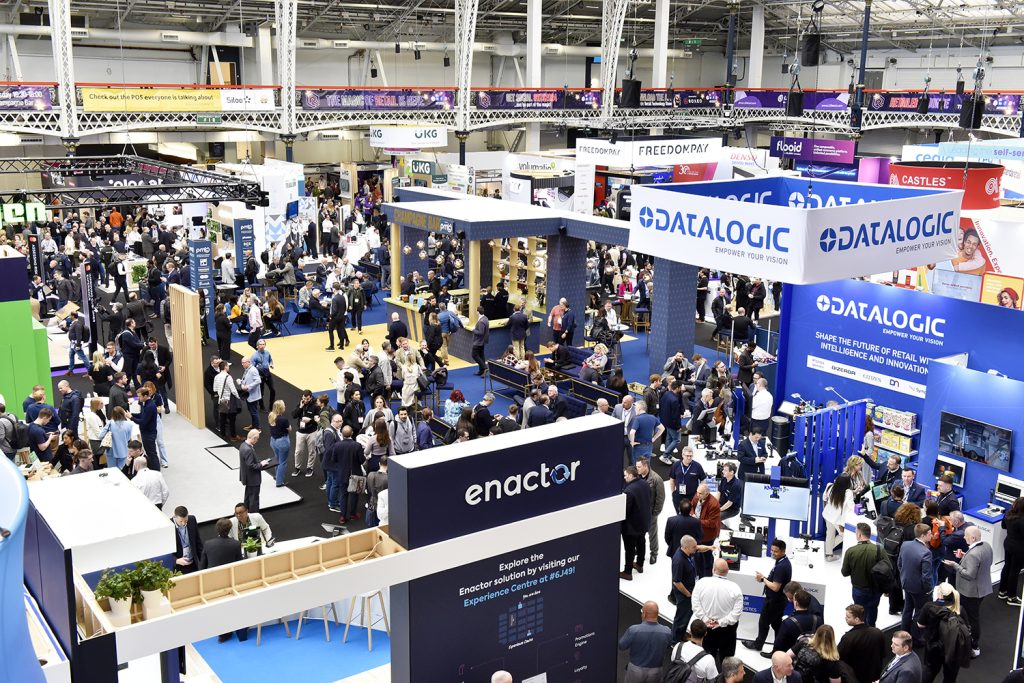
“COVID reminded our industry that we are in a human-first business,” says Homeyer. “The biggest challenge for retailers right now is attracting and retaining people. As we saw at NRF in New York earlier this year, there’s a huge emphasis on store experience and that experience always goes through employees. They’re the ones creating the connection with customers.”

For Weber, whose company has evolved from a pure-play online business into one of Europe’s leading omnichannel eyewear retailers, the challenge goes beyond hiring. “In optical retail, attracting opticians is tough,” he explains. “It’s a trade job that takes years of training, and there’s a shortage of skilled talent. We’ve had to create training programmes that open access to these workers so we can really serve our clientele, not just on the sales side, but by providing the expertise that defines our brand.”

That expertise becomes harder to maintain at scale. “We started stationary retail nearly ten years after we began online,” Weber says. “Since then, we’ve grown exponentially, and with that comes multiple operational challenges, access to talent, how you deploy that talent to the shop floor, how you govern day-to-day operations and maintain efficiency. It’s a constant balancing act between expansion and execution.”

To keep pace, Mister Spex turned to technology. “You can’t bootstrap your retail network all by yourself,” Weber says. “We had to look at scheduling, training, and new technologies that could help us keep pace with growth while still delivering the experiences our customers expect.”

Homeyer believes that’s exactly where retailers should be focusing their transformation efforts. “Everybody’s hearing about AI, which is the next frontier, so you need to be ready for it,” he says. “That means having clean, unified data at scale and platforms that let you bring that data together and keep it updated through regular interaction.”

For him, digital transformation isn’t just about software. “AI will have an impact on how you work, so you need to rethink your organisation and operating model,” he says. “It’s about empowering people to do things they weren’t doing before and changing the mindset. Retailers can’t think of transformation as something that happens every five or ten years anymore. It’s every year, maybe every six months, that you need to adapt how you operate.”

Weber agrees, warning that progress can backfire if it adds friction for staff. “One of the big challenges is not to overburden store teams with administrative tasks,” he notes. “We want them spending time with customers, not data entry. The goal is to simplify processes, give time back to workers, and let them focus on value-creating activities.”

Homeyer nods to the same point. “This transformation should benefit employees,” he says. “Technology should improve their work and make their lives easier. Frontline teams aren’t there to use tech, they’re there to engage with customers. You have to put them at the centre.”

For most retailers, however, the problem isn’t a lack of data, it’s too much of it. “In a survey we did last year, 52 per cent of retailers said one of their biggest problems was that data was everywhere,” Homeyer notes. “46 per cent said they had limited visibility. The result is inefficiency and loss of productivity, people spend more time trying to find information than acting on it.”

He adds that consolidation has measurable benefits. “When you provide data in one place and make it consumable for every stakeholder, productivity rises. In one study, we saw an eight-hour weekly productivity improvement for store managers, and an 8 per cent sales lift per associate.”

Weber notes that Mister Spex’s e-commerce roots gave it an advantage and a new challenge. “As an online brand, we’ve always had plenty of data. When we expanded into stores, the question wasn’t where the data was, it was how to use it,” he says. “We started involving store managers directly in interpreting data and using AI applications that help them make data-informed, not just data-driven, decisions. They can even override the system when local knowledge tells them something different.”

“Instead of centralising reports and telling people what to do, we’ve enabled store teams to work with the data themselves,” he adds. “AI translates the data into something actionable. For example, optimising weekly staffing schedules.”

Workforce management is one of the areas where both leaders see AI adding the most value. “In our survey, retailers told us the top two uses of AI were workforce scheduling and recruitment,” says Homeyer. “It’s about optimising your staff – making the best use of your people – and improving how you hire, onboard and train them. Some retailers are even hiring via social media in under ten minutes, because if they don’t move that fast, another brand will.”

Weber describes how Mister Spex applies that thinking in practice. “Creating an accurate, traffic-based, performance-oriented schedule is complex. AI and machine learning are wonderful tools to support that. They don’t take away decision-making, they enhance it.”

He also sees conversational AI as an unexpected ally. “We’re using information-based chatbots that let store employees access dispersed information quickly, even while they’re with customers,” he adds. “You train an AI once, and it can support thousands of employees every day. It’s like having an expert in every store.”

But even as AI gains ground, Homeyer warns that human needs must remain the focus. “The industry has been suffering from a bad reputation. Long hours, inflexible schedules, low wages,” he suggests. “So, retailers are rethinking their value proposition. Pay will always matter, but flexibility, benefits and career development are key. We’re seeing more flexible scheduling, the ability to swap shifts, new types of employee benefits and clearer career paths.”

Weber agrees that engagement builds from empowerment. “If a store team is performing well, that builds morale. It also gives us more room to be generous with pay through bonuses that reflect performance. For our optometrists, well-designed schedules mean they have time to apply their skills and see the impact of their work. When you combine flexibility, rewards and personal growth, you build teams that stay and thrive.”

Homeyer suggests that for retailers still working with siloed systems, the first step is to rethink how their operations are structured. “If you’re moving to one platform that unifies all your data and maps your employee journey, you need to prepare for that change,” he comments. “Think about how HR, managers and employees will use the system day-to-day. It’s about designing your future state and onboarding everyone in the change so it’s a positive experience.”

Weber closes with a practical example of that change in action. “We implemented Workday’s staff scheduling solution and focused on footfall as the key factor for when to bring workers onto the shop floor,” he says. “Our data scientists analysed how the machine learning algorithm predicted demand and used their own models to identify which stores could add margin by changing staffing patterns. We found 15 stores in Germany that could actually increase operating margin just by adding specific roles at specific times. Those tweaks are now helping turn underperforming stores profitable and at the same time, they’re reducing stress for our existing staff.”

For both leaders, the message is clear. Technology should enable better human outcomes, not replace them. “Technology should improve the lives of employees, not add complexity,” Homeyer emphatically summarises. “They’re not here to use technology. They’re here to engage customers. The tools we give them should make that easier, not harder.”

Click here to sign up to Retail Gazette‘s free daily email newsletter

Feature ArticlesPodcast EpisodesResourcesSponsored

Leave a Reply

Your email address will not be published. Required fields are marked *

Fill out this field
Fill out this field
Please enter a valid email address.

RELATED STORIES

Latest Feature


Menu


Close popup

Please enter the verification code sent to your email: