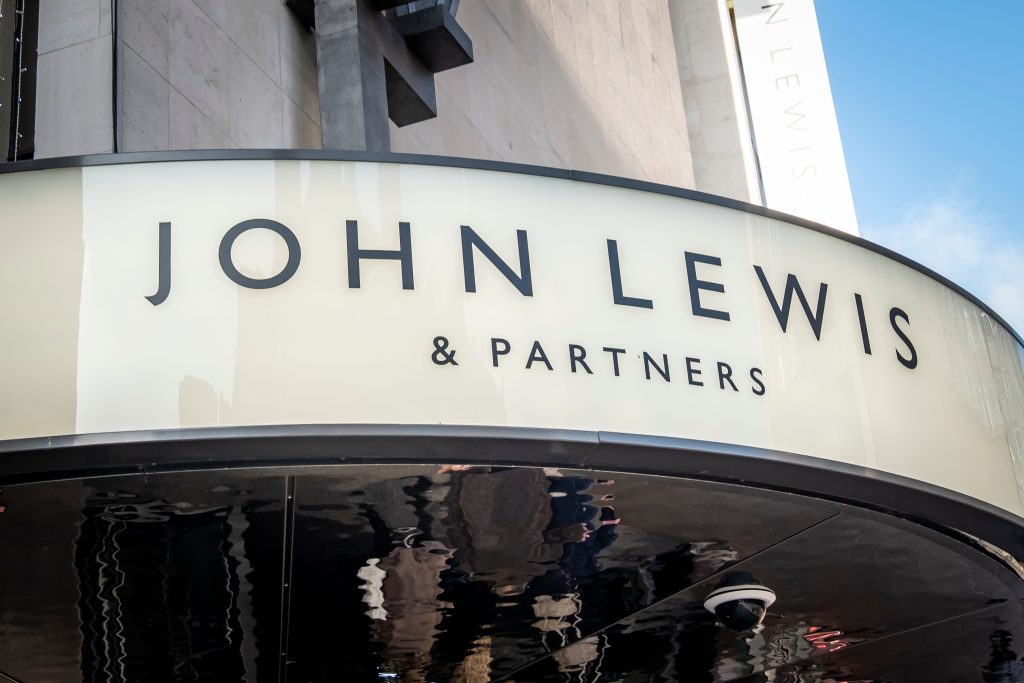
John Lewis Partnership restores staff bonus as profits rise

John Lewis
Department StoresNews

The John Lewis Partnership has reinstated its staff bonus for the first time since 2022 after reporting improved profits and cash generation for the year ending 31 January 2026.

The employee-owned retailer, which operates John Lewis department stores and Waitrose supermarkets, said partners will receive a bonus equivalent to one week’s pay, representing 2 per cent of salary.

The payout follows a year of modest financial improvement, with the group reporting profit before tax, bonus and exceptional items of £134 million, up 6 per cent from £126 million the previous year.

Total sales across the partnership rose 5 per cent to £13.4 billion.

However, statutory performance was weighed down by exceptional charges, with the group reporting a pre-tax loss of £21 million compared with a £97 million profit the year before. The loss largely reflects £120m in exceptional costs, primarily non-cash write-downs linked to legacy technology systems being replaced as part of the retailer’s transformation.

Investment strategy drives performance

Chairman Jason Tarry said the partnership’s long-term investment strategy was beginning to deliver results despite difficult market conditions.

“Our multi-year plan to invest in customers and our brands for the long term is working; we have grown customer numbers and achieved record satisfaction,” he said.

“Despite a subdued market, a challenging lead into the crucial peak period and increased taxes, we took the decision to continue investing in the business, and have delivered cash and profit growth.”

Cash generated from operations rose £63 million to £595 million, while total liquidity strengthened to £1.6 billion.

The retailer also increased investment across its operations during the year, spending 26 per cent more on stores, technology and supply chain improvements.

Customer engagement improved as a result, with membership of My Waitrose rising 6 per cent and My John Lewis membership increasing 10 per cent.

Waitrose continues to lead growth

Much of the partnership’s growth was driven by Waitrose, where sales climbed 7 per cent to £8.5 billion.

The supermarket chain recorded its tenth consecutive quarter of customer growth and reported volumes up 3 per cent, outperforming the wider grocery market.

Adjusted operating profit increased £29 million to £256 million, while operating margin improved to 3.2 per cent.

The business invested heavily in its estate during the year, refurbishing 23 stores and opening three new convenience locations.

Online demand also continued to grow, with order volumes rising 11 per cent and sales increasing more than 13 per cent.

Waitrose also recorded strong growth in premium ranges, with sales of its Waitrose No.1 line increasing nearly 30 per cent.

John Lewis department stores see profit improvement

The John Lewis department store business also returned stronger profitability, with adjusted operating profit rising £13 million to £58 million.

Sales increased 3 per cent to £4.9 billion as the retailer continued to invest in its omnichannel strategy and store estate.

Major refurbishments were completed at its Liverpool and Bluewater locations, while beauty expansions were rolled out across stores including Solihull, Welwyn Garden City and Cambridge.

The retailer also expanded its product offering by introducing 200 new brands during the year, including an exclusive national partnership with Topshop.

Operational improvements also boosted product availability, with “ship-from-store” fulfilment extended to 28 locations.

Rising costs and cautious outlook

Despite the improvement in underlying performance, the partnership said profit growth was partially offset by £53 million in new tax-related costs.

This included £40 million from higher national insurance contributions and £13 million linked to the new Extended Producer Responsibility packaging levy.

The group said cautious consumer spending also resulted in heavier promotional activity, particularly in the run-up to peak trading.

Looking ahead, the partnership warned that the outlook for 2026/27 remains uncertain.

However, Tarry said stronger liquidity and improved cash generation would allow the retailer to continue investing in its long-term strategy.

“We remain on track to make further progress this year,” he said.

Click here to sign up to Retail Gazette‘s free daily email newsletter

Department StoresNews

Leave a Reply

Your email address will not be published. Required fields are marked *

Fill out this field
Fill out this field
Please enter a valid email address.

John Lewis Partnership restores staff bonus as profits rise

John Lewis

The John Lewis Partnership has reinstated its staff bonus for the first time since 2022 after reporting improved profits and cash generation for the year ending 31 January 2026.

The employee-owned retailer, which operates John Lewis department stores and Waitrose supermarkets, said partners will receive a bonus equivalent to one week’s pay, representing 2 per cent of salary.

The payout follows a year of modest financial improvement, with the group reporting profit before tax, bonus and exceptional items of £134 million, up 6 per cent from £126 million the previous year.

Total sales across the partnership rose 5 per cent to £13.4 billion.

However, statutory performance was weighed down by exceptional charges, with the group reporting a pre-tax loss of £21 million compared with a £97 million profit the year before. The loss largely reflects £120m in exceptional costs, primarily non-cash write-downs linked to legacy technology systems being replaced as part of the retailer’s transformation.

Investment strategy drives performance

Chairman Jason Tarry said the partnership’s long-term investment strategy was beginning to deliver results despite difficult market conditions.

“Our multi-year plan to invest in customers and our brands for the long term is working; we have grown customer numbers and achieved record satisfaction,” he said.

“Despite a subdued market, a challenging lead into the crucial peak period and increased taxes, we took the decision to continue investing in the business, and have delivered cash and profit growth.”

Cash generated from operations rose £63 million to £595 million, while total liquidity strengthened to £1.6 billion.

The retailer also increased investment across its operations during the year, spending 26 per cent more on stores, technology and supply chain improvements.

Customer engagement improved as a result, with membership of My Waitrose rising 6 per cent and My John Lewis membership increasing 10 per cent.

Waitrose continues to lead growth

Much of the partnership’s growth was driven by Waitrose, where sales climbed 7 per cent to £8.5 billion.

The supermarket chain recorded its tenth consecutive quarter of customer growth and reported volumes up 3 per cent, outperforming the wider grocery market.

Adjusted operating profit increased £29 million to £256 million, while operating margin improved to 3.2 per cent.

The business invested heavily in its estate during the year, refurbishing 23 stores and opening three new convenience locations.

Online demand also continued to grow, with order volumes rising 11 per cent and sales increasing more than 13 per cent.

Waitrose also recorded strong growth in premium ranges, with sales of its Waitrose No.1 line increasing nearly 30 per cent.

John Lewis department stores see profit improvement

The John Lewis department store business also returned stronger profitability, with adjusted operating profit rising £13 million to £58 million.

Sales increased 3 per cent to £4.9 billion as the retailer continued to invest in its omnichannel strategy and store estate.

Major refurbishments were completed at its Liverpool and Bluewater locations, while beauty expansions were rolled out across stores including Solihull, Welwyn Garden City and Cambridge.

The retailer also expanded its product offering by introducing 200 new brands during the year, including an exclusive national partnership with Topshop.

Operational improvements also boosted product availability, with “ship-from-store” fulfilment extended to 28 locations.

Rising costs and cautious outlook

Despite the improvement in underlying performance, the partnership said profit growth was partially offset by £53 million in new tax-related costs.

This included £40 million from higher national insurance contributions and £13 million linked to the new Extended Producer Responsibility packaging levy.

The group said cautious consumer spending also resulted in heavier promotional activity, particularly in the run-up to peak trading.

Looking ahead, the partnership warned that the outlook for 2026/27 remains uncertain.

However, Tarry said stronger liquidity and improved cash generation would allow the retailer to continue investing in its long-term strategy.

“We remain on track to make further progress this year,” he said.

Click here to sign up to Retail Gazette‘s free daily email newsletter

Social


SUBSCRIBE TO OUR DAILY NEWSLETTER

  • This field is for validation purposes and should be left unchanged.
Department StoresNews

Leave a Reply

Your email address will not be published. Required fields are marked *

Fill out this field
Fill out this field
Please enter a valid email address.

RELATED STORIES

Latest Feature


Menu


Close popup

Please enter the verification code sent to your email: