Omnichannel grocery: How connected retail experiences can unlock value across customer touchpoints

GroceryNewsResourcesSponsored

After years of steady change, grocery retail is now experiencing a surge of new behaviours that is reshaping how customers shop, retailers operate, and brands measure success.

At this time of accelerated change, grocers can no longer see their digital and physical stores as separate channels. At the demand of the consumer, the two must be united and seamless.

“We’re at an inflection point in grocery retail as customer expectations change faster than most retailers’ systems can keep pace,” says Ryan Hamburger, Vice President of Commercial Partnerships at Instacart, the leading grocery technology company in North America.

“Customers want affordability, personalisation, and a grocery experience that adapts to their lives. Retailers simply can’t keep pace without the right technology foundations in place.”

The hybrid shopper is now the default shopper

Customers everywhere want more affordability and personalised shopping experiences. What has now changed is how customers move between channels fluidly. Building baskets online, browsing in-store, redeeming personalised offers, tracking budgets, paying digitally and expecting the experience to be consistent at every step.

In other words, the hybrid shopper is not a segment. It’s the new norm.

Hamburger emphasizes that this shift is accelerating globally. ”When retailers make a customer truly omnichannel, we typically see a 30 to 35 per cent lift in their lifetime value. It’s one of the most powerful levers in the grocer retail industry. But to unlock that value, grocers have to stop thinking of digital and physical as separate businesses.”

This is where many retailers feel the tension. Customers expect discounts, payment options and personalisation they enjoy online to show up instantly, in every store. Brands demand sharper targeting and better measurement across every touchpoint. Store teams need systems that simplify, not add complexity. And, all of it must operate efficiently under rising cost pressure.

Building a connected grocery ecosystem
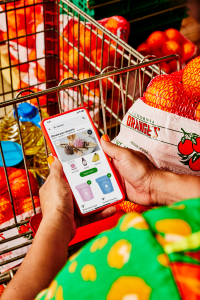
What does investment in serving this new customer demand look like? Instacart has spent more than a decade building the technology foundation that allows retailers to operate in a truly omnichannel world. Its enterprise software suite, spanning ecommerce, in-store technology and AI, is designed to help grocers meet customers wherever they are, while streamlining operations behind the scenes.

Storefront Pro, for example, is Instacart’s enterprise-grade ecommerce platform. It’s very much at the heart of this strategy. Retailers gain full brand ownership and deep customisation, along with the benefit of Instacart’s scale, reliability and native monetisation through Carrot Ads. Most retailers upgrading to Storefront Pro see double-digit growth and, critically, they gain a platform that’s designed to evolve.

Hamburger is clear on why this matters. “Retailers want flexibility, not fragmentation. Headless solutions sound great, but they require you to stitch together payments, loyalty, CRM, POS, and you end up paying for that complexity. At Instacart, our approach is to give retailers customization within a fully integrated ecosystem. It’s like putting a new engine into a car that already has a great shell.”

This modularity extends into fulfilment with Instacart’s Connect API suite, enabling retailers to offer fast, reliable pickup and delivery powered by real-time inventory, batching and routing technology.

But the omnichannel shift isn’t just happening online. Increasingly, it’s happening in the aisles.

When online intelligence moves into the store

Instacart’s Connected Stores technologies bring digital intelligence into the physical environment, creating the seamless, personalised experiences that hybrid customers expect.

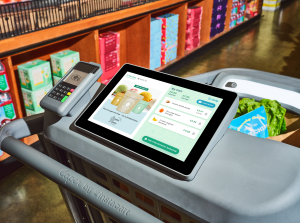
Caper Carts, Instacart’s AI-powered smart trolleys, are one of the clearest examples of what true omnichannel grocery looks like. Each Caper Cart is equipped with AI, cameras, sensors, and a built-in scale, so as items are scanned inside, the trolley instantly identifies them and allows customers to move through the store at their own pace. For the customer, the experience is seamless and frictionless, they simply grab a Caper Cart at the store entrance and begin shopping

“What’s exciting about Caper Carts is that they merge online convenience with the familiarity of the store. You get real-time recommendations, budget tracking and a frictionless checkout,– everything  customers love digitally, now happening in the aisle,” says Hamburger.

For retailers, Caper drives larger baskets, increases loyalty, and creates a new in-store retail media surface for CPG brands. Ads on Caper are personalized, aisle-aware, and inventory-aware, enabling retailers and brands to reach customers in real time. Caper Carts are now in nearly 100 cities, with partners including Coles, Kroger, Schnucks, Wakefern and Morrisons soon. Grocers have seen Caper Carts double-digit lifts in basket size, coupon redemption nearing 40 per cent, and 30 minutes of engaged media time per visit on the cart’s digital screen.

Retailers who once struggled with data overload suddenly get clarity.

“Most retailers have no shortage of data,” says Hamburger. “What they often lack is the ability to turn it into decisions. Our technology gives them actionable insight – which products are out of stock, which items are trending, what’s driving growth – and it does it instantly.”

The rise of retail media, everywhere the customer shops

A modern omnichannel strategy isn’t complete without media. And here too, integration matters.

Instacart’s retail media network is now the third largest in North America. Because it’s embedded directly into the omnichannel ecosystem, it delivers sharper signals, real-time measurement and effective targeting across both digital and in-store environments.

Hamburger emphasises the impact on both brands and retailers. “Brands don’t want to spend money on people who are going to buy the product anyway. We use customer-level understanding and machine learning to ensure ad spend drives incremental purchases. And for retailers, the revenue can effectively subsidise their digital experience without additional investment.”

As in-store surfaces like Caper Carts become media opportunities at the moment of purchase decision, omnichannel grocery becomes a flywheel. Richer engagement drives better insights, which drive better personalisation, which drives more loyalty and more revenue. The ideal retail ecosystem. 

AI as the engine of omnichannel growth

If omnichannel is the model, AI is the accelerator. Instacart has been using machine learning behind the scenes for years, powering search, merchandising and productivity tools that compress innovation cycles. Now, with generative AI, a new frontier is emerging.

“We’re entering an agentic world,” Hamburger says, “and Instacart is bringing that same intelligence to retailers, so they can innovate faster than they ever could alone.”

Instacart’s new AI Solutions suite gives retailers access to enterprise-grade AI across five core areas, from shopping assistants and enriched product data to real-time shelf intelligence. The goal is: to help grocers operate smarter, personalise deeper and compete more effectively.

And crucially, it does so while protecting retailer data. “Retailers have spent years building their data assets,” Hamburger adds. “Our job is to help them enter the AI era without giving that away.”

Why omnichannel is a global opportunity

The shift toward omnichannel grocery isn’t a uniquely American trend. Retailers worldwide have been facing the same pressures as U.S. grocers. Rapidly evolving expectations, increasing digital complexity, and the need for new revenue streams. But they don’t want to rebuild from scratch.

“We’re having conversations with retailers globally who want to leapfrog, not reinvent,” says Hamburger. “There’s no scaled tech provider in many of these markets, no retail media infrastructure. Instacart isn’t just entering new regions, we’re helping shape entirely new retail ecosystems.”

Instacart’s products are already language- and currency-agnostic, designed for modular deployment and scalable adoption. Early international pilots, from Morrisons to Aldi, show how the model can translate and expand rapidly.

The opportunity is as much structural as technological.

Retailers want simplicity. They want speed. Most of all, they want systems that connect: ecommerce, fulfilment, in-store tech, media and AI into a single, scalable platform.

As the grocery retail landscape grows more complex, there is good news: rapid advances in the technology and strong partnerships can turn that complexity into a set of components that simply work together to rise to customer expectations.

Investment today means a simpler, faster and more effective tomorrow.

For more information on Instacart’s Connected Stores technology visit https://www.instacart.com/company/retailer-platform/connected-stores

Click here to sign up to Retail Gazette‘s free daily email newsletter

GroceryNewsResourcesSponsored

Leave a Reply

Your email address will not be published. Required fields are marked *

Fill out this field
Fill out this field
Please enter a valid email address.

Omnichannel grocery: How connected retail experiences can unlock value across customer touchpoints

Social


SUBSCRIBE TO OUR DAILY NEWSLETTER

  • This field is for validation purposes and should be left unchanged.

After years of steady change, grocery retail is now experiencing a surge of new behaviours that is reshaping how customers shop, retailers operate, and brands measure success.

At this time of accelerated change, grocers can no longer see their digital and physical stores as separate channels. At the demand of the consumer, the two must be united and seamless.

“We’re at an inflection point in grocery retail as customer expectations change faster than most retailers’ systems can keep pace,” says Ryan Hamburger, Vice President of Commercial Partnerships at Instacart, the leading grocery technology company in North America.

“Customers want affordability, personalisation, and a grocery experience that adapts to their lives. Retailers simply can’t keep pace without the right technology foundations in place.”

The hybrid shopper is now the default shopper

Customers everywhere want more affordability and personalised shopping experiences. What has now changed is how customers move between channels fluidly. Building baskets online, browsing in-store, redeeming personalised offers, tracking budgets, paying digitally and expecting the experience to be consistent at every step.

In other words, the hybrid shopper is not a segment. It’s the new norm.

Hamburger emphasizes that this shift is accelerating globally. ”When retailers make a customer truly omnichannel, we typically see a 30 to 35 per cent lift in their lifetime value. It’s one of the most powerful levers in the grocer retail industry. But to unlock that value, grocers have to stop thinking of digital and physical as separate businesses.”

This is where many retailers feel the tension. Customers expect discounts, payment options and personalisation they enjoy online to show up instantly, in every store. Brands demand sharper targeting and better measurement across every touchpoint. Store teams need systems that simplify, not add complexity. And, all of it must operate efficiently under rising cost pressure.

Building a connected grocery ecosystem

What does investment in serving this new customer demand look like? Instacart has spent more than a decade building the technology foundation that allows retailers to operate in a truly omnichannel world. Its enterprise software suite, spanning ecommerce, in-store technology and AI, is designed to help grocers meet customers wherever they are, while streamlining operations behind the scenes.

Storefront Pro, for example, is Instacart’s enterprise-grade ecommerce platform. It’s very much at the heart of this strategy. Retailers gain full brand ownership and deep customisation, along with the benefit of Instacart’s scale, reliability and native monetisation through Carrot Ads. Most retailers upgrading to Storefront Pro see double-digit growth and, critically, they gain a platform that’s designed to evolve.

Hamburger is clear on why this matters. “Retailers want flexibility, not fragmentation. Headless solutions sound great, but they require you to stitch together payments, loyalty, CRM, POS, and you end up paying for that complexity. At Instacart, our approach is to give retailers customization within a fully integrated ecosystem. It’s like putting a new engine into a car that already has a great shell.”

This modularity extends into fulfilment with Instacart’s Connect API suite, enabling retailers to offer fast, reliable pickup and delivery powered by real-time inventory, batching and routing technology.

But the omnichannel shift isn’t just happening online. Increasingly, it’s happening in the aisles.

When online intelligence moves into the store

Instacart’s Connected Stores technologies bring digital intelligence into the physical environment, creating the seamless, personalised experiences that hybrid customers expect.

Caper Carts, Instacart’s AI-powered smart trolleys, are one of the clearest examples of what true omnichannel grocery looks like. Each Caper Cart is equipped with AI, cameras, sensors, and a built-in scale, so as items are scanned inside, the trolley instantly identifies them and allows customers to move through the store at their own pace. For the customer, the experience is seamless and frictionless, they simply grab a Caper Cart at the store entrance and begin shopping

“What’s exciting about Caper Carts is that they merge online convenience with the familiarity of the store. You get real-time recommendations, budget tracking and a frictionless checkout,– everything  customers love digitally, now happening in the aisle,” says Hamburger.

For retailers, Caper drives larger baskets, increases loyalty, and creates a new in-store retail media surface for CPG brands. Ads on Caper are personalized, aisle-aware, and inventory-aware, enabling retailers and brands to reach customers in real time. Caper Carts are now in nearly 100 cities, with partners including Coles, Kroger, Schnucks, Wakefern and Morrisons soon. Grocers have seen Caper Carts double-digit lifts in basket size, coupon redemption nearing 40 per cent, and 30 minutes of engaged media time per visit on the cart’s digital screen.

Retailers who once struggled with data overload suddenly get clarity.

“Most retailers have no shortage of data,” says Hamburger. “What they often lack is the ability to turn it into decisions. Our technology gives them actionable insight – which products are out of stock, which items are trending, what’s driving growth – and it does it instantly.”


The rise of retail media, everywhere the customer shops

A modern omnichannel strategy isn’t complete without media. And here too, integration matters.

Instacart’s retail media network is now the third largest in North America. Because it’s embedded directly into the omnichannel ecosystem, it delivers sharper signals, real-time measurement and effective targeting across both digital and in-store environments.

Hamburger emphasises the impact on both brands and retailers. “Brands don’t want to spend money on people who are going to buy the product anyway. We use customer-level understanding and machine learning to ensure ad spend drives incremental purchases. And for retailers, the revenue can effectively subsidise their digital experience without additional investment.”

As in-store surfaces like Caper Carts become media opportunities at the moment of purchase decision, omnichannel grocery becomes a flywheel. Richer engagement drives better insights, which drive better personalisation, which drives more loyalty and more revenue. The ideal retail ecosystem. 

AI as the engine of omnichannel growth

If omnichannel is the model, AI is the accelerator. Instacart has been using machine learning behind the scenes for years, powering search, merchandising and productivity tools that compress innovation cycles. Now, with generative AI, a new frontier is emerging.

“We’re entering an agentic world,” Hamburger says, “and Instacart is bringing that same intelligence to retailers, so they can innovate faster than they ever could alone.”

Instacart’s new AI Solutions suite gives retailers access to enterprise-grade AI across five core areas, from shopping assistants and enriched product data to real-time shelf intelligence. The goal is: to help grocers operate smarter, personalise deeper and compete more effectively.

And crucially, it does so while protecting retailer data. “Retailers have spent years building their data assets,” Hamburger adds. “Our job is to help them enter the AI era without giving that away.”

Why omnichannel is a global opportunity

The shift toward omnichannel grocery isn’t a uniquely American trend. Retailers worldwide have been facing the same pressures as U.S. grocers. Rapidly evolving expectations, increasing digital complexity, and the need for new revenue streams. But they don’t want to rebuild from scratch.

“We’re having conversations with retailers globally who want to leapfrog, not reinvent,” says Hamburger. “There’s no scaled tech provider in many of these markets, no retail media infrastructure. Instacart isn’t just entering new regions, we’re helping shape entirely new retail ecosystems.”

Instacart’s products are already language- and currency-agnostic, designed for modular deployment and scalable adoption. Early international pilots, from Morrisons to Aldi, show how the model can translate and expand rapidly.

The opportunity is as much structural as technological.

Retailers want simplicity. They want speed. Most of all, they want systems that connect: ecommerce, fulfilment, in-store tech, media and AI into a single, scalable platform.

As the grocery retail landscape grows more complex, there is good news: rapid advances in the technology and strong partnerships can turn that complexity into a set of components that simply work together to rise to customer expectations.

Investment today means a simpler, faster and more effective tomorrow.

For more information on Instacart’s Connected Stores technology visit https://www.instacart.com/company/retailer-platform/connected-stores

Click here to sign up to Retail Gazette‘s free daily email newsletter

GroceryNewsResourcesSponsored

Leave a Reply

Your email address will not be published. Required fields are marked *

Fill out this field
Fill out this field
Please enter a valid email address.

RELATED STORIES

Latest Feature


Menu


Close popup

Please enter the verification code sent to your email: