
Will 2026 be the year that the gig economy booms on shop floors?

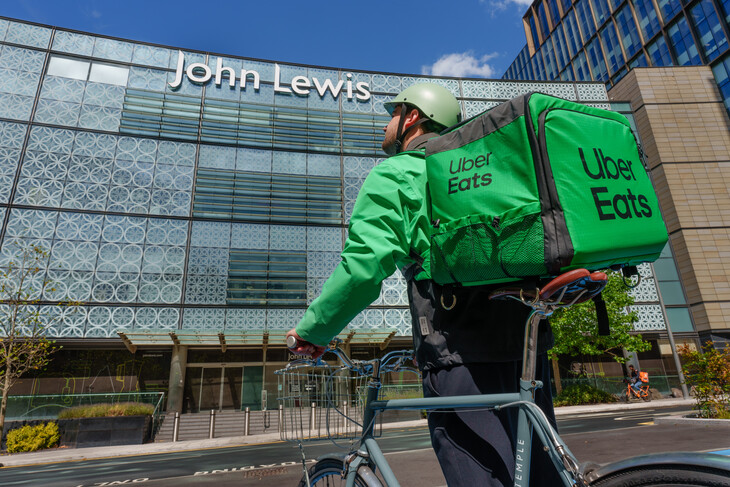
John Lewis partners with Uber Eats for rapid delivery pilot
News

The gig economy has already transformed how goods reach customers. The likes of Deliveroo and Uber Eats have already transformed the fundamental employment of delivery riders, and on-demand couriers are now simply a familiar part of the modern retail ecosystem. But a new phase of gig work is moving to the shop floor.

Across the UK, retailers are beginning to experiment with platforms that connect businesses with freelance workers. Rather than employing workers for fixed shifts, retailers can increasingly outsource specific jobs through apps that use the same basic model that the delivery sector employs.

As labour costs rise and staffing challenges show no signs of slowing, and seasonal fluctuations become more volatile, the gig economy is starting to look like an increasingly attractive option for retailers this year.

Retail’s growing labour challenge

Retail has a staffing problem. Labour pressures are growing more accute across the sector; in the UK, the rise in National Insurance and the National Living Wage are adding yet more cost to the bottom line, at a time when margins are only growing thinner.

At the same time, the industry continues to grapple with rampant recruitment challenges and volatile consumer demand. The British Retail Consortium reports that average staff turnover in the UK retail sector is an eye-watering 50 per cent, per year.

In practical terms, this means roughly half of retail workers leave their job within a year, making it one of the highest turnover industries in the UK workforce. Across the wider UK economy, employee churn averages around 34 per cent, according to labour market analysis based on CIPD and ONS data.

This means that retailers must now fulfil online orders, maintain store standards, serve customers with knowledge and insight, and respond to fluctuating demand, often with limited staffing flexibility, and a revolving door of workers.

It’s fair to say that traditional employment models don’t always accommodate these dynamics well. Staff are typically scheduled for full shifts in set shift patterns, even when workload varies throughout the day and fluctuates month on month, creating vast inefficiencies and a lack of agility.

Gig-style labour platforms offer a more agile alternative. The model promotes the concept of paying for completed tasks, rather than time. According to the European Parliament, around 43 million Europeans were working through digital labour platforms in 2025. Globally, some broader definitions of freelance or independent work suggest more than 1.5 billion people globally engage in gig or freelance work in some capacity.

While gig workers have long supported retail through delivery services, new platforms are focusing on operational work inside stores. These platforms allow retailers to post tasks, such as restocking shelves, checking product availability or picking ecommerce orders, which freelance workers can select and complete through a mobile app.

In practice, this means operational work can be broken into clearly defined tasks with pre-agreed pricing. Retailers effectively pay for outcomes rather than labour hours.

For smaller retailers and franchise operators in particular, the potential efficiency gains are significant.

Why retailers are interested

The appeal of gig labour lies largely in flexibility. Retail demand can change rapidly depending on promotions, weather, seasonal peaks or online order volumes. Being able to access workers quickly allows retailers to respond to these fluctuations without expanding permanent staffing levels.

This flexibility can also help address labour shortages. Many retailers struggle to recruit staff for short-term or irregular work, particularly for operational tasks that occur outside traditional working hours. Gig platforms can provide access to a wider pool of workers who are willing to complete these tasks when it suits their schedules.

Cost control is another factor. With wages rising and margins under pressure, retailers are looking for ways to operate more efficiently. Task-based labour models can reduce idle staffing hours and allow businesses to allocate labour more precisely.

For retailers operating on tight margins, even modest improvements in productivity can have a meaningful financial impact.

Workers want flexibility too

The rise of gig work is not being driven solely by retailers. Worker preferences are also shifting. Flexibility has become a defining feature of the modern labour market, particularly among younger generations. Research from H&R Block found that 29 per cent of Gen Z respondents want to be in business for themselves, while 7 per cent prefer working as independent contractors.

Across generations, interest in self-employment remains strong. The same research found that 37 per cent of millennials, 29 per cent of Gen X and 16 per cent of baby boomers also expressed interest in working for themselves.

For many workers, gig platforms provide an opportunity to earn income while maintaining control over their schedules. Some use gig work as a primary source of income, while others treat it as a secondary role alongside traditional employment.

Retail tasks (particularly short operational assignments) can fit neatly into this flexible working model.

The ethical and regulatory questions

However, the expansion of gig labour into retail has already drawn criticism in many cases. Recently, several retailers and hospitality operators were criticised for using gig staffing platforms such as Temper to recruit shop assistants and warehouse workers on a freelance basis.

Brands including Urban Outfitters and bed retailer Dreams were reported to have advertised short-term retail and warehouse roles through the platform, while cafés operating in London’s Royal Parks also used the app to source barista shifts. Trade unions argued that roles such as shop assistants were difficult to justify as self-employed positions, raising concerns that workers could miss out on employment protections.

In some cases, workers could also pay platform fees to receive faster payments, which critics said risked reducing their effective hourly earnings below the legal minimum wage threshold.

The Trades Union Congress said the spread of gig staffing into sectors such as retail risked creating “bogus self-employment”, arguing that some employers could use labour platforms to avoid providing traditional employment rights.

However, companies using the platforms have defended the model, arguing that freelance staffing offers workers flexibility and allows businesses to respond quickly to short-term operational needs.

Is the future of the workforce hybrid?

Most analysts don’t expect gig workers to replace retail employees entirely. Instead, the industry appears to be moving towards hybrid workforce models.

Under this approach, retailers maintain a core team of permanent staff responsible for customer service, store leadership and brand experience, while gig workers handle more operational tasks such as stock management or order picking.

This allows retailers to retain stability while gaining the flexibility of on-demand labour.

Technology will be central to making this model work. Workforce management platforms are increasingly capable of coordinating both permanent employees and freelance workers, helping retailers allocate labour where it is needed most.

A shift that’s only just beginning

The gig economy’s expansion into retail is still in its early stages, but the forces driving it are unlikely to disappear.

Retailers are under constant pressure to control costs, improve efficiency and respond quickly to changing consumer behaviour. Gig-style labour models offer one potential way to achieve this flexibility.

At the same time, regulators and labour groups will continue to question how these models affect workers and employment standards.

What seems increasingly clear is that the traditional retail workforce is evolving. Gig workers may not replace shopfloor employees, but they are likely to become an increasingly visible part of the industry’s labour mix.

By 2026, the gig economy may not dominate retail, but it could play a far bigger role than many in the sector once imagined.

Click here to sign up to Retail Gazette‘s free daily email newsletter

News

Leave a Reply

Your email address will not be published. Required fields are marked *

Fill out this field
Fill out this field
Please enter a valid email address.

News

Share:

Will 2026 be the year that the gig economy booms on shop floors?

John Lewis partners with Uber Eats for rapid delivery pilot

The gig economy has already transformed how goods reach customers. The likes of Deliveroo and Uber Eats have already transformed the fundamental employment of delivery riders, and on-demand couriers are now simply a familiar part of the modern retail ecosystem. But a new phase of gig work is moving to the shop floor.

Across the UK, retailers are beginning to experiment with platforms that connect businesses with freelance workers. Rather than employing workers for fixed shifts, retailers can increasingly outsource specific jobs through apps that use the same basic model that the delivery sector employs.

As labour costs rise and staffing challenges show no signs of slowing, and seasonal fluctuations become more volatile, the gig economy is starting to look like an increasingly attractive option for retailers this year.

Retail’s growing labour challenge

Retail has a staffing problem. Labour pressures are growing more accute across the sector; in the UK, the rise in National Insurance and the National Living Wage are adding yet more cost to the bottom line, at a time when margins are only growing thinner.

At the same time, the industry continues to grapple with rampant recruitment challenges and volatile consumer demand. The British Retail Consortium reports that average staff turnover in the UK retail sector is an eye-watering 50 per cent, per year.

In practical terms, this means roughly half of retail workers leave their job within a year, making it one of the highest turnover industries in the UK workforce. Across the wider UK economy, employee churn averages around 34 per cent, according to labour market analysis based on CIPD and ONS data.

This means that retailers must now fulfil online orders, maintain store standards, serve customers with knowledge and insight, and respond to fluctuating demand, often with limited staffing flexibility, and a revolving door of workers.

It’s fair to say that traditional employment models don’t always accommodate these dynamics well. Staff are typically scheduled for full shifts in set shift patterns, even when workload varies throughout the day and fluctuates month on month, creating vast inefficiencies and a lack of agility.

Gig-style labour platforms offer a more agile alternative. The model promotes the concept of paying for completed tasks, rather than time. According to the European Parliament, around 43 million Europeans were working through digital labour platforms in 2025. Globally, some broader definitions of freelance or independent work suggest more than 1.5 billion people globally engage in gig or freelance work in some capacity.

While gig workers have long supported retail through delivery services, new platforms are focusing on operational work inside stores. These platforms allow retailers to post tasks, such as restocking shelves, checking product availability or picking ecommerce orders, which freelance workers can select and complete through a mobile app.

In practice, this means operational work can be broken into clearly defined tasks with pre-agreed pricing. Retailers effectively pay for outcomes rather than labour hours.

For smaller retailers and franchise operators in particular, the potential efficiency gains are significant.

Why retailers are interested

The appeal of gig labour lies largely in flexibility. Retail demand can change rapidly depending on promotions, weather, seasonal peaks or online order volumes. Being able to access workers quickly allows retailers to respond to these fluctuations without expanding permanent staffing levels.

This flexibility can also help address labour shortages. Many retailers struggle to recruit staff for short-term or irregular work, particularly for operational tasks that occur outside traditional working hours. Gig platforms can provide access to a wider pool of workers who are willing to complete these tasks when it suits their schedules.

Cost control is another factor. With wages rising and margins under pressure, retailers are looking for ways to operate more efficiently. Task-based labour models can reduce idle staffing hours and allow businesses to allocate labour more precisely.

For retailers operating on tight margins, even modest improvements in productivity can have a meaningful financial impact.

Workers want flexibility too

The rise of gig work is not being driven solely by retailers. Worker preferences are also shifting. Flexibility has become a defining feature of the modern labour market, particularly among younger generations. Research from H&R Block found that 29 per cent of Gen Z respondents want to be in business for themselves, while 7 per cent prefer working as independent contractors.

Across generations, interest in self-employment remains strong. The same research found that 37 per cent of millennials, 29 per cent of Gen X and 16 per cent of baby boomers also expressed interest in working for themselves.

For many workers, gig platforms provide an opportunity to earn income while maintaining control over their schedules. Some use gig work as a primary source of income, while others treat it as a secondary role alongside traditional employment.

Retail tasks (particularly short operational assignments) can fit neatly into this flexible working model.

The ethical and regulatory questions

However, the expansion of gig labour into retail has already drawn criticism in many cases. Recently, several retailers and hospitality operators were criticised for using gig staffing platforms such as Temper to recruit shop assistants and warehouse workers on a freelance basis.

Brands including Urban Outfitters and bed retailer Dreams were reported to have advertised short-term retail and warehouse roles through the platform, while cafés operating in London’s Royal Parks also used the app to source barista shifts. Trade unions argued that roles such as shop assistants were difficult to justify as self-employed positions, raising concerns that workers could miss out on employment protections.

In some cases, workers could also pay platform fees to receive faster payments, which critics said risked reducing their effective hourly earnings below the legal minimum wage threshold.

The Trades Union Congress said the spread of gig staffing into sectors such as retail risked creating “bogus self-employment”, arguing that some employers could use labour platforms to avoid providing traditional employment rights.

However, companies using the platforms have defended the model, arguing that freelance staffing offers workers flexibility and allows businesses to respond quickly to short-term operational needs.

Is the future of the workforce hybrid?

Most analysts don’t expect gig workers to replace retail employees entirely. Instead, the industry appears to be moving towards hybrid workforce models.

Under this approach, retailers maintain a core team of permanent staff responsible for customer service, store leadership and brand experience, while gig workers handle more operational tasks such as stock management or order picking.

This allows retailers to retain stability while gaining the flexibility of on-demand labour.

Technology will be central to making this model work. Workforce management platforms are increasingly capable of coordinating both permanent employees and freelance workers, helping retailers allocate labour where it is needed most.

A shift that’s only just beginning

The gig economy’s expansion into retail is still in its early stages, but the forces driving it are unlikely to disappear.

Retailers are under constant pressure to control costs, improve efficiency and respond quickly to changing consumer behaviour. Gig-style labour models offer one potential way to achieve this flexibility.

At the same time, regulators and labour groups will continue to question how these models affect workers and employment standards.

What seems increasingly clear is that the traditional retail workforce is evolving. Gig workers may not replace shopfloor employees, but they are likely to become an increasingly visible part of the industry’s labour mix.

By 2026, the gig economy may not dominate retail, but it could play a far bigger role than many in the sector once imagined.

Click here to sign up to Retail Gazette‘s free daily email newsletter

Social


SUBSCRIBE TO OUR DAILY NEWSLETTER

  • This field is for validation purposes and should be left unchanged.
News

Leave a Reply

Your email address will not be published. Required fields are marked *

Fill out this field
Fill out this field
Please enter a valid email address.

RELATED STORIES

Latest Feature


Menu


Close popup

Please enter the verification code sent to your email:
