
‘Not just a packaging issue’: Can retailers use DRS to boost footfall and sales?

Exchange for Change has set out its intended producer fees for the UK’s Deposit Return Scheme, giving drinks businesses more detail as they prepare for its October 2027 launch.
5 minutes with...InsightNewsSupply Chain

Exchange for Change has set out its intended producer fees for the UK’s Deposit Return Scheme, giving drinks businesses more detail as they prepare for its October 2027 launch.

Producers will pay no fee for the first 15 months, from October 2027 to December 2028, with current projections putting the fee at 0.6p per aluminium and steel container and 2.3p per PET container from January 2029. The figures will be reviewed and reconfirmed in May 2027, with annual reviews after launch.

For Bill Powers, chairman of DRS International, the announcement gives businesses some welcome clarity. But he believes retailers should be looking beyond the cost and compliance questions.

The bigger opportunity is what happens when consumers start bringing their empty bottles and cans back to shops.

‘You can use this to attract footfall’

Powers says retailers can treat DRS as something they simply have to comply with, or use it to compete for customers.

“You can also say, ‘I’m going to take this change that’s happening across the whole of my society, and I’m going to see can I use this to attract footfall into my store’.”

The basic economics are straightforward: customer returns containers, receives a voucher and then has a reason to spend it.

Powers points to children as one example. If they are returning containers to earn pocket money, a retailer could make the process easy and then offer products they are likely to buy.

“Make it easy for them to come in and have high margin products that as soon as they’ve redeemed, they’ve got their voucher, they straight away want to buy a magazine or a piece of confectionery.”

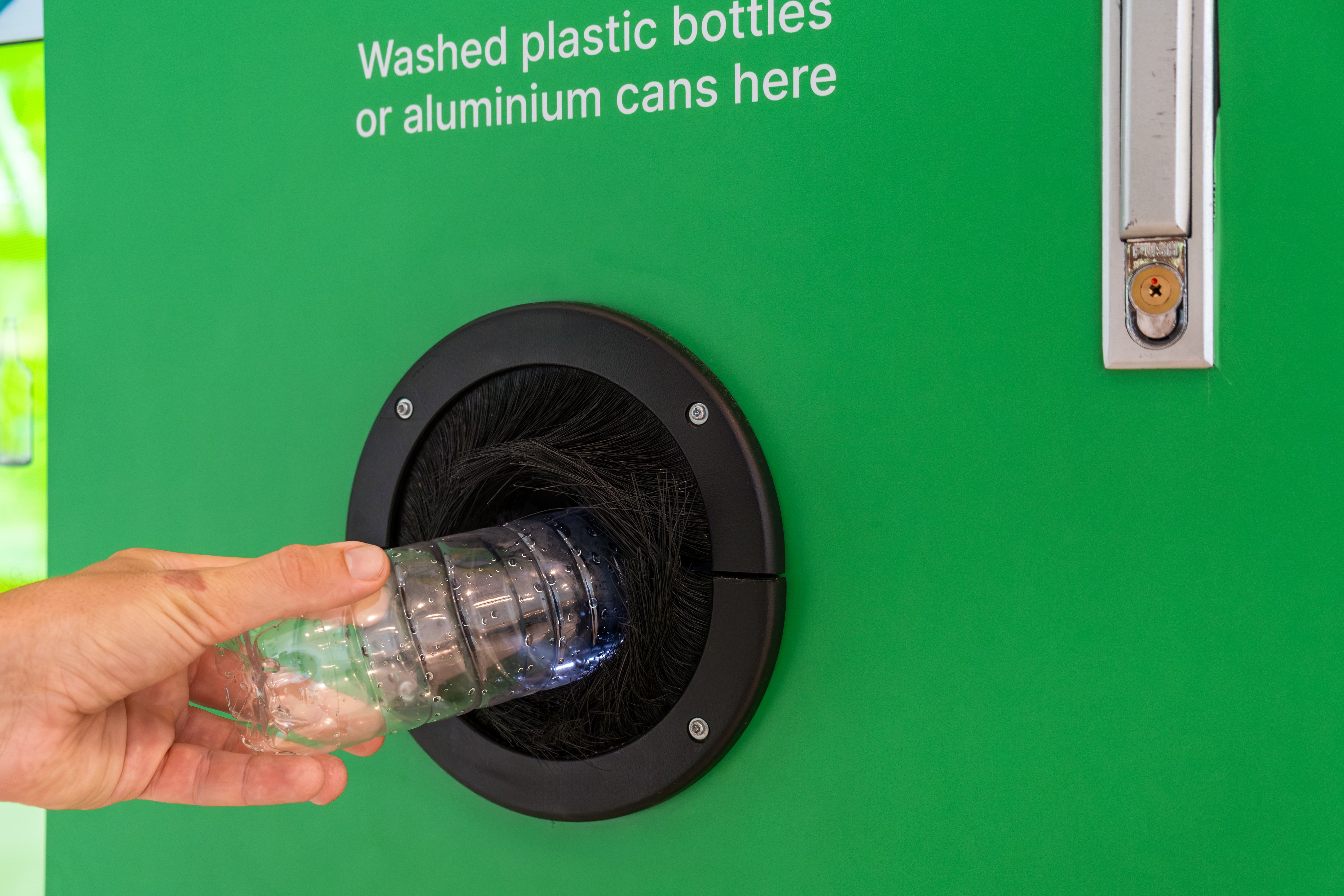
The same principle could work in a very different way at a forecourt. Powers describes retailers in other countries using large reverse vending machines to attract returns well beyond the number of drinks they sell.

A customer could arrive with a large number of empty containers, receive a £100 voucher, then use it to buy fuel or goods in store.

“You don’t just have the economics of the DRS scheme, you have this opportunity to grab consumers and fight for the footfall.”

There is also a practical lesson, when the return point itself becomes part of the customer experience.

“If I turn up at a store and there’s a queue for the machine, consumers hate that,” he says. “Or if I turn up and the machine hasn’t been emptied, and therefore it’s not available for use, consumers hate that.”

Powers says consumers will learn which shops have machines that are easy to use and available, and which do not, creating a new form of competition between retailers.

“How often, in the last couple of years or the last decade, can you remember an infrastructure initiative that gave every retailer in the country an opportunity to compete for footfall?”

He points to a recent example of a retail forecourt in Munster, Ireland, where an RVM installed in February was “nearly paid for by the December”. The lesson is not that every retailer will see the same return, but that the machine can be treated as part of a commercial strategy rather than simply a compliance cost.

‘DRS is not just a packaging issue’

For retailers that have yet to prepare, Powers says the first steps are practical. They need to understand their exemption status, decide whether they want to operate a return point, choose between a manual system and an RVM, investigate grants and consider the effect on cash flow.

The current scheme includes exemptions for some retailers, while Exchange for Change has also announced support for eligible RVM purchases.

Cash flow could be particularly important. Powers says retailers effectively pay and reclaim deposits through several transactions. Using a hypothetical one million containers, each carrying a 20p deposit, he calculates that a retailer could have £800,000 of working capital moving through the business, before taking the return handling fee into account.

“Thinking about the working capital impact: when am I going to get paid? When am I going to pay these items? Is something that retailers really need to think about.”

Producers face a different set of decisions, particularly around the transition into the scheme. Exchange for Change has said products manufactured and filled before October 1, 2027 can remain outside DRS and continue to be sold after launch, while businesses will need to manage the move towards scheme-compliant packaging.

Powers says producers need to think carefully about what stock is entering the supply chain around the cut-off.

A product carrying a deposit will appear more expensive at the till, even though the consumer can reclaim that deposit.

“If I was competing for the Christmas beer market, I’d be thinking very deeply about having my product,” he says. But the wider point is that DRS cannot be left to one department.

“This is often looked at by producers as maybe a packaging or a logistics type project, but we see it as encompassing finance, the commercial teams. It’s a whole of business issue.”

He warns that a company could technically comply while still damaging its commercial position.

“They will be compliant. They may lose market share, but they’ll be compliant.”

The same applies to the customer experience. DRS will introduce a new piece of infrastructure into thousands of communities, from supermarkets and convenience stores to forecourts, stations and major events.

The scheme will not become the new normal overnight. Powers expects consumers to take up to 24 months after launch to become fully accustomed to the system, with further work likely in later years to push redemption rates towards the 90 per cent target. But he believes retailers should start thinking now about what they want their role to be.

“In every country in the world where these get rolled out, consumers love them.” His message to retailers is simple: do not treat that enthusiasm as someone else’s problem.

“If you treat it like a compliance issue, you don’t get to harness that love. But if you treat it like a way to delight your customers, you can harness the love that they have for the scheme, and attach it to the love that they have for your brand.”

Click here to sign up to Retail Gazette‘s free daily email newsletter

5 minutes with...InsightNewsSupply Chain

Leave a Reply

Your email address will not be published. Required fields are marked *

Fill out this field
Fill out this field
Please enter a valid email address.

‘Not just a packaging issue’: Can retailers use DRS to boost footfall and sales?

Exchange for Change has set out its intended producer fees for the UK’s Deposit Return Scheme, giving drinks businesses more detail as they prepare for its October 2027 launch.

Exchange for Change has set out its intended producer fees for the UK’s Deposit Return Scheme, giving drinks businesses more detail as they prepare for its October 2027 launch.

Producers will pay no fee for the first 15 months, from October 2027 to December 2028, with current projections putting the fee at 0.6p per aluminium and steel container and 2.3p per PET container from January 2029. The figures will be reviewed and reconfirmed in May 2027, with annual reviews after launch.

For Bill Powers, chairman of DRS International, the announcement gives businesses some welcome clarity. But he believes retailers should be looking beyond the cost and compliance questions.

The bigger opportunity is what happens when consumers start bringing their empty bottles and cans back to shops.

‘You can use this to attract footfall’

Powers says retailers can treat DRS as something they simply have to comply with, or use it to compete for customers.

“You can also say, ‘I’m going to take this change that’s happening across the whole of my society, and I’m going to see can I use this to attract footfall into my store’.”

The basic economics are straightforward: customer returns containers, receives a voucher and then has a reason to spend it.

Powers points to children as one example. If they are returning containers to earn pocket money, a retailer could make the process easy and then offer products they are likely to buy.

“Make it easy for them to come in and have high margin products that as soon as they’ve redeemed, they’ve got their voucher, they straight away want to buy a magazine or a piece of confectionery.”

The same principle could work in a very different way at a forecourt. Powers describes retailers in other countries using large reverse vending machines to attract returns well beyond the number of drinks they sell.

A customer could arrive with a large number of empty containers, receive a £100 voucher, then use it to buy fuel or goods in store.

“You don’t just have the economics of the DRS scheme, you have this opportunity to grab consumers and fight for the footfall.”

There is also a practical lesson, when the return point itself becomes part of the customer experience.

“If I turn up at a store and there’s a queue for the machine, consumers hate that,” he says. “Or if I turn up and the machine hasn’t been emptied, and therefore it’s not available for use, consumers hate that.”

Powers says consumers will learn which shops have machines that are easy to use and available, and which do not, creating a new form of competition between retailers.

“How often, in the last couple of years or the last decade, can you remember an infrastructure initiative that gave every retailer in the country an opportunity to compete for footfall?”

He points to a recent example of a retail forecourt in Munster, Ireland, where an RVM installed in February was “nearly paid for by the December”. The lesson is not that every retailer will see the same return, but that the machine can be treated as part of a commercial strategy rather than simply a compliance cost.

‘DRS is not just a packaging issue’

For retailers that have yet to prepare, Powers says the first steps are practical. They need to understand their exemption status, decide whether they want to operate a return point, choose between a manual system and an RVM, investigate grants and consider the effect on cash flow.

The current scheme includes exemptions for some retailers, while Exchange for Change has also announced support for eligible RVM purchases.

Cash flow could be particularly important. Powers says retailers effectively pay and reclaim deposits through several transactions. Using a hypothetical one million containers, each carrying a 20p deposit, he calculates that a retailer could have £800,000 of working capital moving through the business, before taking the return handling fee into account.

“Thinking about the working capital impact: when am I going to get paid? When am I going to pay these items? Is something that retailers really need to think about.”

Producers face a different set of decisions, particularly around the transition into the scheme. Exchange for Change has said products manufactured and filled before October 1, 2027 can remain outside DRS and continue to be sold after launch, while businesses will need to manage the move towards scheme-compliant packaging.

Powers says producers need to think carefully about what stock is entering the supply chain around the cut-off.

A product carrying a deposit will appear more expensive at the till, even though the consumer can reclaim that deposit.

“If I was competing for the Christmas beer market, I’d be thinking very deeply about having my product,” he says. But the wider point is that DRS cannot be left to one department.

“This is often looked at by producers as maybe a packaging or a logistics type project, but we see it as encompassing finance, the commercial teams. It’s a whole of business issue.”

He warns that a company could technically comply while still damaging its commercial position.

“They will be compliant. They may lose market share, but they’ll be compliant.”

The same applies to the customer experience. DRS will introduce a new piece of infrastructure into thousands of communities, from supermarkets and convenience stores to forecourts, stations and major events.

The scheme will not become the new normal overnight. Powers expects consumers to take up to 24 months after launch to become fully accustomed to the system, with further work likely in later years to push redemption rates towards the 90 per cent target. But he believes retailers should start thinking now about what they want their role to be.

“In every country in the world where these get rolled out, consumers love them.” His message to retailers is simple: do not treat that enthusiasm as someone else’s problem.

“If you treat it like a compliance issue, you don’t get to harness that love. But if you treat it like a way to delight your customers, you can harness the love that they have for the scheme, and attach it to the love that they have for your brand.”

Click here to sign up to Retail Gazette‘s free daily email newsletter

Social


SUBSCRIBE TO OUR DAILY NEWSLETTER

  • This field is for validation purposes and should be left unchanged.
5 minutes with...InsightNewsSupply Chain

Leave a Reply

Your email address will not be published. Required fields are marked *

Fill out this field
Fill out this field
Please enter a valid email address.

RELATED STORIES

Latest Feature


Menu

Get Inside Matalan

A supply chain case study delivered to your inbox in three emails. The 3 elements Matalan changed to impact its bottom line..

Matalan Supply Chain Programme Form

  • This field is for validation purposes and should be left unchanged.


Please enter the verification code sent to your email: