

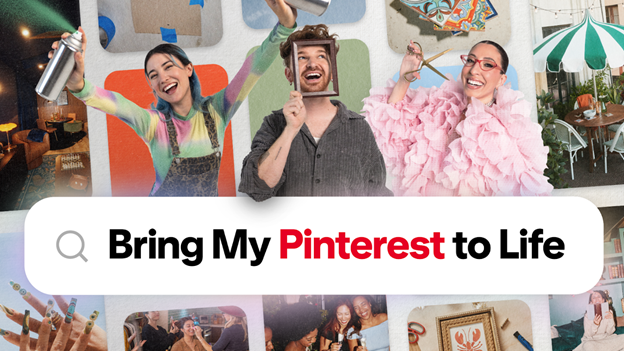
Pinterest has launched a new shoppable streaming series as it looks to deepen its role in the customer journey and give brands new ways to turn inspiration into purchases.
The platform’s six-part series, Bring My Pinterest to Life, premiered on 23 March and follows users as their saved boards are transformed into real-life spaces, style updates and business projects with the help of creators and design experts.
While the format leans into lifestyle entertainment, the commercial aim is more significant. Each episode includes QR codes that take viewers to Pinterest boards featuring products, how-to content and imagery linked to the makeover, allowing them to browse, save and shop ideas directly.
The move marks another step in Pinterest’s broader push to position itself not just as a discovery platform, but as a more actionable retail and advertising channel.
Brand partners including Wayfair, eos and Michaels feature in the series, highlighting the company’s effort to build formats that sit somewhere between content, commerce and creator marketing.
The series covers a range of personal and home-focused transformations, from a balcony redesign and an under-stair reading nook to a mobile styling cart for a small business and a garage converted into an entertaining space.
Other episodes focus on fashion and self-expression, reflecting the categories where Pinterest continues to see strong user engagement.
Pinterest chief content officer Malik Ducard said the series was intended to give users practical inspiration they could apply themselves, whether that meant updating their home, planning an event or refreshing their personal style.
For retail marketers, the launch is another example of how platforms are trying to collapse the gap between media and transaction. Shoppable content is hardly new, but Pinterest is leaning into its existing strength, being high-intent users that already utilise the platform to plan what they want to buy, wear, make or redesign.
That could make this a more natural fit than similar experiments elsewhere. Rather than asking viewers to shift behaviour, Pinterest is building on one that already exists, the habit of saving future purchases and ideas in one place and giving brands a more direct route into that decision-making process.
The bigger opportunity for advertisers is not simply product placement, but proximity to intent. If Pinterest can show that entertainment-led content drives action, it strengthens its case as a platform that sits closer to conversion than traditional upper-funnel media.
Click here to sign up to Retail Gazette‘s free daily email newsletter