Trump has declared the Strait of Hormuz ‘functional’. But what changes do suppliers need to trust the shipping route again?

Feature ArticlesInsightSupply Chain

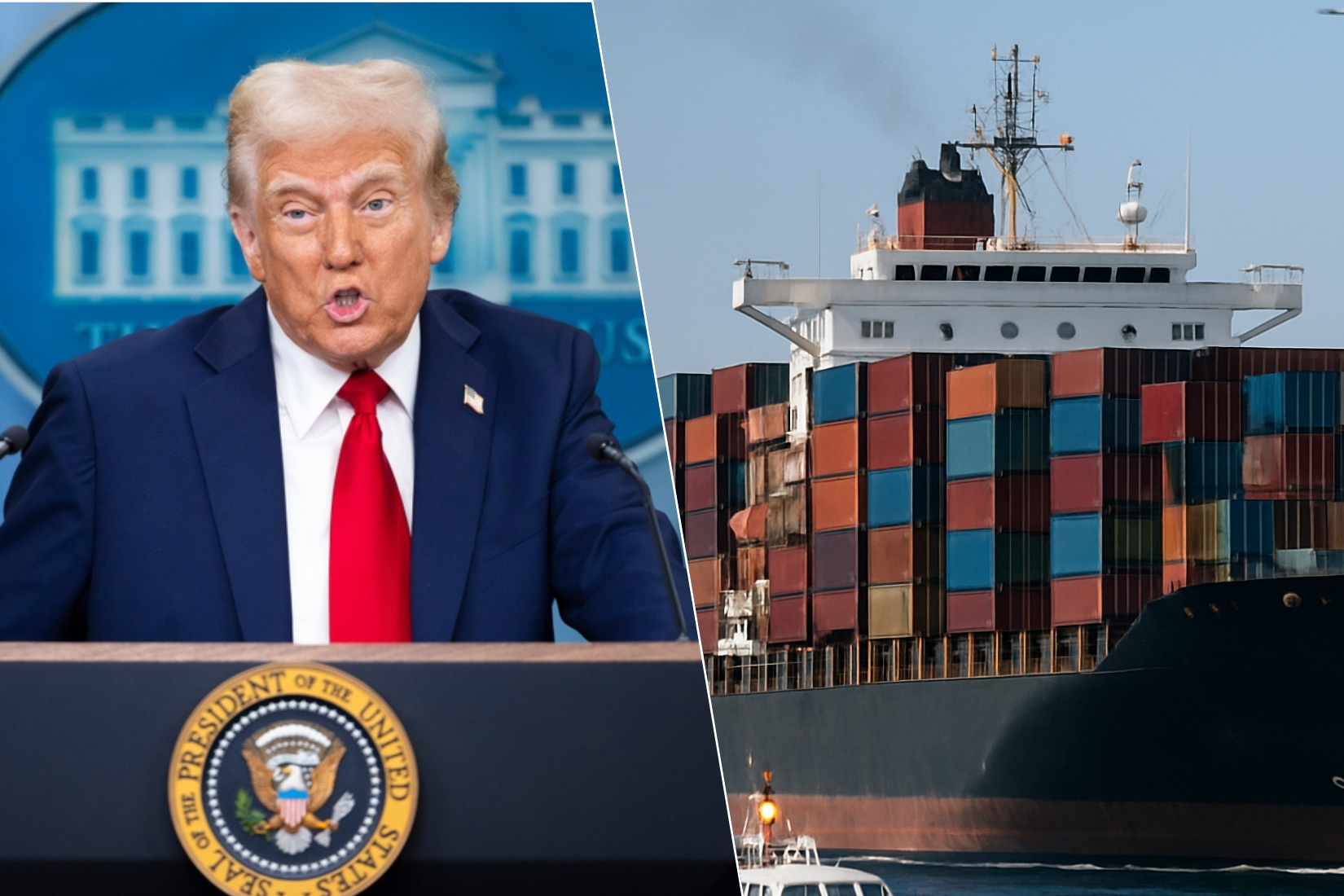
President Donald Trump has declared the Strait of Hormuz ‘functional’ again. Six months on from the start of the conflict, what will it take for suppliers to trust the shipping route again?

‘[Hormuz is a] very functioning Strait… despite the odd rocket or drone’. These are the fairly uninspiring words of US President Donald Trump, speaking on Wednesday in a peculiar rant declaring the shipping route “open” and operational.

Amongst other claims, such as that the conflict with Iran would be “ending fairly soon”, the American leader said on US talk show Glenn Beck Program that the waterway had been de-mined and emphasised that millions of barrels of oil were now passing through the area.

“The mines are gone, you probably saw that. We put it out yesterday. All the mines,” said Trump, referring to the US Navy’s announcement that it had detonated or removed all mines from the shipping route.

“We got rid of the mines, but the strait is functioning. It’s a functioning strait,” he said, before adding: “Yes, every once in a while there will be a drone or a rocket or something shot, but it’s a very functioning strait.”

For the supply chain and shipping industry, it is perhaps unsurprising that the president’s dismissive caveat about the occasional “drone or rocket” does little to inspire confidence that operations can safely resume.

However, the problem is not confined to just Trump’s language; his claims have already been challenged. Hours after this statement, US allies privately warned that the strait is still mined, according to Bloomberg, and could still contain a number of the originally estimated 80 to 150 mines laid by Iran.

The president’s words could not come at a more apt time. Tomorrow, (28 August) marks six months since the strait first faced major operational closure, after Iran declared the waterway closed following joint U.S. and Israeli military strikes.

Six months on, there has been little sign of a return to normality. There have been multiple ceasefire attempts, proposed agreements and repeated declarations that the waterway is open, only for attacks and disagreements over the terms of those arrangements to send shipping confidence backwards again.

Most recently, in June, the US and Iran agreed a memorandum to reopen the Strait and allow vessels to move freely for 60 days. But the agreement was undermined by disagreements over which route ships should use, with Iran backing one route and Oman and the US backing another. Attacks followed and the interim arrangement collapsed.

Trump has since made similar claims. On 12 July, he said the Strait was open to commercial traffic, even as the US and Iran continued to exchange attacks. On 18 August, he again said the Strait was “open and operating” and that all mines had been removed.

Despite the president’s words, it is clear the supply chain sector is not taking a chance with the shipping route: before the war, more than 130 vessels a day were crossing the Strait, according to Kpler data cited by Reuters. On Tuesday, just five commodity vessels made the crossing and on Wednesday, the number rose to 10, still well below the 10-day average of 15.

UK trade association Logistics UK chief executive Ben Fletcher says that while the industry has adapted, with insurance issues and ongoing risk to crews’ lives, it will take more that just a declaration from the US president before ships begin to return in meaningful numbers to the strait.

“Things were worse a few months ago, but it would be silly to say that they are in any way cured,” Fletcher says.

“No one is anticipating that we’re going to have a swift return to anything like normal.”

Six months on, how have suppliers adapted to the closed Strait?

For many businesses, the disruption began before Hormuz. The attacks by the Houthis on shipping in the Red Sea in October 2023 had already pushed some vessels away from the Suez Canal and towards the Cape of Good Hope.

However, the latest crisis has widened that diversion, with more vessels avoiding the Gulf altogether and for cargo travelling from the Far East and the Antipodes to the UK, that means longer journeys around Africa, adding thousands of miles and several days to voyages.

In some cases, Fletcher says, vessels have gone even further, travelling through the Panama Canal and across the Atlantic.
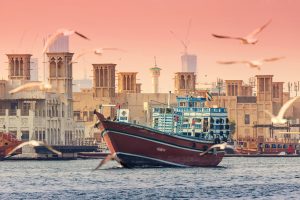
Dubai is planning a new port in Fujairah as the UAE looks to reduce its reliance on the Strait of Hormuz following continued attacks on shipping in the region.
Photo: Shutterstock. Last month, Dubai proposed building a new in Fujairah as the UAE looks to reduce its reliance on the Strait of Hormuz following continued attacks on shipping in the region.

Attempts to build alternative routes, such as Dubai’s DP World proposal to build a new multi-purpose port and container terminal in Fujairah to help the UAE bypass the Strait of Hormuz and talks of a Gulf countries racing to build new oil pipelines, have been dismissed as immediate solutions due to current geopolitical tensions in the countries involved, as well as limitations such as price and time.

And although some improvement has emerged – the shipping schedules that were thrown out of sequence, affecting when vessels arrived and departed, have now seen companies starting to rebuild the longer journeys into their planning – the additional cost still remains.

Fletcher says the same is true of the air, as Gulf airports have reopened since the worst of the conflict, but there are still fewer passenger flights through the region. The alternatives are not as cheap or straightforward as the original route.

“The industry is incredibly resilient and the industry is incredibly capable,” Fletcher says. “These are big challenges.”

He says the sector found ways to keep goods moving even when Gulf airports were closed and shipping routes were severely disrupted. “But those solutions don’t come for free,” he says, adding that fuel remains the biggest concern among his members.

Brent crude was trading at around $87 a barrel on Thursday, having fallen back from the much higher levels seen during the crisis ($150 in April), and with prices continuing to fall as markets watch diplomatic efforts to reopen Hormuz. But that is still well above the roughly $70 average recorded in 2025.

In August, one Indian refiner reportedly paid $23 million to $25 million to charter a supertanker carrying 2 million barrels of Iraqi crude. Before the conflict, a comparable voyage cost about $2 million.

For Fletcher, fuel is the more immediate concern for UK logistics. “The logistics industry, generally, particularly road haulage, operates at incredibly narrow margins,” he says. “You know, one or two per cent profit.”

At the height of the conflict, the cost of filling an HGV tank rose by more than £200, he says.

“And to put that in context, the average HGV at the peak of the conflict cost over £1,000 to fill a tank.”

Fuel prices have fallen since then, but Fletcher says they remain well above pre-crisis levels. That leaves hauliers particularly exposed if the conflict escalates again.

“If we had serious additional conflict, if we had further challenges, I think it is inevitable that it pushes the prices back up,” he says.

There is also a concern about the wider supply of fuel, although Fletcher is clear that this is not currently the main problem for the UK.

“So far, we haven’t had any supply problems in the UK, and no one anticipates any supply problems in the UK,” he says. “There is no evidence at this stage to suggest that there’s any great risk of that happening.”

“I think the much bigger issue is about price.”

What would make suppliers trust Hormuz again?

Fletcher says confidence in the shipping route cannot be restored overnight. While Trump can declare the Strait open, and ships can technically pass through it, this does not mean that insurers, shipowners and cargo owners are ready to return.

Fletcher says companies need more than a political statement. “I think you need to have the ability of both sides of this conflict to be able to jointly sign up to the same statement and certainty,” he says.

That would need to include a clear commitment that the Strait is open and that ships will not have to make payments simply to access international waters.

“There is often a requirement to pay a substantial security tariff,” Fletcher says. “There’s uncertainty about what will happen if that isn’t paid.”

He added that shipping companies are not prepared to take shortcuts when it comes to their employees.

“They are not prepared to risk the lives of their crew,” he says. “You’d probably need a decent amount of time where a small number of vessels were able to move safely.

“Confidence is one of those things that grows. You can’t just switch it back on and off. If we want to get supply chains back to where they were, you know, a few years ago, there needs to be a degree of confidence that covers the whole region.”

Photo: Shutterstock. At the peak of the conflict, the average HGV cost over £1,000 to fill a tank, says the CEO.

Amongst other measures to inspire confidence for the supply chain industry, Fletcher says the government should give businesses greater certainty over fuel costs. He says the sector welcomes the decision not to increase fuel duty in September, but says longer-term commitments would help businesses plan.

“If we had a real big spike in the price in the autumn, I think government should go further than that and think about how they might actually actively reduce fuel duty rather than just confirm they’re not going to put it up anymore.”

“It’s not about the government protecting the logistics industry; it’s about the government doing things that will help address the cost of living for everybody.”

Over the past six months, the logistics industry has shown that it can find another way; ships can sail around Africa; air freight can be rerouted; pipelines can take some of the pressure; and schedules can be rewritten.

However, there is a limit to how much disruption businesses can absorb. For Fletcher, that is why the industry’s resilience should not be mistaken for acceptance.

“We have seen solutions found,” he says. “There are other routes that can be taken.”

But, he adds, “those problems come at a big cost.”

Click here to sign up to Retail Gazette‘s free daily email newsletter

Feature ArticlesInsightSupply Chain

Leave a Reply

Your email address will not be published. Required fields are marked *

Fill out this field
Fill out this field
Please enter a valid email address.

Trump has declared the Strait of Hormuz ‘functional’. But what changes do suppliers need to trust the shipping route again?

President Donald Trump has declared the Strait of Hormuz ‘functional’ again. Six months on from the start of the conflict, what will it take for suppliers to trust the shipping route again?

‘[Hormuz is a] very functioning Strait… despite the odd rocket or drone’. These are the fairly uninspiring words of US President Donald Trump, speaking on Wednesday in a peculiar rant declaring the shipping route “open” and operational.

Amongst other claims, such as that the conflict with Iran would be “ending fairly soon”, the American leader said on US talk show Glenn Beck Program that the waterway had been de-mined and emphasised that millions of barrels of oil were now passing through the area.

“The mines are gone, you probably saw that. We put it out yesterday. All the mines,” said Trump, referring to the US Navy’s announcement that it had detonated or removed all mines from the shipping route.

“We got rid of the mines, but the strait is functioning. It’s a functioning strait,” he said, before adding: “Yes, every once in a while there will be a drone or a rocket or something shot, but it’s a very functioning strait.”

For the supply chain and shipping industry, it is perhaps unsurprising that the president’s dismissive caveat about the occasional “drone or rocket” does little to inspire confidence that operations can safely resume.

However, the problem is not confined to just Trump’s language; his claims have already been challenged. Hours after this statement, US allies privately warned that the strait is still mined, according to Bloomberg, and could still contain a number of the originally estimated 80 to 150 mines laid by Iran.

The president’s words could not come at a more apt time. Tomorrow, (28 August) marks six months since the strait first faced major operational closure, after Iran declared the waterway closed following joint U.S. and Israeli military strikes.

Six months on, there has been little sign of a return to normality. There have been multiple ceasefire attempts, proposed agreements and repeated declarations that the waterway is open, only for attacks and disagreements over the terms of those arrangements to send shipping confidence backwards again.

Most recently, in June, the US and Iran agreed a memorandum to reopen the Strait and allow vessels to move freely for 60 days. But the agreement was undermined by disagreements over which route ships should use, with Iran backing one route and Oman and the US backing another. Attacks followed and the interim arrangement collapsed.

Trump has since made similar claims. On 12 July, he said the Strait was open to commercial traffic, even as the US and Iran continued to exchange attacks. On 18 August, he again said the Strait was “open and operating” and that all mines had been removed.

Despite the president’s words, it is clear the supply chain sector is not taking a chance with the shipping route: before the war, more than 130 vessels a day were crossing the Strait, according to Kpler data cited by Reuters. On Tuesday, just five commodity vessels made the crossing and on Wednesday, the number rose to 10, still well below the 10-day average of 15.

UK trade association Logistics UK chief executive Ben Fletcher says that while the industry has adapted, with insurance issues and ongoing risk to crews’ lives, it will take more that just a declaration from the US president before ships begin to return in meaningful numbers to the strait.

“Things were worse a few months ago, but it would be silly to say that they are in any way cured,” Fletcher says.

“No one is anticipating that we’re going to have a swift return to anything like normal.”

Six months on, how have suppliers adapted to the closed Strait?

For many businesses, the disruption began before Hormuz. The attacks by the Houthis on shipping in the Red Sea in October 2023 had already pushed some vessels away from the Suez Canal and towards the Cape of Good Hope.

However, the latest crisis has widened that diversion, with more vessels avoiding the Gulf altogether and for cargo travelling from the Far East and the Antipodes to the UK, that means longer journeys around Africa, adding thousands of miles and several days to voyages.

In some cases, Fletcher says, vessels have gone even further, travelling through the Panama Canal and across the Atlantic.

Dubai is planning a new port in Fujairah as the UAE looks to reduce its reliance on the Strait of Hormuz following continued attacks on shipping in the region.
Photo: Shutterstock. Last month, Dubai proposed building a new in Fujairah as the UAE looks to reduce its reliance on the Strait of Hormuz following continued attacks on shipping in the region.

Attempts to build alternative routes, such as Dubai’s DP World proposal to build a new multi-purpose port and container terminal in Fujairah to help the UAE bypass the Strait of Hormuz and talks of a Gulf countries racing to build new oil pipelines, have been dismissed as immediate solutions due to current geopolitical tensions in the countries involved, as well as limitations such as price and time.

And although some improvement has emerged – the shipping schedules that were thrown out of sequence, affecting when vessels arrived and departed, have now seen companies starting to rebuild the longer journeys into their planning – the additional cost still remains.

Fletcher says the same is true of the air, as Gulf airports have reopened since the worst of the conflict, but there are still fewer passenger flights through the region. The alternatives are not as cheap or straightforward as the original route.

“The industry is incredibly resilient and the industry is incredibly capable,” Fletcher says. “These are big challenges.”

He says the sector found ways to keep goods moving even when Gulf airports were closed and shipping routes were severely disrupted. “But those solutions don’t come for free,” he says, adding that fuel remains the biggest concern among his members.

Brent crude was trading at around $87 a barrel on Thursday, having fallen back from the much higher levels seen during the crisis ($150 in April), and with prices continuing to fall as markets watch diplomatic efforts to reopen Hormuz. But that is still well above the roughly $70 average recorded in 2025.

In August, one Indian refiner reportedly paid $23 million to $25 million to charter a supertanker carrying 2 million barrels of Iraqi crude. Before the conflict, a comparable voyage cost about $2 million.

For Fletcher, fuel is the more immediate concern for UK logistics. “The logistics industry, generally, particularly road haulage, operates at incredibly narrow margins,” he says. “You know, one or two per cent profit.”

At the height of the conflict, the cost of filling an HGV tank rose by more than £200, he says.

“And to put that in context, the average HGV at the peak of the conflict cost over £1,000 to fill a tank.”

Fuel prices have fallen since then, but Fletcher says they remain well above pre-crisis levels. That leaves hauliers particularly exposed if the conflict escalates again.

“If we had serious additional conflict, if we had further challenges, I think it is inevitable that it pushes the prices back up,” he says.

There is also a concern about the wider supply of fuel, although Fletcher is clear that this is not currently the main problem for the UK.

“So far, we haven’t had any supply problems in the UK, and no one anticipates any supply problems in the UK,” he says. “There is no evidence at this stage to suggest that there’s any great risk of that happening.”

“I think the much bigger issue is about price.”

What would make suppliers trust Hormuz again?

Fletcher says confidence in the shipping route cannot be restored overnight. While Trump can declare the Strait open, and ships can technically pass through it, this does not mean that insurers, shipowners and cargo owners are ready to return.

Fletcher says companies need more than a political statement. “I think you need to have the ability of both sides of this conflict to be able to jointly sign up to the same statement and certainty,” he says.

That would need to include a clear commitment that the Strait is open and that ships will not have to make payments simply to access international waters.

“There is often a requirement to pay a substantial security tariff,” Fletcher says. “There’s uncertainty about what will happen if that isn’t paid.”

He added that shipping companies are not prepared to take shortcuts when it comes to their employees.

“They are not prepared to risk the lives of their crew,” he says. “You’d probably need a decent amount of time where a small number of vessels were able to move safely.

“Confidence is one of those things that grows. You can’t just switch it back on and off. If we want to get supply chains back to where they were, you know, a few years ago, there needs to be a degree of confidence that covers the whole region.”

Photo: Shutterstock. At the peak of the conflict, the average HGV cost over £1,000 to fill a tank, says the CEO.

Amongst other measures to inspire confidence for the supply chain industry, Fletcher says the government should give businesses greater certainty over fuel costs. He says the sector welcomes the decision not to increase fuel duty in September, but says longer-term commitments would help businesses plan.

“If we had a real big spike in the price in the autumn, I think government should go further than that and think about how they might actually actively reduce fuel duty rather than just confirm they’re not going to put it up anymore.”

“It’s not about the government protecting the logistics industry; it’s about the government doing things that will help address the cost of living for everybody.”

Over the past six months, the logistics industry has shown that it can find another way; ships can sail around Africa; air freight can be rerouted; pipelines can take some of the pressure; and schedules can be rewritten.

However, there is a limit to how much disruption businesses can absorb. For Fletcher, that is why the industry’s resilience should not be mistaken for acceptance.

“We have seen solutions found,” he says. “There are other routes that can be taken.”

But, he adds, “those problems come at a big cost.”

Click here to sign up to Retail Gazette‘s free daily email newsletter

Social


SUBSCRIBE TO OUR DAILY NEWSLETTER

  • This field is for validation purposes and should be left unchanged.
Feature ArticlesInsightSupply Chain

Leave a Reply

Your email address will not be published. Required fields are marked *

Fill out this field
Fill out this field
Please enter a valid email address.

RELATED STORIES

Latest Feature


Menu

Get Inside Matalan

A supply chain case study delivered to your inbox in three emails. The 3 elements Matalan changed to impact its bottom line..

Matalan Supply Chain Programme Form

  • This field is for validation purposes and should be left unchanged.


Close popup

Please enter the verification code sent to your email: