

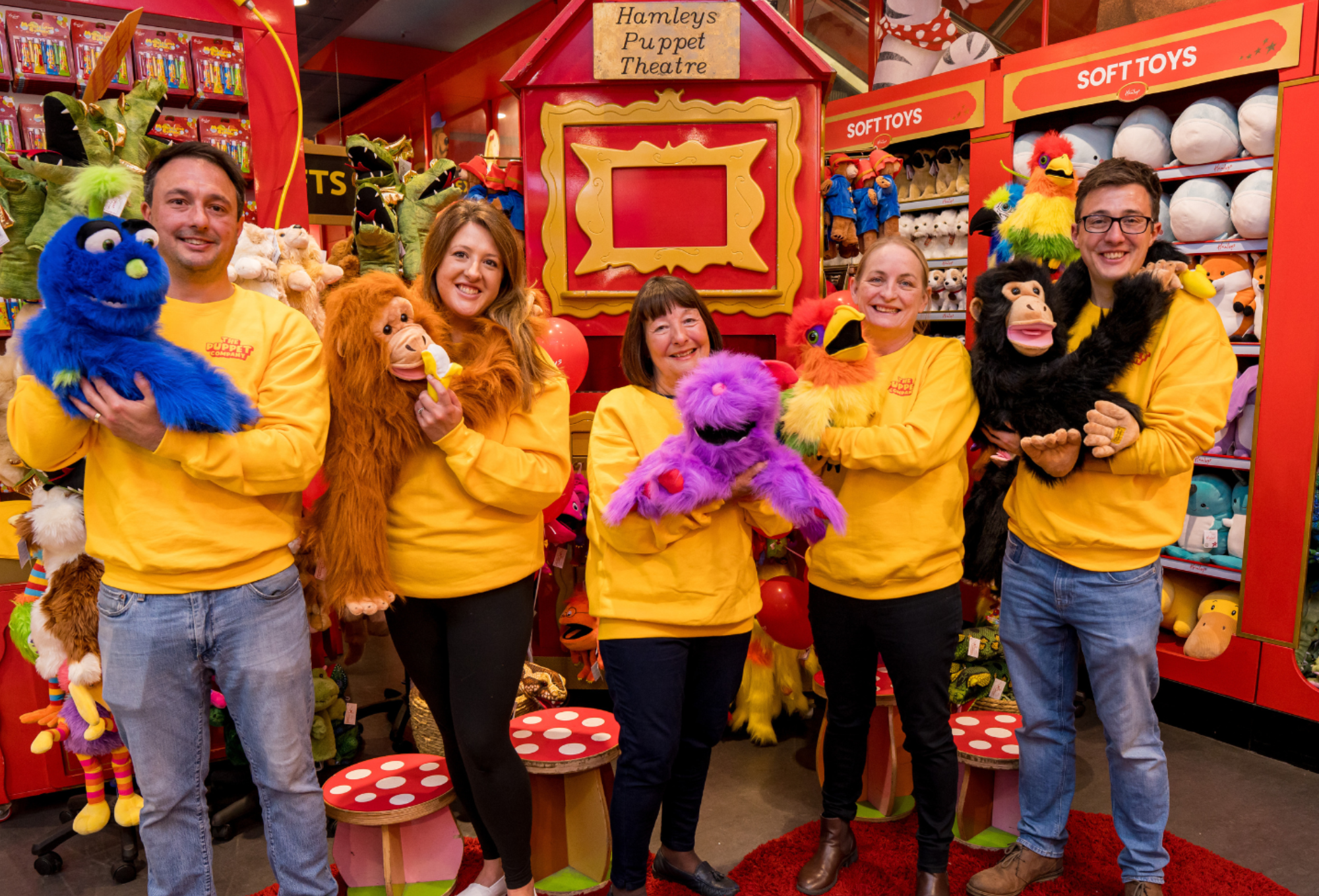
For Sue Lockey, co-founder of the Puppet Company, the nomination for Women in Leadership at this year’s RG Retail Excellence Awards came with a “sense of pride”, but also as something of a surprise as she had never really thought about praise and accolades before.
The business has, as she puts it, “carried on and done its own thing” for years.
Foundations
However, for Lockey’s daughter, Katy, who nominated her for the award, it was a no-brainer. After all, the company, which turned 25 this year and now has a global reach, was started from Sue and her husband Peter’s kitchen table. It was almost seen as a hobby at the time.
Prior to starting up The Puppet Company, Lockey hadn’t had any experience in retail beyond a Saturday job at M&S.
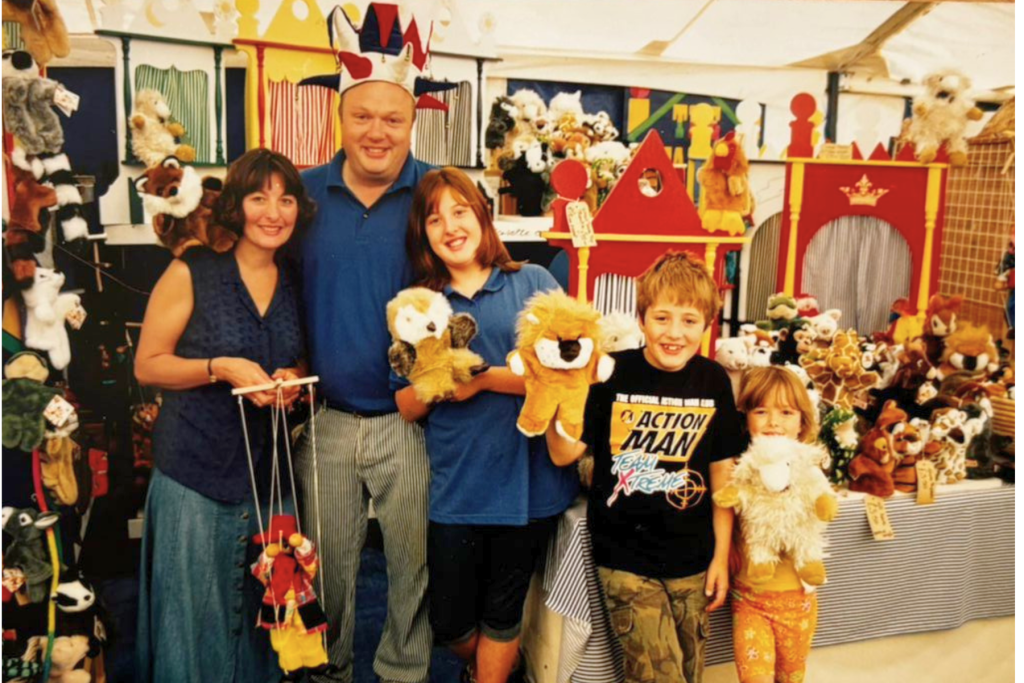
She says: “My late husband was very arty and creative, and was so good at so many things, especially woodwork. He made a puppet theatre for Katy when she was about three years old. That is where it all started.”
The role of the theatre quickly grew as the family threw children’s parties and put on puppet shows using the theatre; Lockey came up with stories and themes.
Soon parents started asking the couple if they could have a puppet theatre, and Sue and Peter realised there could be interest in a puppet business – especially given the positive effect the puppet shows had on children.
She explains: “It’s a bit of a cliché but we talk about the ‘power of puppets’. The children might not always listen to the adult, the teacher, the carer, parent, whoever. But if a puppet asks them to do something, then invariably they will do it. You can get so many messages across using them.
“And with my early years teaching background, that insight was really at the forefront of our thinking. Sadly, back in those days, there wasn’t as much puppetry available. It was one of those things that had not exactly died a death, but had gone a bit out of fashion, and other toys and crazes were replacing it.”
Another important part of the inspiration the company had in moving forwards was to do with the children’s emotional response – in particular feedback from schools regarding puppet play and how it allowed children to open up and share their feelings.
A bit of luck
However, Lockey adds, there was also a bit of luck behind the business’s success. It was just starting out as the early year’s curriculum was introduced and teachers saw that puppets could help deliver what they were trying to get across.
But they needed help, so, even as they were getting the business going, Sue and Peter also took time out over a few years, travelling the country training teachers – and others keen to learn – in how to use puppets successfully in educational and other relevant settings.
Her late husband Peter was also an important factor. As the creative force behind the firm he had a vision for The Puppet Company – and, importantly, they both had a shared drive to make something of the idea.
She says: “We had latched onto something that perhaps hadn’t been done for a very long time – or was being done in perhaps a different way with an early years focus.”
There were other revelations too. She explains: “I was teaching in a secondary school and worked with some children that were really struggling with their reading. They’d never seen a puppet, never played with them, and their response was just remarkable.”
And that’s not all she has learned about the power of puppets. She continues: “Today we get people of all ages purchasing them. I think we probably sell as many to adults as we do to children. We’ve realised that for older people puppets can very much have a part to play, especially in old people’s care homes as having something soft to stroke can often be therapeutic. Which makes it doubly worthwhile.”
It wasn’t easy for the Lockey’s at the start as they took a lot of risks – they even had to re-mortgage their house – but she explains that they knew they just had to have faith and believe in what they were doing. And sure enough, they were soon designing their own ranges. And that’s when The Puppet Company really began to expand.
She shares: “We had professional advice of course. But I also have a fantastic team here, and my family is just brilliant. Three of our four children are with us, and they all have their set role, and we work together as a team.”
“We’ve certainly had challenges, but as Peter always used to say: ‘If it was easy, everybody would be doing it.’ We bear that in mind as we go along. This is just part of life; you’ve just got to accept the rough with the smooth. And luckily, the smooth comes out much stronger and more frequently than the rough does.”
In other words, she says, one of the main things – aside from finances – that people need to succeed in business is a “belief in what you are doing”.
Lockey explains: “If you are convinced enough, you’ve got a good idea, and you’ve done a bit of market research, and you know what your competition is and where you’re going to get all your resources from, you’ve got a chain in place.
“Then, if you come across well to customers, if you are passionate about it and you believe in it without being too pushy, it should work, whatever that idea is.”
Something that is very important to the firm is open progression no matter someone’s background. If they have drive and talent to succeed, Lockey believes that’s all someone needs to progress.
The company often promotes those who started in junior roles with them up the ladder, which is something that Lockey believes companies should be doing more of. Indeed, although Katy Rugman, Lockey’s eldest daughter and her brothers all work for the firm, like other employees they have worked their way up from the bottom.
Lockey says senior leadership just has to keep listening and keep the doors open to senior management. She adds that they should “encourage ideas and creativity”, especially when it comes to getting more women in positions of leadership.
“If there are people that are hungry, value and support them,” she says.
And, indeed support is an important part of the company’s philosophy. Lockey knows from being a mum of four herself and bringing them up while trying to work that it is not always easy, so the firm remains adaptable, especially when it comes to the vital early years of a child’s life.
Staff have flexible working hours to enable them to support their childcare needs – and to be with their children during milestones such as a Christmas nativity play – even during peak trading periods.
Silver jubilee
This year sees The Puppet Company celebrating its 25th anniversary. Lockey says: “Katy has been really good at pushing the celebration and putting the news out there, but I’ve been looking through all our photos and the early designs, and I still can’t believe it’s 25 years. It’s just unbelievable.
“I think it’s an incredible achievement in this day and age with so many restraints and so many barriers, especially for small companies – and especially small family businesses.
“The challenges are harder than ever, but we have come through. I often say it is one step forwards and two steps backwards. But I’ve mainly felt just surprise and pride in immense quantities. We have a brilliant staff here. Everybody works together.”
And beyond her brilliant staff, Lockey is also proud of the company’s growing number of licensing agreements. It has partnerships with Paddington, Elmer and Numberblocks alongside the Natural History Museum and the RSPB – with more on the way.
She says: “We’re not this little company any longer. People recognise us and know that we always provide good quality, good service, and good products at nice prices.”
Lockey is also proud of the company’s ongoing partnership with Hamley’s and the fact that The Puppet Company is now more recognised overseas, especially in much of Europe and in the US. It now has over 30 distributors worldwide and is in over 40 countries globally.
However, the moment still feels a little “bittersweet” to Lockey as the past five years have been incredibly challenging for the company, both as a business and a family, since losing Peter to a brain tumour in 2021.
But they made it – so they wanted to make a big thing of their 25th birthday and celebrate that legacy.
Katy Rugman says: “And with coming out of lockdown and all of those challenges, it’s been a real ‘wow – we’re still here and we’re still standing’ kind of moment. This is like the start of a new chapter for us”.
Hope
Over the years the company has worked with multiple charity partnerships. Its closest link, however, is with The Brain Tumour Charity.
Lockey says: “We have a range called the Sockettes, which are knitted puppets with lots of different colour stripes and funny faces. They’re quite comical, and they are really, really popular so we decided to make one in collaboration with The Brain Tumour Charity.
“We created one which we’ve called Hope, reflecting the hope that one day there will be a cure, especially for children with brain tumours. For every Hope we sell, we donate a pound to The Brain Tumour Charity in Peter’s memory.”
Beyond its partnership with The Brain Tumour Charity, The Puppet Company also donates boxes of puppets to various organisations, not just in the UK, but also in the US, South America, Africa and elsewhere.
As well as The Brain Tumour Charity the company has supported a wide range of other charities including Barnardos and Save the Children, in addition to hospitals, hospices and charities.
It also partners with schools in the Gambia – including in-house charity partner Project Gambia.
Lockey is a close friend of a retired headteacher named Neil Griffiths, who set up Project Gambia, which helps give young children a preschool education.
Through her friendship with Griffiths, she started supplying the project with puppets to take out to the Gambia as its preschool education supplies were mainly limited to a board and some chalk.
Lockey has also visited the country to provide training, working with schools to ensure they have all the resources they need, in addition to visiting with son Joe, who helps with the school infrastructure and youngest daughter Hannah, who helps with the teaching. The company funds the salaries, school meals, uniforms and staff training for one of the four schools involved.
On helping charities and children she says: “It is really rewarding. We’ve had emails requesting something for a child – sometimes a child with additional needs – that needs something. We always send a puppet or soft toy out, and we get wonderful emails back from parents saying, “Oh my goodness, my child’s never talked before. They’ve never spoken. They’ve got multiple additional needs. They can’t always hold something, but they relate to it by stroking it.”
One letter Lockey highlighted as being particularly moving was from a parent that read: “You will never know the joy this has brought to my family.”
She says: “That’s what keeps us going. It is just wonderful to do something that not only you enjoy doing and you’re passionate about but that also brings so much joy and reward to others.”
Lockey joins leaders from NIFT, Noli, Unhidden, Lush, Wayfair and many more in the Women in Leadership category. This year’s RG Excellence Awards will be hosted at the Underglobe on 14 October 2026, see the full shortlist here.
Click here to sign up to Retail Gazette‘s free daily email newsletter