Something borrowed: HURR, Oxfam and By Rotation on fashion rental this party season

Rental
Big InterviewEcommerceFashionFeature Articles

Partywear rental is moving into the retail mainstream. As Christmas demand builds, HURR, By Rotation and Oxfam explain how access, convenience and circularity could reshape festive shopping — and what retailers and brands need to get right.

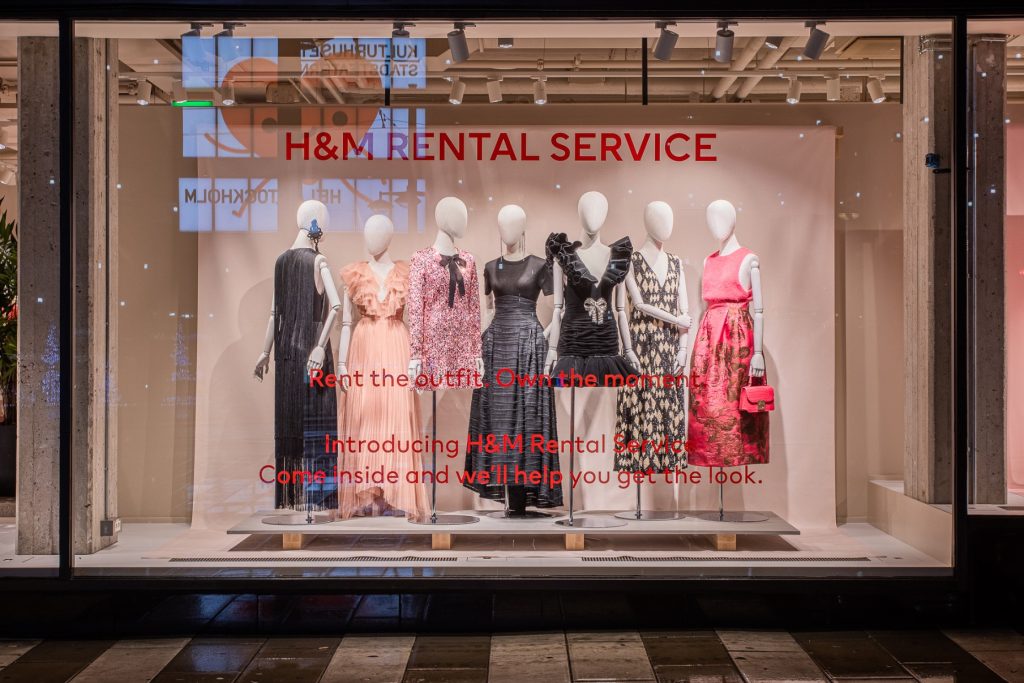
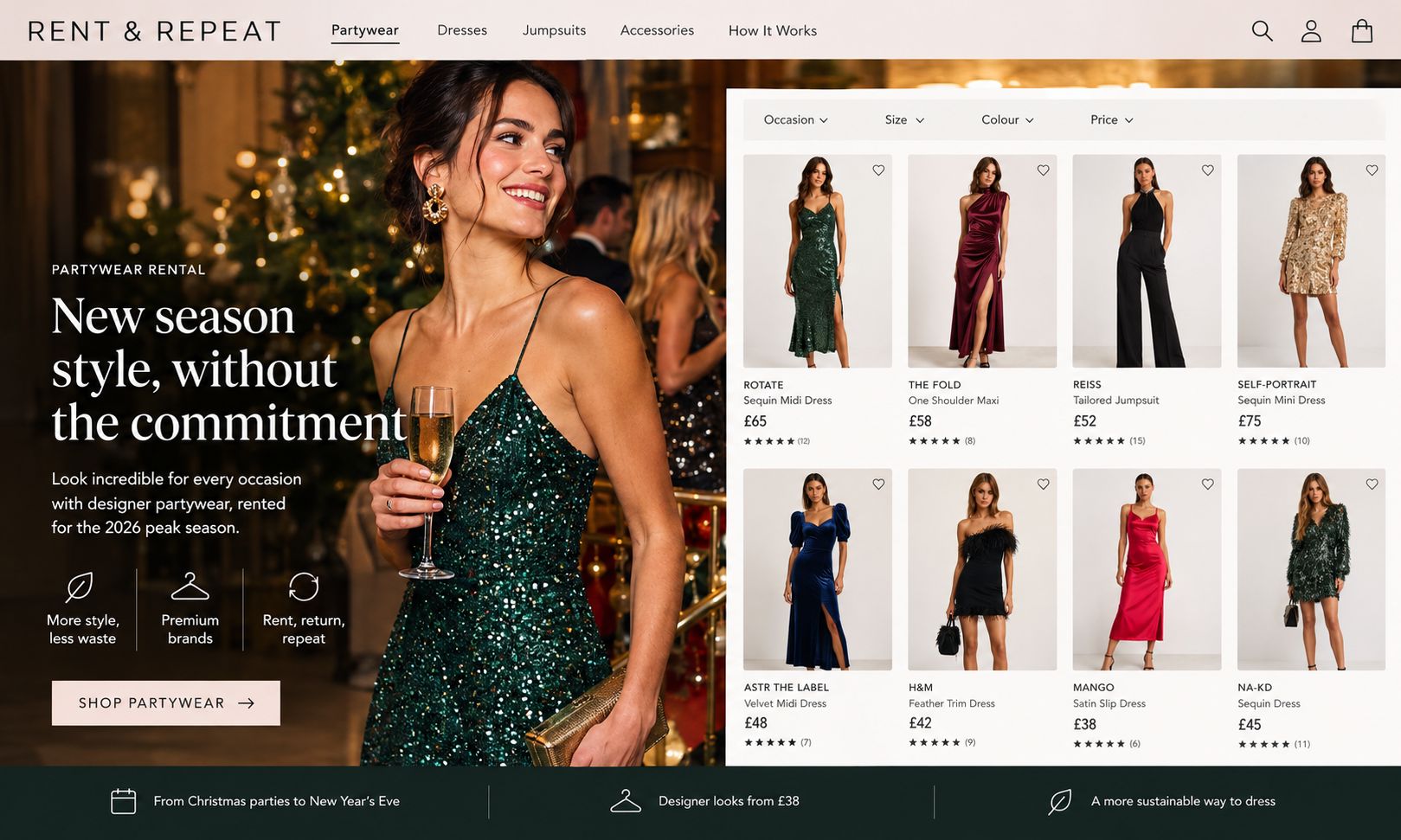
Christmas party season has long encouraged shoppers to buy something new for a single night. This peak, rental platforms and fashion retailers are positioning themselves as a practical alternative. They are providing shoppers with a way to access standout fashion without committing to ownership, while keeping garments in circulation for longer.

The proposition is gaining ground beyond specialist rental sites. HURR operates rental partnerships for department stores including John Lewis and Selfridges, luxury brands such as Mulberry, and on-demand delivery platform Deliveroo. For retailers and brands festive rental is more than a sustainability story. It is also a route to new customers, fresh product discovery and additional value from existing stock.

Elevating everyday outfits

Lauren Roberts, CEO of HURR, says the category is broadening as rental becomes part of shoppers’ regular wardrobe habits: “As fashion rental becomes an increasingly mainstream part of how consumers shop, we’re seeing its appeal extend well beyond traditional occasionwear into what we call the ‘elevated everyday’.”

That shift could strengthen the Christmas proposition, rather than treating a party dress as a one-off transaction, customers are seeking more use and flexibility.

“There’s also growing appetite for longer rental periods, with customers wanting the flexibility to wear and re-style pieces multiple times, rather than renting something for a single event,” adds Roberts.

The bigger opportunity may be the relationship between rental and resale. “In many ways, they’re two sides of the same coin,” Roberts says, with rental giving customers “a low-commitment way to experiment with new designers, styles and trends before deciding whether to invest in a piece”.

A festive rental can therefore become a discovery channel and, if the customer falls in love with the product, a route into purchase.

Roberts believes the winning model will connect rather than separate circular and traditional commerce: “Ultimately, we see the future of fashion as one where rental, resale and traditional retail work together, giving consumers greater choice and flexibility in how they engage with their wardrobes.”

The commercial prize is the chance “to reach new audiences, deepen customer relationships and unlock additional value” from products. The challenge is execution, making circular shopping as seamless and intuitive as buying new, while building models that can scale.


Convenience turns inspiration into a last-minute transaction

By Rotation founder and chief executive Eshita Kabra-Davies also sees rental becoming embedded in how people dress. The peer-to-peer marketplace has more than one million users, she says: “Rental is no longer just a peak-season activity, our community is active throughout the year.”

Some lenders are turning wardrobe sharing into a full-time business, she adds, earning more than £5,000 a month.

Kabra-Davies adds that consumers can “access to a curated world of designer fashion, from the latest sought-after pieces to archive finds and styles that are no longer available to purchase”.

“It gives people the freedom to experiment with their style, discover something unique and dress for every occasion without the commitment of ownership,” she shares.

At peak, speed may be as important as range. By Rotation’s partnership with Uber Courier offers door-to-door delivery in under 60 minutes in London, alongside delivery across the UK.

“Convenience is accelerating this shift. Whether it’s a wedding, a last-minute invitation or the search for a special piece that can no longer be found on the high street, rental offers an immediate and flexible way to access fashion,” she notes.

A compelling edit will not be enough on its own: platforms must remove friction around availability and fulfilment while giving shoppers confidence that a special piece can arrive when it is needed. As Kabra-Davies puts it, peer-to-peer wardrobes can become “shared resources” where pieces are “discovered, worn and loved again”.

Oxfam tests purpose-led rental at Christmas

Additionally, Oxfam sees festive trading as a test for whether a charity-backed service can add purpose to the rental proposition.

“Oxfam Rental is still in its pilot phase, but we’ve been encouraged by the early interest we’ve seen,” says Julie Tyrrell, head of ecommerce and retail sustainability.

Its opportunity is to give more people access to Oxfam’s unique fashion “all while keeping those garments in use for longer.”

Oxfam’s State of Style report found that 40 per cent of people still buy new outfits to wear just once for a special occasion.

Tyrrell explains: “Rental offers a different way to approach those occasions, giving people the chance to wear something special without buying a whole new outfit that may only be worn once.”

Its dedicated Christmas party collection will provide an early read on demand. “Christmas is a key moment for us to test that proposition,” Tyrrell says.

The season of giving also creates a chance to assess whether supporting Oxfam’s work fighting inequality and poverty “resonates with customers”.

Rental has the ingredients to capture peak-season demand — distinctive product, lower commitment, circular credentials and, increasingly, rapid delivery. But the businesses that convert festive curiosity into lasting behaviour will be those that make access feel every bit as dependable as ownership. If retailers, brands and platforms can combine convenience with discovery and purpose, the borrowed party look may prove to be more than a seasonal novelty.

Click here to sign up to Retail Gazette‘s free daily email newsletter

Big InterviewEcommerceFashionFeature Articles

Leave a Reply

Your email address will not be published. Required fields are marked *

Fill out this field
Fill out this field
Please enter a valid email address.

Something borrowed: HURR, Oxfam and By Rotation on fashion rental this party season

Rental

Partywear rental is moving into the retail mainstream. As Christmas demand builds, HURR, By Rotation and Oxfam explain how access, convenience and circularity could reshape festive shopping — and what retailers and brands need to get right.

Christmas party season has long encouraged shoppers to buy something new for a single night. This peak, rental platforms and fashion retailers are positioning themselves as a practical alternative. They are providing shoppers with a way to access standout fashion without committing to ownership, while keeping garments in circulation for longer.

The proposition is gaining ground beyond specialist rental sites. HURR operates rental partnerships for department stores including John Lewis and Selfridges, luxury brands such as Mulberry, and on-demand delivery platform Deliveroo. For retailers and brands festive rental is more than a sustainability story. It is also a route to new customers, fresh product discovery and additional value from existing stock.

Elevating everyday outfits

Lauren Roberts, CEO of HURR, says the category is broadening as rental becomes part of shoppers’ regular wardrobe habits: “As fashion rental becomes an increasingly mainstream part of how consumers shop, we’re seeing its appeal extend well beyond traditional occasionwear into what we call the ‘elevated everyday’.”

That shift could strengthen the Christmas proposition, rather than treating a party dress as a one-off transaction, customers are seeking more use and flexibility.

“There’s also growing appetite for longer rental periods, with customers wanting the flexibility to wear and re-style pieces multiple times, rather than renting something for a single event,” adds Roberts.

The bigger opportunity may be the relationship between rental and resale. “In many ways, they’re two sides of the same coin,” Roberts says, with rental giving customers “a low-commitment way to experiment with new designers, styles and trends before deciding whether to invest in a piece”.

A festive rental can therefore become a discovery channel and, if the customer falls in love with the product, a route into purchase.

Roberts believes the winning model will connect rather than separate circular and traditional commerce: “Ultimately, we see the future of fashion as one where rental, resale and traditional retail work together, giving consumers greater choice and flexibility in how they engage with their wardrobes.”

The commercial prize is the chance “to reach new audiences, deepen customer relationships and unlock additional value” from products. The challenge is execution, making circular shopping as seamless and intuitive as buying new, while building models that can scale.


Convenience turns inspiration into a last-minute transaction

By Rotation founder and chief executive Eshita Kabra-Davies also sees rental becoming embedded in how people dress. The peer-to-peer marketplace has more than one million users, she says: “Rental is no longer just a peak-season activity, our community is active throughout the year.”

Some lenders are turning wardrobe sharing into a full-time business, she adds, earning more than £5,000 a month.

Kabra-Davies adds that consumers can “access to a curated world of designer fashion, from the latest sought-after pieces to archive finds and styles that are no longer available to purchase”.

“It gives people the freedom to experiment with their style, discover something unique and dress for every occasion without the commitment of ownership,” she shares.

At peak, speed may be as important as range. By Rotation’s partnership with Uber Courier offers door-to-door delivery in under 60 minutes in London, alongside delivery across the UK.

“Convenience is accelerating this shift. Whether it’s a wedding, a last-minute invitation or the search for a special piece that can no longer be found on the high street, rental offers an immediate and flexible way to access fashion,” she notes.

A compelling edit will not be enough on its own: platforms must remove friction around availability and fulfilment while giving shoppers confidence that a special piece can arrive when it is needed. As Kabra-Davies puts it, peer-to-peer wardrobes can become “shared resources” where pieces are “discovered, worn and loved again”.

Oxfam tests purpose-led rental at Christmas

Additionally, Oxfam sees festive trading as a test for whether a charity-backed service can add purpose to the rental proposition.

“Oxfam Rental is still in its pilot phase, but we’ve been encouraged by the early interest we’ve seen,” says Julie Tyrrell, head of ecommerce and retail sustainability.

Its opportunity is to give more people access to Oxfam’s unique fashion “all while keeping those garments in use for longer.”

Oxfam’s State of Style report found that 40 per cent of people still buy new outfits to wear just once for a special occasion.

Tyrrell explains: “Rental offers a different way to approach those occasions, giving people the chance to wear something special without buying a whole new outfit that may only be worn once.”

Its dedicated Christmas party collection will provide an early read on demand. “Christmas is a key moment for us to test that proposition,” Tyrrell says.

The season of giving also creates a chance to assess whether supporting Oxfam’s work fighting inequality and poverty “resonates with customers”.

Rental has the ingredients to capture peak-season demand — distinctive product, lower commitment, circular credentials and, increasingly, rapid delivery. But the businesses that convert festive curiosity into lasting behaviour will be those that make access feel every bit as dependable as ownership. If retailers, brands and platforms can combine convenience with discovery and purpose, the borrowed party look may prove to be more than a seasonal novelty.

Click here to sign up to Retail Gazette‘s free daily email newsletter

Social


SUBSCRIBE TO OUR DAILY NEWSLETTER

  • This field is for validation purposes and should be left unchanged.
Big InterviewEcommerceFashionFeature Articles

Leave a Reply

Your email address will not be published. Required fields are marked *

Fill out this field
Fill out this field
Please enter a valid email address.

RELATED STORIES

Latest Feature


Menu


Please enter the verification code sent to your email: