
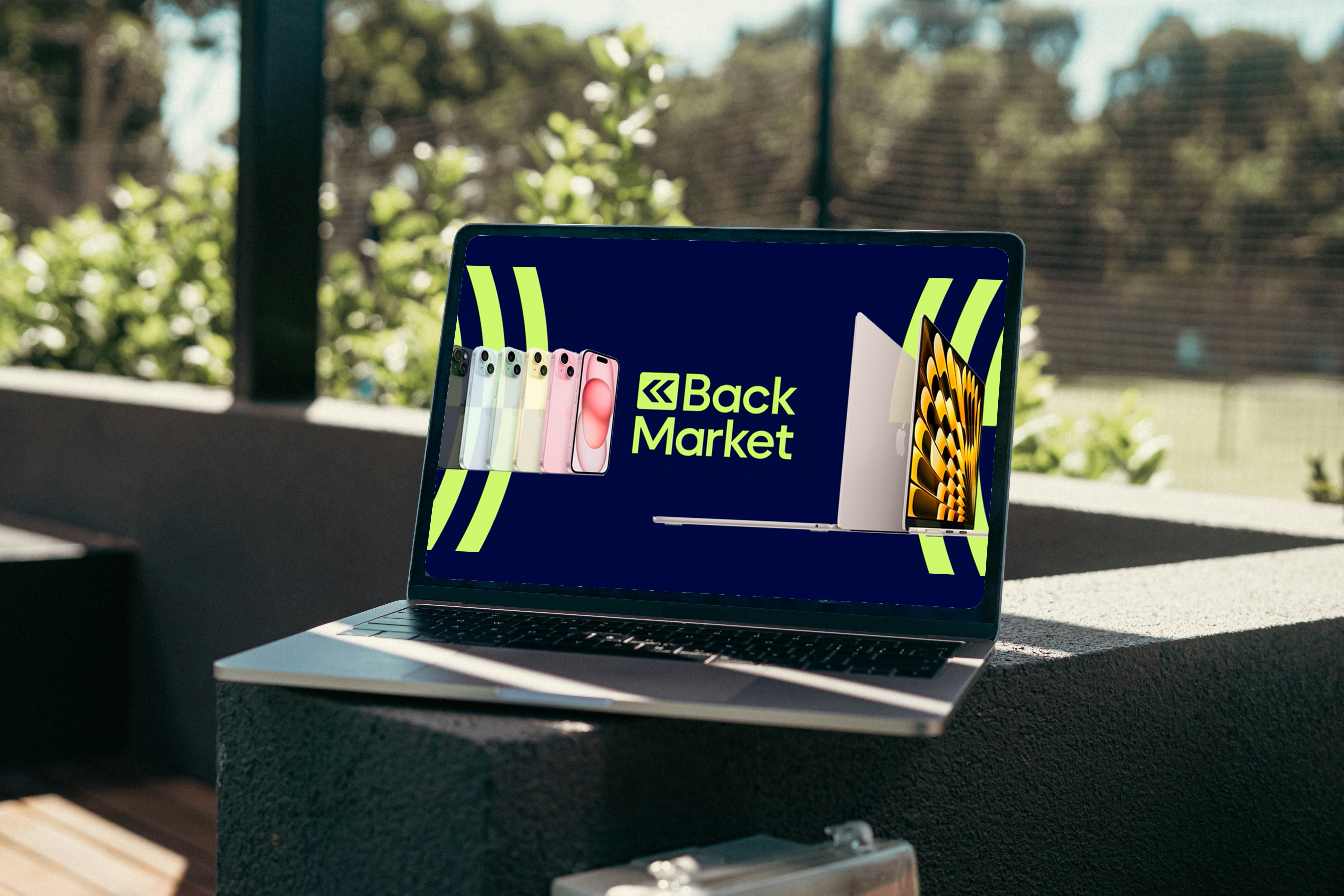
Back Market: ‘The biggest challenge is convincing people that refurbished is not second-hand’

For Back Market, the biggest obstacle to selling refurbished technology has never simply been price, but trust.
5 minutes with...Big InterviewInsightSupply ChainTechnology

For Back Market, the biggest obstacle to selling refurbished technology has never simply been price, but trust.

The French marketplace, founded in 2014, has built a business around persuading consumers that a device which has already had an owner can be every bit as desirable as one fresh from a factory.

Now, as the price of new technology rises due to AI-related shortages and consumers become more aware of e-waste, the company believes it has a chance to move refurbished electronics from the margins of retail into the mainstream.

It is already a well established sustainable move to buy a recycled device. A refurbished purchase could extending a device’s life from 2.5 to 10 years can slash carbon emissions by up to 68 per cent, a huge benefit to a digital industry which already accounts for 4 per cent of global greenhouse gas emissions and is predicted to represent 14 per cent of total global emissions by 2040.

Its latest attempt to tackle consumer scepticism comes in the form of an unusually high-stakes advertising campaign. In a film created by creative agency Mother, founder and chief executive Thibaud Hug de Larauze effectively puts his real-life mother’s life, and her worldly possessions, on the line to vouch for the quality of Back Market’s products.

The campaign, launched this month, is built around the company’s “Back Market Promise”, which aims to reassure customers that refurbished does not mean inferior. The company says its devices are professionally checked, with a 30-day return policy and a 12-month warranty.

For Back Market’s UK general manager Katy Medlock, the deliberately dramatic campaign addresses a problem that has held the refurbished industry back for years.

“Britain, as a consumer nation, is super comfortable with buying second-hand,” she says, referring to clothes, cars and home-furniture. ” But electronics traditionally was a space which was slower.”

The reason, she argues, is simple. A second-hand jumper is one thing. A second-hand smartphone, containing someone’s personal data and potentially worth hundreds of pounds, is another.

She says Back Market’s answer is to draw a sharp line between the two. “People don’t always know the difference between second-hand and refurbished,” Medlock says. “The difference is huge.”

A phone bought directly from another consumer is a transaction between two individuals, but a refurbished device sold through Back Market, she says, has been professionally inspected, data-wiped and tested, with the customer offered guarantees and the ability to return the product. The same reassurance you get from a brand new device, bought straight from the retailer.

That distinction is at the heart of the company’s new campaign. The message is not simply that refurbished technology is cheaper, but that that customers should feel they are buying a product with all the same protections and confidence associated with buying new.

The move from niche market to mainstream

The strategy appears to be working. Back Market’s latest financial update said the company generated more than $3.5bn in global gross merchandise value in 2025, a 32 per cent increase on the previous year. Its results also pointed to growth beyond smartphones, with laptops, tablets, gaming consoles and audio products becoming a larger part of the business.

In the UK, the company’s Downgrade Now research found that purchases of refurbished technology grew by 37 per cent in 2025. Forty per cent of English buyers were buying refurbished for the first time, while 85 per cent of unit sales took place outside London.

Medlock says that represents a fundamental shift in the company’s customer base. “When I started, it was a small, niche audience,” she says. “People who were either very cost-savvy or very environmentally sustainability-minded.”

That is no longer the case. BackMarket’s new customers are families are buying devices for children who need technology at school; early adopters are returning to buy refurbished products as gifts for their parents; and businesses are purchasing iPads and laptops for employees, motivated by both cost and environmental targets.

The result, Medlock says, is that customers are no longer asking whether they can afford to buy new.

“They’re asking, ‘Can I get a better device for the money I would have spent buying new?'” she says.

Photo: Shutterstock. Data from fellow electronics retailer Currys found some 880 million unused electronic devices lie in homes across the country

In particular, Londoners are spending more (around £311) on refurbished devices, trading-up, purchasing more on higher-quality refurbished devices, with the trade-in rate in 2025 hitting 25 per cent in London compared to 22 per cent in the UK.

The shift is particularly visible among younger consumers, who Back Market believes have helped make refurbished technology more socially acceptable.

“We’ve made it cool,” Medlock says. “We’ve turned up and said to the Gen Z generation: this is something you should be proud of. It’s a bragging right rather than it being a cost choice that you’ve made.”

The company has also benefited from the widening gap between new and refurbished prices. Following Apple’s latest price increases, born from the shortage of memory chips following the boom of AI data-centres, Back Market reported a 43 per cent week-on-week rise in global MacBook GMV and a 32 per cent rise for iPads in the seven days after the changes. The company says the figures suggest consumers are beginning to reassess whether buying new is worth the premium.

Medlock does not believe this means refurbished technology is destined to replace new products, but she does think the distinction between the two markets is becoming less important to consumers.

“People just want more tech for their money,” she says. The rise in popularity for refurbished tech has seen retailers bolster their own circularity and refurbished devices schemes, which is also creating an unusual dynamic for Back Market.

Apple, Samsung and other manufacturers have expanded their own refurbished offerings, potentially creating competition but also helping to educate consumers about the category. Currys, which began selling refurbished tech in 2023, recently relaunched its ‘Track the Tech’ scheme, reporting consumers recycled or traded-in 5.5 million devices over the last year.

“All people selling refurbished devices are competition,” Medlock says. “But where we’re actually really grateful for the big players stepping up is it’s all category education.”

The supply problem

There is, however, a fundamental limit to the refurbished business model. A new technology manufacturer can build another factory and make more products, however a refurbished marketplace needs someone to have bought those products first.

As demand grows, Back Market is therefore reliant on consumers to keep trading in their old devices. Medlock acknowledges that this could eventually become a constraint: if fewer people buy new devices, there will be fewer products entering the refurbished supply chain.

“At one point there will become a new device shortage,” she says. “We may find that the price of refurbished goes up because of that scarcity.”

However, for now, she believes there is plenty of untapped supply. Back Market has previously estimated that the average British household has thousands of pounds’ worth of unused technology sitting in drawers and cupboards, and recent data from fellow electronics retailer Currys found some 880 million unused electronic devices lie in homes across the country.

The great challenge facing the tech sector is getting those devices back into circulation. “Even just what we have within our own homes and with our own businesses in the UK is more than enough,” Medlock says. “What we really need people to be doing is trading those devices in.”

Smartphones remain the largest part of Back Market’s UK business, followed by products including iPads, MacBooks and laptops. But the company’s ambitions extend beyond simply selling another generation of used iPhones.

It is increasingly involved in the debate around government regulation, such as the right to repair, working with organisations including the Restart Project to push for longer software support, greater access to spare parts and the development of repair skills.

Photo. Shutterstock. The boom in popularity for AI has led to a shortage of memory chips – driving up the price of new devices and creating opportunity for refurbished tech retailers.

For Medlock, that is essential if the refurbished market is to keep expanding, with “Green skills” needed to ensure there are enough people capable of repairing the technology that consumers want to keep in use, she says.

She adds that the company’s future depends on two things happening at once: persuading consumers to trust refurbished devices, and persuading them to keep their existing technology in circulation.

That makes the “Back Market Promise” more than an advertising slogan. It is an attempt to solve the central commercial problem of the refurbished market: convincing people that the device they are buying is worth trusting, while convincing those who already own technology that it is worth selling rather than leaving in a drawer.

As AI infrastructure pushes up the cost of new electronics, the opportunity is growing. But Medlock’s ambition is not simply to persuade consumers to buy refurbished because new technology has become too expensive.

“The real story,” she says, is that consumers are turning to refurbished as a “price-driven, quality and environmental-driven choice”.

Click here to sign up to Retail Gazette‘s free daily email newsletter

5 minutes with...Big InterviewInsightSupply ChainTechnology

Leave a Reply

Your email address will not be published. Required fields are marked *

Fill out this field
Fill out this field
Please enter a valid email address.

Back Market: ‘The biggest challenge is convincing people that refurbished is not second-hand’

For Back Market, the biggest obstacle to selling refurbished technology has never simply been price, but trust.

For Back Market, the biggest obstacle to selling refurbished technology has never simply been price, but trust.

The French marketplace, founded in 2014, has built a business around persuading consumers that a device which has already had an owner can be every bit as desirable as one fresh from a factory.

Now, as the price of new technology rises due to AI-related shortages and consumers become more aware of e-waste, the company believes it has a chance to move refurbished electronics from the margins of retail into the mainstream.

It is already a well established sustainable move to buy a recycled device. A refurbished purchase could extending a device’s life from 2.5 to 10 years can slash carbon emissions by up to 68 per cent, a huge benefit to a digital industry which already accounts for 4 per cent of global greenhouse gas emissions and is predicted to represent 14 per cent of total global emissions by 2040.

Its latest attempt to tackle consumer scepticism comes in the form of an unusually high-stakes advertising campaign. In a film created by creative agency Mother, founder and chief executive Thibaud Hug de Larauze effectively puts his real-life mother’s life, and her worldly possessions, on the line to vouch for the quality of Back Market’s products.

The campaign, launched this month, is built around the company’s “Back Market Promise”, which aims to reassure customers that refurbished does not mean inferior. The company says its devices are professionally checked, with a 30-day return policy and a 12-month warranty.

For Back Market’s UK general manager Katy Medlock, the deliberately dramatic campaign addresses a problem that has held the refurbished industry back for years.

“Britain, as a consumer nation, is super comfortable with buying second-hand,” she says, referring to clothes, cars and home-furniture. ” But electronics traditionally was a space which was slower.”

The reason, she argues, is simple. A second-hand jumper is one thing. A second-hand smartphone, containing someone’s personal data and potentially worth hundreds of pounds, is another.

She says Back Market’s answer is to draw a sharp line between the two. “People don’t always know the difference between second-hand and refurbished,” Medlock says. “The difference is huge.”

A phone bought directly from another consumer is a transaction between two individuals, but a refurbished device sold through Back Market, she says, has been professionally inspected, data-wiped and tested, with the customer offered guarantees and the ability to return the product. The same reassurance you get from a brand new device, bought straight from the retailer.

That distinction is at the heart of the company’s new campaign. The message is not simply that refurbished technology is cheaper, but that that customers should feel they are buying a product with all the same protections and confidence associated with buying new.

The move from niche market to mainstream

The strategy appears to be working. Back Market’s latest financial update said the company generated more than $3.5bn in global gross merchandise value in 2025, a 32 per cent increase on the previous year. Its results also pointed to growth beyond smartphones, with laptops, tablets, gaming consoles and audio products becoming a larger part of the business.

In the UK, the company’s Downgrade Now research found that purchases of refurbished technology grew by 37 per cent in 2025. Forty per cent of English buyers were buying refurbished for the first time, while 85 per cent of unit sales took place outside London.

Medlock says that represents a fundamental shift in the company’s customer base. “When I started, it was a small, niche audience,” she says. “People who were either very cost-savvy or very environmentally sustainability-minded.”

That is no longer the case. BackMarket’s new customers are families are buying devices for children who need technology at school; early adopters are returning to buy refurbished products as gifts for their parents; and businesses are purchasing iPads and laptops for employees, motivated by both cost and environmental targets.

The result, Medlock says, is that customers are no longer asking whether they can afford to buy new.

“They’re asking, ‘Can I get a better device for the money I would have spent buying new?'” she says.

Photo: Shutterstock. Data from fellow electronics retailer Currys found some 880 million unused electronic devices lie in homes across the country

In particular, Londoners are spending more (around £311) on refurbished devices, trading-up, purchasing more on higher-quality refurbished devices, with the trade-in rate in 2025 hitting 25 per cent in London compared to 22 per cent in the UK.

The shift is particularly visible among younger consumers, who Back Market believes have helped make refurbished technology more socially acceptable.

“We’ve made it cool,” Medlock says. “We’ve turned up and said to the Gen Z generation: this is something you should be proud of. It’s a bragging right rather than it being a cost choice that you’ve made.”

The company has also benefited from the widening gap between new and refurbished prices. Following Apple’s latest price increases, born from the shortage of memory chips following the boom of AI data-centres, Back Market reported a 43 per cent week-on-week rise in global MacBook GMV and a 32 per cent rise for iPads in the seven days after the changes. The company says the figures suggest consumers are beginning to reassess whether buying new is worth the premium.

Medlock does not believe this means refurbished technology is destined to replace new products, but she does think the distinction between the two markets is becoming less important to consumers.

“People just want more tech for their money,” she says. The rise in popularity for refurbished tech has seen retailers bolster their own circularity and refurbished devices schemes, which is also creating an unusual dynamic for Back Market.

Apple, Samsung and other manufacturers have expanded their own refurbished offerings, potentially creating competition but also helping to educate consumers about the category. Currys, which began selling refurbished tech in 2023, recently relaunched its ‘Track the Tech’ scheme, reporting consumers recycled or traded-in 5.5 million devices over the last year.

“All people selling refurbished devices are competition,” Medlock says. “But where we’re actually really grateful for the big players stepping up is it’s all category education.”

The supply problem

There is, however, a fundamental limit to the refurbished business model. A new technology manufacturer can build another factory and make more products, however a refurbished marketplace needs someone to have bought those products first.

As demand grows, Back Market is therefore reliant on consumers to keep trading in their old devices. Medlock acknowledges that this could eventually become a constraint: if fewer people buy new devices, there will be fewer products entering the refurbished supply chain.

“At one point there will become a new device shortage,” she says. “We may find that the price of refurbished goes up because of that scarcity.”

However, for now, she believes there is plenty of untapped supply. Back Market has previously estimated that the average British household has thousands of pounds’ worth of unused technology sitting in drawers and cupboards, and recent data from fellow electronics retailer Currys found some 880 million unused electronic devices lie in homes across the country.

The great challenge facing the tech sector is getting those devices back into circulation. “Even just what we have within our own homes and with our own businesses in the UK is more than enough,” Medlock says. “What we really need people to be doing is trading those devices in.”

Smartphones remain the largest part of Back Market’s UK business, followed by products including iPads, MacBooks and laptops. But the company’s ambitions extend beyond simply selling another generation of used iPhones.

It is increasingly involved in the debate around government regulation, such as the right to repair, working with organisations including the Restart Project to push for longer software support, greater access to spare parts and the development of repair skills.

Photo. Shutterstock. The boom in popularity for AI has led to a shortage of memory chips – driving up the price of new devices and creating opportunity for refurbished tech retailers.

For Medlock, that is essential if the refurbished market is to keep expanding, with “Green skills” needed to ensure there are enough people capable of repairing the technology that consumers want to keep in use, she says.

She adds that the company’s future depends on two things happening at once: persuading consumers to trust refurbished devices, and persuading them to keep their existing technology in circulation.

That makes the “Back Market Promise” more than an advertising slogan. It is an attempt to solve the central commercial problem of the refurbished market: convincing people that the device they are buying is worth trusting, while convincing those who already own technology that it is worth selling rather than leaving in a drawer.

As AI infrastructure pushes up the cost of new electronics, the opportunity is growing. But Medlock’s ambition is not simply to persuade consumers to buy refurbished because new technology has become too expensive.

“The real story,” she says, is that consumers are turning to refurbished as a “price-driven, quality and environmental-driven choice”.

Click here to sign up to Retail Gazette‘s free daily email newsletter

Social


SUBSCRIBE TO OUR DAILY NEWSLETTER

  • This field is for validation purposes and should be left unchanged.
5 minutes with...Big InterviewInsightSupply ChainTechnology

Leave a Reply

Your email address will not be published. Required fields are marked *

Fill out this field
Fill out this field
Please enter a valid email address.

RELATED STORIES

Latest Feature


Menu

Get Inside Matalan

A supply chain case study delivered to your inbox in three emails. The 3 elements Matalan changed to impact its bottom line..

Matalan Supply Chain Programme Form

  • This field is for validation purposes and should be left unchanged.


Close popup

Please enter the verification code sent to your email: