

IKEA is investing in right-sized packaging and a more regional distribution model as it looks to cut waste, delivery miles and emissions, all while building out its circular retail offer.
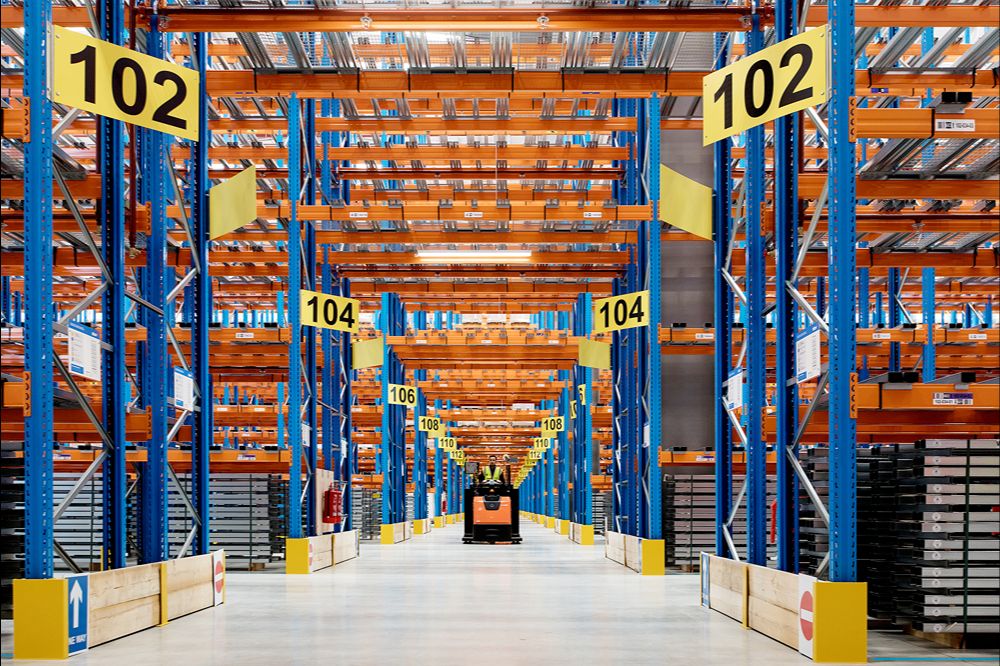
The furniture giant is putting £31.5m into its UK fulfilment network, linking a drive for faster online delivery with efforts to reduce packaging waste and transport emissions.
The investment spans the retailer’s customer distribution centres in Peterborough and Doncaster and comes as ecommerce accounts for 43.3 per cent of IKEA’s UK sales.
It is an operational response to the growing share of customers ordering online, but it also offers a practical test of how sustainability can be embedded into the mechanics of fulfilment rather than treated as a separate initiative.
Packaging made to measure
The bulk of the funding, £30m over two years, is earmarked for technology at Peterborough. Central to the upgrade is PackSize equipment that produces boxes to fit individual customer orders, avoiding oversized cartons and reducing the need for filling paper.
IKEA says the system can cut packaging material use by up to 30 per cent and void fill by as much as 60 per cent. The retailer expects the proportion of parcels processed through automation at Peterborough to rise from 47 per cent today to 75 per cent in 2027, removing the need for teams to measure products and manually create cartons for a large share of orders.
The site has also introduced three drones and docking nests to scan aisles in short cycles and improve inventory accuracy. IKEA said the technology will support its fulfilment teams and will not affect staffing levels.
A shorter route to northern customers
A further £1.5m is supporting a regional fulfilment trial at Doncaster. The centre is now serving customers around Gateshead, Edinburgh and Glasgow, with Sheffield due to follow, shifting orders that would previously have travelled from Peterborough closer to their final destination.
IKEA expects the change to remove about 212,000 lorry miles a year and cut annual carbon emissions by an estimated 280 tonnes. The calculation is based on 2,361 lorryloads for Scotland and northern England, with an average saving of 90 miles per trip. The new capability has also created 80 jobs at Doncaster.
David McCabe, chief executive and chief sustainability officer of IKEA UK and Ireland, explains: “Our wonderful teams of co-workers in Peterborough and Doncaster work tirelessly getting orders to our customers, and we couldn’t function without them.
“We’re empowering our people to get the best out of these new technologies, and we’re excited to watch them grow alongside the business.”
Related Story

From efficient fulfilment to circular retail
The fulfilment programme sits alongside IKEA’s broader attempt to make its UK business more circular. The retailer has launched a second-hand marketplace in the UK and Ireland, allowing IKEA Family members to buy and sell used products directly, and is exploring how to connect that platform with its established buyback service.
A pilot in Spain and Portugal will allow people listing eligible used IKEA products to receive an offer from the retailer while the item remains on the marketplace. They can then sell to another customer or accept IKEA’s offer and complete the buyback in store. A UK rollout is expected to follow if the test succeeds.
The marketplace, first tested in Madrid and Oslo in 2024, has expanded across Europe. Across its first six markets it recorded 15m visits and 95,700 listings by the end of August, while listed products were on average 60 per cent cheaper than new equivalents. IKEA said around a quarter of users were new or reactivated IKEA Family members — evidence that circular services may support customer acquisition as well as sustainability goals.
The direction is also visible at leadership level. Erika Intiso is due to become IKEA’s chief sustainability officer on 15 November, succeeding Karen Pflug after five years. Intiso previously oversaw the sustainability agenda across IKEA’s retail businesses in the Czech Republic, Hungary and Slovakia.
Sustainability moves into operating model
IKEA’s stated climate plan includes halving absolute value-chain greenhouse gas emissions by 2030 and reducing them by at least 90 per cent by 2050 against a 2016 baseline. Ingka Group, its largest franchisee, is also targeting more than 90 per cent of customer deliveries by electric or other zero-emission vehicles by 2028.
The Peterborough and Doncaster investments translate those ambitions into operational changes with measurable outputs: less cardboard and void fill, more automated packing, fewer delivery miles and lower emissions.
McCabe adds: “At IKEA, we are always on the lookout for new ways to do things better, and that’s true across the operational side of our business just as much as the innovative new products and services we bring to market.
“These investments in our Peterborough and Doncaster Customer Distribution Centres will ensure fulfilment is smoother than ever and reduce our environmental footprint – while positioning the business for long-term success by strengthening operational efficiency and supporting sustainable growth.”
Together with its resale and buyback push, they show IKEA treating circularity not simply as a product-design challenge, but as a question of how goods are packed, moved, sold and kept in use.
Photographer: Teri Pengilley/ UNP for IKEA
Click here to sign up to Retail Gazette‘s free daily email newsletter