

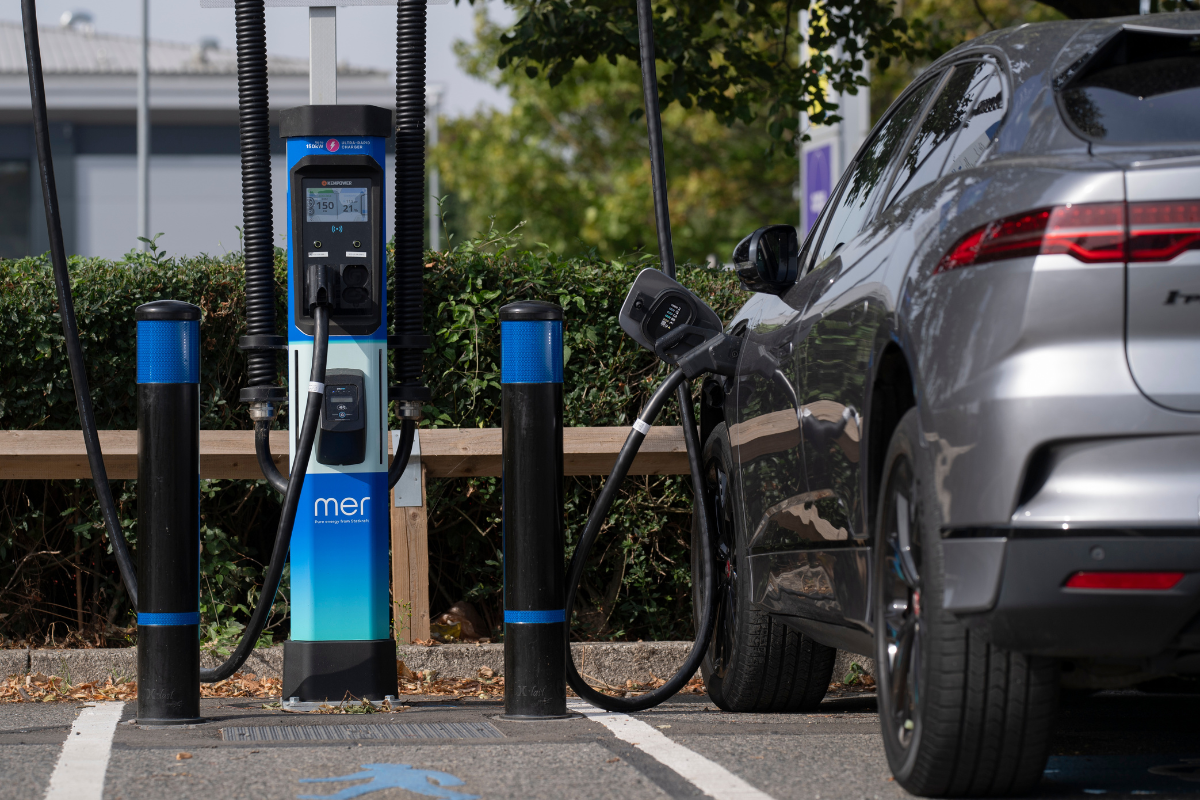
The number of EVs being sold in the UK is at an all-time high. 50% of vehicles registered in September were fully- or partially electric. However, we still need more public EV chargers up and down the country to meet this demand. Retail sites, with their expansive car parks and plentiful amenities, have emerged as a prime location to host EV charging infrastructure. For the landlords of these retail sites, and their tenants, the presence of EV charging presents a unique commercial opportunity.
Why retail sites?
Retail sites offer a unique combination of factors that sets them apart from other locations for installing EV charging. They are generally located near major roads and urban areas, attract a high footfall and have a lot of space in their car parks.
The behaviour of EV drivers is markedly different to petrol and diesel car drivers. An EV takes longer to charge than it takes a traditional car to refuel. This means there is a more significant dwell time for the driver. In our latest customer survey, we asked our drivers what they prefer to do while they charge their car: 59% of respondents said they prefer to go shopping or grab some refreshments. This translates to a higher proportion of incidental spenders at sites with EV charging.
For landlords, the presence of EV charging boosts footfall, increases dwell time, enhances the site’s land value and furthers their sustainability credentials. Meanwhile tenants benefit from welcoming new customers, who are looking for a way to pass the time while charging.
Funding – a plan for every budget
There are many different models of funding available for retail sites looking to install EV charging on their premises, since no two retail sites are the same. These models are designed to suit varying levels of investment, the number of chargers, the size of the site and anticipated demand.
Some landlords might choose a fully funded model, partnering with a Charge Point Operator (CPO) such as Mer who pays for, installs and maintains the infrastructure. Other retail sites might instead choose to self-fund the infrastructure, where Mer installs the hardware and the landowner retains the revenue generated. There are various hybrid solutions between these two models, whereby varying levels of investment and revenues are shared accordingly.
Tenants can also get involved with these agreements – perhaps they want the chargers in front of their shop to help boost sustainability initiatives and attract more customers? They might look to enter the partnership alongside their landlords and the CPO.
There are several government-backed grants and schemes that landlords, tenants and CPOs can utilise to lower the initial costs of installing EV charging infrastructure. All these different models provide ways for landlords and tenants to obtain new revenue streams through either direct charging revenues or the CPO becoming a tenant.
Beyond revenue
Installing EV charging is not just about boosting revenues. Depending on the financial model in place, the CPO is incentivised to help market the retail site to its network of drivers. Meanwhile, for tenants and landlords, the EV chargers can be a powerful marketing tool to help demonstrate their own sustainability initiatives.
The chargers can also act as valuable data collection points. EV chargers provide a wealth of data surrounding customer visit patterns, dwell times and footfall. This data can give you new insights to shape your commercial strategy, aid your ESG reporting. You can also track how many EV miles your chargers have powered, and by extension understand how much carbon you have saved.
Charging forwards
As the public shifts towards electric mobility, retail sites stand in a unique position to benefit from this switch. Installing an EV charging hub presents a powerful proposition that helps to boost revenues, improve land value as well as customer and tenant satisfaction. However, navigating the complexities of EV charging can be difficult without expert help.
From coordinating with grid operators to selecting the right hardware and managing on-site works, EV charging installations are complex. Choosing an expert partner like Mer reduces risks, ensures regulatory compliance and delivers high-quality, future-proofed infrastructure. If you are looking to install EV charging in your retail site’s car park and want to know what else should be considered, download our latest e-guide.
Click here to sign up to Retail Gazette‘s free daily email newsletter