

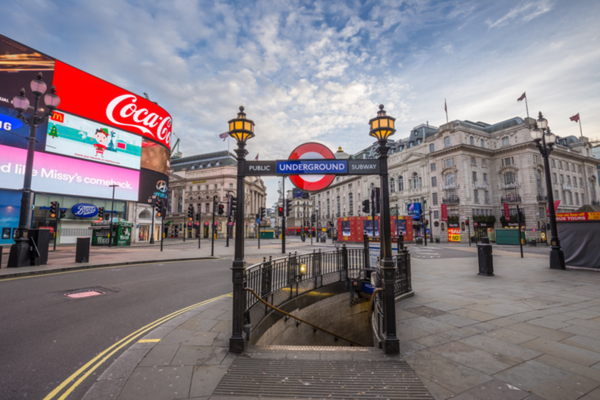
The ad was once a static piece of content used as a medium for reaching consumers: a billboard on a busy high street; a big out-of-home (OOH) display; a TV advert beamed into living rooms at the end of the day, writes Cameron Arthur-Harris, experiential account director at Spark.
Those formats still exist – and they still matter. But the smartphone has taken things to a new level, taking us into a whole new world of ecommerce, engagement and experience when it comes to brand-consumer communication and potential purchasing. In 2026, screens are no longer just where messages appear or where content is pushed towards consumers. They’re becoming gateways into much broader brand experiences.
The screen used to be a boundary – the space where a marketing message was presented and contained. Increasingly, it’s acting as a portal: a starting point for experiences that unfold across physical, shared and connected environments. From in-store, to online and live-shopping. The next phase of content consumption is spatial, and retailers will feel the impact more than most.
Screens don’t contain experiences; they unlock them
A glimpse of this future already exists. Snap’s Augmented Reality (AR) Studio Paris partnered with historian and adventurer Bettany Hughes to bring Channel 5’s Seven Wonders of the Ancient World to life. By scanning an on-screen QR code, viewers could step into AR recreations of ancient sites. While not a retail campaign, it shows a shift that retailers must respond to: screens no longer contain experiences; they unlock them.
And as this becomes more common, brands face a growing challenge: managing an increasingly fragmented content load across screens, surfaces and channels while ensuring consistency, quality and governance.
John Sadeghipoor, marketing and digital consultant and former CMO of Lulu Guinness, believes this shift will accelerate as technology evolves.
“It’s very The Matrix,” he explains. “I can imagine a world not too far away where we put on Apple Vision Pro or a Meta or Google headset, powered by AI, and you watch movies, media, Netflix series, etc., connected by 6G.
“Imagine donning that technology and virtually entering a Selfridges or Harrods or somewhere like Galeries Lafayette, and you’re immersed in an environment while shopping in first person. It’d be like playing Call of Duty while you’re shopping – that’s the future, and it’s where brands should be exploring in terms of innovation and engagement.”
While price points for the tech mean this won’t be mainstream in 2026, Sadeghipoor predicts it represents the direction of travel for luxury brands and the marketing industry.
Retail design becomes behaviour-driven
As screens start behaving more like computers, retail experiences become far more contextual and behaviour-driven. Brands are no longer designing for a single piece of content, but for how people move, interact and respond across environments.
This requires retailers to get under the skin of their audience more than ever. It’s no longer enough to produce marketing in new formats for new platforms.
Where the idea of diving through the screen into in-real-life (IRL) retail experiences will truly take off in 2026 is through concepts like live shopping. Zara’s live shopping production starring Cindy Crawford and her daughter is a good example. Consumers could purchase items in real time as a story unfolded – turning the phone into a whole new interactive world of entertainment.
This isn’t just commerce evolving. It reflects a behavioural shift, particularly among younger audiences, where brand environments become stages for identity, discovery and participation.
Live shopping is a huge area of growth for organisations like eBay. Maria Betés, head of marketing at eBay, says it’s shopping, but it’s different to before: “It’s entertainment – and consumers want to join in. It’s all about connecting people and community.”
Crucially for retailers, live shopping works across categories, and it can be set up to coincide with major events or cultural moments, driving audience connection and community. Betés adds this example of pulling people into the screen is “bringing the fun back to shopping and making discovery exciting”.
Where physical retail reasserts its value
It’s important to understand that this shift doesn’t diminish the importance of physical retail. The most effective retail strategies now blend screen-led discovery with IRL moments.
Topshop’s 2025 relaunch is a great example. At a time when many fashion editors were on holiday, and the world wasn’t in traditional ‘fashion mode’, Topshop went ahead with a summer fashion show in London’s Trafalgar Square.
The brand’s Global Marketing Director, Moses Rashid, explains the thinking behind it: “It was really important our audience could come and experience our first runway show in nearly a decade. They brought an incredible energy which saw us enjoy this moment together.”
The aim went beyond press coverage: “We want to make our audience feel like they can engage with us, have a voice, and inform our future decisions,” Rashid says.
For retailers, this points to a new type of funnel emerging – one where brands focus less on transactions and more on building cultural communities.
The fusion of screens, spaces and stores
Examples of brands combining the virtual and physical to good effect will be more visible in the year ahead. Lisa Miles, director of strategic growth, insights and engagement at Outernet London, sees digital screens and physical spaces feeding off one another.
“It’s not just about a screen giving content,” she explains. “It’s about inviting people into a wider immersive experience that consumers can really integrate with – where a brand message can collide with a consumer journey. You’re not just telling people’ this is what I have to sell you’ – it’s about creating a dual pathway for consumers and brands to interact.”
Audiences move through content now, but they expect the experience to feel seamless. They crave shared experiences that feel real and help them feel like they’re part of a community. This turns content into something people feel, not just see. And while the smartphone remains the doorway, the experience itself increasingly lives beyond the screen.
Click here to sign up to Retail Gazette‘s free daily email newsletter