

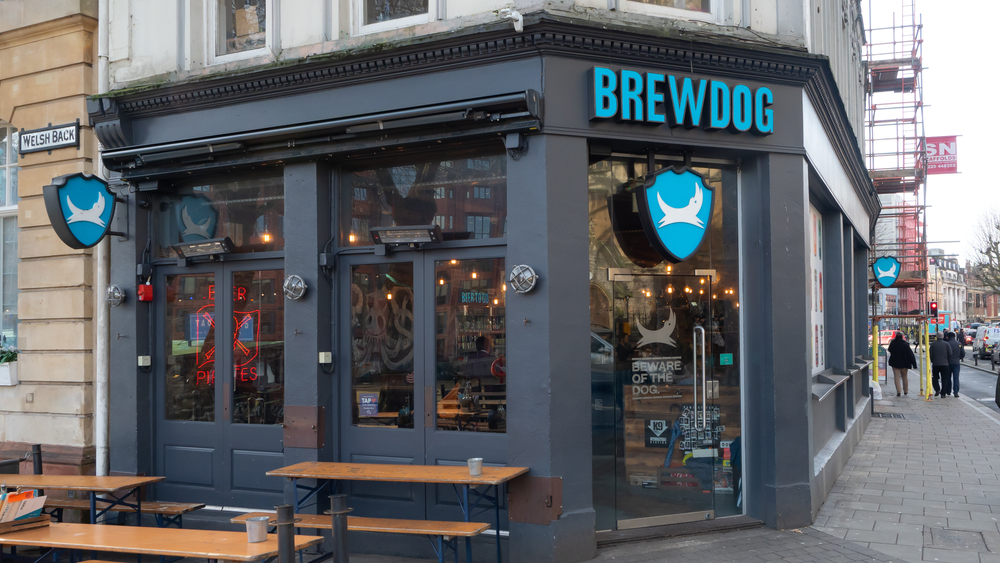
BrewDog co-founder James Watt has said he is “heartbroken” following the sale of the craft beer brand he launched in 2007, after Tilray Brands acquired the business in a £33m deal earlier this week.
Writing on LinkedIn, Watt reflected on the end of his 17-year tenure building BrewDog from a startup into one of the world’s most recognisable craft beer brands, while acknowledging the business’s recent struggles and the disappointment felt by staff and investors.
“This week has been incredibly hard,” Watt said. “It is really difficult to find the right words and know what to say. On Monday, the business I co-founded in 2007 was sold.”
He added: “I am heartbroken for all of the hardworking and passionate team members who have lost their jobs. I am heartbroken for all of our brilliant equity punks who did not get the return on their investment they wanted. And heartbroken to have dedicated the best 20 years of my life to something that ultimately did not have the ending we all wished for.”
From garage startup to global craft brand
Watt founded BrewDog alongside Martin Dickie in Aberdeenshire in 2007. The company quickly became one of the most prominent names in the craft beer movement, known for its disruptive marketing and its “Equity for Punks” crowdfunding scheme.
Reflecting on the early days, Watt said he had little experience when launching the business. “I was 24, working part time on a fishing boat, and still living in my dad’s spare room when we started BrewDog,” he said.
“I had never run a business before, I had no idea what I was really doing and I just made it all up as I went along.”
Over the following years the company grew rapidly, expanding internationally, opening bars around the world and building a portfolio that included Punk IPA, Hazy Jane, Lost Lager and Wingman.
“We grew from a garage to the world’s leading independent beer brand,” Watt said. “We employed thousands and challenged an entire industry.”
Acknowledging mistakes
However, Watt admitted that the business made strategic mistakes as it scaled. “With the benefit of hindsight there are also so many other things I would have done differently,” he said.
“At times we expanded too fast and diversified too broadly. During certain periods I did not control spend well enough across the business and furthermore I feel that I did not respond to certain crises that we faced in a way that was authentic and true to who I am.”
He also suggested BrewDog’s rebellious “underdog” positioning became harder to maintain as the company grew.
“When an underdog strategy works so well that people perceive you as the incumbent, that strategy breaks down, and I should have recognised that earlier,” he said.
Sale to Tilray
Tilray Brands confirmed this week that it has acquired BrewDog’s global brand and intellectual property, its UK brewing operations and 11 pubs across the UK and Ireland.
The sites included in the deal are located in Birmingham, Canary Wharf, Ellon, Dublin, Edinburgh DogHouse, Lothian Road, Manchester, Paddington, Seven Dials, Tower Hill and Waterloo.
The consumer packaged goods company said the assets are expected to generate approximately $200m in annual net revenue and between $6m and $8m in adjusted EBITDA by fiscal 2027.
Tilray chairman and chief executive Irwin Simon said the acquisition would help return BrewDog to sustainable growth.
“BrewDog is one of the most iconic, mission-driven craft beer brands in the UK,” he said.
“As we begin a new chapter for this great brand, our priority is to refocus BrewDog on the craft beer excellence that made it beloved in the first place and strategically invest to return the operations to profitable growth.”
A difficult ending
The sale comes after a challenging financial period for the brewer. BrewDog’s pre-tax losses widened from £30m in 2022 to £59.2m in the year to 31 December 2024.
For Watt, however, the most painful part of the outcome is the impact on employees and investors “Ultimately, the mistakes hurt far more than the successes console,” he said.
“I would have loved to save every single job and every single equity punk investment. Ultimately, I couldn’t. That will stay with me.”
Watt said he would speak more openly about the final chapter of BrewDog in future. “There is much more to say about the final chapter. In time, I will tell that story. Today is not that day.”
Despite the circumstances, he said he will continue to support the brand from afar.
“I still love the business. It will always feel like an intrinsic part of me. I will always be cheering it on from the sidelines, even if the next chapter is now going to be written by others.”
Click here to sign up to Retail Gazette‘s free daily email newsletter