
IZIPIZI co-founder Charles Brun on using stores to overcome eyewear’s biggest issue

In-Store

As the Paris-born brand expands its store estate, co-founder Charles Brun explains why physical retail is central to making glasses feel easier, clearer and more enjoyable to buy.

For IZIPIZI, the bricks-and-mortar store is where the eyewear brand can solve the biggest barrier in its category.

Glasses are difficult to buy with confidence, and that’s doubly true within ecommerce. They sit at the centre of the face. They change how people look, how they feel, and how comfortable they are being seen. Purchasing glasses online is a gamble, yet for many, stores can be intimidating places. Add in rows of shapes, colours, lens types and price points, and a functional purchase can quickly become an overwhleming one.

It’s a problem the founders of IZIPIZI have considered deeply. The Paris-born brand has built its name on colourful, accessible eyewear that reframes glasses as an everyday fashion accessory. But according to co-founder Charles Brun, the store has to be both a functional showroom for the product, and also a space to help customers navigate choice, feel comfortable trying frames on, and leave with confidence.

“The first thing is people,” says Brun. “We are a people business.”

The importance of connection is the core of IZIPIZI’s retail strategy as it expands its monobrand store estate. The business currently has 25 stores across markets including France, the UK, Belgium and Spain, with further openings planned. In London, it operates in Covent Garden, Carnaby and King’s Road, while Brun says Marylebone, Shoreditch and Manchester are all locations the brand has considered.

The locations are chosen carefully. Because IZIPIZI sells at an accessible price point, stores need strong traffic. But Brun says volume alone is not enough. The brand looks for areas that combine local customers, tourists and a sense of cultural relevance.

“We need high traffic,” he says. “But we want a healthy mix of local people and tourists. This is very important. We also want a trendy neighbourhood.”

Carnaby is a good example. It delivers international visitors, daily footfall and a natural association with fashion, colour and discovery. But once customers step inside, the store is designed to slow the decision down, not rush it.

Brun says the aim is to make the experience feel “easy peasy”.
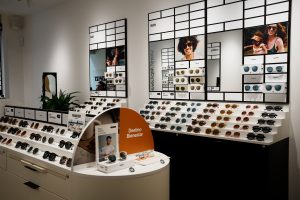
That starts with clarity. IZIPIZI now sells readers, sunglasses, sun readers, screen glasses, children’s glasses, sports eyewear and accessories. The breadth is commercially wide, but it creates a retail challenge. Customers need to understand the offer quickly without feeling overwhelmed.

In store, that means separating ranges clearly, highlighting shapes, grouping colours, making prices easy to understand and giving new capsules stronger visibility without losing sight of the permanent collection.

“We want it to be easy for our customers to quickly understand where each range is,” says Brun. “Depending on the ranges, the shapes and the colours, it can be a bit overwhelming. So, we ensure that our ranges are really clear, and that everything has a clear logic to it. Like the shape? Look above and below, and you’ll see the various colours available. Like the colour? Look sideways and see the different shapes available in that colourway. Very simple.”

Stores are often the first point of real brand education. Brun says many customers buy their first IZIPIZI pair in a store or through a wholesale partner, then return online once they know which shape and colour suit them.

“Perhaps the name grabs some attention, or our wonderful window displays,” he says. “That secures a first purchase, but they buy their second or third pair online, because they know which shape they like and which colour they like. We’ve already been a consultative partner in their decision to buy from us.”

That makes physical retail a recruitment engine for the brand, rather than just a transactional space. It’s where customers learn the range, build confidence and create the knowledge that later supports repeat purchases online. Staff are trained to advise rather than pressure, and to balance product knowledge with warmth. “They have to be technical on one aspect, but then also welcoming, cheerful, listening, making sure the customer feels comfortable,” says Brun. “We are not here to push them to make a purchase. That’s off-putting. We’re there to offer them the guidance they need, and take the time they need to make a purchase when they choose.”

The same thinking carries through into store design.

Lighting is a major focus. Brun says IZIPIZI avoids “harsh white lighting because it can make a store feel cold and clinical”. Instead, it uses warmer tones to create a more relaxed atmosphere. For eyewear, however, lighting isn’t just about mood. It affects how customers see themselves and the product. If light hits the face too harshly, the mirror experience suffers. If the colour temperature is wrong, frames can appear different in store than they will outside.

“For glasses, this is very specific,” says Brun. “You need to make sure the colour in the store looks like if you were outside, and that you have a good rendering on your face.”

Mirrors are placed throughout the store so customers can try frames without feeling crowded or exposed. In newer stores, including Carnaby, IZIPIZI has introduced a more open concept with updated furniture, ceiling lighting and lighting built into fixtures.
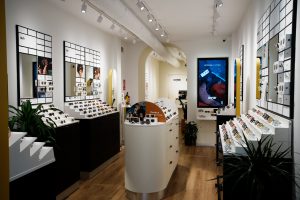

The concept has evolved significantly since the brand opened its first monobrand store in Le Marais, Paris, in 2017. That same year, the business changed its name from See Concept to IZIPIZI, a move Brun says helped turn a successful wholesale brand into something more memorable and ownable. Before then, the company was stocked in fashion stores, design shops, concept stores and department stores, but its name was not always cutting through. “People were calling us C, people were calling us Concept, or even worse, people were calling us nothing,” he says.

The first store gave the brand a physical place to express its identity. Brun says that was the moment IZIPIZI realised it needed its own retail estate if it wanted to build a stronger direct relationship with customers. “We realised that if we really wanted to be a brand, we had to have our own stores,” he says.

That role has become more important as the range has expanded. IZIPIZI now needs to showcase more accessories, more sports products and more children’s ranges, while still keeping the store simple and approachable.

“We wanted to highlight the accessories more,” says Brun. “We have more sports products, so we wanted to highlight sports in a different way. We have more kids’ products, so we wanted to highlight the kids’ products also.”

The challenge is to give each category enough space without making the store feel busy. The result has to be clear, warm and easy to shop.

That balance will matter as IZIPIZI continues to grow. Brun says the brand is opening four to five stores a year, with opportunities across Spain, France, the UK, Italy, Germany, the US and Asia. Japan is an important next step as the company moves from wholesale into its own monobrand retail environment.

As the estate grows, IZIPIZI’s stores will do more than sell glasses. They will introduce new customers to the brand, help them understand the range, give them the confidence to buy again, and turn a purchase many people find exposing into something lighter and more enjoyable.

For Brun, the strategy still comes back to the same simple point. The product matters. The layout matters. The lighting matters. But the experience only works if customers feel welcome. “If you go to our store, we really pay attention to make sure you are well treated,” he says. “It’s an easy relationship. Easy peasy.”

Click here to sign up to Retail Gazette‘s free daily email newsletter

In-Store

Leave a Reply

Your email address will not be published. Required fields are marked *

Fill out this field
Fill out this field
Please enter a valid email address.

In-Store

Share:

IZIPIZI co-founder Charles Brun on using stores to overcome eyewear’s biggest issue

As the Paris-born brand expands its store estate, co-founder Charles Brun explains why physical retail is central to making glasses feel easier, clearer and more enjoyable to buy.

For IZIPIZI, the bricks-and-mortar store is where the eyewear brand can solve the biggest barrier in its category.

Glasses are difficult to buy with confidence, and that’s doubly true within ecommerce. They sit at the centre of the face. They change how people look, how they feel, and how comfortable they are being seen. Purchasing glasses online is a gamble, yet for many, stores can be intimidating places. Add in rows of shapes, colours, lens types and price points, and a functional purchase can quickly become an overwhleming one.

It’s a problem the founders of IZIPIZI have considered deeply. The Paris-born brand has built its name on colourful, accessible eyewear that reframes glasses as an everyday fashion accessory. But according to co-founder Charles Brun, the store has to be both a functional showroom for the product, and also a space to help customers navigate choice, feel comfortable trying frames on, and leave with confidence.

“The first thing is people,” says Brun. “We are a people business.”

The importance of connection is the core of IZIPIZI’s retail strategy as it expands its monobrand store estate. The business currently has 25 stores across markets including France, the UK, Belgium and Spain, with further openings planned. In London, it operates in Covent Garden, Carnaby and King’s Road, while Brun says Marylebone, Shoreditch and Manchester are all locations the brand has considered.

The locations are chosen carefully. Because IZIPIZI sells at an accessible price point, stores need strong traffic. But Brun says volume alone is not enough. The brand looks for areas that combine local customers, tourists and a sense of cultural relevance.

“We need high traffic,” he says. “But we want a healthy mix of local people and tourists. This is very important. We also want a trendy neighbourhood.”

Carnaby is a good example. It delivers international visitors, daily footfall and a natural association with fashion, colour and discovery. But once customers step inside, the store is designed to slow the decision down, not rush it.

Brun says the aim is to make the experience feel “easy peasy”.

That starts with clarity. IZIPIZI now sells readers, sunglasses, sun readers, screen glasses, children’s glasses, sports eyewear and accessories. The breadth is commercially wide, but it creates a retail challenge. Customers need to understand the offer quickly without feeling overwhelmed.

In store, that means separating ranges clearly, highlighting shapes, grouping colours, making prices easy to understand and giving new capsules stronger visibility without losing sight of the permanent collection.

“We want it to be easy for our customers to quickly understand where each range is,” says Brun. “Depending on the ranges, the shapes and the colours, it can be a bit overwhelming. So, we ensure that our ranges are really clear, and that everything has a clear logic to it. Like the shape? Look above and below, and you’ll see the various colours available. Like the colour? Look sideways and see the different shapes available in that colourway. Very simple.”

Stores are often the first point of real brand education. Brun says many customers buy their first IZIPIZI pair in a store or through a wholesale partner, then return online once they know which shape and colour suit them.

“Perhaps the name grabs some attention, or our wonderful window displays,” he says. “That secures a first purchase, but they buy their second or third pair online, because they know which shape they like and which colour they like. We’ve already been a consultative partner in their decision to buy from us.”

That makes physical retail a recruitment engine for the brand, rather than just a transactional space. It’s where customers learn the range, build confidence and create the knowledge that later supports repeat purchases online. Staff are trained to advise rather than pressure, and to balance product knowledge with warmth. “They have to be technical on one aspect, but then also welcoming, cheerful, listening, making sure the customer feels comfortable,” says Brun. “We are not here to push them to make a purchase. That’s off-putting. We’re there to offer them the guidance they need, and take the time they need to make a purchase when they choose.”

The same thinking carries through into store design.

Lighting is a major focus. Brun says IZIPIZI avoids “harsh white lighting because it can make a store feel cold and clinical”. Instead, it uses warmer tones to create a more relaxed atmosphere. For eyewear, however, lighting isn’t just about mood. It affects how customers see themselves and the product. If light hits the face too harshly, the mirror experience suffers. If the colour temperature is wrong, frames can appear different in store than they will outside.

“For glasses, this is very specific,” says Brun. “You need to make sure the colour in the store looks like if you were outside, and that you have a good rendering on your face.”

Mirrors are placed throughout the store so customers can try frames without feeling crowded or exposed. In newer stores, including Carnaby, IZIPIZI has introduced a more open concept with updated furniture, ceiling lighting and lighting built into fixtures.


The concept has evolved significantly since the brand opened its first monobrand store in Le Marais, Paris, in 2017. That same year, the business changed its name from See Concept to IZIPIZI, a move Brun says helped turn a successful wholesale brand into something more memorable and ownable. Before then, the company was stocked in fashion stores, design shops, concept stores and department stores, but its name was not always cutting through. “People were calling us C, people were calling us Concept, or even worse, people were calling us nothing,” he says.

The first store gave the brand a physical place to express its identity. Brun says that was the moment IZIPIZI realised it needed its own retail estate if it wanted to build a stronger direct relationship with customers. “We realised that if we really wanted to be a brand, we had to have our own stores,” he says.

That role has become more important as the range has expanded. IZIPIZI now needs to showcase more accessories, more sports products and more children’s ranges, while still keeping the store simple and approachable.

“We wanted to highlight the accessories more,” says Brun. “We have more sports products, so we wanted to highlight sports in a different way. We have more kids’ products, so we wanted to highlight the kids’ products also.”

The challenge is to give each category enough space without making the store feel busy. The result has to be clear, warm and easy to shop.

That balance will matter as IZIPIZI continues to grow. Brun says the brand is opening four to five stores a year, with opportunities across Spain, France, the UK, Italy, Germany, the US and Asia. Japan is an important next step as the company moves from wholesale into its own monobrand retail environment.

As the estate grows, IZIPIZI’s stores will do more than sell glasses. They will introduce new customers to the brand, help them understand the range, give them the confidence to buy again, and turn a purchase many people find exposing into something lighter and more enjoyable.

For Brun, the strategy still comes back to the same simple point. The product matters. The layout matters. The lighting matters. But the experience only works if customers feel welcome. “If you go to our store, we really pay attention to make sure you are well treated,” he says. “It’s an easy relationship. Easy peasy.”

Click here to sign up to Retail Gazette‘s free daily email newsletter

Social


SUBSCRIBE TO OUR DAILY NEWSLETTER

  • This field is for validation purposes and should be left unchanged.
In-Store

Leave a Reply

Your email address will not be published. Required fields are marked *

Fill out this field
Fill out this field
Please enter a valid email address.

RELATED STORIES

Latest Feature


Menu


Close popup

Please enter the verification code sent to your email: