Meet the artist: Yinka Ilori on bringing ‘joy’ to Absolut and Tomorrowland

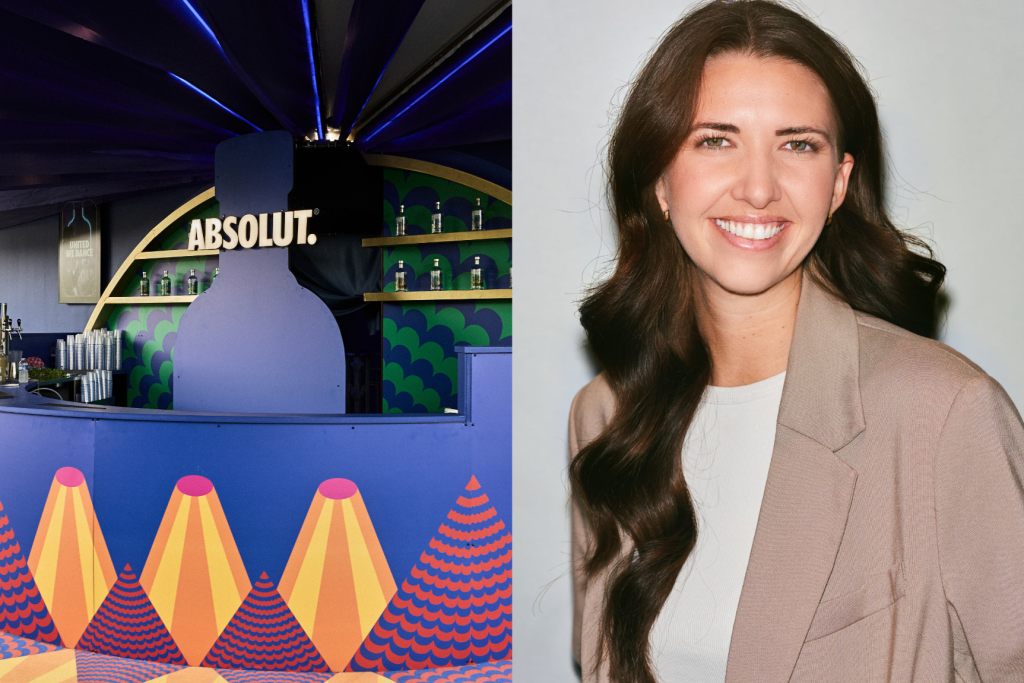
Stepping into Tomorrowland's installation, you are immediately hit with the rich blues, greens, oranges and pinks layered that have now become synonymous with Yinka Ilori's work, makes Absolut's new Tomorrowland installation a refreshing pop of colour.
Big InterviewEventsInsightMarketing

Stepping into Absolut’s Tomorrowland activation, visitors are immediately met with a sea of the rich blues, greens, oranges and pink patterns that have now become synonymous with Yinka Ilori’s work.

The result is a refreshing pop of colour and an oasis amid the bustling energy of a busy music event.

That is no small feat at a festival already renowned for its striking imagery and elaborate stage design, which welcomes over 400,000 attendees over two weekends.

Yet, somehow, Ilori’s collaboration with drinks brand Absolut achieves this. The two-storey building stands apart from other branded pop ups, which are clustered around the food courts and the lower areas of the festival.

Instead, positioned beside Tomorrowland’s iconic main stage, Absolut’s installation offers views across the festival site, free for all festivalgoers to enter, providing those without VIP tickets the only chance they’ll have to experience the festival from that viewpoint.

The prime location also can be interpreted as a representation of how far the Pernod Ricard-owned vodka brand‘s relationship with Tomorrowland has come.

Now in its tenth year, the partnership has grown from a local sponsorship into a wider global platform, with Absolut activations also taking place at Tomorrowland events in France, Colombia and Brazil, as well as the festival’s first full-scale Asian edition in Thailand later this year.

Photo: Absolut. Absolut activation outside (left) and inside bar area (right).

And at the heart of this latest chapter lies Ilori, the British-Nigerian artist and designer appointed creative director for Absolut’s global festival activations. Speaking to Retail Gazette at Tomorrowland’s media centre, he says for him the collaboration began not with the festival, but with a visit to Absolut’s home in Sweden.

“When I went to the Absolut distillery, where they juice the vodka,” he says. “Even from the bottle design and the shape of the bottle, I was able to get an understanding of the brand and what they care about.”

Ilori explains he was struck by the idea of transparency. Absolut’s clear bottle reflects its transparent production process, he says, but also allowed him to see a connection with his own approach to design.

“I think for me, when I transfer that language of transparency across to my practice, I find I strive to be very transparent in terms of what I create. It’s this kind of transparent joy. It’s not filtered, it’s not protected. You can see the energy, you can feel the energy.”

Ilori says that was one of three reasons the partnership made sense. The second was what he describes as Absolut’s respect for artists and the role they can play across music, art and culture. The third was the overlap between the brand’s values and his own.

“Music, art, togetherness, joy, memory-making, those are all the things that really kind of embody my practice and work that I’ve been doing for over a decade now,” he says.

It is a career that has moved between art, design, architecture, furniture and public spaces, often with a common thread of colour, storytelling and community.

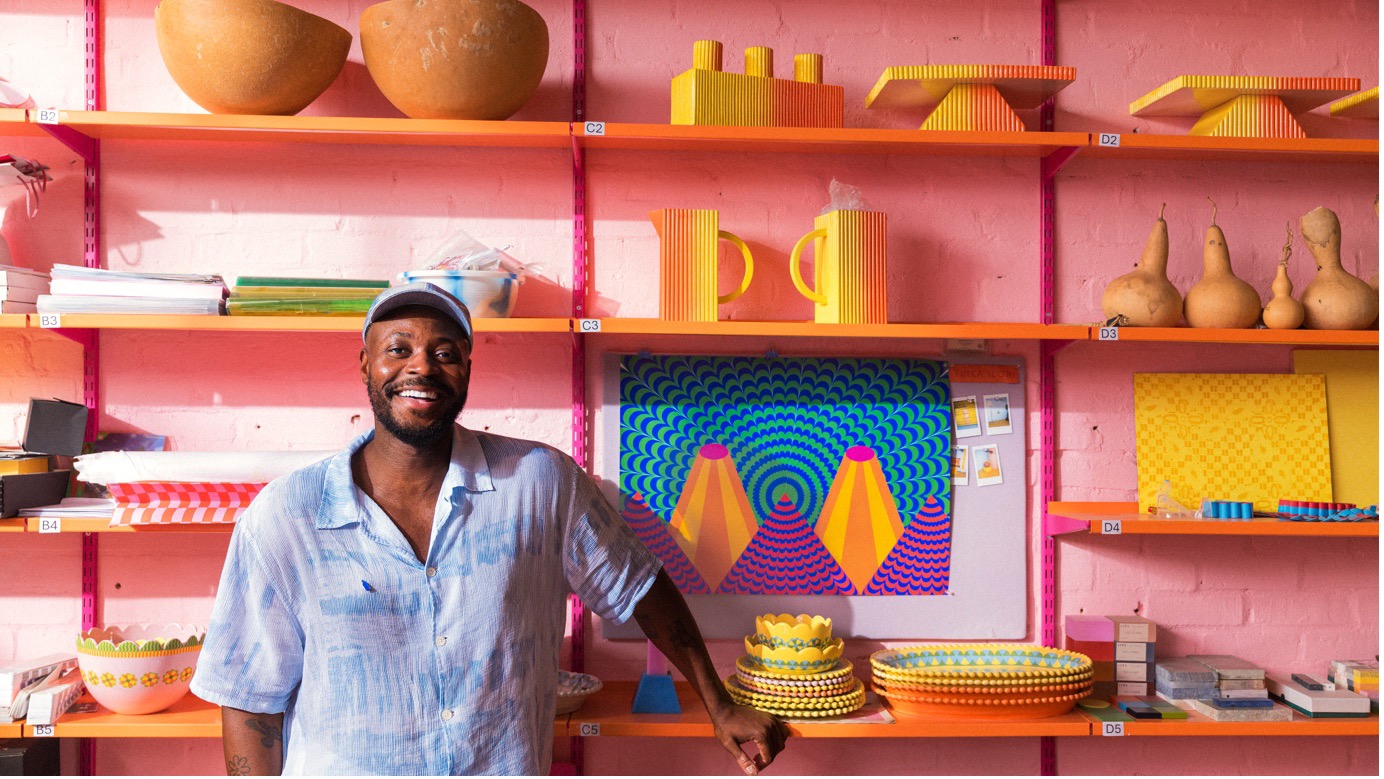
His British-Nigerian heritage has also been an important influence on his visual language, with his work drawing on the colour and patterns of his upbringing as well as London’s multicultural landscape.

Ilori first began attracting wider attention through projects such as It Started With a Parable in 2013, before his 2015 exhibition If Chairs Could Talk helped establish his reputation. The latter saw him transform upcycled chairs into colourful, story-led works, with the pieces inspired by memories and people from his childhood.

It would therefore not be surprising if parts of the Tomorrowland installation feel familiar to shoppers who have encountered his work on the high street.

This is not Ilori’s first collaboration with a retailer. He worked at M&S’ Moorgate store for eight years early in his career and before later returning to the retailer as a designer, creating two reusable bags in 2023 inspired by his memories of the store and his journey through London.

His latest collaboration with Dunelm, launched earlier in July, brings his bold patterns and colours into a 40-piece collaboration spanning furniture, lighting and homeware.

The Absolut partnership, however, marks a new direction. It is Ilori’s first alcohol brand collaboration of this kind and his first major festival installation.

‘Brands want magic’

The brief was to create an experience centred on togetherness and community, while bringing Absolut’s connections to art, culture and music into the space.

Ilori says the freedom he was given was important. Rather than simply placing his visual identity onto an existing brand experience, he wanted to find a point where his own ideas and Absolut’s identity could meet.

“What was really easy about this was that there is so much joy that is around Absolut,” he says. “There was so much energy in the room. So, with my work, it was like a perfect marriage because it really does show the importance of togetherness and community.”

The installation was designed to be experienced rather than simply looked at. Interactive screens respond to movement, while cylinders shift as people move around them.

The wider installation draws on movement traditions including West African masquerade, Brazilian capoeira and Persian Sufi whirling, translating dance into a visual language.

“I travel quite a bit,” he says. “So I can just sketch on my mobile and then on paper,” before developing the ideas further with his studio and the brand.

Even after the installation, which took over a year to create, was complete, Ilori said he was still thinking about how people would use the space, explaining: “I’m really obsessed with how people move in the space.”

Ilori says this was central to his thinking. Tomorrowland, through its D&I scheme with Absolut, encourages people to come alone as well as with friends, and he wanted the space to feel like an open invitation to take part.

“That’s what I think the space for me was also about, really kind of trying to invite those people to come into the space, to engage, connect, meet people,” he says. “The artwork is trying to do that. It’s really trying to encourage you to move, dance, engage, connect, belong.”

Photo. Absolut.

That idea of movement also explains the installation’s vivid colours, in contrast to Absolut’s famously simple blue and clear design. Ilori sees colour as a way of creating memories and triggering emotion, rather than simply making a space look attractive.

“When I’m creating experiences, I’m always trying to work out how are they going to remember that experience,” he says. “There’s so much power in colour and how colours can really evoke emotions and ideas.”

The result is a space that Ilori describes almost as a form of utopia, a temporary escape from everyday life, or in this case, the bustle of the festival outside. His ambition is for visitors to leave with a memory attached to the place, whether that comes from dancing with friends or meeting someone new.

For Ilori, that is the real measure of success. Not simply social media numbers or clicks, but the people standing in front of the work and becoming part of it.

“I saw myself yesterday just standing back, watching everyone dance and drink, and I’m just capturing those joyful moments,” he says. “For me, that’s what I intend this place to be. It feels like a joy shrine where everyone’s really kind of having an amazing time, dancing, laughing.”

That instinct to keep questioning and refining may be why the partnership has felt different from a conventional brand commission. Ilori says the most important thing is retaining the freedom to make work that feels true to his practice.

“I think for me, a brand that gives me creative freedom is where I go to,” he says. “Brands that I work with, they want magic. And I think for me, the work I create is I try to create a place of magic, a place of hope, resilience.”

He says the ambition behind the work is simple. In a festival of hundreds of thousands of people, surrounded by colour, music and spectacle, Ilori wants his work to give people a reason to stop, move and connect.

“Just ultimate joy, man. Just taking it away. That’s my goal.”

Click here to sign up to Retail Gazette‘s free daily email newsletter

Big InterviewEventsInsightMarketing

Leave a Reply

Your email address will not be published. Required fields are marked *

Fill out this field
Fill out this field
Please enter a valid email address.

Meet the artist: Yinka Ilori on bringing ‘joy’ to Absolut and Tomorrowland

Stepping into Tomorrowland's installation, you are immediately hit with the rich blues, greens, oranges and pinks layered that have now become synonymous with Yinka Ilori's work, makes Absolut's new Tomorrowland installation a refreshing pop of colour.

Stepping into Absolut’s Tomorrowland activation, visitors are immediately met with a sea of the rich blues, greens, oranges and pink patterns that have now become synonymous with Yinka Ilori’s work.

The result is a refreshing pop of colour and an oasis amid the bustling energy of a busy music event.

That is no small feat at a festival already renowned for its striking imagery and elaborate stage design, which welcomes over 400,000 attendees over two weekends.

Yet, somehow, Ilori’s collaboration with drinks brand Absolut achieves this. The two-storey building stands apart from other branded pop ups, which are clustered around the food courts and the lower areas of the festival.

Instead, positioned beside Tomorrowland’s iconic main stage, Absolut’s installation offers views across the festival site, free for all festivalgoers to enter, providing those without VIP tickets the only chance they’ll have to experience the festival from that viewpoint.

The prime location also can be interpreted as a representation of how far the Pernod Ricard-owned vodka brand‘s relationship with Tomorrowland has come.

Now in its tenth year, the partnership has grown from a local sponsorship into a wider global platform, with Absolut activations also taking place at Tomorrowland events in France, Colombia and Brazil, as well as the festival’s first full-scale Asian edition in Thailand later this year.

Photo: Absolut. Absolut activation outside (left) and inside bar area (right).

And at the heart of this latest chapter lies Ilori, the British-Nigerian artist and designer appointed creative director for Absolut’s global festival activations. Speaking to Retail Gazette at Tomorrowland’s media centre, he says for him the collaboration began not with the festival, but with a visit to Absolut’s home in Sweden.

“When I went to the Absolut distillery, where they juice the vodka,” he says. “Even from the bottle design and the shape of the bottle, I was able to get an understanding of the brand and what they care about.”

Ilori explains he was struck by the idea of transparency. Absolut’s clear bottle reflects its transparent production process, he says, but also allowed him to see a connection with his own approach to design.

“I think for me, when I transfer that language of transparency across to my practice, I find I strive to be very transparent in terms of what I create. It’s this kind of transparent joy. It’s not filtered, it’s not protected. You can see the energy, you can feel the energy.”

Ilori says that was one of three reasons the partnership made sense. The second was what he describes as Absolut’s respect for artists and the role they can play across music, art and culture. The third was the overlap between the brand’s values and his own.

“Music, art, togetherness, joy, memory-making, those are all the things that really kind of embody my practice and work that I’ve been doing for over a decade now,” he says.

It is a career that has moved between art, design, architecture, furniture and public spaces, often with a common thread of colour, storytelling and community.

His British-Nigerian heritage has also been an important influence on his visual language, with his work drawing on the colour and patterns of his upbringing as well as London’s multicultural landscape.

Ilori first began attracting wider attention through projects such as It Started With a Parable in 2013, before his 2015 exhibition If Chairs Could Talk helped establish his reputation. The latter saw him transform upcycled chairs into colourful, story-led works, with the pieces inspired by memories and people from his childhood.

It would therefore not be surprising if parts of the Tomorrowland installation feel familiar to shoppers who have encountered his work on the high street.

This is not Ilori’s first collaboration with a retailer. He worked at M&S’ Moorgate store for eight years early in his career and before later returning to the retailer as a designer, creating two reusable bags in 2023 inspired by his memories of the store and his journey through London.

His latest collaboration with Dunelm, launched earlier in July, brings his bold patterns and colours into a 40-piece collaboration spanning furniture, lighting and homeware.

The Absolut partnership, however, marks a new direction. It is Ilori’s first alcohol brand collaboration of this kind and his first major festival installation.

‘Brands want magic’

The brief was to create an experience centred on togetherness and community, while bringing Absolut’s connections to art, culture and music into the space.

Ilori says the freedom he was given was important. Rather than simply placing his visual identity onto an existing brand experience, he wanted to find a point where his own ideas and Absolut’s identity could meet.

“What was really easy about this was that there is so much joy that is around Absolut,” he says. “There was so much energy in the room. So, with my work, it was like a perfect marriage because it really does show the importance of togetherness and community.”

The installation was designed to be experienced rather than simply looked at. Interactive screens respond to movement, while cylinders shift as people move around them.

The wider installation draws on movement traditions including West African masquerade, Brazilian capoeira and Persian Sufi whirling, translating dance into a visual language.

“I travel quite a bit,” he says. “So I can just sketch on my mobile and then on paper,” before developing the ideas further with his studio and the brand.

Even after the installation, which took over a year to create, was complete, Ilori said he was still thinking about how people would use the space, explaining: “I’m really obsessed with how people move in the space.”

Ilori says this was central to his thinking. Tomorrowland, through its D&I scheme with Absolut, encourages people to come alone as well as with friends, and he wanted the space to feel like an open invitation to take part.

“That’s what I think the space for me was also about, really kind of trying to invite those people to come into the space, to engage, connect, meet people,” he says. “The artwork is trying to do that. It’s really trying to encourage you to move, dance, engage, connect, belong.”

Photo. Absolut.

That idea of movement also explains the installation’s vivid colours, in contrast to Absolut’s famously simple blue and clear design. Ilori sees colour as a way of creating memories and triggering emotion, rather than simply making a space look attractive.

“When I’m creating experiences, I’m always trying to work out how are they going to remember that experience,” he says. “There’s so much power in colour and how colours can really evoke emotions and ideas.”

The result is a space that Ilori describes almost as a form of utopia, a temporary escape from everyday life, or in this case, the bustle of the festival outside. His ambition is for visitors to leave with a memory attached to the place, whether that comes from dancing with friends or meeting someone new.

For Ilori, that is the real measure of success. Not simply social media numbers or clicks, but the people standing in front of the work and becoming part of it.

“I saw myself yesterday just standing back, watching everyone dance and drink, and I’m just capturing those joyful moments,” he says. “For me, that’s what I intend this place to be. It feels like a joy shrine where everyone’s really kind of having an amazing time, dancing, laughing.”

That instinct to keep questioning and refining may be why the partnership has felt different from a conventional brand commission. Ilori says the most important thing is retaining the freedom to make work that feels true to his practice.

“I think for me, a brand that gives me creative freedom is where I go to,” he says. “Brands that I work with, they want magic. And I think for me, the work I create is I try to create a place of magic, a place of hope, resilience.”

He says the ambition behind the work is simple. In a festival of hundreds of thousands of people, surrounded by colour, music and spectacle, Ilori wants his work to give people a reason to stop, move and connect.

“Just ultimate joy, man. Just taking it away. That’s my goal.”

Click here to sign up to Retail Gazette‘s free daily email newsletter

Social


SUBSCRIBE TO OUR DAILY NEWSLETTER

  • This field is for validation purposes and should be left unchanged.
Big InterviewEventsInsightMarketing

Leave a Reply

Your email address will not be published. Required fields are marked *

Fill out this field
Fill out this field
Please enter a valid email address.

RELATED STORIES

Latest Feature


Menu

The brand, budget, and agency decisions reshaping UK retail marketing

Join 1.5k retail marketing directors and senior leaders

Marketing Weekly NL Form

  • This field is for validation purposes and should be left unchanged.


Please enter the verification code sent to your email: