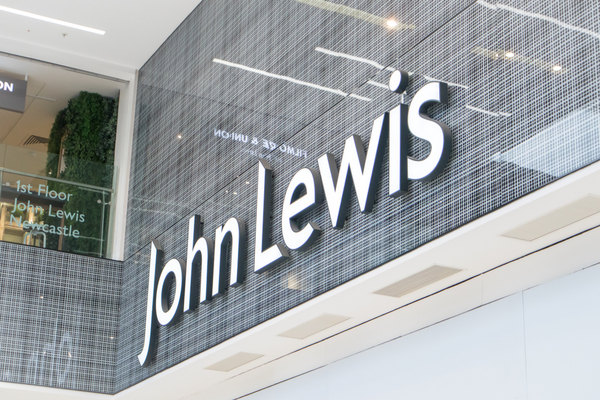
After 3 years of losses, is it time for John Lewis Partnership to shelve its turnaround plan?

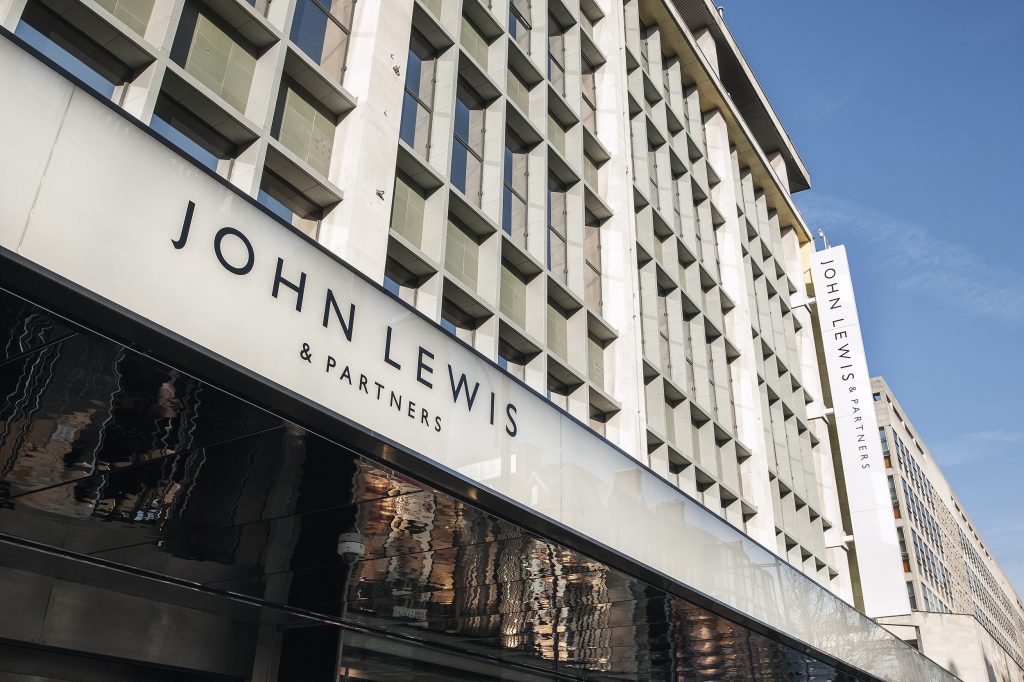
John Lewis
Department StoresFeature Articles

Three years into Dame Sharon White’s turnaround plan and John Lewis Partnership unveiled an eye watering £234m full-year loss as it scrapped this year’s staff bonus entirely.

This is the third year the partnership has posted statutory losses – although it edged into the black last year when exceptionals were pulled out.

What’s more, the retail group seemed unsure it would return to profit in its current year.

Finance director Bérangère Michel says that it expects “an improvement in performance” but falls short of confirming it would definitely be back in the black.

“We want to make a profit. We hope we will get to make a profit. We just want to be cautious given the economic outlook,” she says.

John Lewis Partnership has undoubtedly been dealt its fair share of challenges, from a pandemic to a cost-of-living crisis, since White set out her plan in late 2020 to grow profits to £400m in five years.

John Lewis
John Lewis boss Sharon White:

The plan set out that it would: remain “driven by purpose”,  simplify how the business works, become more convenient and appealing to the “next generation”, expand its services offer, and strike partnerships to power growth. 

It vowed to boost Waitrose and John Lewis’ value credentials, and make their products more accessible via digital, and virtual services like personal styling, plus growing Waitrose’s online delivery capacities.

The partnership also saw an opportunity to bring its two brands closer together, as has been seen with the John Lewis shop-in-shops in Waitrose as well as a roll out of collection points.

Further investment in customer experience and sustainability was promised, alongside the introduction of services including like rental, recycling, savings, insurance and private rented and social housing was announced.

White insisted they were still 100% behind this plan and it remains on course to achieve £400m profit by 2025.

“The strategy I couldn’t be more confident in,” she says.

However, more than halfway through its five year turnaround plan, should it be in a better place financially?

Retail Gazette delves into what action it is taking to quell the losses and whether the plan is still the right one for JLP.

Another year of losses

JLP’s results make for tough reading.

Although a big chunk of the £234m loss is down to a write down in the value of Waitrose stores, stripping this out, the retail group was still substantially in the red with a £78m loss.

The partnership says this is “principally due to economic backdrop and inflationary pressures”.

Operating profits fell at both John Lewis and Waitrose

White says: “In the last 12 months, inflation has hit us like a hurricane.”

Operating profits fell at both Waitrose and John Lewis, down £126m and £82m respectively.

Sales across the partnership fell 2%, with Waitrose sales down 3%, while John Lewis edged into positive territory with a 0.2% rise. 

Retail analyst Nick Bubb describes the results as “poor. Even worse than thought”.

But what is it doing to get back to growth?

The answer seems to be cost-cutting. The partnership set out plans to triple the scale of its cost cutting from £300m to £900m by January 2026.

The additional £600m in savings will come from simplifying the business and improving its margin through action such as consolidating its supply base, and nearshoring to bring down freight costs, which have soared in recent years.

Michel admits that the cost-saving plan will “impact the number of partners” although she did not give details into the numbers of jobs that would be cut.

Partnership chair White says job cuts would be linked to efficiencies made.

“As we get more efficient, less time has to be spent on processes on things like replenishment of our shelves or nighttime picking for online orders. Less time inevitably means fewer partners,” she says.

Catherine Shuttleworth, chief executive of Savvy Marketing, is unimpressed with the fact the Partnership’s response is all about finding efficiencies.

“It’s cost-cutting plan. It’s not a retail recovery plan – and that concerns me,” she says. “There’s not enough said about how they’re going to drive sales.”

Meanwhile, Bubb questions where the £308m of cost savings it has accumulated across the last two years has gone. “It’s certainly not showing through to the bottom line.”

What’s happening at John Lewis?

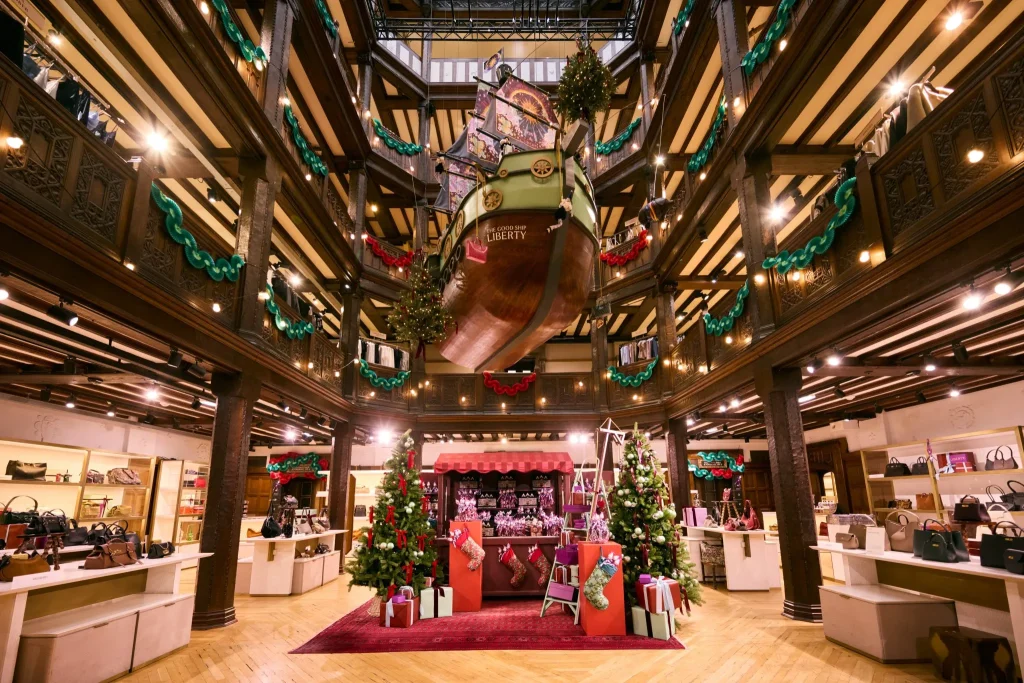
There are some positive signs from John Lewis such as the return of shoppers to stores. Footfall was was up 34% year on year.

John Lewis
John Lewis footfall is up

New executive director Naomi Simcock says the strength of weekend trade has surprised her.

“Customers are loving being out for a day and the whole shopping experience. They really want to have events, experiences, personal styling, contact with our partners.

“If you go into shops at the weekends, they are they are really, really buzzing – and it’s lovely to see.”

However, Shuttleworth points out that John Lewis needs to make the most of this traffic.

“It needs to make the most of the department store customer. It’s got the footfall but they need to get shoppers trading up, not down,” she says, referring to the retailer’s value range Anyday, which took £160m in sales this year.

There are some negatives in this shift back to stores for John Lewis, where online accounts for the bulk of sales. 

Bubb says M&S is better placed to benefit from this return to stores.

Meanwhile, the partnership’s cost-cutting drive means it will not be jumping on opportunities to expand its store network.

Despite trialing a new small store format in Horsham, Simcock made clear it would not be rolling it out in the short term.

“We’re really looking at how we develop our local approach and like any retailer, we will continue to look at locations that come up but it’s not something we’re prioritising this year.

“Our priority is around improving our margins and taking cost out.”

Instead, John Lewis will focus on convenience and growing the number of collection points for customers.

However, this could be a missed opportunity for the department store as rival M&S is opening a range of new flagships. 

M&S has taken a raft of former Debenhams stores in Leeds, Manchester’s Trafford Centre, Liverpool One and Lakeside Shopping Centre as it looks to hoover up the share left by Debenhams, which disappeared from the high street in 2021.

M&S
M&S is opening flagships in ex-Debenhams stores as it aims to hoover up share

Shuttleworth says: “John Lewis is effectively the last man standing in the department store sector so should be clearing up right now. There is an appetite for customer to shop in good quality department store.  

“John Lewis is letting M&S have its business. M&S is filling the gap with the third-party brands it’s introducing and new stores it’s opening.”

What’s Waitrose doing?

Despite attracting almost a million more customers last year, Waitrose shoppers spent substantially less. Basket sizes declined 15% in branch, as overall volumes sold at the grocer slumped 10%.

Waitrose boss James Bailey said the grocer was hit by the consumer environment.

“We saw inflation at record high levels in grocery and consumer confidence at record lows and historically it’s a brand where consumer confidence has an impact on our market share,” he says.

The decline in online also hit Waitrose hard. Online volumes dropped 27% last year, with the decline in ecommerce hitting the grocer’s top line.

So, what is the grocer doing to stop the rot?

In this market supermarkets need to compete on price. Despite its more affluent target customer, Waitrose has experienced shoppers shifting to the discounters.

Bailey says: “Contrary to popular belief, Waitrose customers are very similar to everyone else’s customers. They’re not immune to the challenges of inflation and everything else. 

“Most supermarkets last year have seen some of their customers shopping on a budget, and sometimes that involves shopping at the discounters. So I don’t think we are more or less exposed to that than anyone else.”

Bailey points out that Waitrose has ploughed £100m into prices on more than 300 everyday products. 

However, this pales in comparison to some of the price investments made by other supermarket groups.

Hargreaves Lansdown analyst Sophie Lund-Yates says: “It’s a fine balancing act for Waitrose because it doesn’t want to alienate its core customers by trying to appear like a bargain supermarket. You’re never going to see Waitrose doing an Aldi price match.”

However, Shuttleworth believes that Waitrose is not just losing ground to the discounters.

All the talk has been about Waitrose losing shoppers to the discounters but lots of people are shopping at M&S for their food. It’s filling the gap on quality and price.”

Lund-Yates agrees and says M&S Food has proven to be “incredibly resilient” as it has put a “great deal of work to improve value perception”. 

Shuttleworth believes Waitrose needs to get a lot of the basics right, pointing out that the supermarket has been plagued with availability issues over the past year and many of its stores are in need of an overhaul. 

This appears to be in the offing with reports of a revamp of its stores earlier this month.

However, store overhauls take time. In the meantime, it’s hard to convince customers why they should pay slightly more for their products with stores that are in need of updating and gaps on the shelves.

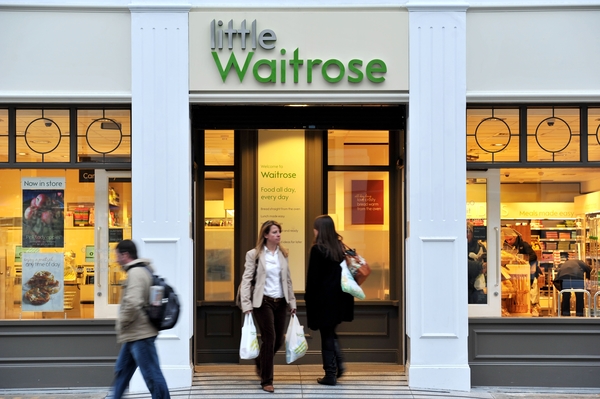
Convenience has also been identified as an opportunity for Waitrose, an area where the grocer is under-exposed.

It will open 50 new convenience sites in 2023 via partnerships with Dobbies and Shell.
Waitrose to open more convenience stores

However, Waitrose’s plans are nowhere near as aggressive as fellow convenience laggard Asda, which plans to open 300 stores by 2026.

Lund-Yates says M&S has done well because it focuses more on its convenience offering compared to Waitrose which, she says, is seen more as a “big shop” supermarket. 

The supermarket is also gearing up to attract customers as the cost-of-living crisis eases by shouting about what makes it different.

“Our customers consistently have fed back to us that quality, service and ethics are the reasons they shop with us,” says Bailey.

“We believe we have the world’s best animal welfare credentials, and we’ll be majoring on that more into this year.”

He believes this will encourage shoppers that may have been swayed by the discounters to return to Waitrose.

“We’re making sure that we’re in the very best shape we can be for our customers so just as customers switch out, they can switch back in again.”

Shuttleworth says: “Of course they need to make sure people know Waitrose is different and it’s special but this focus on British and farmers,  Aldi and Lidl are already doing that. It’s not setting Waitrose apart.”

Diversification: An opportunity or a distraction?

White has been criticised for her pursuit of diversifying the partnership’s portfolio into financial services and housing.

The JLP chair insists that it has always been a diversified business. “We’ve been in financial services for 20 years,” she says.

She terms the business as “retail and more” and says the greater push into areas like financial services and housing is “responding to our customers who want us to be involved in new services”. John Lewis Financial Services

Bubb describes the move into financial services as odd considering every other retailer is pulling out the market, says Bubb pointing out that Tesco is reviewing its banking arm which could result in a sale.

“It’s hard to break into those markets,” he says.

However, the Partnership has had some success in financial services grew 22% in the year spurred by the relaunch of pet insurance, the introduction of a store credit card and a trial of Junior ISAs.

The Partnership’s venture into build-to-rent housing has also raised eyebrows.

The retailer signed a £500m joint venture with abrdn to build 1,000 new homes last year, however, it has faced backlash over its plans with residents of Ealing accusing it “bullying”. 

The residents also raised concerns to the local council about the height of its planned tower blocks.

Is it right to stick with its plan to diversify the business?

“Diversifying your income stream is usually a good idea and that’s what John Lewis has tried to do. The problem is that these extra things are not their core business,” said Lund-Yates.

“They might be able to provide a little bit of a buffer [to poor sales] but John Lewis isn’t going to be a housing and banking specialist in the future, it’s still a retail company,” she says, explaining that retail will also be the main sales driver for the business.

Is the plan the right one?

John Lewis Partnership’s disappointing results calls into question whether White’s turnaround plan is actually working.

She insists there is a “clear path to profit” and despite the spiralling losses, says it is still on track to hit its target of £400m in profit by 2025.

As far as the plan is concerned, we’re on track,” she says. “Inflation, nobody could have predicted quite the impact we’ve had in the last year.

“But we are confident, which is why we’re continuing to invest substantially in both brands and our diversification.”

Bubb, however, believes the results “have definitely been a wake up call” and says the appointment of Nish Kankiwala as the Partnership’s first ever chief executive shows that it realises a change was needed.

“She needs help and she’s clever enough to realise that, hence the new CEO role,” he says. “Questions would have been asked otherwise.”

Shuttleworth says that time is running out for John Lewis Partnership. “It needs to get back on track and quickly now.

“We’re told that John Lewis Partnership is different, however the only thing different is that it’s not making a profit, she says.

“It needs to maintain what makes it special. They need to get back on track and maximise the sales opportunities that they have. To do so they need to think and act like retailers.”

The pressure is certainly building on John Lewis Partnership. The current year will be a crucial one for the business, where people will be looking for profit and not just progress.

Department StoresFeature Articles

22 Comments. Leave new

  • David 3 years ago

    The core experience of JLP staff was deliberately removed ( Department Managers ) in a cost cutting exercise and no amount of female new directors will provide the experience thrown away. To reach department manager you had to work your way up from the bottom and some made it to MD level ( Peter Still ) all this has gone, Never Knowingly Undersold GONE , the original JLP credit Card GONE, the company has lost JLP so much Goodwill and incredible loss of the customer base. The top brass do not understand the Partnership Psyche and the fact that the business belongs to its PARTNERS. It will be a long hard slog with a change of leadership to turn JLP fortunes.

    Reply
  • Barrers 3 years ago

    Building new rental homes as priority when Waitrose stores are suffering from decay. Non sensical.

    Reply
  • Alex Windsor 3 years ago

    They have lost there way in so many ways and are now selling the silver wear to stay afloat . Don’t think the chairman would still be in a job on many other company’s

    Reply
  • Concerned ex partner 3 years ago

    Waitrose is too top heavy in management, removing the ASM role and replacing with additional SM roles on bigger salaries a crazy idea, in branch you have a BM, DM and SM’s with a Regional Manager, why do they need all this heavy costs a branch should be run on a BM and four SM plus team leaders, the RM and DM role should be removed they offer no real benefit to running a branch, the BM should manage the store in line with the KRA’s set, SM’s are able to run the floor and report to the BM. as a previous partner the partnership needs to strip out these costs and invest in Partners. Just a thought.

    Reply
    • A R DMgr 3 years ago

      They’ve already stripped these levels of management out back in April last year and now have a very inexperienced thin layer of young managers. You say DMs but most DMs have gone now. Lots of layers of valuable experience stripped away and now the Partnership reaps what they sowed – their branches are falling apart. The CEO – an accountant listening to accountants for advice running a retail business and letting her religion of woke politics disconnect the business from its core customer base

      Reply
  • Gaz 3 years ago

    Perhaps a Lewis should be on the board instead of people who do not understand the principles of the Partnership. I am an ex Waitrose partner, it’s a special place that’s being managed by people with no real background or knowledge of the John Lewis Partnership. More home grown talent needs to fill the jobs of buyers, senior managers etc. Its the JLP, not John Lewis & Partners

    Reply
  • Pete 3 years ago

    My wife works at Waitrose and she has seen the effects already. Shortage of staff is ridiculous, just two people to man the tills in the morning even on the busiest days (Friday). The staff have been told that there will be no new staff being taken on and if staff leave they will not be replaced. She is not counting the days to retirement, and will be glad to be out of it.

    Reply
  • Mark Nutting 3 years ago

    Does Sharon white have any background in retail department stores or food stores at all ?
    If not without being simplistic is that not the issue
    In a plc by now the shareholders would have pushed for change at the very top

    Reply
    • Mike Hunt 3 years ago

      She went into Tesco once to do her shopping. That’s about it.

      Reply
  • Anthony 3 years ago

    Year on Year footfall increase is irrelevant when they’ve shut several of their biggest shops in the last couple of years!

    As for where has the previous cost saving money gone – new and refurb stores that they then immediately decided to permanently close. Hundreds of millions wasted.

    Reply
  • Charles Fleming 3 years ago

    Go woke, go broke.

    Reply
  • Alistair Marks 3 years ago

    The customer service I recently received from the overseas JLP call centre was atrocious, with a “couldn’t be bothered attitude”. I needed info on a acer laptop. JLP customer service gave me no info at all, so I purchased one from argos, who offered excellent customer service. Sainsburys are missing a trick given the chaos JLP are in.
    I sent a letter of complaint to Sharon White, whose team wasn’t much better than the overseas call centre staff.
    JLP might end up in Mike Ashley’s stable.

    Reply
  • SteveC 3 years ago

    After 3 years of losses , it is time for JLP to shelve it’s chairperson , who openly admitted she knows nothing about retail , and now clearly she is proving the point !!

    Reply
  • Eric Kimber 3 years ago

    The DM sacrifice was made because the minority had become complacent, lazy and ineffective. Rather than tackle the few. The business convinced itself that it was a redundant layer and simply paid off (at huge expense) many hugely talented, committed and competent managers. They them promoted the underling section managers (not so competent, dedicated or capable) into those roles and over 3 years ended up with the same costs! Sadly, retail is too simple for current JL senior management: they confuse themselves with bright new initiatives because they don’t understand how to trade themselves out of a very large, self dug, ditch.
    Incredibly, they still talk about cost cutting (in a Partnership where everyone is equal) by cutting the selling Partners who the customers are missing so much!

    Reply
  • JAY 3 years ago

    Sharon has no retail experience and they have made losses for 3 years ?!, mmhh !!, on track to deliver profit ?!. Lacking any effective leadership me thinks, Sharon needs to go !

    Reply
    • Dr Shanks 3 years ago

      I agree with you I used to be a regular customer of JLP BUT not any more.
      It has been a great disappointment to witness the disastrous decline of JLP’s fortunes by someone with clear lack of retail experience in this line of business.

      Reply
  • Roland Fox 3 years ago

    My student book on organisation theory had the memorable sentence “organisations should become like what they really are” JL take note as my wife noted the other day haberdashery was no better than hobbbeycraft to which I added and who wants to buy goods from China these days.

    Reply
  • Mike London 3 years ago

    JLP need to move upmarket and provide innovative upscale solutions. Currently their home furnishings offer makes IKEA look upmarket and the basement at Oxford street is full of cheap stocking-filler landfill. The footfall increase is just amazon customers doing their research. There is a huge gap in the middle/aspirational marketplace and competing on price instead of quality or innovation is a huge mistake, and the numbers seem to agree with me.

    Reply
    • JAY 3 years ago

      Makes so much sense

      Reply
  • PEDRO PANADERO 3 years ago

    JL have the wrong Chief Executive. They hired someone without retail experience. The move into the extra curricula activity of housing is odd and risky. I suspect JL is slowly going the way of other long established High Street retailers which lost their sense of direction.

    Reply
  • Norma Stitz 3 years ago

    John Lewis going into housing makes as much sense as Wimpey going into retailing.

    Reply
  • Mark 3 years ago

    They need to promote the partnership MORE. Newcomers such as myself and the younger generation have no idea what the structure of the partnership is. All retailers are the same as far as I was concerned. Now that I’m aware, I’m more likely to shop there and not grouse about Waitrose prices so much.

    Reply

Leave a Reply

Your email address will not be published. Required fields are marked *

Fill out this field
Fill out this field
Please enter a valid email address.

After 3 years of losses, is it time for John Lewis Partnership to shelve its turnaround plan?

John Lewis

Social


SUBSCRIBE TO OUR DAILY NEWSLETTER

  • This field is for validation purposes and should be left unchanged.

Three years into Dame Sharon White’s turnaround plan and John Lewis Partnership unveiled an eye watering £234m full-year loss as it scrapped this year’s staff bonus entirely.

This is the third year the partnership has posted statutory losses – although it edged into the black last year when exceptionals were pulled out.

What’s more, the retail group seemed unsure it would return to profit in its current year.

Finance director Bérangère Michel says that it expects “an improvement in performance” but falls short of confirming it would definitely be back in the black.

“We want to make a profit. We hope we will get to make a profit. We just want to be cautious given the economic outlook,” she says.

John Lewis Partnership has undoubtedly been dealt its fair share of challenges, from a pandemic to a cost-of-living crisis, since White set out her plan in late 2020 to grow profits to £400m in five years.

John Lewis
John Lewis boss Sharon White:

The plan set out that it would: remain “driven by purpose”,  simplify how the business works, become more convenient and appealing to the “next generation”, expand its services offer, and strike partnerships to power growth. 

It vowed to boost Waitrose and John Lewis’ value credentials, and make their products more accessible via digital, and virtual services like personal styling, plus growing Waitrose’s online delivery capacities.

The partnership also saw an opportunity to bring its two brands closer together, as has been seen with the John Lewis shop-in-shops in Waitrose as well as a roll out of collection points.

Further investment in customer experience and sustainability was promised, alongside the introduction of services including like rental, recycling, savings, insurance and private rented and social housing was announced.

White insisted they were still 100% behind this plan and it remains on course to achieve £400m profit by 2025.

“The strategy I couldn’t be more confident in,” she says.

However, more than halfway through its five year turnaround plan, should it be in a better place financially?

Retail Gazette delves into what action it is taking to quell the losses and whether the plan is still the right one for JLP.

Another year of losses

JLP’s results make for tough reading.

Although a big chunk of the £234m loss is down to a write down in the value of Waitrose stores, stripping this out, the retail group was still substantially in the red with a £78m loss.

The partnership says this is “principally due to economic backdrop and inflationary pressures”.

Operating profits fell at both John Lewis and Waitrose

White says: “In the last 12 months, inflation has hit us like a hurricane.”

Operating profits fell at both Waitrose and John Lewis, down £126m and £82m respectively.

Sales across the partnership fell 2%, with Waitrose sales down 3%, while John Lewis edged into positive territory with a 0.2% rise. 

Retail analyst Nick Bubb describes the results as “poor. Even worse than thought”.

But what is it doing to get back to growth?

The answer seems to be cost-cutting. The partnership set out plans to triple the scale of its cost cutting from £300m to £900m by January 2026.

The additional £600m in savings will come from simplifying the business and improving its margin through action such as consolidating its supply base, and nearshoring to bring down freight costs, which have soared in recent years.

Michel admits that the cost-saving plan will “impact the number of partners” although she did not give details into the numbers of jobs that would be cut.

Partnership chair White says job cuts would be linked to efficiencies made.

“As we get more efficient, less time has to be spent on processes on things like replenishment of our shelves or nighttime picking for online orders. Less time inevitably means fewer partners,” she says.

Catherine Shuttleworth, chief executive of Savvy Marketing, is unimpressed with the fact the Partnership’s response is all about finding efficiencies.

“It’s cost-cutting plan. It’s not a retail recovery plan – and that concerns me,” she says. “There’s not enough said about how they’re going to drive sales.”

Meanwhile, Bubb questions where the £308m of cost savings it has accumulated across the last two years has gone. “It’s certainly not showing through to the bottom line.”

What’s happening at John Lewis?

There are some positive signs from John Lewis such as the return of shoppers to stores. Footfall was was up 34% year on year.

John Lewis
John Lewis footfall is up

New executive director Naomi Simcock says the strength of weekend trade has surprised her.

“Customers are loving being out for a day and the whole shopping experience. They really want to have events, experiences, personal styling, contact with our partners.

“If you go into shops at the weekends, they are they are really, really buzzing – and it’s lovely to see.”

However, Shuttleworth points out that John Lewis needs to make the most of this traffic.

“It needs to make the most of the department store customer. It’s got the footfall but they need to get shoppers trading up, not down,” she says, referring to the retailer’s value range Anyday, which took £160m in sales this year.

There are some negatives in this shift back to stores for John Lewis, where online accounts for the bulk of sales. 

Bubb says M&S is better placed to benefit from this return to stores.

Meanwhile, the partnership’s cost-cutting drive means it will not be jumping on opportunities to expand its store network.

Despite trialing a new small store format in Horsham, Simcock made clear it would not be rolling it out in the short term.

“We’re really looking at how we develop our local approach and like any retailer, we will continue to look at locations that come up but it’s not something we’re prioritising this year.

“Our priority is around improving our margins and taking cost out.”

Instead, John Lewis will focus on convenience and growing the number of collection points for customers.

However, this could be a missed opportunity for the department store as rival M&S is opening a range of new flagships. 

M&S has taken a raft of former Debenhams stores in Leeds, Manchester’s Trafford Centre, Liverpool One and Lakeside Shopping Centre as it looks to hoover up the share left by Debenhams, which disappeared from the high street in 2021.

M&S
M&S is opening flagships in ex-Debenhams stores as it aims to hoover up share

Shuttleworth says: “John Lewis is effectively the last man standing in the department store sector so should be clearing up right now. There is an appetite for customer to shop in good quality department store.  

“John Lewis is letting M&S have its business. M&S is filling the gap with the third-party brands it’s introducing and new stores it’s opening.”

What’s Waitrose doing?

Despite attracting almost a million more customers last year, Waitrose shoppers spent substantially less. Basket sizes declined 15% in branch, as overall volumes sold at the grocer slumped 10%.

Waitrose boss James Bailey said the grocer was hit by the consumer environment.

“We saw inflation at record high levels in grocery and consumer confidence at record lows and historically it’s a brand where consumer confidence has an impact on our market share,” he says.

The decline in online also hit Waitrose hard. Online volumes dropped 27% last year, with the decline in ecommerce hitting the grocer’s top line.

So, what is the grocer doing to stop the rot?

In this market supermarkets need to compete on price. Despite its more affluent target customer, Waitrose has experienced shoppers shifting to the discounters.

Bailey says: “Contrary to popular belief, Waitrose customers are very similar to everyone else’s customers. They’re not immune to the challenges of inflation and everything else. 

“Most supermarkets last year have seen some of their customers shopping on a budget, and sometimes that involves shopping at the discounters. So I don’t think we are more or less exposed to that than anyone else.”

Bailey points out that Waitrose has ploughed £100m into prices on more than 300 everyday products. 

However, this pales in comparison to some of the price investments made by other supermarket groups.

Hargreaves Lansdown analyst Sophie Lund-Yates says: “It’s a fine balancing act for Waitrose because it doesn’t want to alienate its core customers by trying to appear like a bargain supermarket. You’re never going to see Waitrose doing an Aldi price match.”

However, Shuttleworth believes that Waitrose is not just losing ground to the discounters.

All the talk has been about Waitrose losing shoppers to the discounters but lots of people are shopping at M&S for their food. It’s filling the gap on quality and price.”

Lund-Yates agrees and says M&S Food has proven to be “incredibly resilient” as it has put a “great deal of work to improve value perception”. 

Shuttleworth believes Waitrose needs to get a lot of the basics right, pointing out that the supermarket has been plagued with availability issues over the past year and many of its stores are in need of an overhaul. 

This appears to be in the offing with reports of a revamp of its stores earlier this month.

However, store overhauls take time. In the meantime, it’s hard to convince customers why they should pay slightly more for their products with stores that are in need of updating and gaps on the shelves.

Convenience has also been identified as an opportunity for Waitrose, an area where the grocer is under-exposed.

It will open 50 new convenience sites in 2023 via partnerships with Dobbies and Shell.

Waitrose to open more convenience stores

However, Waitrose’s plans are nowhere near as aggressive as fellow convenience laggard Asda, which plans to open 300 stores by 2026.

Lund-Yates says M&S has done well because it focuses more on its convenience offering compared to Waitrose which, she says, is seen more as a “big shop” supermarket. 

The supermarket is also gearing up to attract customers as the cost-of-living crisis eases by shouting about what makes it different.

“Our customers consistently have fed back to us that quality, service and ethics are the reasons they shop with us,” says Bailey.

“We believe we have the world’s best animal welfare credentials, and we’ll be majoring on that more into this year.”

He believes this will encourage shoppers that may have been swayed by the discounters to return to Waitrose.

“We’re making sure that we’re in the very best shape we can be for our customers so just as customers switch out, they can switch back in again.”

Shuttleworth says: “Of course they need to make sure people know Waitrose is different and it’s special but this focus on British and farmers,  Aldi and Lidl are already doing that. It’s not setting Waitrose apart.”

Diversification: An opportunity or a distraction?

White has been criticised for her pursuit of diversifying the partnership’s portfolio into financial services and housing.

The JLP chair insists that it has always been a diversified business. “We’ve been in financial services for 20 years,” she says.

She terms the business as “retail and more” and says the greater push into areas like financial services and housing is “responding to our customers who want us to be involved in new services”. John Lewis Financial Services

Bubb describes the move into financial services as odd considering every other retailer is pulling out the market, says Bubb pointing out that Tesco is reviewing its banking arm which could result in a sale.

“It’s hard to break into those markets,” he says.

However, the Partnership has had some success in financial services grew 22% in the year spurred by the relaunch of pet insurance, the introduction of a store credit card and a trial of Junior ISAs.

The Partnership’s venture into build-to-rent housing has also raised eyebrows.

The retailer signed a £500m joint venture with abrdn to build 1,000 new homes last year, however, it has faced backlash over its plans with residents of Ealing accusing it “bullying”. 

The residents also raised concerns to the local council about the height of its planned tower blocks.

Is it right to stick with its plan to diversify the business?

“Diversifying your income stream is usually a good idea and that’s what John Lewis has tried to do. The problem is that these extra things are not their core business,” said Lund-Yates.

“They might be able to provide a little bit of a buffer [to poor sales] but John Lewis isn’t going to be a housing and banking specialist in the future, it’s still a retail company,” she says, explaining that retail will also be the main sales driver for the business.

Is the plan the right one?

John Lewis Partnership’s disappointing results calls into question whether White’s turnaround plan is actually working.

She insists there is a “clear path to profit” and despite the spiralling losses, says it is still on track to hit its target of £400m in profit by 2025.

As far as the plan is concerned, we’re on track,” she says. “Inflation, nobody could have predicted quite the impact we’ve had in the last year.

“But we are confident, which is why we’re continuing to invest substantially in both brands and our diversification.”

Bubb, however, believes the results “have definitely been a wake up call” and says the appointment of Nish Kankiwala as the Partnership’s first ever chief executive shows that it realises a change was needed.

“She needs help and she’s clever enough to realise that, hence the new CEO role,” he says. “Questions would have been asked otherwise.”

Shuttleworth says that time is running out for John Lewis Partnership. “It needs to get back on track and quickly now.

“We’re told that John Lewis Partnership is different, however the only thing different is that it’s not making a profit, she says.

“It needs to maintain what makes it special. They need to get back on track and maximise the sales opportunities that they have. To do so they need to think and act like retailers.”

The pressure is certainly building on John Lewis Partnership. The current year will be a crucial one for the business, where people will be looking for profit and not just progress.

Department StoresFeature Articles

22 Comments. Leave new

  • David 3 years ago

    The core experience of JLP staff was deliberately removed ( Department Managers ) in a cost cutting exercise and no amount of female new directors will provide the experience thrown away. To reach department manager you had to work your way up from the bottom and some made it to MD level ( Peter Still ) all this has gone, Never Knowingly Undersold GONE , the original JLP credit Card GONE, the company has lost JLP so much Goodwill and incredible loss of the customer base. The top brass do not understand the Partnership Psyche and the fact that the business belongs to its PARTNERS. It will be a long hard slog with a change of leadership to turn JLP fortunes.

    Reply
  • Barrers 3 years ago

    Building new rental homes as priority when Waitrose stores are suffering from decay. Non sensical.

    Reply
  • Alex Windsor 3 years ago

    They have lost there way in so many ways and are now selling the silver wear to stay afloat . Don’t think the chairman would still be in a job on many other company’s

    Reply
  • Concerned ex partner 3 years ago

    Waitrose is too top heavy in management, removing the ASM role and replacing with additional SM roles on bigger salaries a crazy idea, in branch you have a BM, DM and SM’s with a Regional Manager, why do they need all this heavy costs a branch should be run on a BM and four SM plus team leaders, the RM and DM role should be removed they offer no real benefit to running a branch, the BM should manage the store in line with the KRA’s set, SM’s are able to run the floor and report to the BM. as a previous partner the partnership needs to strip out these costs and invest in Partners. Just a thought.

    Reply
    • A R DMgr 3 years ago

      They’ve already stripped these levels of management out back in April last year and now have a very inexperienced thin layer of young managers. You say DMs but most DMs have gone now. Lots of layers of valuable experience stripped away and now the Partnership reaps what they sowed – their branches are falling apart. The CEO – an accountant listening to accountants for advice running a retail business and letting her religion of woke politics disconnect the business from its core customer base

      Reply
  • Gaz 3 years ago

    Perhaps a Lewis should be on the board instead of people who do not understand the principles of the Partnership. I am an ex Waitrose partner, it’s a special place that’s being managed by people with no real background or knowledge of the John Lewis Partnership. More home grown talent needs to fill the jobs of buyers, senior managers etc. Its the JLP, not John Lewis & Partners

    Reply
  • Pete 3 years ago

    My wife works at Waitrose and she has seen the effects already. Shortage of staff is ridiculous, just two people to man the tills in the morning even on the busiest days (Friday). The staff have been told that there will be no new staff being taken on and if staff leave they will not be replaced. She is not counting the days to retirement, and will be glad to be out of it.

    Reply
  • Mark Nutting 3 years ago

    Does Sharon white have any background in retail department stores or food stores at all ?
    If not without being simplistic is that not the issue
    In a plc by now the shareholders would have pushed for change at the very top

    Reply
    • Mike Hunt 3 years ago

      She went into Tesco once to do her shopping. That’s about it.

      Reply
  • Anthony 3 years ago

    Year on Year footfall increase is irrelevant when they’ve shut several of their biggest shops in the last couple of years!

    As for where has the previous cost saving money gone – new and refurb stores that they then immediately decided to permanently close. Hundreds of millions wasted.

    Reply
  • Charles Fleming 3 years ago

    Go woke, go broke.

    Reply
  • Alistair Marks 3 years ago

    The customer service I recently received from the overseas JLP call centre was atrocious, with a “couldn’t be bothered attitude”. I needed info on a acer laptop. JLP customer service gave me no info at all, so I purchased one from argos, who offered excellent customer service. Sainsburys are missing a trick given the chaos JLP are in.
    I sent a letter of complaint to Sharon White, whose team wasn’t much better than the overseas call centre staff.
    JLP might end up in Mike Ashley’s stable.

    Reply
  • SteveC 3 years ago

    After 3 years of losses , it is time for JLP to shelve it’s chairperson , who openly admitted she knows nothing about retail , and now clearly she is proving the point !!

    Reply
  • Eric Kimber 3 years ago

    The DM sacrifice was made because the minority had become complacent, lazy and ineffective. Rather than tackle the few. The business convinced itself that it was a redundant layer and simply paid off (at huge expense) many hugely talented, committed and competent managers. They them promoted the underling section managers (not so competent, dedicated or capable) into those roles and over 3 years ended up with the same costs! Sadly, retail is too simple for current JL senior management: they confuse themselves with bright new initiatives because they don’t understand how to trade themselves out of a very large, self dug, ditch.
    Incredibly, they still talk about cost cutting (in a Partnership where everyone is equal) by cutting the selling Partners who the customers are missing so much!

    Reply
  • JAY 3 years ago

    Sharon has no retail experience and they have made losses for 3 years ?!, mmhh !!, on track to deliver profit ?!. Lacking any effective leadership me thinks, Sharon needs to go !

    Reply
    • Dr Shanks 3 years ago

      I agree with you I used to be a regular customer of JLP BUT not any more.
      It has been a great disappointment to witness the disastrous decline of JLP’s fortunes by someone with clear lack of retail experience in this line of business.

      Reply
  • Roland Fox 3 years ago

    My student book on organisation theory had the memorable sentence “organisations should become like what they really are” JL take note as my wife noted the other day haberdashery was no better than hobbbeycraft to which I added and who wants to buy goods from China these days.

    Reply
  • Mike London 3 years ago

    JLP need to move upmarket and provide innovative upscale solutions. Currently their home furnishings offer makes IKEA look upmarket and the basement at Oxford street is full of cheap stocking-filler landfill. The footfall increase is just amazon customers doing their research. There is a huge gap in the middle/aspirational marketplace and competing on price instead of quality or innovation is a huge mistake, and the numbers seem to agree with me.

    Reply
    • JAY 3 years ago

      Makes so much sense

      Reply
  • PEDRO PANADERO 3 years ago

    JL have the wrong Chief Executive. They hired someone without retail experience. The move into the extra curricula activity of housing is odd and risky. I suspect JL is slowly going the way of other long established High Street retailers which lost their sense of direction.

    Reply
  • Norma Stitz 3 years ago

    John Lewis going into housing makes as much sense as Wimpey going into retailing.

    Reply
  • Mark 3 years ago

    They need to promote the partnership MORE. Newcomers such as myself and the younger generation have no idea what the structure of the partnership is. All retailers are the same as far as I was concerned. Now that I’m aware, I’m more likely to shop there and not grouse about Waitrose prices so much.

    Reply

Leave a Reply

Your email address will not be published. Required fields are marked *

Fill out this field
Fill out this field
Please enter a valid email address.

RELATED STORIES

Latest Feature


Menu


Close popup

Please enter the verification code sent to your email: