Oatly’s head of food and drinks experience on turning taste, culture and conviction into a strong brand story

Big InterviewMarketing

Few brands in the dairy alternatives category have shaped the conversation quite like Oatly.

Founded in 1994 in Sweden, the oat drink pioneer has grown from a niche plant-based disruptor into a globally recognisable brand synonymous with dairy alternatives. With a market capitalisation of roughly $338 to $365 million as of March 2026, Oatly has built its reputation not simply on product innovation, but on a distinctive marketing philosophy that blends culture, taste and activism.

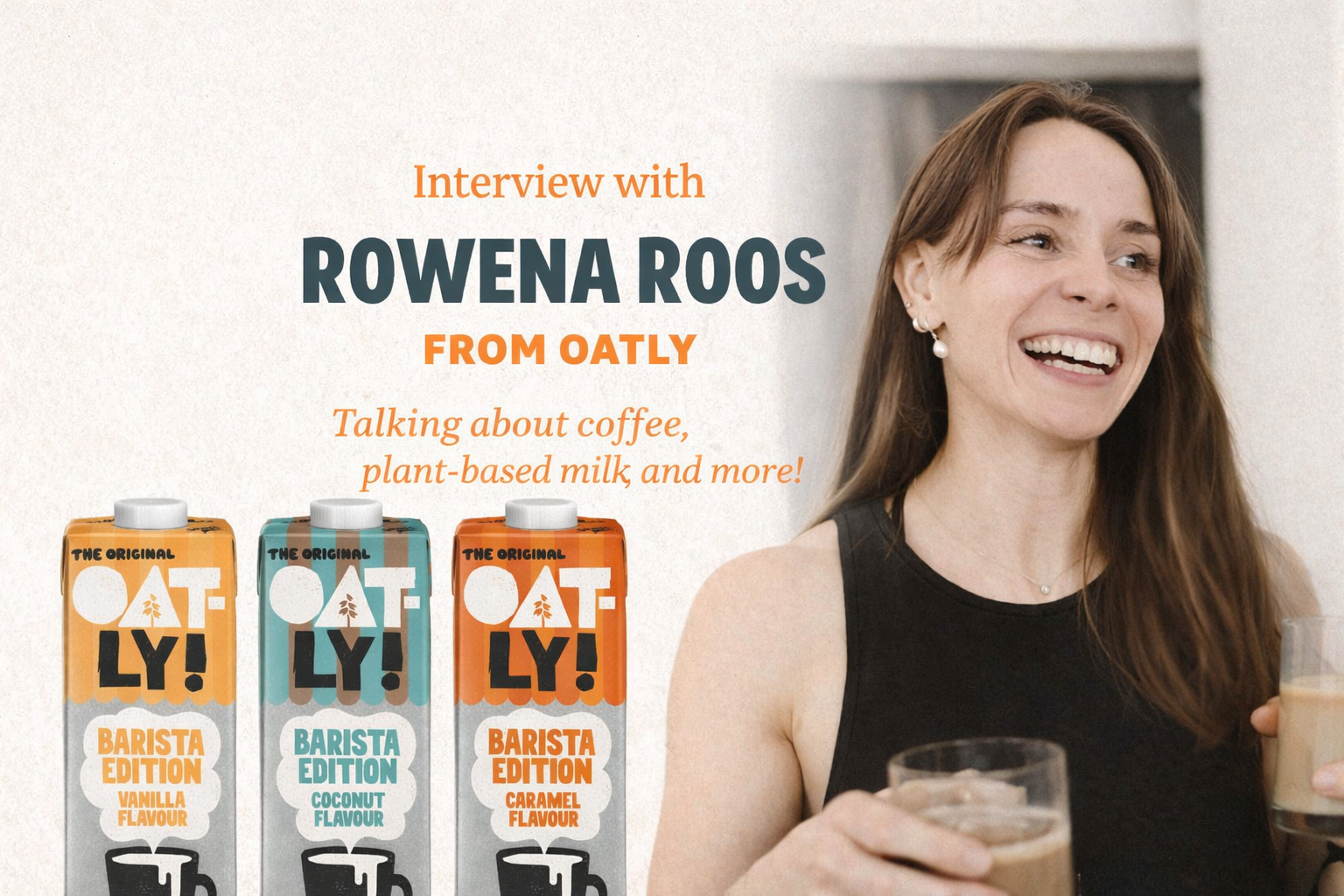
For Rowena Roos, Oatly’s head of food and drinks experience, the brand’s success stems from an understanding that food and drink are deeply tied to identity and cultural expression. “Oatly does not operate as a regular food or drinks company,” she explains.

“A big part of this is our understanding that taste is more than just about flavour. Our focus on taste is a frontier for innovation, identity, and impact. It’s about understanding how people express themselves through what they eat and drink, and where culture is heading next.”

That philosophy has shaped how the brand approaches both product development and marketing storytelling. At the heart of Oatly’s marketing strategy is a simple principle, that taste is the category’s most powerful conversion tool. Roos believes the brand’s focus on taste as both a sensory and cultural experience has helped Oatly stand apart in a crowded plant-based market.

“That thinking led to the launch of our first-ever Future of Taste Report – a global deep dive combining interviews with hundreds of baristas and drinks experts across 23 countries, alongside cultural and quantitative data. The research project was designed not only to identify emerging flavour trends but to position Oatly at the centre of drinks culture,” she says.

“It identified the flavours, formats, and lifestyle trends set to shape global food and drinks culture in 2026 and beyond. We then brought those insights to life through our Autumn/Winter Look Book, a fashion-inspired seasonal collection highlighting just how versatile Oatly Barista Oat Drink can be.”

A bold voice in a polarised category

Alongside taste, Oatly’s brand identity has long been defined by its outspoken tone of voice. From sustainability messaging to debates around nutrition and food systems, the company has repeatedly positioned itself as an activist brand within the industry. “We are not afraid to speak up,” Roos notes.

“Whether that’s inspiring change in the food system (because the current one drains resources and fuels climate change!), championing plant-based innovation or challenging misinformation around nutrition, we’ve always had a bold tone of voice and a clear point of view. That combination of culture-led insights, great taste, and a willingness to stand behind what we believe, has helped make the brand not just relevant, but enduring.”

Why oats, of all things, became the brand’s foundation

While soy and almond dominated the early dairy alternative market, Oatly’s decision to focus on oats proved to be a key differentiator. “It might not seem obvious at first, but oats are a great place to start!” Roos says. “European oats are the main raw ingredient in our products, and we retain much of their inherent goodness in our drinks.”

The ingredient itself also plays into the brand’s broader positioning around nutrition and sustainability. “Oats are often described as a ‘super food’ because of their unique balance of macro and micronutrients. Compared to many other grains, they offer good-quality protein, more healthy unsaturated fats, and are naturally rich in fibre.

“Put simply, oats are nutritious, versatile, and sustainable, and when treated the right way, they make an incredibly creamy, great-tasting base for drinks that work just as well in coffee and tea as they do on cereal or straight from the glass.”

Crucially, oats also allow for creative experimentation across flavours and formats. “This is because oats have a neutral taste which is perfect for flavour layering.”

Understanding the modern plant-based consumer

For marketers working in the food and beverage sector, the biggest shift in recent years has been the maturation of the plant-based consumer. Early adopters were largely motivated by sustainability or ethical considerations. Today’s consumers, Roos argues, are far more demanding.

“What we’re seeing is a broader shift in how people think about food and drink,” she says. “Consumers are more curious, more culturally aware, and more informed than ever.”

At the same time, she acknowledges that misinformation has also become more prevalent. “In the same breath, there is more misinformation than ever before, too, which we are carefully working around. They want innovation and great taste, but they also expect transparency and trust.” This dynamic has pushed Oatly to invest heavily in consumer insight and trend analysis. “Taste-led innovation sits at the heart of our strategy, and it’s driven by deep cultural insight.”

The company’s research has highlighted emerging flavour trends such as sea buckthorn and koji, alongside broader lifestyle shifts. “We’ve seen a growing interest in fibre and gut health, driven by trends like ‘fibremaxxing,’ and an increasing demand for decaf and lower-caffeine options. Health, sustainability and global flavour exploration are increasingly intersecting – that’s what’s shaping individual drinks choices.”

Translating insight into product innovation

These cultural insights feed directly into Oatly’s product pipeline. “Over the past year, we’ve translated those insights into products and formats that expand drink occasions both at home and on the go,” Roos explains. “From our Matcha Latte Oat Drink for the ‘matcha-curious’, to ready-to-drink coffee formats, and Baristamatic (our oat drink designed specifically for automated coffee machines) we’re continuously evolving alongside drinks culture.”

The brand has also expanded its barista-focused range to reflect growing consumer demand for café-style experiences at home. “We’ve also expanded our Barista range with Coconut, Vanilla and Caramel flavours, responding to demand for customisable, café-style moments at home.” Even the brand’s creative campaigns have been designed to encourage experimentation. “Our seasonal Look Books have displayed oat drinks beyond the flat white, dialing up experimentation and creativity.”

Innovation that starts ‘in the field’

Behind Oatly’s marketing narrative sits a significant investment in research and development. “At Oatly, innovation is never about launching for launch’s sake,” Roos says. “Great ideas often sit at the intersection of creativity and functionality and must solve a real consumer need while reinforcing what makes Oatly distinctive.”

One example is the brand’s matcha latte product.

“Take, Oatly Matcha Latte for example, in the wave of Matcha excitement, we wanted to create an accessible product for matcha lovers and the matcha curious alike, quick to use, straight from the fridge to glass without compromising great taste.”

Product development is supported by a global network of drinks professionals. “We have an amazing network of drinks professionals all over the world who help us understand the trends, preferences and desires of consumers globally.”

Behind the scenes, the company’s R&D capabilities are equally extensive. “We have over 70 scientists and product developers who are constantly researching and learning to make sure we get the best out of our oats. Some of these around based in our Science and Innovation Centre in Lund, where the Oatly story began over 30 years ago. So, really, Oatly’s product development actually starts in the field.”

Building the category alongside retailers

Despite its strong brand identity, Oatly’s growth strategy remains heavily reliant on collaboration with retail partners. “Retailers are strategic partners in building the plant-based category, not simply distribution channels,” Roos says. “We maintain close collaboration via regular insight sharing, joint business planning, and innovation alignment.”

The company also works closely with retailers to share data and category insights. “We bring category data, shopper insight and trend forecasting to the table too, helping retailers understand how plant-based is evolving and where growth pockets exist.”

Execution in-store remains crucial. “From clear pack communication to impactful activation and sampling, we work together to ensure Oatly stands out and clearly communicates its benefits.”

A maturing plant-based market

Looking ahead, Roos believes the plant-based category is entering a more mature phase. “While the wider meat and dairy alternatives category has faced challenges and slower growth in certain segments, Oatly has continued to perform strongly,” she says.

Rather than explosive growth, the market may now shift towards consolidation and quality. “2026 is likely to be defined by quality over quantity. We may see fewer but stronger brands with products that earn their place in consumers’ routines.”

For Oatly, the long-term ambition is still very much to make oat-based products an everyday choice for consumers. “As a people and planet organisation, sustainability is at the core of our business and a part of every strategic decision we make across the value chain,” Roos says.

“Meeting consumer demand and continuing to strengthen our product offering remains Oatly’s priority focus.” While she jokes about global domination, the brand’s mission is more incremental.

“‘World domination’ might be said with a smile, but our genuine ambition is to strive to replace one dairy product at a time by making it easier for more people to choose oat, seamlessly and confidently, and in more moments throughout the day, without recklessly taxing the planet’s resources.”

Click here to sign up to Retail Gazette‘s free daily email newsletter

Big InterviewMarketing

Leave a Reply

Your email address will not be published. Required fields are marked *

Fill out this field
Fill out this field
Please enter a valid email address.

Oatly’s head of food and drinks experience on turning taste, culture and conviction into a strong brand story

Few brands in the dairy alternatives category have shaped the conversation quite like Oatly.

Founded in 1994 in Sweden, the oat drink pioneer has grown from a niche plant-based disruptor into a globally recognisable brand synonymous with dairy alternatives. With a market capitalisation of roughly $338 to $365 million as of March 2026, Oatly has built its reputation not simply on product innovation, but on a distinctive marketing philosophy that blends culture, taste and activism.

For Rowena Roos, Oatly’s head of food and drinks experience, the brand’s success stems from an understanding that food and drink are deeply tied to identity and cultural expression. “Oatly does not operate as a regular food or drinks company,” she explains.

“A big part of this is our understanding that taste is more than just about flavour. Our focus on taste is a frontier for innovation, identity, and impact. It’s about understanding how people express themselves through what they eat and drink, and where culture is heading next.”

That philosophy has shaped how the brand approaches both product development and marketing storytelling. At the heart of Oatly’s marketing strategy is a simple principle, that taste is the category’s most powerful conversion tool. Roos believes the brand’s focus on taste as both a sensory and cultural experience has helped Oatly stand apart in a crowded plant-based market.

“That thinking led to the launch of our first-ever Future of Taste Report – a global deep dive combining interviews with hundreds of baristas and drinks experts across 23 countries, alongside cultural and quantitative data. The research project was designed not only to identify emerging flavour trends but to position Oatly at the centre of drinks culture,” she says.

“It identified the flavours, formats, and lifestyle trends set to shape global food and drinks culture in 2026 and beyond. We then brought those insights to life through our Autumn/Winter Look Book, a fashion-inspired seasonal collection highlighting just how versatile Oatly Barista Oat Drink can be.”

A bold voice in a polarised category

Alongside taste, Oatly’s brand identity has long been defined by its outspoken tone of voice. From sustainability messaging to debates around nutrition and food systems, the company has repeatedly positioned itself as an activist brand within the industry. “We are not afraid to speak up,” Roos notes.

“Whether that’s inspiring change in the food system (because the current one drains resources and fuels climate change!), championing plant-based innovation or challenging misinformation around nutrition, we’ve always had a bold tone of voice and a clear point of view. That combination of culture-led insights, great taste, and a willingness to stand behind what we believe, has helped make the brand not just relevant, but enduring.”

Why oats, of all things, became the brand’s foundation

While soy and almond dominated the early dairy alternative market, Oatly’s decision to focus on oats proved to be a key differentiator. “It might not seem obvious at first, but oats are a great place to start!” Roos says. “European oats are the main raw ingredient in our products, and we retain much of their inherent goodness in our drinks.”

The ingredient itself also plays into the brand’s broader positioning around nutrition and sustainability. “Oats are often described as a ‘super food’ because of their unique balance of macro and micronutrients. Compared to many other grains, they offer good-quality protein, more healthy unsaturated fats, and are naturally rich in fibre.

“Put simply, oats are nutritious, versatile, and sustainable, and when treated the right way, they make an incredibly creamy, great-tasting base for drinks that work just as well in coffee and tea as they do on cereal or straight from the glass.”

Crucially, oats also allow for creative experimentation across flavours and formats. “This is because oats have a neutral taste which is perfect for flavour layering.”

Understanding the modern plant-based consumer

For marketers working in the food and beverage sector, the biggest shift in recent years has been the maturation of the plant-based consumer. Early adopters were largely motivated by sustainability or ethical considerations. Today’s consumers, Roos argues, are far more demanding.

“What we’re seeing is a broader shift in how people think about food and drink,” she says. “Consumers are more curious, more culturally aware, and more informed than ever.”

At the same time, she acknowledges that misinformation has also become more prevalent. “In the same breath, there is more misinformation than ever before, too, which we are carefully working around. They want innovation and great taste, but they also expect transparency and trust.” This dynamic has pushed Oatly to invest heavily in consumer insight and trend analysis. “Taste-led innovation sits at the heart of our strategy, and it’s driven by deep cultural insight.”

The company’s research has highlighted emerging flavour trends such as sea buckthorn and koji, alongside broader lifestyle shifts. “We’ve seen a growing interest in fibre and gut health, driven by trends like ‘fibremaxxing,’ and an increasing demand for decaf and lower-caffeine options. Health, sustainability and global flavour exploration are increasingly intersecting – that’s what’s shaping individual drinks choices.”

Translating insight into product innovation

These cultural insights feed directly into Oatly’s product pipeline. “Over the past year, we’ve translated those insights into products and formats that expand drink occasions both at home and on the go,” Roos explains. “From our Matcha Latte Oat Drink for the ‘matcha-curious’, to ready-to-drink coffee formats, and Baristamatic (our oat drink designed specifically for automated coffee machines) we’re continuously evolving alongside drinks culture.”

The brand has also expanded its barista-focused range to reflect growing consumer demand for café-style experiences at home. “We’ve also expanded our Barista range with Coconut, Vanilla and Caramel flavours, responding to demand for customisable, café-style moments at home.” Even the brand’s creative campaigns have been designed to encourage experimentation. “Our seasonal Look Books have displayed oat drinks beyond the flat white, dialing up experimentation and creativity.”

Innovation that starts ‘in the field’

Behind Oatly’s marketing narrative sits a significant investment in research and development. “At Oatly, innovation is never about launching for launch’s sake,” Roos says. “Great ideas often sit at the intersection of creativity and functionality and must solve a real consumer need while reinforcing what makes Oatly distinctive.”

One example is the brand’s matcha latte product.

“Take, Oatly Matcha Latte for example, in the wave of Matcha excitement, we wanted to create an accessible product for matcha lovers and the matcha curious alike, quick to use, straight from the fridge to glass without compromising great taste.”

Product development is supported by a global network of drinks professionals. “We have an amazing network of drinks professionals all over the world who help us understand the trends, preferences and desires of consumers globally.”

Behind the scenes, the company’s R&D capabilities are equally extensive. “We have over 70 scientists and product developers who are constantly researching and learning to make sure we get the best out of our oats. Some of these around based in our Science and Innovation Centre in Lund, where the Oatly story began over 30 years ago. So, really, Oatly’s product development actually starts in the field.”

Building the category alongside retailers

Despite its strong brand identity, Oatly’s growth strategy remains heavily reliant on collaboration with retail partners. “Retailers are strategic partners in building the plant-based category, not simply distribution channels,” Roos says. “We maintain close collaboration via regular insight sharing, joint business planning, and innovation alignment.”

The company also works closely with retailers to share data and category insights. “We bring category data, shopper insight and trend forecasting to the table too, helping retailers understand how plant-based is evolving and where growth pockets exist.”

Execution in-store remains crucial. “From clear pack communication to impactful activation and sampling, we work together to ensure Oatly stands out and clearly communicates its benefits.”

A maturing plant-based market

Looking ahead, Roos believes the plant-based category is entering a more mature phase. “While the wider meat and dairy alternatives category has faced challenges and slower growth in certain segments, Oatly has continued to perform strongly,” she says.

Rather than explosive growth, the market may now shift towards consolidation and quality. “2026 is likely to be defined by quality over quantity. We may see fewer but stronger brands with products that earn their place in consumers’ routines.”

For Oatly, the long-term ambition is still very much to make oat-based products an everyday choice for consumers. “As a people and planet organisation, sustainability is at the core of our business and a part of every strategic decision we make across the value chain,” Roos says.

“Meeting consumer demand and continuing to strengthen our product offering remains Oatly’s priority focus.” While she jokes about global domination, the brand’s mission is more incremental.

“‘World domination’ might be said with a smile, but our genuine ambition is to strive to replace one dairy product at a time by making it easier for more people to choose oat, seamlessly and confidently, and in more moments throughout the day, without recklessly taxing the planet’s resources.”

Click here to sign up to Retail Gazette‘s free daily email newsletter

Social


SUBSCRIBE TO OUR DAILY NEWSLETTER

  • This field is for validation purposes and should be left unchanged.
Big InterviewMarketing

Leave a Reply

Your email address will not be published. Required fields are marked *

Fill out this field
Fill out this field
Please enter a valid email address.

RELATED STORIES

Latest Feature


Menu


Close popup

Please enter the verification code sent to your email: