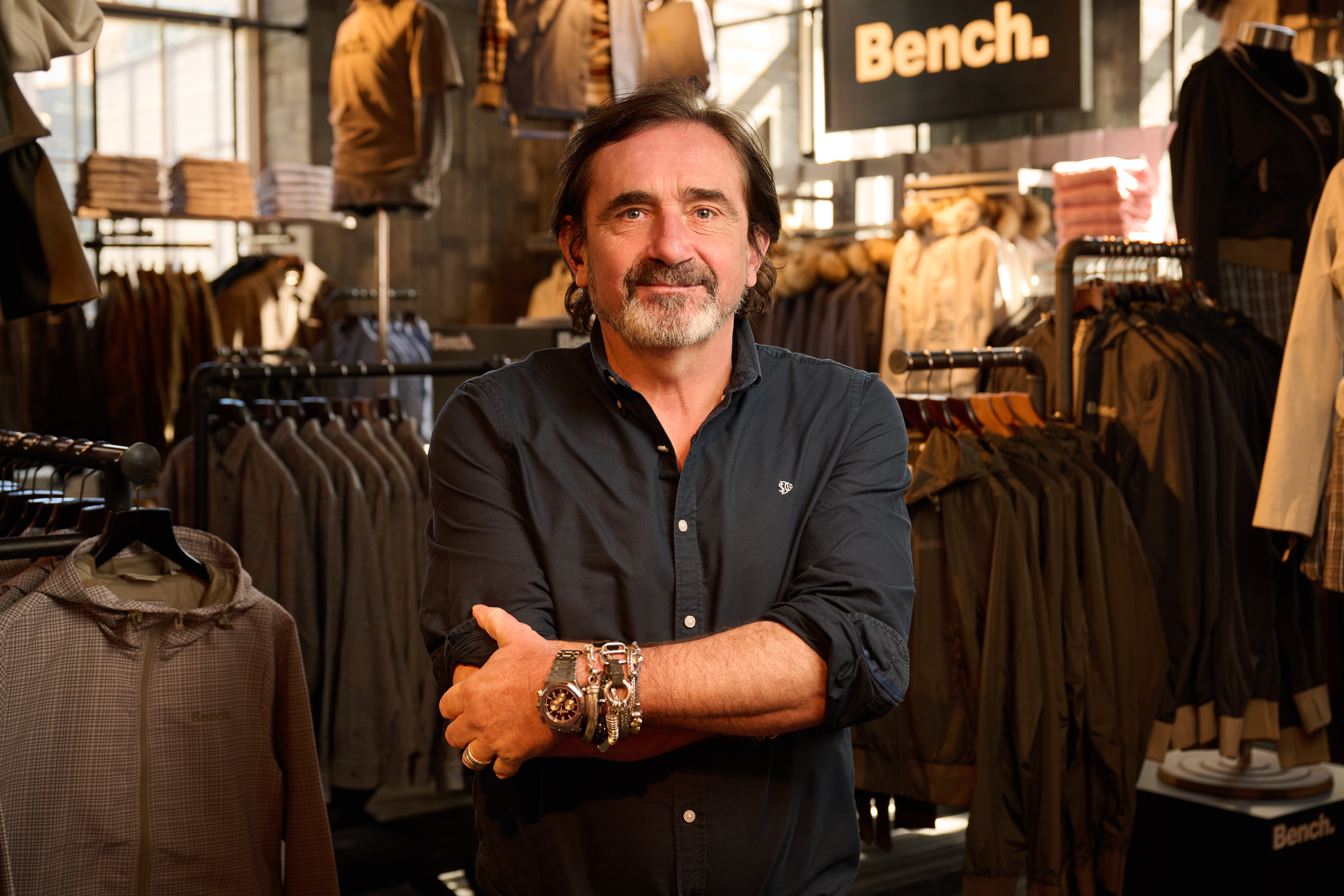
Superdry CEO Julian Dunkerton on why his Bench revival is more than nostalgia

Big InterviewFashionMarketing

Julian Dunkerton has brought back one of British fashion’s most recognisable names, but he insists this is not a throwback for throwback’s sake.

At Superdry’s Oxford Street flagship, the return of Bench is being framed as both a commercial opportunity and a cultural one.

The early-2000s favourite, now relaunched under the Superdry & Co umbrella, arrives at a moment when heritage brands are finding fresh relevance with younger shoppers. But for Superdry founder and CEO Julian Dunkerton, this isn’t simply a case of dusting off an old name and hoping nostalgia does the rest.

If Bench is coming back, he believes it has to be done properly.

“When you’re dealing with a brand like Bench that’s very dear to people’s hearts, it does need to be dealt with very delicately,” he says. “You can almost bastardise the brand if you come in with the wrong attitude.”
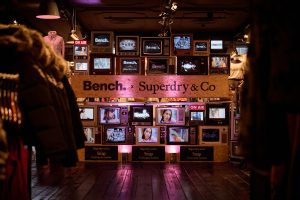
That, in many ways, is the central argument behind the launch. Dunkerton is betting that consumers still have affection for heritage brands, but also that they’re far more sensitive than many operators realise to whether those revivals feel authentic or opportunistic.

“We all know about people who buy up IP and then sort of hand it out willy-nilly,” he says. “This is a different model. I’m very empathetic to the customer and the product.”

Dunkerton’s relationship with Bench goes back decades, and he speaks about the brand less like a newly acquired project and more like a label that has stayed with him.

“I think I was the very first Bench customer in the UK,” he says. “The moleskin classic simple jacket was the first piece that made the company famous. So that’s a really nostalgic piece.” He also had a deeper connection than simple fandom. “I used to help design the whole range back in the day,” he says. “I used to work really closely with the company.”

That history explains why Bench became the first major revival project under the new Superdry & Co banner. It was not chosen at random, and Dunkerton is clear that it topped his list from the start.

“When Jules started talking about the ‘& Co’, and what he wanted to bring back, this was the first brand on his list,” says Matt Brewster, who handles wholesale and relationships for the business and helped set up the deal. “We’re really proud of this one.”

For Dunkerton, the case for revival was strengthened by what he was already seeing in the market. Superdry had been watching resale channels closely, and the signs were hard to ignore.

“We watch what people are buying on Depop,” he says. “And I became aware that they didn’t really know what to do with [Bench], not in the way that I remembered it being done.”

That observation sits at the heart of the wider consumer story. Fashion is in one of those cyclical moments where yesterday’s codes are being rediscovered by a younger audience that wants something different from the flatness of mass-market sameness.

Dunkerton’s amused by it, but he’s also alive to the commercial meaning. “Young people are desperately looking for things that are new and exciting,” he says. “But also it says something about the state of fashion at the moment. Things from my past, they’re now coming back.”

He laughs at the idea of being old enough to see his own past return as trend material, but he isn’t dismissive of it. If anything, he sees it as confirmation that Bench has landed in exactly the right cultural window.

“I think we have actually just hit the nail on the head in terms of timing for the consumer,” he says.

That specific kind of nostalgia is now proving commercially powerful. Heritage labels with clear visual codes, emotional memory and a sense of identity that newer brands often struggle to establish.

Bench has that. It was one of those brands that, at its peak, had a highly recognisable silhouette and graphic confidence. Dunkerton still talks admiringly about how it embedded its branding into the product itself.

“Bench cleverly incorporated the name, the branding, into the design of the product itself,” he says. “They were the first ones to achieve that. Everyone else just stuck their name on. They incorporated it into the actual product. I love that.”

That’s part of why he believes the brand still has cut-through. The consumer doesn’t need to be told what Bench is supposed to stand for. The cues are already there, they just need to be reintroduced in a way that feels right for now.

The relaunch has therefore been handled less like a licensing exercise and more like a design rebuild. Dunkerton says the collection was shaped by a tight group: himself, Superdry designer Sarah Fisher, and his 19-year-old daughter, who acted as a sounding board for the target audience.

“It was me, her and my daughter,” he says. “So my daughter’s 19, and I’ve been training her since she was about five. It’s just great to have that age group sense-checking everything that we’re doing to make sure it’s done correctly.

“It isn’t just me. It isn’t just a designer. It’s a little collaboration between the three of us going, all right, I’ve got all the knowledge of the past, you’re an amazing designer, and you’re in the right age group and have a great eye. Between us, we sort of pulled it all together. That’s why I think it’s got integrity.”

That word, integrity, is what Dunkerton believes separates a meaningful brand revival from a hollow one. Bench may be benefiting from Y2K appetite and renewed interest in archive style, but he is adamant that this cannot just be retro costume.

The range itself reflects that balance. It draws on familiar Bench signatures, but it has been rebuilt for a modern customer and delivered at price points Dunkerton sees as essential to the brand’s credibility.

“We are not expensive,” he says. “I pride myself on making sure that we are affordable. I don’t think our prices have really changed in 20 years. I’m still dealing in the same price points in my head.”

The speed of the launch is also notable. From concept to launch, the whole thing took around eight months, unusually quick for a project of this scale.

“I no longer have to ask the board whether I’m able to do things. I get on and do it,” says Dunkerton. “Not having a board to turn to and just being able to get on with things has allowed this process to be quick.”

Sarah Fisher, the designer who worked closely on the collection, says that pace was driven by a rare level of directness. “It’s somebody who knows exactly what their vision is, and it doesn’t really change,” she says of Dunkerton.

“There’s always a logic in it.”

In practice, that meant a fast-moving development process, constant dialogue and a willingness to make real-time decisions rather than allow ideas to get diluted. For Dunkerton, that’s critical not just to speed but to product quality. He argues that too many brands lose their edge by trimming away the details that gave the design meaning in the first place.

At Superdry, he says, that’s not how the process works.

“When Sarah designs something, what we get is what she designed,” he says. “And if anything, we then go, can we improve it in any way? What else can we do? How do we make it even better? There isn’t this sort of dumbing down, which happens everywhere.”

What makes the Bench relaunch especially significant, though, is that it is doing more than bringing back a dormant brand. It’s also showing how Superdry wants to evolve. Under the ‘& Co’ concept, the business is positioning itself not as a single-label retailer, but more as a curator of brands, categories and cultural cues that can bring different consumers into the same space.

Bench is central to that strategy because it gives Superdry both a heritage story and a new audience opportunity. Dunkerton says the early signals are encouraging.

“We’ve had already a number of inbounds from people in Spain and some of the European markets who used to stock Bench back in its heyday and already have come and said, ‘Look, we’d love to partner with you again,’” he says.

Brewster is even more bullish. “I reckon we’ll turn this into something between £30 million and £50 million,” he says.

That may sound ambitious, but it underlines how seriously Superdry is taking the revival. This is not a capsule or a short-term nostalgia play. It’s being treated as a live growth brand with genuine scale potential, supported by Superdry’s retail infrastructure, ecommerce reach and wholesale network.

It’s also being launched in a very different market from the one Bench originally thrived in. Back then, there was no social commerce ecosystem capable of amplifying a heritage comeback at speed. Today, there is.

“There’ll be 230 influencers tonight,” says Dunkerton of the launch party organised to celebrate the release. “I think they’re all wearing Bench. One of them has five million followers, and there’s 230 of them. We’ve got to be talking somewhere between 50 million and 100 million followers.”

That gives the brand something it didn’t have in its first life, a digital layer that can make the return visible instantly and allow a new generation to discover it not as history, but as current fashion.

For Dunkerton, that is the real opportunity. Bench may be rooted in the past, but the ambition isn’t to preserve it in amber. It’s to make it live again.

“Today, kids want something different. This is the perfect brand to have out there in 2026. I want to these consumers something that excites them. Something they can own.”

In that sense, the Superdry x Bench relaunch says quite a lot about where fashion is right now. Heritage matters, but only when it’s handled with care. Nostalgia sells, but only when it arrives with a point of view. And old brands can still have new lives, if the people bringing them back understand what made them matter in the first place.

Bench, in Dunkerton’s eyes, always had that. The job now is to prove that a new generation sees it too.

Click here to sign up to Retail Gazette‘s free daily email newsletter

Big InterviewFashionMarketing

Leave a Reply

Your email address will not be published. Required fields are marked *

Fill out this field
Fill out this field
Please enter a valid email address.

Superdry CEO Julian Dunkerton on why his Bench revival is more than nostalgia

Julian Dunkerton has brought back one of British fashion’s most recognisable names, but he insists this is not a throwback for throwback’s sake.

At Superdry’s Oxford Street flagship, the return of Bench is being framed as both a commercial opportunity and a cultural one.

The early-2000s favourite, now relaunched under the Superdry & Co umbrella, arrives at a moment when heritage brands are finding fresh relevance with younger shoppers. But for Superdry founder and CEO Julian Dunkerton, this isn’t simply a case of dusting off an old name and hoping nostalgia does the rest.

If Bench is coming back, he believes it has to be done properly.

“When you’re dealing with a brand like Bench that’s very dear to people’s hearts, it does need to be dealt with very delicately,” he says. “You can almost bastardise the brand if you come in with the wrong attitude.”

That, in many ways, is the central argument behind the launch. Dunkerton is betting that consumers still have affection for heritage brands, but also that they’re far more sensitive than many operators realise to whether those revivals feel authentic or opportunistic.

“We all know about people who buy up IP and then sort of hand it out willy-nilly,” he says. “This is a different model. I’m very empathetic to the customer and the product.”

Dunkerton’s relationship with Bench goes back decades, and he speaks about the brand less like a newly acquired project and more like a label that has stayed with him.

“I think I was the very first Bench customer in the UK,” he says. “The moleskin classic simple jacket was the first piece that made the company famous. So that’s a really nostalgic piece.” He also had a deeper connection than simple fandom. “I used to help design the whole range back in the day,” he says. “I used to work really closely with the company.”

That history explains why Bench became the first major revival project under the new Superdry & Co banner. It was not chosen at random, and Dunkerton is clear that it topped his list from the start.

“When Jules started talking about the ‘& Co’, and what he wanted to bring back, this was the first brand on his list,” says Matt Brewster, who handles wholesale and relationships for the business and helped set up the deal. “We’re really proud of this one.”

For Dunkerton, the case for revival was strengthened by what he was already seeing in the market. Superdry had been watching resale channels closely, and the signs were hard to ignore.

“We watch what people are buying on Depop,” he says. “And I became aware that they didn’t really know what to do with [Bench], not in the way that I remembered it being done.”

That observation sits at the heart of the wider consumer story. Fashion is in one of those cyclical moments where yesterday’s codes are being rediscovered by a younger audience that wants something different from the flatness of mass-market sameness.

Dunkerton’s amused by it, but he’s also alive to the commercial meaning. “Young people are desperately looking for things that are new and exciting,” he says. “But also it says something about the state of fashion at the moment. Things from my past, they’re now coming back.”

He laughs at the idea of being old enough to see his own past return as trend material, but he isn’t dismissive of it. If anything, he sees it as confirmation that Bench has landed in exactly the right cultural window.

“I think we have actually just hit the nail on the head in terms of timing for the consumer,” he says.

That specific kind of nostalgia is now proving commercially powerful. Heritage labels with clear visual codes, emotional memory and a sense of identity that newer brands often struggle to establish.

Bench has that. It was one of those brands that, at its peak, had a highly recognisable silhouette and graphic confidence. Dunkerton still talks admiringly about how it embedded its branding into the product itself.

“Bench cleverly incorporated the name, the branding, into the design of the product itself,” he says. “They were the first ones to achieve that. Everyone else just stuck their name on. They incorporated it into the actual product. I love that.”

That’s part of why he believes the brand still has cut-through. The consumer doesn’t need to be told what Bench is supposed to stand for. The cues are already there, they just need to be reintroduced in a way that feels right for now.

The relaunch has therefore been handled less like a licensing exercise and more like a design rebuild. Dunkerton says the collection was shaped by a tight group: himself, Superdry designer Sarah Fisher, and his 19-year-old daughter, who acted as a sounding board for the target audience.

“It was me, her and my daughter,” he says. “So my daughter’s 19, and I’ve been training her since she was about five. It’s just great to have that age group sense-checking everything that we’re doing to make sure it’s done correctly.

“It isn’t just me. It isn’t just a designer. It’s a little collaboration between the three of us going, all right, I’ve got all the knowledge of the past, you’re an amazing designer, and you’re in the right age group and have a great eye. Between us, we sort of pulled it all together. That’s why I think it’s got integrity.”

That word, integrity, is what Dunkerton believes separates a meaningful brand revival from a hollow one. Bench may be benefiting from Y2K appetite and renewed interest in archive style, but he is adamant that this cannot just be retro costume.

The range itself reflects that balance. It draws on familiar Bench signatures, but it has been rebuilt for a modern customer and delivered at price points Dunkerton sees as essential to the brand’s credibility.

“We are not expensive,” he says. “I pride myself on making sure that we are affordable. I don’t think our prices have really changed in 20 years. I’m still dealing in the same price points in my head.”

The speed of the launch is also notable. From concept to launch, the whole thing took around eight months, unusually quick for a project of this scale.

“I no longer have to ask the board whether I’m able to do things. I get on and do it,” says Dunkerton. “Not having a board to turn to and just being able to get on with things has allowed this process to be quick.”

Sarah Fisher, the designer who worked closely on the collection, says that pace was driven by a rare level of directness. “It’s somebody who knows exactly what their vision is, and it doesn’t really change,” she says of Dunkerton.

“There’s always a logic in it.”

In practice, that meant a fast-moving development process, constant dialogue and a willingness to make real-time decisions rather than allow ideas to get diluted. For Dunkerton, that’s critical not just to speed but to product quality. He argues that too many brands lose their edge by trimming away the details that gave the design meaning in the first place.

At Superdry, he says, that’s not how the process works.

“When Sarah designs something, what we get is what she designed,” he says. “And if anything, we then go, can we improve it in any way? What else can we do? How do we make it even better? There isn’t this sort of dumbing down, which happens everywhere.”

What makes the Bench relaunch especially significant, though, is that it is doing more than bringing back a dormant brand. It’s also showing how Superdry wants to evolve. Under the ‘& Co’ concept, the business is positioning itself not as a single-label retailer, but more as a curator of brands, categories and cultural cues that can bring different consumers into the same space.

Bench is central to that strategy because it gives Superdry both a heritage story and a new audience opportunity. Dunkerton says the early signals are encouraging.

“We’ve had already a number of inbounds from people in Spain and some of the European markets who used to stock Bench back in its heyday and already have come and said, ‘Look, we’d love to partner with you again,’” he says.

Brewster is even more bullish. “I reckon we’ll turn this into something between £30 million and £50 million,” he says.

That may sound ambitious, but it underlines how seriously Superdry is taking the revival. This is not a capsule or a short-term nostalgia play. It’s being treated as a live growth brand with genuine scale potential, supported by Superdry’s retail infrastructure, ecommerce reach and wholesale network.

It’s also being launched in a very different market from the one Bench originally thrived in. Back then, there was no social commerce ecosystem capable of amplifying a heritage comeback at speed. Today, there is.

“There’ll be 230 influencers tonight,” says Dunkerton of the launch party organised to celebrate the release. “I think they’re all wearing Bench. One of them has five million followers, and there’s 230 of them. We’ve got to be talking somewhere between 50 million and 100 million followers.”

That gives the brand something it didn’t have in its first life, a digital layer that can make the return visible instantly and allow a new generation to discover it not as history, but as current fashion.

For Dunkerton, that is the real opportunity. Bench may be rooted in the past, but the ambition isn’t to preserve it in amber. It’s to make it live again.

“Today, kids want something different. This is the perfect brand to have out there in 2026. I want to these consumers something that excites them. Something they can own.”

In that sense, the Superdry x Bench relaunch says quite a lot about where fashion is right now. Heritage matters, but only when it’s handled with care. Nostalgia sells, but only when it arrives with a point of view. And old brands can still have new lives, if the people bringing them back understand what made them matter in the first place.

Bench, in Dunkerton’s eyes, always had that. The job now is to prove that a new generation sees it too.

Click here to sign up to Retail Gazette‘s free daily email newsletter

Social


SUBSCRIBE TO OUR DAILY NEWSLETTER

  • This field is for validation purposes and should be left unchanged.
Big InterviewFashionMarketing

Leave a Reply

Your email address will not be published. Required fields are marked *

Fill out this field
Fill out this field
Please enter a valid email address.

RELATED STORIES

Latest Feature


Menu


Close popup

Please enter the verification code sent to your email: