

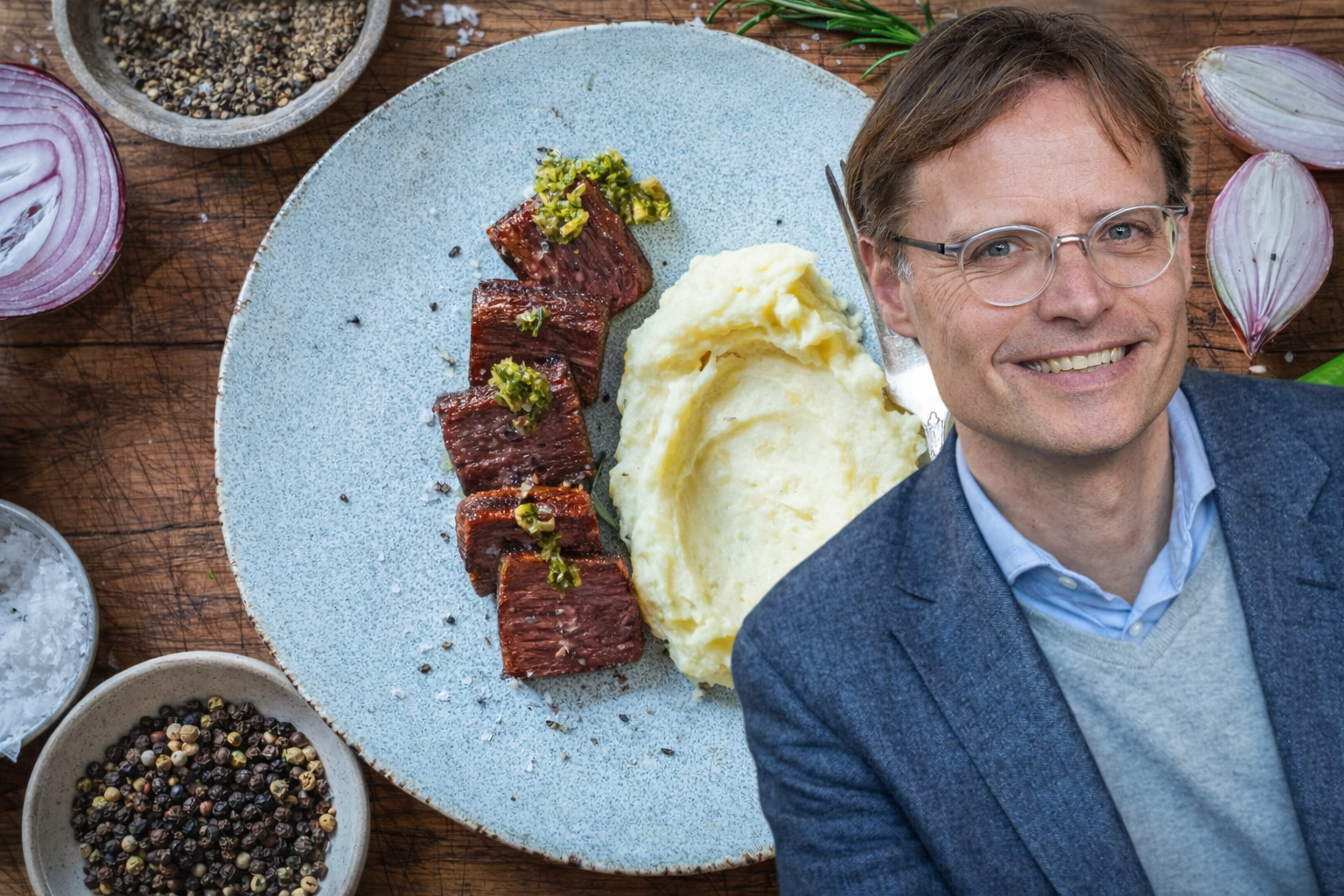
Redefine Meat’s Edwin Bark on manufacturing the best plant-based food on the market

Big InterviewGrocerySupply Chain

For Edwin Bark, the problem with plant-based meat has not been ambition. It has been execution.

Too many brands, he argues, rushed products to market on hype and sustainability messaging without solving the harder challenge, how to create something people genuinely want to eat again, and how to produce it consistently at scale.

That is where Redefine Meat believes it stands apart.

Founded in 2018, the business has built its offer around premium plant-based products designed to replicate the flavour, texture, aroma and cooking performance of meat. But Bark is clear that the company’s edge is not just product concept. It is the production system behind it.

“We are the first, and I think the only ones, to be able to produce that at scale and also efficiently,” he says. “We have an industrial line of layered production that allows us to mimic the very complex texture of meat.”

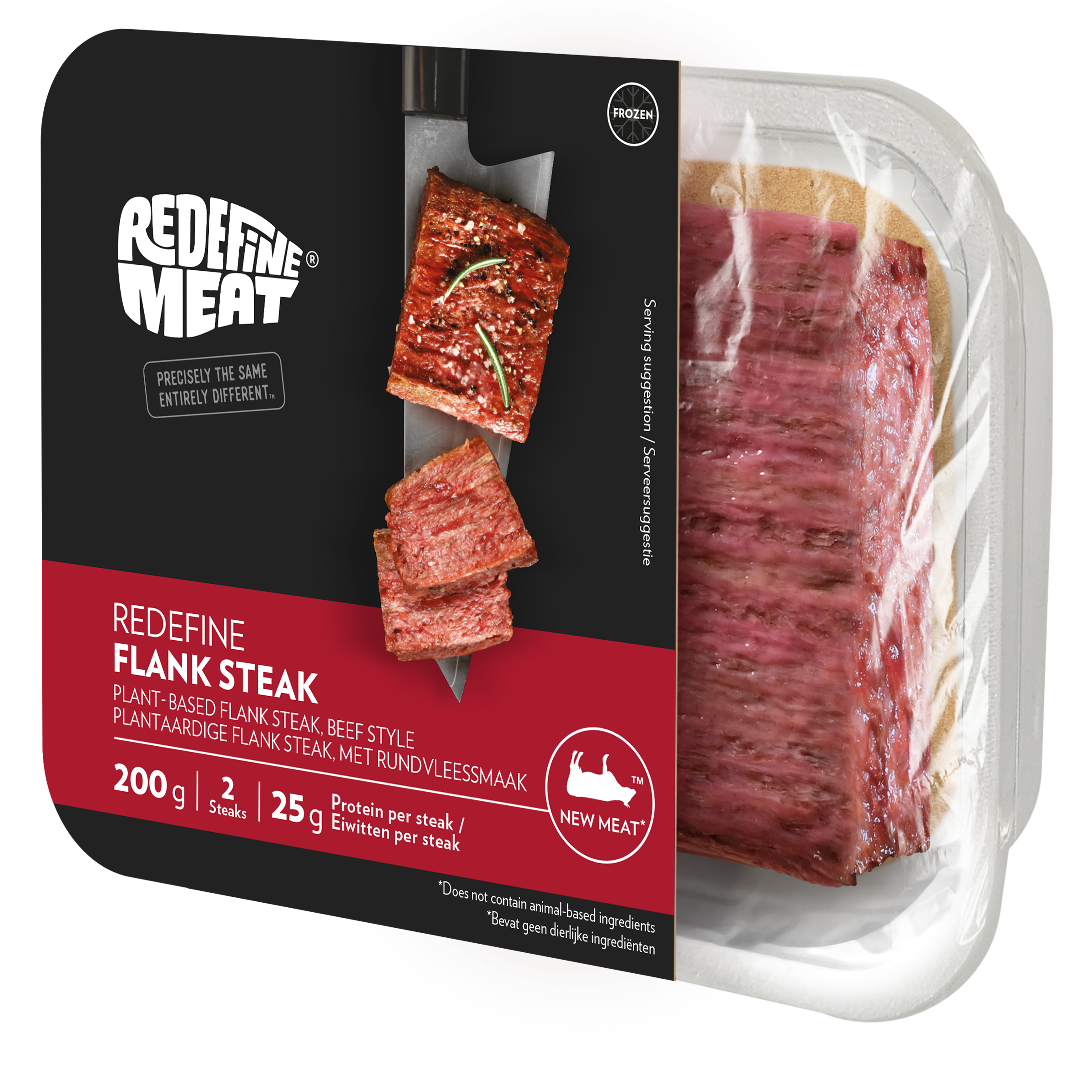
That production capability is central to Redefine Meat’s strategy. While much of the category has focused on burgers, nuggets and mince, the company chose to tackle one of the hardest formats first, whole-muscle cuts.

“When we started the company, we thought, what’s missing in this market? And what makes people crave meat? We concluded that it’s whole-muscle cuts. It’s steak,” Bark says.

Recreating the nuanced experience of cooking and eating a steak wasn’t a branding exercise for the brand, but a manufacturing one.
Redefine Meat has often been associated with 3D printing, but Bark prefers the term additive manufacturing. He says early versions of the technology worked as proof of concept, but were not commercially scalable.

“At the very beginning of our technology development, that was indeed the case. We built what we called the Angus printer. But that specific technology was not scalable.”

The business has since developed an industrial layered production line that can build plant-based cuts in a way that mimics the fibrous complexity of meat, turning a technical idea into a repeatable manufacturing process.

That, Bark suggests, is where much of the category has fallen short. Plant-based growth has cooled not because consumers lost interest in the idea, but because too many products failed to deliver on quality.

“The pressure to create very cheap protein means savings are made on the quality of the protein source or on the aromas,” he says. “When you see a cheap burger for one and a half pounds, you can be sure it’s not tasty.”

For Bark, the next phase of plant-based will be shaped less by marketing and more by process control, ingredient quality and repeat purchase.

“What sets us apart from the competition is that we are very meaty. We’re obsessed by meat,” he says, pointing to the company’s use of meat scientists to analyse animal meat at molecular level and identify plant-based equivalents.

That scientific approach has also shaped Redefine Meat’s route to market. Rather than pushing straight into grocery, the business first built scale in foodservice, using chefs and professional kitchens as a test bed for product performance.

“From day one, we started working with Michelin chefs,” Bark says.

The company now has around 7,000 foodservice locations serving its products, giving it a live environment to test consistency, cooking performance and consumer response before expanding further in retail.

When it did move into grocery, Bark says the business focused on retail partners that shared its long-term view of the category, including early work with Ocado and later expansion with Asda.

“The beauty of working with an online retailer is that you get a lot of data, so you can constantly test and learn and improve your performance,” he says.

Redefine Meat is not trying to be the cheapest brand on shelf. Bark says it sits above average on price, but argues that consumers will pay for quality if the eating experience is strong enough.

“We’re not the cheapest brand, actually,” he says. “Consumers are willing to pay for that because they enjoy the product.”

His view is straightforward. Coming top in the plant-based category won’t happen for those who shout loudest or have the best branding, but by those who build the strongest production model, with a focus on the quality of the product.

In a category that has often overpromised, Redefine Meat is betting that better manufacturing, not better messaging, will be what brings consumers back.

Click here to sign up to Retail Gazette‘s free daily email newsletter

Big InterviewGrocerySupply Chain

Leave a Reply

Your email address will not be published. Required fields are marked *

Fill out this field
Fill out this field
Please enter a valid email address.

Redefine Meat’s Edwin Bark on manufacturing the best plant-based food on the market

For Edwin Bark, the problem with plant-based meat has not been ambition. It has been execution.

Too many brands, he argues, rushed products to market on hype and sustainability messaging without solving the harder challenge, how to create something people genuinely want to eat again, and how to produce it consistently at scale.

That is where Redefine Meat believes it stands apart.

Founded in 2018, the business has built its offer around premium plant-based products designed to replicate the flavour, texture, aroma and cooking performance of meat. But Bark is clear that the company’s edge is not just product concept. It is the production system behind it.

“We are the first, and I think the only ones, to be able to produce that at scale and also efficiently,” he says. “We have an industrial line of layered production that allows us to mimic the very complex texture of meat.”

That production capability is central to Redefine Meat’s strategy. While much of the category has focused on burgers, nuggets and mince, the company chose to tackle one of the hardest formats first, whole-muscle cuts.

“When we started the company, we thought, what’s missing in this market? And what makes people crave meat? We concluded that it’s whole-muscle cuts. It’s steak,” Bark says.

Recreating the nuanced experience of cooking and eating a steak wasn’t a branding exercise for the brand, but a manufacturing one.

Redefine Meat has often been associated with 3D printing, but Bark prefers the term additive manufacturing. He says early versions of the technology worked as proof of concept, but were not commercially scalable.

“At the very beginning of our technology development, that was indeed the case. We built what we called the Angus printer. But that specific technology was not scalable.”

The business has since developed an industrial layered production line that can build plant-based cuts in a way that mimics the fibrous complexity of meat, turning a technical idea into a repeatable manufacturing process.

That, Bark suggests, is where much of the category has fallen short. Plant-based growth has cooled not because consumers lost interest in the idea, but because too many products failed to deliver on quality.

“The pressure to create very cheap protein means savings are made on the quality of the protein source or on the aromas,” he says. “When you see a cheap burger for one and a half pounds, you can be sure it’s not tasty.”

For Bark, the next phase of plant-based will be shaped less by marketing and more by process control, ingredient quality and repeat purchase.

“What sets us apart from the competition is that we are very meaty. We’re obsessed by meat,” he says, pointing to the company’s use of meat scientists to analyse animal meat at molecular level and identify plant-based equivalents.

That scientific approach has also shaped Redefine Meat’s route to market. Rather than pushing straight into grocery, the business first built scale in foodservice, using chefs and professional kitchens as a test bed for product performance.

“From day one, we started working with Michelin chefs,” Bark says.

The company now has around 7,000 foodservice locations serving its products, giving it a live environment to test consistency, cooking performance and consumer response before expanding further in retail.

When it did move into grocery, Bark says the business focused on retail partners that shared its long-term view of the category, including early work with Ocado and later expansion with Asda.

“The beauty of working with an online retailer is that you get a lot of data, so you can constantly test and learn and improve your performance,” he says.

Redefine Meat is not trying to be the cheapest brand on shelf. Bark says it sits above average on price, but argues that consumers will pay for quality if the eating experience is strong enough.

“We’re not the cheapest brand, actually,” he says. “Consumers are willing to pay for that because they enjoy the product.”

His view is straightforward. Coming top in the plant-based category won’t happen for those who shout loudest or have the best branding, but by those who build the strongest production model, with a focus on the quality of the product.

In a category that has often overpromised, Redefine Meat is betting that better manufacturing, not better messaging, will be what brings consumers back.

Click here to sign up to Retail Gazette‘s free daily email newsletter

Social


SUBSCRIBE TO OUR DAILY NEWSLETTER

  • This field is for validation purposes and should be left unchanged.
Big InterviewGrocerySupply Chain

Leave a Reply

Your email address will not be published. Required fields are marked *

Fill out this field
Fill out this field
Please enter a valid email address.

RELATED STORIES

Latest Feature


Menu


Close popup

Please enter the verification code sent to your email: