

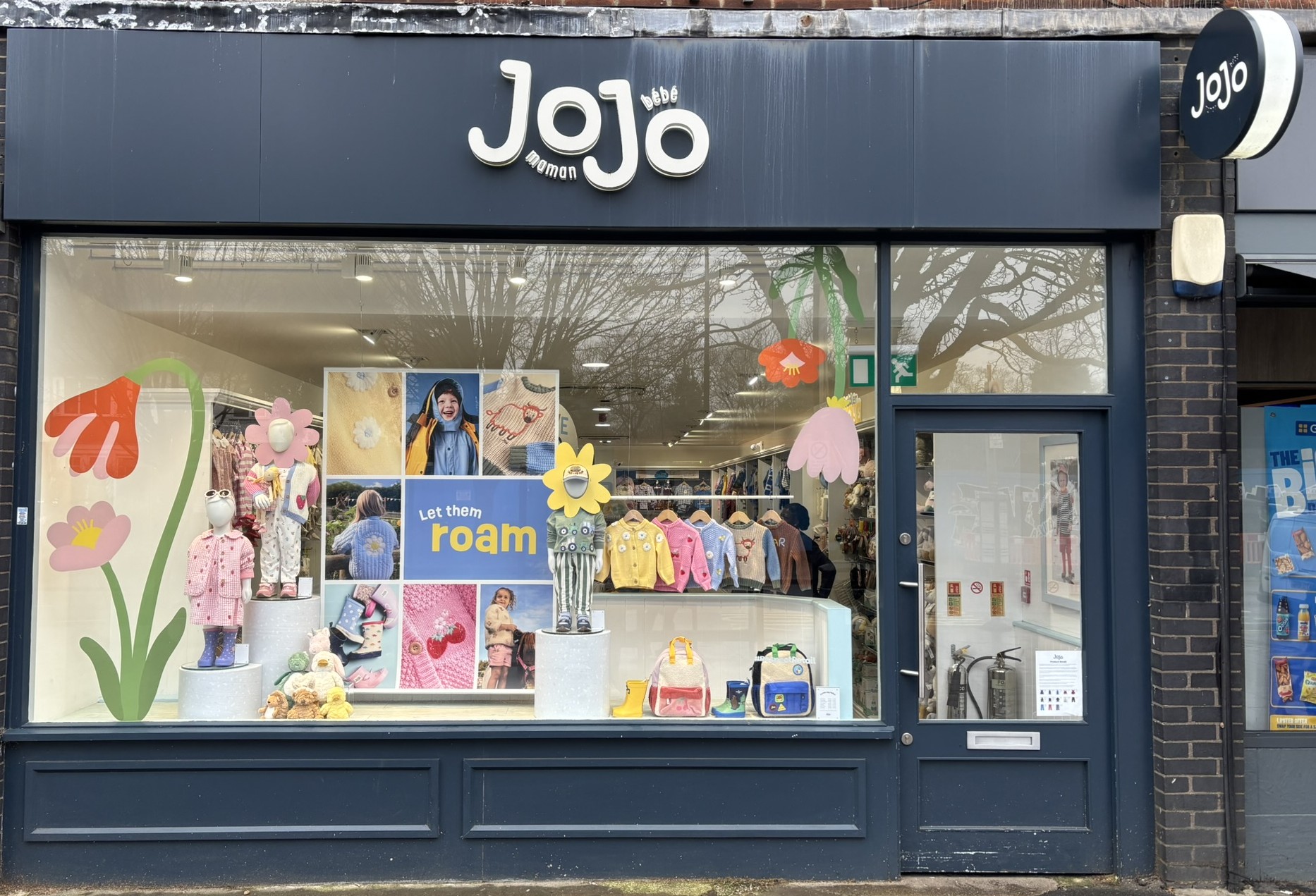
Last week, JoJo Maman Bébé celebrated 10 years of its B Corp certification, and for many retailers, this would be seen as simply a branding milestone. However, for JoJo Maman Bébé, it is also something more operational and, at times, more complicated.
The childrenswear specialist, which in 2016 became the UK’s first B Corp children’s wear brand, has spent the past 10 years steadily reshaping how its products are sourced, made and, increasingly, reused.
Acquired in April 2022 by a joint venture involving Next plc (44% stake) and investment firms linked to Davidson Kempner, the business has around 80 stores across the UK and Ireland.
Speaking to Retail Gazette, head of quality and responsible sourcing Laura Golledge says progress has been tangible, but far from complete, as the retailer paints a picture of a supply chain that is more structured and transparent than it once was, but still facing the practical limits of the complexity of evolving this system.
An evolving supply chain
“Reaching 10 years as a B Corp is something we’re incredibly proud of at JoJo, particularly as standards continue to evolve and industry expectations increase,” says Golledge.
Golledge says, over that period, the biggest shift has not been geography, but governance.
“Over the past decade, our supply chain has become more focused and structured. We still work with many of the same suppliers we partnered with ten years ago.
“Some relationships extend beyond 20 years, which reflects the strength and trust built over time.”

And that continuity spans a sourcing footprint led by China and India, alongside partners in Turkey, Sri Lanka and parts of Europe. But where relationships were once largely relationship-led, they are now underpinned by systems.
“Understanding where our products are made and building mutually beneficial partnerships has always been important to us, but today that knowledge is supported by more formal systems. Every factory producing JoJo orders is audited against our Code of Practice and assessed against technical standards.”
The next challenge is one familiar across the industry. “We are continuing to strengthen traceability so we can gain greater visibility beyond tier 1 suppliers,” she adds.
“Our next focus is to continue mapping beyond tier 1 in a meaningful and effective way, deepening our understanding of the wider supply network and strengthening transparency at every level.”
The slow reality of scaling sustainable materials
Founded in 1993 by Lauren Tenison from a kitchen-table start-up, JoJo’s early move into recycled fibres, dating back to 2007 for its polar fleece clothing and accessories, positioned it ahead of many peers. But scaling those materials across a full childrenswear range has proved less straightforward.
“Scaling certified materials across product categories brings both opportunity and complexity,” Golledge explains. “The biggest opportunity is the ability to create impact at scale, integrating these materials into our ranges allows us to reduce environmental impact while still delivering the comfort and quality parents expect.”
The retailer has opted for a targeted approach rather than wholesale change.
“Our approach has been to prioritise introducing certified materials into specific ranges where they can deliver meaningful impact, while maintaining performance. These materials currently represent a small proportion of our overall range rather than the majority, but we see this as a key area of growth.”
That expansion now includes a small organic babywear collection launched in 2025, alongside certified materials in categories such as outerwear, swimwear (2002) and toys.

In 2023, it become scope certified to the Global Recycled Standard and launched its first range of FSC Certified Rubber wellies, followed by Global Organic Textile Standard by the Soil Operations in 2024. A forthcoming Preferred Materials List will set out priorities including organic cotton and recycled fibres.
However, Golledge warns operational constraints still remain the main barrier. “Availability, cost and traceability can vary depending on the certification, material and product category,” she says.
“Ensuring consistent supply while maintaining quality standards is critical.” Even at product level, the trade-offs are less about design than process.
“Organic cotton refers to cotton that is grown without synthetic pesticides or fertilisers and processed according to recognised certification standards.
“Our organic babywear collection is certified, meaning the fibre sourcing and processing meet strict environmental and chemical management requirements.”
But that comes with added complexity. “Working with any certified material requires careful documentation and certificate management at every stage of production. Ensuring compliance with certification requirements adds administrative complexity and requires additional internal resources.”
Circularity moves from concept to infrastructure
Like many retailers, JoJo has experimented with circular initiatives over the years, “From A Mother To Another” donation scheme. While the goal is the same, Golledge says what has changed is how those programmes are delivered.
“Circularity is an increasingly important part of how we think about product lifecycle and long-term resource use,” says Golledge.
“As the business evolved, changes in logistics made it difficult to manage at the scale and level of control required, and the programme was brought to a close.”
For example, the retailer has shifted towards more structured partnerships such as its collaboration with The Little Loop for ‘JoJo Reloved’, a trade-in model designed to keep products in circulation.
“This approach enables us to take a more structured and scalable view of product reuse, supported by specialist infrastructure. The Little Loop manages the collection, cleaning, sorting and redistribution processes, allowing us to integrate circular thinking into our operations without compromising product quality or safety standards.”
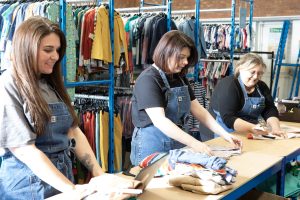
As a result, while donation still plays a role, it is in a more controlled format. “In 2025, we donated 80 large boxes of unused samples to charities supporting vulnerable families, ensuring usable product continues to deliver value beyond its original purpose.”
Looking ahead, industry changes such as digital product passports are also being closely watched. The scheme, set to be implemented later this year, has been eyed by the fashion retail sector, for its potential to support resale by verifying product authenticity and material composition.
“We see strong potential for DPPs to improve transparency and traceability, particularly by giving customers clearer visibility into materials, care requirements and product lifecycle information,” Golledge says,
Holding the line on sustainability goals
As costs rise and regulatory pressure increases, JoJo is clear on where it will and will not bend.
“We will never compromise on product safety, quality, or comfort. Families trust us to deliver products that are safe, reliable, and built to last, and that responsibility sits at the centre of every decision we make.”
However, as with many retailers feeling the bite from inflation borne from geopolitical shocks, elsewhere progress may be less linear. “Rising costs and increasing regulatory requirements do require careful prioritisation. In some areas, this may mean phasing initiatives over time rather than introducing changes all at once.”
For Golledge, that is not a retreat from sustainability goals, but a reflection of how supply chains actually work. “While the pace may vary, the direction of travel remains clear, continuing to improve standards while maintaining accessibility for families,” she says.
Click here to sign up to Retail Gazette‘s free daily email newsletter