

For many retailers, the search for a new payments partner begins with discipline.
Internal teams map out what the business needs. They review pain points, customer behaviour, technology requirements, security standards and whether each provider can support the company’s next phase of growth.
Then the decision reaches the boardroom.
Suddenly, the questions can change. Who are our competitors using? Which provider is best known? Who has the biggest clients? Which name feels safest?
For the payments, IT and finance specialists who have done the work, it can feel like a popularity contest. Yet Simon Tune, commercial director at Elavon, argues that those questions shouldn’t simply be dismissed.
“I’d summarise that in two words,” he says. “Trust and risk.” A familiar provider feels safer. A supplier used by peers feels proven. A big-name partner appears to reduce the risk of making the wrong call.
“If you see your peers doing something, and they are people you trust and respect, it comes with a level of trust that’s just ingrained because somebody else is doing it,” Tune explains.
That’s why references sit so late in almost every RFP process. Retailers want proof that a provider can do what it says it can do, but they also want reassurance from people who understand their world.

The problem starts when reassurance becomes a shortcut. Brand recognition may show that a provider is established, but it doesn’t prove that it’s right for a retailer’s channels, customers, growth plans, internal capabilities or appetite for risk.
The bigger choice behind the supplier name
Tune believes retailers need to stop treating payments partner selection as a simple comparison between providers. Increasingly, it’s a decision about operating model.
On one side sits the full-stack model, where a single provider can offer payment processing, hardware, software, integrations and related services. The appeal is clear. It offers simplicity, scale and a cleaner line of accountability.
On the other side is a modular model, where the payments provider plays one role in a wider ecosystem of technology partners, hardware suppliers, software platforms and networks.
Tune says Elavon often sits in this second space.
“We will, in some cases, be the provider of software and hardware, but in the majority of cases we’ll be the provider of payments,” he says. “Other people who we need to partner with and create integrations to will be part of creating that experience as well.”
The stronger boardroom question is whether the retailer wants one provider to own the whole ecosystem, or several partners that can work together. “Do you trust that one big provider can own all of your ecosystem and all of the dependencies that you have on it?” Tune asks.
“Or do you prefer a model where some of your risk is spread across multiple participants, but you need to trust that those participants can coordinate across each other?”
Neither route is automatically better. A full-stack model can reduce complexity, but it may tie the retailer to one provider’s roadmap. A modular model can offer greater flexibility, but it demands stronger governance, cleaner ownership and better coordination.
The right choice depends on where the retailer’s heading. A business moving from a single-channel model into online, app, kiosk or multichannel commerce may need space to add and change partners. A larger retailer may decide the burden of managing multiple suppliers has become too heavy.
The fundamentals still decide the outcome
Before retailers reach the operating model debate, there are fundamentals every credible payments partner must prove.
Tune says the first is relevant credibility. It’s not enough for a provider to be generally known in payments. Retailers need confidence that the provider understands their specific vertical.
Then come what Tune calls the hygiene factors. These are security, platform performance, availability, acceptance and authorisation. These are commercial measures, not dull technical details.
“If your platform isn’t measured at five nines, 99.999 per cent of the time available, you’re not doing your job,” Tune says.
Every outage has a revenue consequence. Every failed transaction risks losing a customer at the point of purchase and every poor payment experience undermines the work retailers have done to bring that customer to the checkout.
Authorisation is especially important, and Tune believes it’s often misunderstood. Retailers can obsess over traffic, conversion, loyalty and acquisition cost, yet overlook the value of marginal gains in approval rates.
“The difference of a payments processor approving 93 per cent of their transactions, compared to a payments processor that’s approving 95, 96 per cent of their transactions, when all of that translates down to bottom line, can have a massive impact,” he says.
Authorisation depends on scheme relationships, issuer connectivity, fraud tools and how transaction data is managed. It is not always easy to assess fully until a provider is live, but it should never be treated as secondary.
The ecosystem now makes or breaks the experience
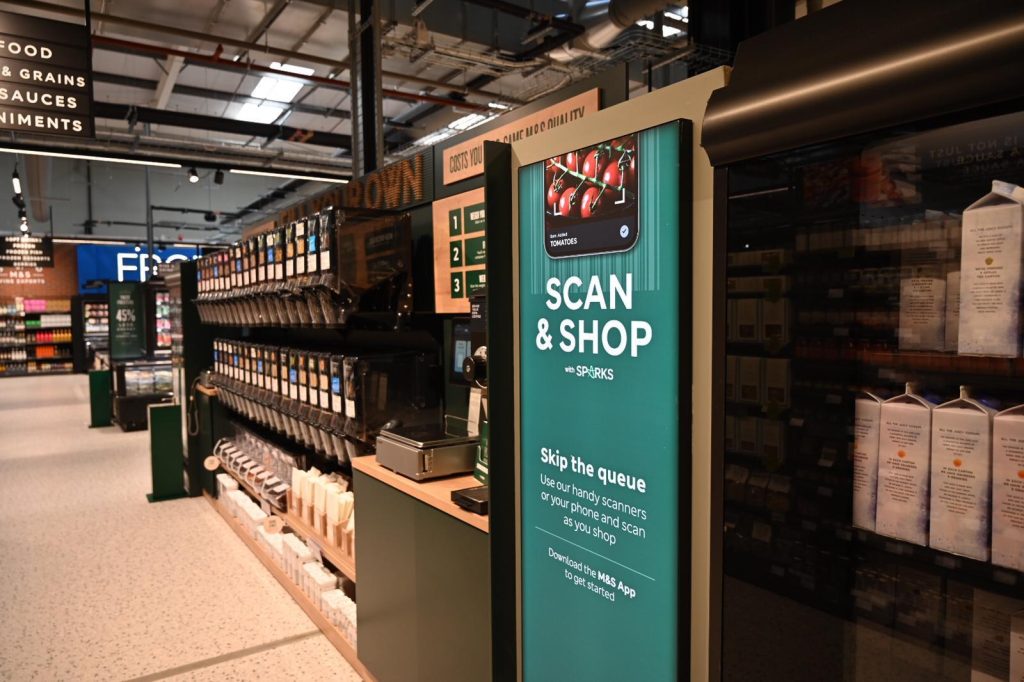
Modern retail payments rarely sit in isolation. A customer may pay in store, online, through an app, at a kiosk, through an account, or through a mix of different methods. Behind that apparently simple experience is a network of providers that must work together. “If one part of that ecosystem falls apart, the whole customer experience falls apart,” Tune says.
This is where modularity needs discipline. The benefit is flexibility. Retailers can choose the right component for each part of the journey and adapt as the market changes. The risk is operational complexity.
If a kiosk goes down, the customer doesn’t care whether the problem sits with the hardware provider, the software, connectivity or the payments processor. The retailer simply needs it working again.
That means contracts, ownership, performance reporting, KPIs and root-cause processes need to be clear from the start. A full-stack model may make accountability easier. A modular model may make adaptation easier. Retailers need to decide which trade-off they are prepared to manage.
Start with the reason for change
For Tune, the best way to stop payments selection turning into a brand-led boardroom debate is to define the purpose of the process before it begins.
“What is the set of outcomes that we’re actually trying to achieve?” he asks. Too often, he says, RFPs are unclear about the need for change. Sometimes the process appears to be happening because a contract has reached a review point, not because the business has a specific strategic objective.
“So many of the RFPs that I see, it isn’t clear as to the need for change,” he says.
That lack of clarity makes it harder for suppliers to respond intelligently, harder for internal teams to compare options, and easier for senior leaders to fall back on familiar names.
If the objective is simply price evaluation, the business may not need a board-level strategic review. If the objective is to support new channels, improve customer experience, reduce failed transactions, strengthen resilience or prepare for growth, the conversation changes completely.
Retail teams should enter the boardroom with a case built around outcomes, not preferences. Improved authorisation becomes revenue protection. Platform availability becomes operational resilience. Integration capability becomes speed to market. Flexibility becomes future readiness.
Boards will always care about trust and risk, and they should. The role of retail teams is to show where trust is genuinely earned, where risk really sits, and why the most recognisable provider is not always the best fit.
In payments, popularity can be reassuring. But it should never be mistaken for proof.
Click here to sign up to Retail Gazette‘s free daily email newsletter