


UK inflation accelerated to 2.9 per cent in July as soaring household energy costs pushed up the cost of living, raising fresh concerns over pressure on consumers and retailers.
The Consumer Prices Index climbed from 2.6 per cent in June, according to the Office for National Statistics, marking the first rise in the annual rate since March.
Housing and household services were the biggest contributor to the increase, with gas prices jumping 14.7 per cent during July following changes to the Ofgem energy price cap. Electricity prices also rose 3.6 per cent.
The rise in gas prices was the largest since October 2022, with the energy price cap increasing partly as higher wholesale prices linked to the conflict in the Middle East fed through to household bills.
However, underlying inflation remained more stable. Core CPI, which excludes energy, food, alcohol and tobacco, held at 2.6 per cent, while services inflation eased from 3.6 per cent to 3.4 per cent.
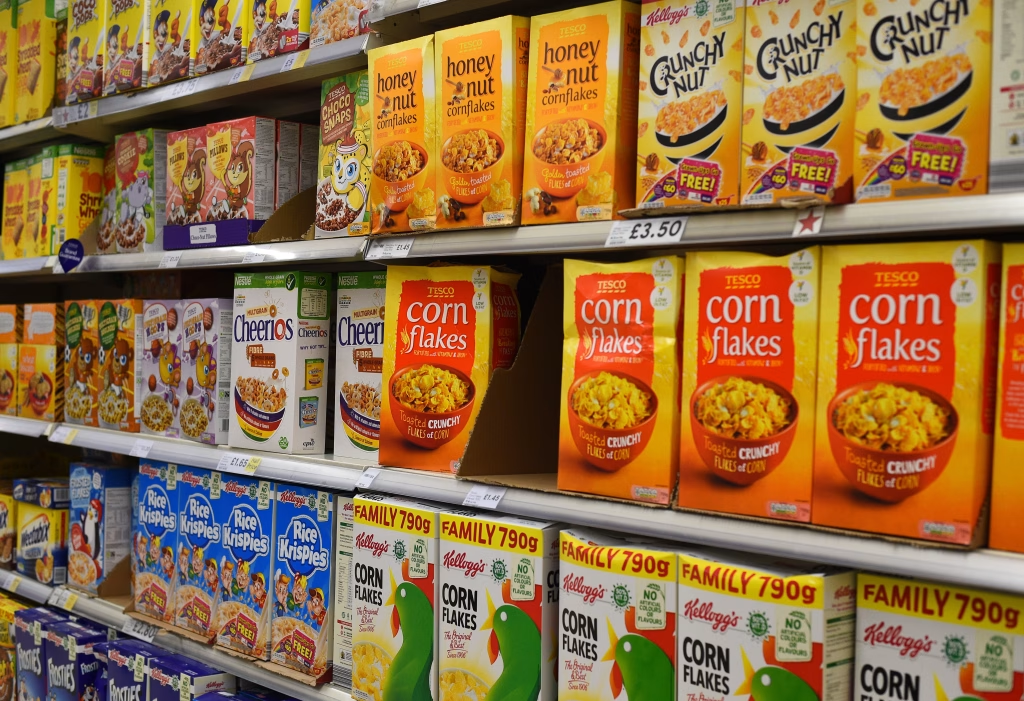
Food and non-alcoholic beverage inflation also slowed from 1.7 per cent to 1.3 per cent, while clothing and footwear prices were 0.5 per cent higher year on year.
Samuel Fuller, director of Financial Markets Online, said the figures showed the inflationary impact of the Iran conflict had finally begun to hit UK households after months of relative resilience.
He said: “The inflationary whiplash of the Iran war has finally hit. The surprising thing isn’t that it has pushed up CPI, but that it took so long to do so.
“Apart from a modest spike during the first month of the conflict, CPI has either stayed flat or fallen during the on-off war and proved remarkably resilient to the extreme swings in fuel prices unleashed by the fighting.
“However the surge in household energy prices has finally caught up with the UK. July saw the largest spike in gas prices since October 2022 and this is the main culprit for the rapid acceleration in the cost of living.”
Fuller pointed to the stability of core and services inflation as reasons for optimism, adding that the headline figure was only marginally above the Bank of England’s 2.8 per cent forecast.
He warned, however, that retailers and consumers could face further inflationary pressure if higher energy costs persist or poor UK harvests begin to push up food prices.
“The question now is whether the spike in headline inflation endures or fades away,” Fuller said.
“The US-Iran crisis remains unresolved and with much of the UK in drought conditions, crop harvests have been poor and the spectre of rapid food price inflation looms.”
Fuller said financial markets are now pricing in at least one Bank of England interest rate increase by the end of the year, although he added that a move at the Monetary Policy Committee’s September meeting remains unlikely.
He concluded: “The UK’s apparent imperviousness to the war’s inflationary effects is over.”
Click here to sign up to Retail Gazette‘s free daily email newsletter