
eBay UK general manager Eve Williams on innovations in community-building

Big InterviewMarketingTechnology

Vice-president and general manager Eve Williams explains why AI should disappear into the experience, why the strongest live-commerce hosts are experts rather than influencers, and how community is becoming one of eBay’s most persuasive forms of brand building…

For a marketplace with billions of listings, the biggest marketing challenge facing eBay is to make an almost limitless inventory feel personal, credible and human.

Eve Williams, vice-president and general manager of eBay UK, believes the answer lies in combining the oldest strengths of the platform with newer forms of discovery, entertainment and real-world participation.

“There are a lot of things that have changed, but there are also some things that have stayed consistent,” Williams says.

“What hasn’t changed is that customers want to have a trusted experience. Trust is absolutely fundamental in a marketplace, more than anything. Choice is incredibly important and value is critical. Then you’ve got trust, value and choice, but there’s also community and connection; wanting to know where your things have come from.”

That list is far more than a description of customer needs. It’s also a useful map of eBay’s marketing strategy. The task, as Williams frames it, is to translate durable brand promises into experiences that feel native to the way people now browse, watch, share and shop.
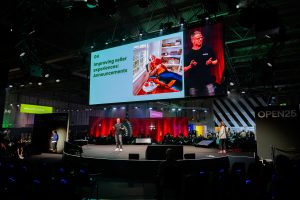
Image credit: eBay

“Those have always been the pillars of what consumers need, but customers’ expectations have changed,” she says. “Over the last few years, we’ve definitely been on a massive journey of transforming the eBay experience to make sure that it meets the needs of consumers.”

Make the technology disappear

The first part of that transformation is a discovery problem. eBay’s scale is an advantage only if the right objects reach the right people, and Williams is clear that technology should reduce the effort involved rather than announce itself as another layer of complexity.

“While new technology is coming into the experience, it’s our job to make sure that it isn’t adding complexity,” she says. “It’s actually removing that complexity.”

Artificial intelligence is already embedded across recommendations, search and homepages, she says, and is increasingly being used to make selling and finding products easier. In the example Williams gives, a seller can upload a watch image and let AI identify the brand and model, then pre-fill the relevant categories. The result should give buyers richer, more accurate information while making the listing process simpler for sellers.

Personalisation is the other side of the equation.

“The reality is that we’ve got billions of listings, but we’ve also got over 137 million potential buyers,” Williams says. “You’ve got to balance those very unique listings (often they are one of a kind, which is incredible) with how you understand the intent of those buyers.”

That means matching product attributes with buying and search histories, then moving beyond a purely query-led experience. Williams says eBay has been testing more product and homepage feeds in the UK so people can discover relevant items before explicitly searching for them.

A watch buyer, for example, might see another watch that fits their taste, or an adjacent product favoured by shoppers with similar interests. “It’s about using AI in a very seamless way to match the items with the intent of the buyer,” she says.

Williams also points to US trials involving AI chatbots and agents that help people identify products.

“Search queries are becoming longer, and we’re helping people to discover products that are more specific to their interests and needs,” she says. “If you’re trying to complete a collection, it can help you find that, but it can also help you discover something when you’ve got a very specific need.”

The seller is the creative

If AI makes discovery quieter and more intuitive, live commerce makes the people behind the inventory more visible. Here, eBay’s marketing advantage is a vast supply of specialist knowledge and enthusiasm.

“You could start with an assumption that the people who are going to be really great on live are going to be really media-trained, have done loads of social media, or be really outgoing,” Williams says. “Actually, that’s not the case. It’s people who really understand the category they’re selling in, who understand their pieces and who are passionate about it.”

She cites The Luxury Pickers, a Bath-based couple who source watches, jewellery and handbags from markets and thrift stores around the world. Their content follows the sourcing journey (including trips to Tokyo) before directing followers to a scheduled eBay Live sale.
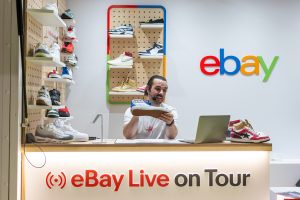
Image credit: eBay

“They build a following, they build a community and they build a conversation,” Williams says. “People come on to the live and they return. That connection existed on eBay before because there were small businesses, but it comes to life in such a powerful way.”

The commercial effect continues after a stream ends.

“We’re seeing that people who are following and going on to these live streams are then going on and buying more from these sellers on the core platform,” Williams says. “They’re building a relationship with them and then going back and buying more from the eBay site, because they know who it is they’re buying from.”

Live also gives passion categories a reason to command attention even when a viewer isn’t ready to buy.

“If you care about watches, you’re coming on to see the people selling great watches not just because you’re going to buy them,” Williams says. “You want to see what’s available, what kind of price they’re going for and the conversation around them. There’s an amazing element of entertainment, connection and community.”

That community can begin to sustain the content itself. Williams describes a regular viewer of refurbished-electronics seller Preloved Tech who started helping answer questions in the chat and later met the business owners in person. A Warhammer seller, she adds, organised a trip with members of its buyer community.

“There’s this amazing morphing of worlds where it’s bringing the community together,” she says.

Turn seller success into brand storytelling

The seller story also travels beyond eBay. Williams highlights King’s Kleans, whose sneaker-cleaning venture developed into buying and reselling footwear, supported by a social following she puts at more than 1.5 million and an audience on eBay Live.

Another young seller behind Philips Hobbies has progressed from enthusiast trading to employing someone.

“It’s about making sure that we create these role models, profile these sellers and make sure that people recognise that could be them,” Williams says. “We’ve done a lot on platforms like TikTok, Instagram and YouTube, raising the profile of some of these sellers and making sure that people know that could be them too.”

In that formulation, seller advocacy is acquisition marketing: the most credible invitation to start is evidence that somebody else already did.
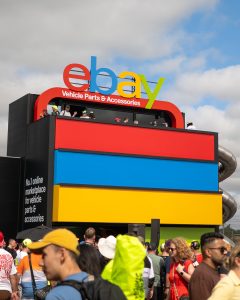
Image credit: eBay

Show up where the community already is

The same principle informs eBay’s physical activations. Rather than treating online and offline as separate channels, Williams sees events as places where community, product storytelling and platform features can reinforce one another.

“People want that human connection,” she says. “They want the joy of seeing the product. They want the joy of knowing where it’s coming from.”

She points to a London live-commerce activation featuring Peter Crouch selling sports memorabilia; eBay’s presence at Comic-Con, where live streams and an AI tool that turned visitors into superhero trading cards brought technology into the event; Silverstone activity around car parts, including recycled and salvaged components; and a Second Life Market appearance that combined pre-loved fashion with an on-site live stream.

“Often it is all centred on showing up where that community is,” Williams says. “We will continue to show up in real life because we want to be part of those communities. It gives us an amazing opportunity to spend time with our buyers and sellers, see what they’re interested in and connect with them.”

It also provides the right context to explain trust products such as eBay’s Authenticity Guarantee.

Trust is the brand promise

Williams welcomes the arrival of more resale marketplaces because they help normalise buying pre-loved and second-hand. But she argues that trust remains the decisive point of differentiation.

“People want choice, value, convenience and community, but you’ve got to have trust underpinning it as well,” she says.

That promise is operational as well as emotional.

“Trust and online safety are at the forefront of our minds in everything we do and every experience we’re creating,” Williams says, describing a combination of risk, trust and compliance teams, AI that identifies bad actors and manual checks. “Trust and safety on the platform are absolutely central, at the heart of everything we do.”

Her own favourite eBay purchase brings the strategy down to the level of a single object; a pair of gold Liberty Nike Air Max that she had once sold and regretted losing.

“The beauty of eBay is when they pop up again and you find them,” she says. “It was a total joy when you see those and think they’ve gone from your grasp and they come back. I do love a pair of Nikes and I do love gold, so it was perfection, and I got it through AG [Authenticity Guarantee], so it was even better.”

Click here to sign up to Retail Gazette‘s free daily email newsletter

Big InterviewMarketingTechnology

Leave a Reply

Your email address will not be published. Required fields are marked *

Fill out this field
Fill out this field
Please enter a valid email address.

eBay UK general manager Eve Williams on innovations in community-building

Vice-president and general manager Eve Williams explains why AI should disappear into the experience, why the strongest live-commerce hosts are experts rather than influencers, and how community is becoming one of eBay’s most persuasive forms of brand building…

For a marketplace with billions of listings, the biggest marketing challenge facing eBay is to make an almost limitless inventory feel personal, credible and human.

Eve Williams, vice-president and general manager of eBay UK, believes the answer lies in combining the oldest strengths of the platform with newer forms of discovery, entertainment and real-world participation.

“There are a lot of things that have changed, but there are also some things that have stayed consistent,” Williams says.

“What hasn’t changed is that customers want to have a trusted experience. Trust is absolutely fundamental in a marketplace, more than anything. Choice is incredibly important and value is critical. Then you’ve got trust, value and choice, but there’s also community and connection; wanting to know where your things have come from.”

That list is far more than a description of customer needs. It’s also a useful map of eBay’s marketing strategy. The task, as Williams frames it, is to translate durable brand promises into experiences that feel native to the way people now browse, watch, share and shop.

Image credit: eBay

“Those have always been the pillars of what consumers need, but customers’ expectations have changed,” she says. “Over the last few years, we’ve definitely been on a massive journey of transforming the eBay experience to make sure that it meets the needs of consumers.”

Make the technology disappear

The first part of that transformation is a discovery problem. eBay’s scale is an advantage only if the right objects reach the right people, and Williams is clear that technology should reduce the effort involved rather than announce itself as another layer of complexity.

“While new technology is coming into the experience, it’s our job to make sure that it isn’t adding complexity,” she says. “It’s actually removing that complexity.”

Artificial intelligence is already embedded across recommendations, search and homepages, she says, and is increasingly being used to make selling and finding products easier. In the example Williams gives, a seller can upload a watch image and let AI identify the brand and model, then pre-fill the relevant categories. The result should give buyers richer, more accurate information while making the listing process simpler for sellers.

Personalisation is the other side of the equation.

“The reality is that we’ve got billions of listings, but we’ve also got over 137 million potential buyers,” Williams says. “You’ve got to balance those very unique listings (often they are one of a kind, which is incredible) with how you understand the intent of those buyers.”

That means matching product attributes with buying and search histories, then moving beyond a purely query-led experience. Williams says eBay has been testing more product and homepage feeds in the UK so people can discover relevant items before explicitly searching for them.

A watch buyer, for example, might see another watch that fits their taste, or an adjacent product favoured by shoppers with similar interests. “It’s about using AI in a very seamless way to match the items with the intent of the buyer,” she says.

Williams also points to US trials involving AI chatbots and agents that help people identify products.

“Search queries are becoming longer, and we’re helping people to discover products that are more specific to their interests and needs,” she says. “If you’re trying to complete a collection, it can help you find that, but it can also help you discover something when you’ve got a very specific need.”

The seller is the creative

If AI makes discovery quieter and more intuitive, live commerce makes the people behind the inventory more visible. Here, eBay’s marketing advantage is a vast supply of specialist knowledge and enthusiasm.

“You could start with an assumption that the people who are going to be really great on live are going to be really media-trained, have done loads of social media, or be really outgoing,” Williams says. “Actually, that’s not the case. It’s people who really understand the category they’re selling in, who understand their pieces and who are passionate about it.”

She cites The Luxury Pickers, a Bath-based couple who source watches, jewellery and handbags from markets and thrift stores around the world. Their content follows the sourcing journey (including trips to Tokyo) before directing followers to a scheduled eBay Live sale.

Image credit: eBay

“They build a following, they build a community and they build a conversation,” Williams says. “People come on to the live and they return. That connection existed on eBay before because there were small businesses, but it comes to life in such a powerful way.”

The commercial effect continues after a stream ends.

“We’re seeing that people who are following and going on to these live streams are then going on and buying more from these sellers on the core platform,” Williams says. “They’re building a relationship with them and then going back and buying more from the eBay site, because they know who it is they’re buying from.”

Live also gives passion categories a reason to command attention even when a viewer isn’t ready to buy.

“If you care about watches, you’re coming on to see the people selling great watches not just because you’re going to buy them,” Williams says. “You want to see what’s available, what kind of price they’re going for and the conversation around them. There’s an amazing element of entertainment, connection and community.”

That community can begin to sustain the content itself. Williams describes a regular viewer of refurbished-electronics seller Preloved Tech who started helping answer questions in the chat and later met the business owners in person. A Warhammer seller, she adds, organised a trip with members of its buyer community.

“There’s this amazing morphing of worlds where it’s bringing the community together,” she says.

Turn seller success into brand storytelling

The seller story also travels beyond eBay. Williams highlights King’s Kleans, whose sneaker-cleaning venture developed into buying and reselling footwear, supported by a social following she puts at more than 1.5 million and an audience on eBay Live.

Another young seller behind Philips Hobbies has progressed from enthusiast trading to employing someone.

“It’s about making sure that we create these role models, profile these sellers and make sure that people recognise that could be them,” Williams says. “We’ve done a lot on platforms like TikTok, Instagram and YouTube, raising the profile of some of these sellers and making sure that people know that could be them too.”

In that formulation, seller advocacy is acquisition marketing: the most credible invitation to start is evidence that somebody else already did.

Image credit: eBay

Show up where the community already is

The same principle informs eBay’s physical activations. Rather than treating online and offline as separate channels, Williams sees events as places where community, product storytelling and platform features can reinforce one another.

“People want that human connection,” she says. “They want the joy of seeing the product. They want the joy of knowing where it’s coming from.”

She points to a London live-commerce activation featuring Peter Crouch selling sports memorabilia; eBay’s presence at Comic-Con, where live streams and an AI tool that turned visitors into superhero trading cards brought technology into the event; Silverstone activity around car parts, including recycled and salvaged components; and a Second Life Market appearance that combined pre-loved fashion with an on-site live stream.

“Often it is all centred on showing up where that community is,” Williams says. “We will continue to show up in real life because we want to be part of those communities. It gives us an amazing opportunity to spend time with our buyers and sellers, see what they’re interested in and connect with them.”

It also provides the right context to explain trust products such as eBay’s Authenticity Guarantee.

Trust is the brand promise

Williams welcomes the arrival of more resale marketplaces because they help normalise buying pre-loved and second-hand. But she argues that trust remains the decisive point of differentiation.

“People want choice, value, convenience and community, but you’ve got to have trust underpinning it as well,” she says.

That promise is operational as well as emotional.

“Trust and online safety are at the forefront of our minds in everything we do and every experience we’re creating,” Williams says, describing a combination of risk, trust and compliance teams, AI that identifies bad actors and manual checks. “Trust and safety on the platform are absolutely central, at the heart of everything we do.”

Her own favourite eBay purchase brings the strategy down to the level of a single object; a pair of gold Liberty Nike Air Max that she had once sold and regretted losing.

“The beauty of eBay is when they pop up again and you find them,” she says. “It was a total joy when you see those and think they’ve gone from your grasp and they come back. I do love a pair of Nikes and I do love gold, so it was perfection, and I got it through AG [Authenticity Guarantee], so it was even better.”

Click here to sign up to Retail Gazette‘s free daily email newsletter
Social


SUBSCRIBE TO OUR DAILY NEWSLETTER

  • This field is for validation purposes and should be left unchanged.
Big InterviewMarketingTechnology

Leave a Reply

Your email address will not be published. Required fields are marked *

Fill out this field
Fill out this field
Please enter a valid email address.

RELATED STORIES

Latest Feature


Menu

The brand, budget, and agency decisions reshaping UK retail marketing

Join 1.5k retail marketing directors and senior leaders

Marketing Weekly NL Form

  • This field is for validation purposes and should be left unchanged.


Close popup

Please enter the verification code sent to your email: