Furniturebox co-founder: “There’s no manuscript” for building ecommerce success

Big InterviewEcommerceHome & DIY

Monty George was 17-years-old when he evolved his skill for selling on marketplaces into a dedicated ecommerce business, with his school-friend Dan Beckles. Just over a decade later and Furniturebox has recently rebranded; has grown into the States; and is about to replatform for its next stage of development.

Fueled by a love of second-hand goods, George started selling electronics, mini quad bikes and dirt bikes on the likes of eBay. He realised if he could sell logistically complex items such as dirt bikes successfully through a marketplace model, scaling into furniture was not only viable but commercially compelling.

“There weren’t a huge amount of people selling furniture online – it was big and bulky. There were quite high barriers to entry,” George explains.

This inspired him to get a container of furniture.

“That sold incredibly quickly. I realised the market was fairly expansive, and there were all these different products that we could do. I thought ‘fantastic’. This is a really exciting proposition.”

Unperturbed by the “big and bulky” nature of furniture, even doing some of the heavy lifting in the early days, George was conscious that delivery of such items had to be right.

Customer centric from the start

“We learnt a lot in the early days about damages, about the issues that carriers can cause, and really built our customer experience – and a lot of the way we do things – around those customer concerns and pitfalls,” he explains.

This included getting packaging back from customers, addressing “will it fit through the door?” worries, and returns queries.

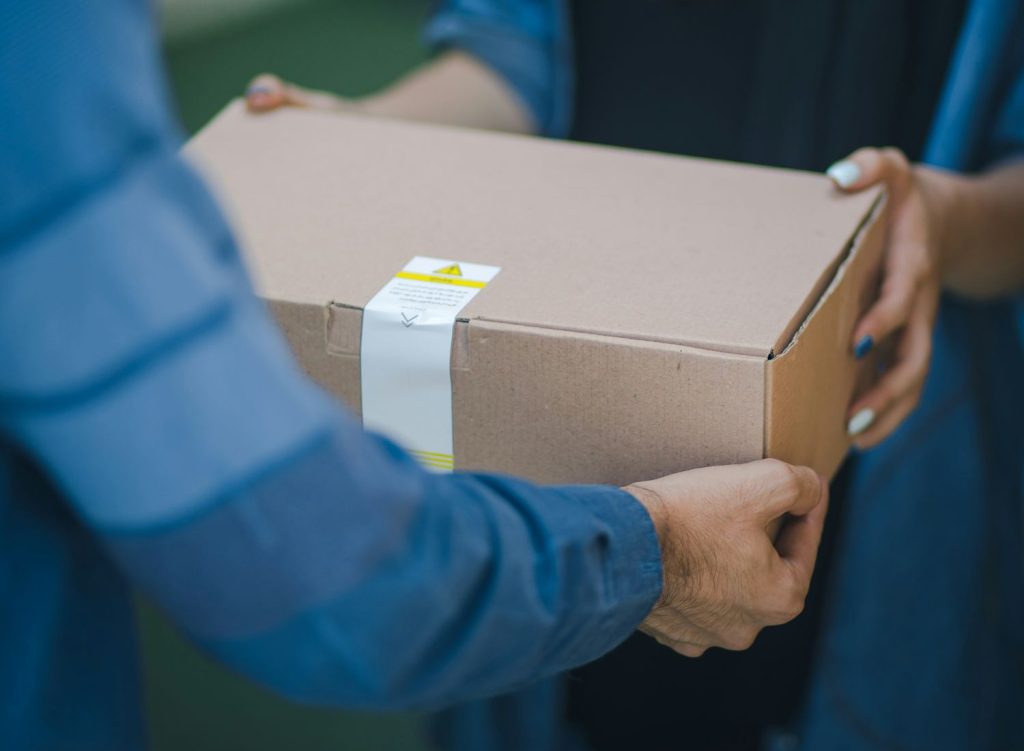
“We’ve always been a very customer centric company. We offer next day delivery up to eight o’clock in the evening, which is industry leading for large parcel multi box. And when you call up our customer service team, they are empowered to actually sort the problem out, rather than having a stock response because every situation is slightly different,” notes George.

New locations, new learnings

The brand’s ability to deliver next-day with an eight pm cut-off in the UK is thanks to a centralised hub, this hasn’t been a luxury when growing the US offering.

“It’s a completely different geography. Each state has its own accounting legislation and various different laws. The market, as well, is different,” warns George.

The right partnerships, and building those relationships has been key to Furniturebox’s American ambitions.

“You can leverage those relationships to support you, walk through these various different areas – in accounting, in logistics, even in retail,” he says.

Having built a strong relationship with Wayfair in the UK, it is now also their largest partner in the US. George states: “We’ve leveraged those relationships rather than having to learn it all ourselves. Partnering with really good people allows us to not make mistakes.”

Mistakes which could be costly, whether it is additional storage fees, new tariffs, long lead times. “If you are going into the US, try and work out the minimum that you need to invest to work out whether it’s going to work or not, rather than going whole hog,” he warns.

New platform, same focus

Learning from American partners, or through their own experimentation, Furniturebox has always strived to advance its offer for customers. “Visual curation” has been important to Furniturebox from the start, and the etailer is replatforming in the next 12-months to further strength this.

“We were marketplace native, and we realised that to really build a brand, build brand equity and have ownership of where we wanted to go, we needed to come off marketplaces and make sure that the website was was at the forefront,” says George.

The existing website, and in some ways brand, has gone through a “rocky road” over the past few years. This has driven a rebrand and a new website: “We’re repitching ourselves as a brand to then grow”.

George hopes this new image and platform will help with long term customer recognition, retention and basket size. They will, however, continue with the same customer-focus. He doesn’t want to fall into a habit he has seen with other online retailers where the purchase is seen as “job done”.

“That post sales experience is equally or more important than once they bought it. Often things might go wrong. Lots of companies neglect that part, and that’s where the customer is going to remember the experience badly. It’s when the customer has left that five-star positive review, that’s when the job is really done,” states George.

These five-star reviews will be even more important as the ecommerce sector goes through another change.

“People are consuming multiple different types of media. There’s advertising that’s coming on streaming, through AI and TikTok, as well as all the meta ads” he says. “There’s going to be a big evolution there. It’s just being aware of what’s out there and the change in consumer habits.”

Be curious

Understanding the ecommerce sector, and your consumer, is a constant process. And one that George, and his co-founder Beckles, understands needs work.

“We always knew that the brand would need to have a refresh at some point because Dan and I started the business 10 years ago. The aesthetic was the same as it had been. The logo was the same as it had been. We we never really articulated properly what our brand was all about, what all of our values were.”

The team has worked to “hone in” how customers perceive the brand but also where it wants to go. George adds that “there is no set route” to growing an ecommerce brand, and sometimes it is just about starting.

“There’s no manuscript to how you become an entrepreneur. The sooner you start being curious, and starting up a side hustle or investigating business you can then make that first step, and it doesn’t need to be big step. It might seem a really big task, and if you look at us now and ask ‘well, how do the hell do they get there?’ But it all started with just some some small steps, as it always does with many things,” he concludes.

Click here to sign up to Retail Gazette‘s free daily email newsletter

Big InterviewEcommerceHome & DIY

Leave a Reply

Your email address will not be published. Required fields are marked *

Fill out this field
Fill out this field
Please enter a valid email address.

Furniturebox co-founder: “There’s no manuscript” for building ecommerce success

Monty George was 17-years-old when he evolved his skill for selling on marketplaces into a dedicated ecommerce business, with his school-friend Dan Beckles. Just over a decade later and Furniturebox has recently rebranded; has grown into the States; and is about to replatform for its next stage of development.

Fueled by a love of second-hand goods, George started selling electronics, mini quad bikes and dirt bikes on the likes of eBay. He realised if he could sell logistically complex items such as dirt bikes successfully through a marketplace model, scaling into furniture was not only viable but commercially compelling.

“There weren’t a huge amount of people selling furniture online – it was big and bulky. There were quite high barriers to entry,” George explains.

This inspired him to get a container of furniture.

“That sold incredibly quickly. I realised the market was fairly expansive, and there were all these different products that we could do. I thought ‘fantastic’. This is a really exciting proposition.”

Unperturbed by the “big and bulky” nature of furniture, even doing some of the heavy lifting in the early days, George was conscious that delivery of such items had to be right.

Customer centric from the start

“We learnt a lot in the early days about damages, about the issues that carriers can cause, and really built our customer experience – and a lot of the way we do things – around those customer concerns and pitfalls,” he explains.

This included getting packaging back from customers, addressing “will it fit through the door?” worries, and returns queries.

“We’ve always been a very customer centric company. We offer next day delivery up to eight o’clock in the evening, which is industry leading for large parcel multi box. And when you call up our customer service team, they are empowered to actually sort the problem out, rather than having a stock response because every situation is slightly different,” notes George.

New locations, new learnings

The brand’s ability to deliver next-day with an eight pm cut-off in the UK is thanks to a centralised hub, this hasn’t been a luxury when growing the US offering.

“It’s a completely different geography. Each state has its own accounting legislation and various different laws. The market, as well, is different,” warns George.

The right partnerships, and building those relationships has been key to Furniturebox’s American ambitions.

“You can leverage those relationships to support you, walk through these various different areas – in accounting, in logistics, even in retail,” he says.

Having built a strong relationship with Wayfair in the UK, it is now also their largest partner in the US. George states: “We’ve leveraged those relationships rather than having to learn it all ourselves. Partnering with really good people allows us to not make mistakes.”

Mistakes which could be costly, whether it is additional storage fees, new tariffs, long lead times. “If you are going into the US, try and work out the minimum that you need to invest to work out whether it’s going to work or not, rather than going whole hog,” he warns.

New platform, same focus

Learning from American partners, or through their own experimentation, Furniturebox has always strived to advance its offer for customers. “Visual curation” has been important to Furniturebox from the start, and the etailer is replatforming in the next 12-months to further strength this.

“We were marketplace native, and we realised that to really build a brand, build brand equity and have ownership of where we wanted to go, we needed to come off marketplaces and make sure that the website was was at the forefront,” says George.

The existing website, and in some ways brand, has gone through a “rocky road” over the past few years. This has driven a rebrand and a new website: “We’re repitching ourselves as a brand to then grow”.

George hopes this new image and platform will help with long term customer recognition, retention and basket size. They will, however, continue with the same customer-focus. He doesn’t want to fall into a habit he has seen with other online retailers where the purchase is seen as “job done”.

“That post sales experience is equally or more important than once they bought it. Often things might go wrong. Lots of companies neglect that part, and that’s where the customer is going to remember the experience badly. It’s when the customer has left that five-star positive review, that’s when the job is really done,” states George.

These five-star reviews will be even more important as the ecommerce sector goes through another change.

“People are consuming multiple different types of media. There’s advertising that’s coming on streaming, through AI and TikTok, as well as all the meta ads” he says. “There’s going to be a big evolution there. It’s just being aware of what’s out there and the change in consumer habits.”

Be curious

Understanding the ecommerce sector, and your consumer, is a constant process. And one that George, and his co-founder Beckles, understands needs work.

“We always knew that the brand would need to have a refresh at some point because Dan and I started the business 10 years ago. The aesthetic was the same as it had been. The logo was the same as it had been. We we never really articulated properly what our brand was all about, what all of our values were.”

The team has worked to “hone in” how customers perceive the brand but also where it wants to go. George adds that “there is no set route” to growing an ecommerce brand, and sometimes it is just about starting.

“There’s no manuscript to how you become an entrepreneur. The sooner you start being curious, and starting up a side hustle or investigating business you can then make that first step, and it doesn’t need to be big step. It might seem a really big task, and if you look at us now and ask ‘well, how do the hell do they get there?’ But it all started with just some some small steps, as it always does with many things,” he concludes.

Click here to sign up to Retail Gazette‘s free daily email newsletter

Social


SUBSCRIBE TO OUR DAILY NEWSLETTER

  • This field is for validation purposes and should be left unchanged.
Big InterviewEcommerceHome & DIY

Leave a Reply

Your email address will not be published. Required fields are marked *

Fill out this field
Fill out this field
Please enter a valid email address.

RELATED STORIES

Latest Feature


Menu


Close popup

Please enter the verification code sent to your email: