


As AG1 enters Holland & Barrett, CEO Tim Harrington discusses creators, credibility and the challenge of justifying £3 a day…
AG1’s latest marketing experiment comes in a five-pack. For a business accustomed to sending a month’s supply of its powdered supplement directly to customers, the smaller format changes how the brand hopes to make a sale.
The company is taking its first steps into UK bricks-and-mortar retail with Holland & Barrett, with a rollout to 400 stores planned for November. Alongside a 30-serving pack, it will sell five servings to shoppers weighing up the taste and the prospect of a daily habit.
“The reality is the business was set up to serve an online customer for such a long period of time,” says Tim Harrington, AG1’s CEO, international. “Everything from the design of that pack, the size of that pack” has been shaped around a monthly delivery. Retail, he says, demands a different understanding of the customer.
Harrington describes Holland & Barrett as the obvious starting point. He sees a fit between its “Back Your Body” message and AG1’s view that “health is a means to an end”. Its shoppers already study ingredients and consider gut health. Yet shelf space is a different contest from winning a click after a podcast advert or creator endorsement. The brand must now earn a place in an established shopping trip.
That changes the media brief, too. “It’s a shift in the way that we think about marketing the product,” Harrington says, moving from “a very D-to-C, online-focused approach”, with considerable emphasis on performance marketing, towards “a more balanced approach” involving traditional marketing. The aim is to have customers recognise AG1 before they enter the store, and remember it when they reach the aisle.
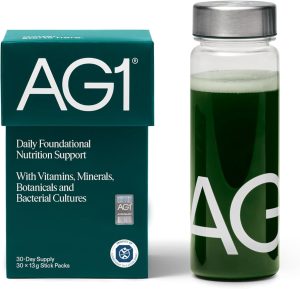 AG1 has spent years making itself familiar through digital advertising and creators. Harrington is clear that retail offers something those channels cannot reproduce on their own, physical reassurance.
“There’s something nice about consumers having the opportunity to touch and feel,” he says. “Even if they see it on shelf and they don’t buy it.”
A shopper may have heard a creator endorse AG1 and still hesitate. Seeing the packaging in person, he believes, adds credibility.
Although Harrington resists the assumption that a five-pack necessarily starts a journey towards an online subscription, some customers, he expects, will return to the retailer for their refills. For AG1, that makes distribution an audience decision as much as a sales decision.
Distribution can only take a premium product so far. That brings Harrington back to price.
“Price is a proxy for value proposition,” he says. He wants consumers to see spending “£3 a day” on their health as a reasonable investment. He knows others will judge it expensive. The better AG1 can explain its value, he argues, the broader the range of retailers that might make sense for the brand.
For now, that range is deliberately narrow. “We don’t necessarily think that in the short term that we’re the right fit for every retailer,” he says.
The priority is executing the Holland & Barrett launch, rather than scattering the product across the high street. But attitudes towards preventative health have changed, particularly since Covid, and Harrington believes some retailers that would have been unsuitable five or six years ago are becoming credible prospects.
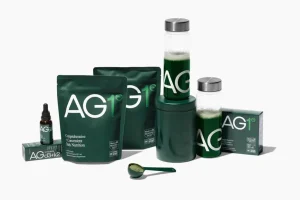
The pressure to explain value is sharper because the market AG1 has operated in for years is getting crowded. Harrington sees newer brands making bolder claims about nutritional products, partly because they have less to lose. AG1, he insists, has to take another route.
“The easy option is to make really strong claims,” he says. “You may win a customer on that day, but long term, you’re overpromising and underdelivering.”
He points to research investment and third-party credentials, including Informed Sport in the UK and Europe and NSF in the US.
“When an informed shopper does due diligence, it should lead them to a conclusion that AG1 is the product and the brand that invests the most in science,” he says.
That is an ambition rather than a comparison substantiated during the interview, but it reveals the positioning. Trust is especially valuable when the purchase is intended to become daily consumption.
“We’re asking someone to ingest this every single day,” he adds.
That concern for credibility carries through to influencer marketing. AG1 still budgets for Meta, Google, YouTube and creator partnerships, while testing newer opportunities such as TikTok and thinking about AI-driven discovery.
“Where are people spending their time?” he asks. “Where are people seeking these answers?”
He’s particularly interested in smaller creators with loyal niche audiences. Their appeal, he suggests, comes partly from being less polished.
“It’s a little bit more authentic when they’re not media trained,” he says.
The risk of giving an individual room to express an unscripted opinion is real, but the endorsement may carry more weight. The company’s rule for partnerships, he says, is straightforward: “We wouldn’t work with someone unless we’ve sent them a product, they’ve had time to test it.” Some, he says, were users for years before entering a commercial relationship.
The consumer AG1 wants to reach is considerably broader than the athletic crowd traditionally associated with high-performance supplements. Internally, Harrington says, the company calls its target customers “self-motivated drivers”.
Its high-performance positioning can encompass a marathon runner, but also a parent determined to do more for their children or an employee seeking to improve their working day.
“Our product is ultimately for someone who is self-motivated to improve themselves on a daily basis,” he says.

That definition gives its marketing considerable room to move, and may also influence the products those customers eventually find on the shelf. “We can see a world in the UK in the near future where we have more of an entry-level type product,” Harrington says, with AG1 potentially sitting alongside a more specialised offering. Hydration and protein are among the daily nutrition areas he identifies as opportunities. He describes the UK possibilities as future directions rather than confirmed launches.
For the moment, Holland & Barrett is the test. Harrington wants the retailer’s insights to influence everything from pack formats to shelf position, while AG1 adapts the marketing that made it an online name. But tomorrow? It seems that AG1 finds itself as an originator in a market that’s keen to emulate. Luckily for Harrington, consumer trust seems to be on the brand’s side. And AG1 is keen to rise and meet the needs of its evolving consumer.
Click here to sign up to Retail Gazette‘s free daily email newsletter