

From M&S celebrity cameos to Aldi’s returning Kevin the Carrot, RG’s LinkedIn polls suggest familiar faces are striking a chord. But the stories around them may matter as much as the stars themselves.
One is a television star dressed as Santa. Another is a carrot embarking on his tenth festive adventure. Christmas 2026’s advertising line-up offers very different routes to the same creative goal: giving audiences someone they want to watch.
RG’s LinkedIn polls put M&S ahead among the celebrity cameos surveyed and Aldi’s Kevin the Carrot firmly in front among the character-led campaigns. These are separate polls, not a head-to-head contest between celebrities and animation. Read together, however, they offer a useful starting point for exploring the appeal of recognition, recurring stories and festive escapism.
The results are a snapshot of participating RG LinkedIn voters’ preferences, rather than evidence of wider consumer opinion or sales impact. The campaigns themselves suggest why a familiar face can be such a useful starting point — and why familiarity alone is not the whole story.
Celebrity casting with a story to tell
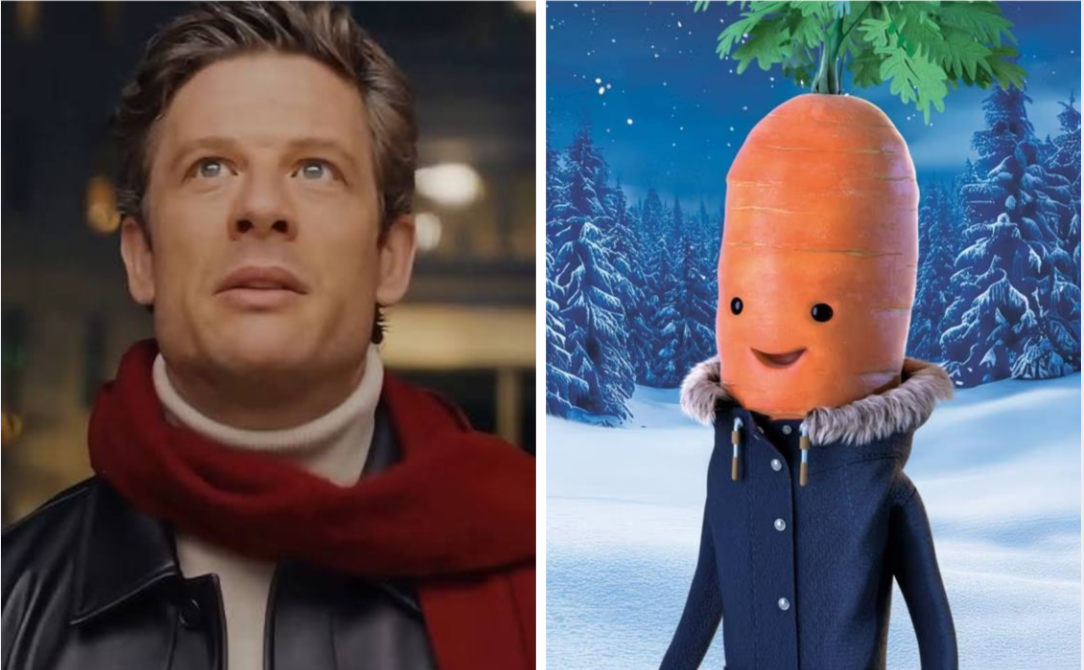
M&S took 61 per cent of the vote in RG’s poll asking which celebrity cameo had proved most popular so far. Lidl’s campaign featuring EastEnders actor Shaun Williamson, best known as Barry Evans, received 20 per cent, followed by Kristin Scott Thomas in John Lewis’s campaign on 13 per cent and Tesco on seven per cent.
While M&S casts Norton into the instantly recognisable role of Santa, Tesco brings together Motherland star Anna Maxwell Martin and comedian Roisin Conaty. The creative opportunity is not simply to put a famous name on screen, but to give that performer a role that makes the festive story worth watching.
Waitrose’s sequel takes that entertainment-led approach further. Its six-minute romantic comedy brings Alex Hassell into a returning cast that includes Keira Knightley and Joe Wilkinson. The format gives the retailer room to build a story around its performers, rather than relying on the brief reveal of a celebrity face.
The attraction is the combination: a recognisable performer and a festive premise that gives them something to do. A famous face can be the invitation into a campaign, but the story still needs to justify the audience’s attention.
Kevin shows the value of a familiar character
If celebrities bring recognition from outside a retailer’s advertising, a returning character offers a different proposition: another chapter in a story already associated with the brand.
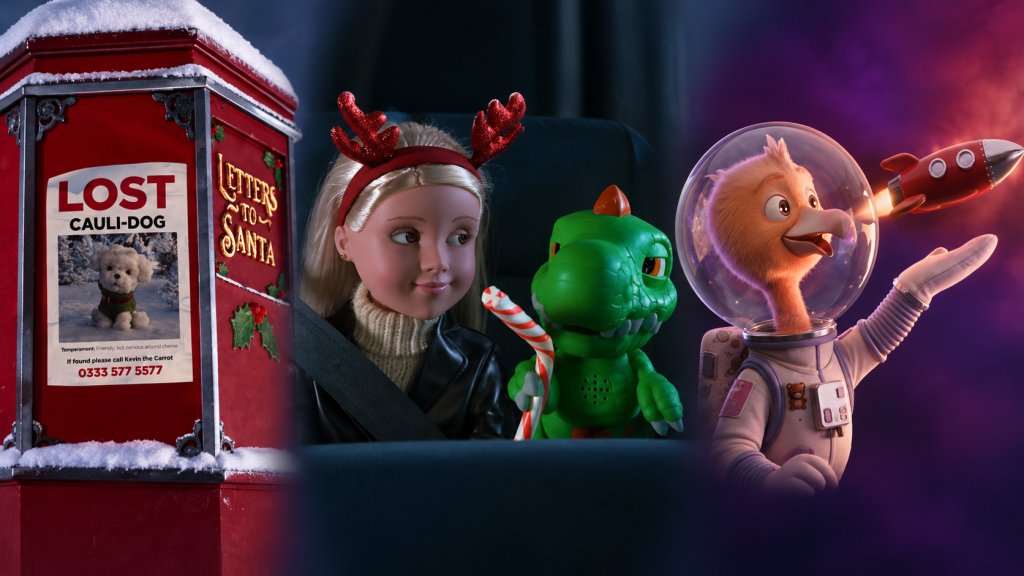
Aldi’s Kevin the Carrot took 81 per cent of the vote in RG’s separate poll asking respondents to choose their favourite character or characters in the 2026 Christmas campaigns so far. Argos’s doll and dinosaur received nine per cent of the vote, the retailer scooped Christmas Advert of the Year at the RG Excellence Awards 2026.
Additionally, TK Maxx’s first campaign in three years took seven per cent of the vote, and Very Group’s AI-powered flamingos received one per cent.
Kevin’s latest outing gives that familiarity a fresh plot. Following a 10-second teaser released on 2 November, Aldi’s full 45-second festive film, The Christmas Wish, sees him and his daughter Chantenay search for their missing cauliflower companion.
Now returning for a tenth year, Kevin illustrates how a character can provide continuity without requiring the same story to be repeated. The face stays familiar; the adventure changes. That balance offers a plausible explanation for his appeal, although the poll does not tell us why individual voters chose him.
The creative lesson is not simply to choose animation. Kevin offers Aldi something more specific: a familiar personality with a continuing place in its festive advertising. The new adventure builds on that connection rather than starting again.
Related Story
Aardman adds craft to the character appeal
Aardman’s two Christmas campaigns offer another angle on the attraction of recognisable characters: the opportunity to connect the entertainment with a brand’s own story.
For Barbour’s second adventure with Wallace & Gromit, that connection is craftsmanship and British heritage. Global marketing director Jamie McCall says the two businesses share “a distinctly British heritage, a passion for craftsmanship and an appreciation for the attention to detail that make something truly special”.
His explanation of the characters’ appeal puts warmth and intergenerational recognition at the centre of the partnership.
McCall shares: “Wallace & Gromit resonate across generations, bringing such warmth, charm and humour, making them the perfect characters to celebrate Barbour’s iconic tartan this festive season. This year’s film beautifully captures the joy of giving, the magic of Christmas and those little moments that bring people together. Even when things don’t exactly go to plan, but everything works out wonderfully in the end.”
Aardman’s work on Thatchers Cider’s first Christmas advert makes the craft connection literal. The studio recreated managing director Martin Thatcher as a stop-motion puppet, complete with clothing made using the techniques of a full-sized garment.
In an exclusive RG interview, Thatcher recalls: “They literally cut a little miniature pattern out as if they were tailor-making a full-size coat.” Here, the detail behind the character becomes part of the campaign’s story too.
Recognition opens the door — the story does the rest
The common thread across these campaigns is not simply celebrity or animation. It is the use of a recognisable personality to give a festive story an immediate point of connection: a familiar actor in an unexpected role, a returning carrot with a new adventure, or much-loved stop-motion characters whose craftsmanship fits the brand.
RG’s poll results suggest that M&S and Aldi have struck a particular chord with participating readers. Their approaches differ, but both give the audience a clear personality around which the campaign can unfold.
But they do point towards a useful creative distinction. Recognition gives audiences a reason to look; humour, warmth and a story give them something to enjoy once they do. As the Christmas 2026 campaigns continue to be unveiled, the most interesting question may be less “who is in the advert?” than “what has the brand given them to do?”
Click here to sign up to Retail Gazette‘s free daily email newsletter