As brands move towards flagships, is there still life in a local store?

As brands move towards flagships, is there still life in a local store?
FashionFeature ArticlesGeneral RetailHome & DIYInsightNewsProperty

New Look warned this week that its high street presence was at risk as the retailer plans to speed up its store closures programme ahead of tax increases this April.

Its another blow to the local high street, which has taken a beating in the last couple of years as consumers head to shopping centres and retail parks to hit the shops.

Data from the British Retail Consortium found that retail parks remained the most resilient when it came to footfall across the UK last year, enjoying as much as a 7.3% surge in visitor numbers in September.

Many retailers have followed their customers, with H&M, Sports Direct and Zara investing in fewer but larger flagships to debut new store concepts and showcase wider ranges.

Hotel Chocolat, Holland & Barrett and other retailers traditionally found on the high street have also shifted their focus towards retail parks and travel destinations to expand their store estates.

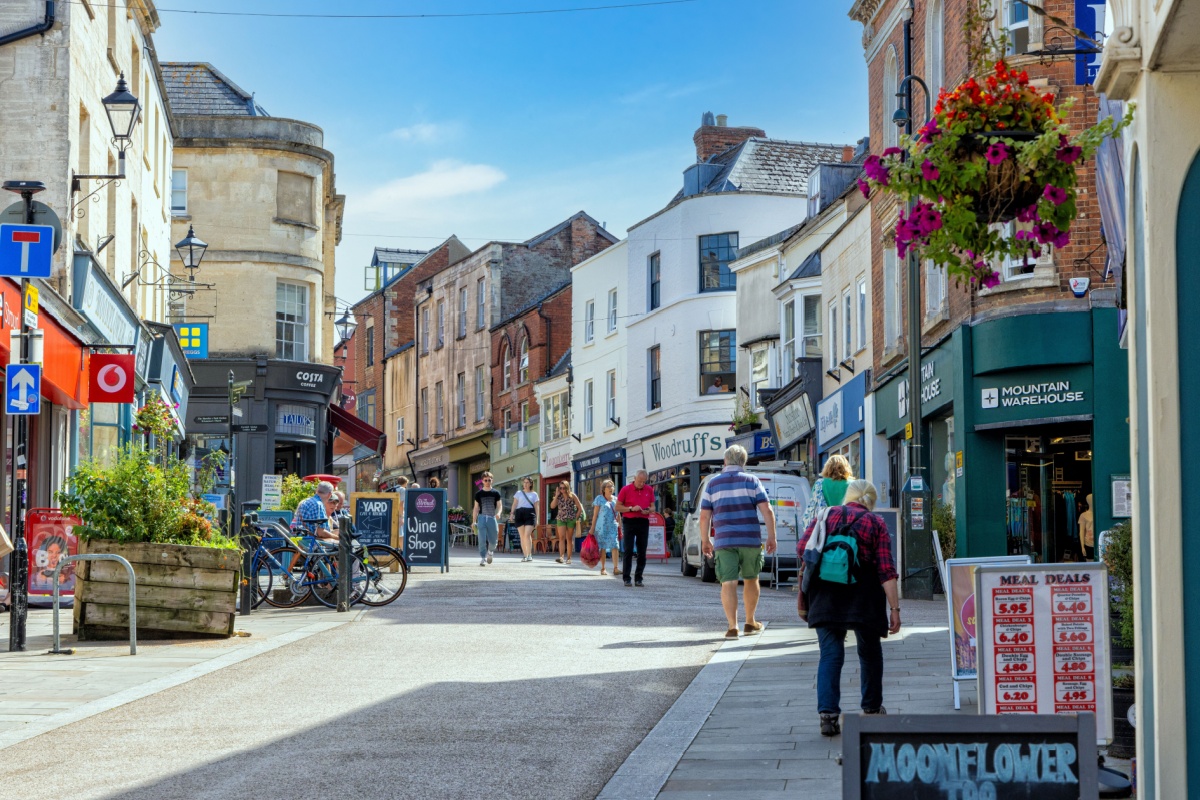
The wider industry shift begs the question – is there still life in the local high street store?

The rise in flagships and larger stores

H&M

Both H&M and Zara’s current strategies focus on the wider roll-out of fewer, larger, tech-enabled stores in prime retail locations.

Zara opened the doors to its “significantly upsized flagship” in Liverpool ONE last month as it increased its shop floor by 55% to 42,000sq ft store, while H&M unveiled its new tech-driven store concept at the end of November when it reopened in Westfield Stratford City following extensive renovation works.

Sports Direct, which is well known for its high street presence, is continuing its expansion via larger stores as part of owner Frasers Group’s elevation strategy.

The retail giant’s managing director of sport Ger Wright previously told Retail Gazette that the business would consolidate some of its smaller stores below 20,000 sq ft in areas it plans to open new flagships. as it has done in Birmingham and Manchester.

Retail analyst Stephen Springham suggests that this shift in focus comes as “a lot of those [Sports Direct] stores are probably under space for where the business is at”, explaining that the larger stores better suit the retailer’s expanded range.

Investing in the high street

Jo Malone London

Despite the rise in flagship stores, the sector hasn’t completely shunned the local high street.

Waterstones, which unveiled 12 new bookshops around the UK including on the high street in London’s Streatham last year, is plotting to open at least a dozen new stores over the next 12 months.

Jo Malone London is also planning to open up to eight new stores by the middle of 2025, targeting market towns such as Wilmslow, Farnham, Market Harborough, Leamington Spa and Chichester.

The brand’s senior vice-president and global general manager Jo Dancey told The Financial Times: “People are more local than they’ve ever been before, and that is something that we’re tapping into.”

Data from MRI Software found that consumers favoured the high street as they hit the Boxing Day sales during this Christmas, with footfall on December 27 up 20.2%.

Online fashion brand Sosandar also targeted affluent high street stores when it made its brick and mortar debut last September in Marlow, Buckinghamshire and Chelmsford in Essex.

Co-chief executive Julie Livingston says the fashion operator will continue to prioritise small format store openings of approximately “1,500 sq ft of trading space”.

“Our demographic is 35+, affluent women, who could be working, could be not working, could be retired. We know where those types of people over index in places like Marlow and Chelmsford.

“What’s important to us is being in the locations where our customers are, or our potential customers, because obviously we’re not just targeting existing customers, we’re targeting new customers as well,” she says, adding “what we want is a density of the types of people that would shop with Sosandar”.

Big box retailers moving in

B&Q Local

The second half of 2024 saw many retailers traditionally found in retail parks and trading estates look towards the high street for their expansion plans.

B&Q continued the rollout of its Local format with a new branch in Brighton, following a successful trial of high streets in London.

The stores offer a ‘pickup’ range of over 3,500 products, a showroom to browse homewares, flooring, kitchen, and bathroom ranges, as well as services such as paint mixing, tool hire, key cutting, The Rug Doctor, and white-goods recycling.

B&Q retail, property and technology director Paddy Earnshaw says the performance of the stores so far suggests that its Local concept will play “an increasingly crucial role in how we are more convenient for our customers”. 

“The B&Q Local format is enabling us to expand our eco-system of stores to entice new and different customers to the brand.”

“Reflecting the convenience of their High Street locations, we’re seeing high levels of Click & Collect orders through DIY.com for these stores – three times higher than our average.”

Fellow Kingfisher-owned DIY chain Screwfix also ramped up the rollout of its City concept last year as it targets up to 100 branches over the next few years.

DIY giants are not the only retailers that are expanding onto the high street. Bed specialist Dreams unveiling a new premium concept store in East Sheen last October as CEO Jonathan Hirst says the “smaller format stores open up opportunities for us to reach customers in more convenient high street locations across the UK”.

He explains the “very encouraging” early trading in its Richmond store has boosted Dreams’ confidence in its new premium, compact store format, and will play a role in the retailer’s wider expansion strategy.

“Now that we have proven smaller format sizes work for our business model, we will be able to assess opportunities for stores in areas that were not an option before.”

Dreams

A tale of two high streets?

Data from MRI Software shows that footfall along UK high streets is starting to recover slightly, with numbers down 0.3% for the last six months of 2024 year on year, up slightly from the -1.3% between January and June.

The Entertainer boss Andrew Murphy told Retail Gazette last month that he believes that some high streets will suffer ahead of the business rates rise among other measures announced in Labour’s first Budget coming into force April 1.

“Some of the smaller towns that we’ve been in, historically, sadly, will prove unable to support many retail businesses going forward, and that’s honestly my fear for for small format UK retail, because the economics of it have just been made incredibly difficult,” he noted.

The rising cost pressures are already being felt in retail. Garden Centre Dobbies’ venture into small format stores came to an end last November as it shuttered its six Little Dobbies stores as part of a wider restructure.

The retailer’s six small format stores, which first opened in London’s Westbourne Grove, were labelled by the business as unprofitable.

Murphy’s caution echoes that of the Centre of Retail Research, which estimates that over 17,000 stores will shutter over the next 12 months – 84% of which will be independent retailers likely to be found in local areas.

However, Sosandar’s chief financial officer Steve Dilks argues that the UK has “slightly polar opposites of types of high street”.

“We’ve got those that are really thriving, and we’ve got certain high streets that are really struggling.

“I suppose it depends where they are, who shops there, what the wider macro economics are of that area,” he explains.

Livingston claims the death of the high street talk are “nonsense” as she exclaims there is “absolutely no death of the High Street in anywhere that we’re looking”.

She notes that there are often three or four different companies vying for each each store location where the fashion brand looks to expand.

While certain areas are feeling the brunt of retailers focusing their investment on larger stores, many brands including unlikely names such as Dreams, Pets at Home and Jo Malone are proving that there is still life left in the local store.

Click here to sign up to Retail Gazette‘s free daily email newsletter

FashionFeature ArticlesGeneral RetailHome & DIYInsightNewsProperty

As brands move towards flagships, is there still life in a local store?

As brands move towards flagships, is there still life in a local store?

Social


SUBSCRIBE TO OUR DAILY NEWSLETTER

  • This field is for validation purposes and should be left unchanged.

New Look warned this week that its high street presence was at risk as the retailer plans to speed up its store closures programme ahead of tax increases this April.

Its another blow to the local high street, which has taken a beating in the last couple of years as consumers head to shopping centres and retail parks to hit the shops.

Data from the British Retail Consortium found that retail parks remained the most resilient when it came to footfall across the UK last year, enjoying as much as a 7.3% surge in visitor numbers in September.

Many retailers have followed their customers, with H&M, Sports Direct and Zara investing in fewer but larger flagships to debut new store concepts and showcase wider ranges.

Hotel Chocolat, Holland & Barrett and other retailers traditionally found on the high street have also shifted their focus towards retail parks and travel destinations to expand their store estates.

The wider industry shift begs the question – is there still life in the local high street store?

The rise in flagships and larger stores

H&M

Both H&M and Zara’s current strategies focus on the wider roll-out of fewer, larger, tech-enabled stores in prime retail locations.

Zara opened the doors to its “significantly upsized flagship” in Liverpool ONE last month as it increased its shop floor by 55% to 42,000sq ft store, while H&M unveiled its new tech-driven store concept at the end of November when it reopened in Westfield Stratford City following extensive renovation works.

Sports Direct, which is well known for its high street presence, is continuing its expansion via larger stores as part of owner Frasers Group’s elevation strategy.

The retail giant’s managing director of sport Ger Wright previously told Retail Gazette that the business would consolidate some of its smaller stores below 20,000 sq ft in areas it plans to open new flagships. as it has done in Birmingham and Manchester.

Retail analyst Stephen Springham suggests that this shift in focus comes as “a lot of those [Sports Direct] stores are probably under space for where the business is at”, explaining that the larger stores better suit the retailer’s expanded range.

Investing in the high street

Jo Malone London

Despite the rise in flagship stores, the sector hasn’t completely shunned the local high street.

Waterstones, which unveiled 12 new bookshops around the UK including on the high street in London’s Streatham last year, is plotting to open at least a dozen new stores over the next 12 months.

Jo Malone London is also planning to open up to eight new stores by the middle of 2025, targeting market towns such as Wilmslow, Farnham, Market Harborough, Leamington Spa and Chichester.

The brand’s senior vice-president and global general manager Jo Dancey told The Financial Times: “People are more local than they’ve ever been before, and that is something that we’re tapping into.”

Data from MRI Software found that consumers favoured the high street as they hit the Boxing Day sales during this Christmas, with footfall on December 27 up 20.2%.

Online fashion brand Sosandar also targeted affluent high street stores when it made its brick and mortar debut last September in Marlow, Buckinghamshire and Chelmsford in Essex.

Co-chief executive Julie Livingston says the fashion operator will continue to prioritise small format store openings of approximately “1,500 sq ft of trading space”.

“Our demographic is 35+, affluent women, who could be working, could be not working, could be retired. We know where those types of people over index in places like Marlow and Chelmsford.

“What’s important to us is being in the locations where our customers are, or our potential customers, because obviously we’re not just targeting existing customers, we’re targeting new customers as well,” she says, adding “what we want is a density of the types of people that would shop with Sosandar”.

Big box retailers moving in

B&Q Local

The second half of 2024 saw many retailers traditionally found in retail parks and trading estates look towards the high street for their expansion plans.

B&Q continued the rollout of its Local format with a new branch in Brighton, following a successful trial of high streets in London.

The stores offer a ‘pickup’ range of over 3,500 products, a showroom to browse homewares, flooring, kitchen, and bathroom ranges, as well as services such as paint mixing, tool hire, key cutting, The Rug Doctor, and white-goods recycling.

B&Q retail, property and technology director Paddy Earnshaw says the performance of the stores so far suggests that its Local concept will play “an increasingly crucial role in how we are more convenient for our customers”. 

“The B&Q Local format is enabling us to expand our eco-system of stores to entice new and different customers to the brand.”

“Reflecting the convenience of their High Street locations, we’re seeing high levels of Click & Collect orders through DIY.com for these stores – three times higher than our average.”

Fellow Kingfisher-owned DIY chain Screwfix also ramped up the rollout of its City concept last year as it targets up to 100 branches over the next few years.

DIY giants are not the only retailers that are expanding onto the high street. Bed specialist Dreams unveiling a new premium concept store in East Sheen last October as CEO Jonathan Hirst says the “smaller format stores open up opportunities for us to reach customers in more convenient high street locations across the UK”.

He explains the “very encouraging” early trading in its Richmond store has boosted Dreams’ confidence in its new premium, compact store format, and will play a role in the retailer’s wider expansion strategy.

“Now that we have proven smaller format sizes work for our business model, we will be able to assess opportunities for stores in areas that were not an option before.”

Dreams

A tale of two high streets?

Data from MRI Software shows that footfall along UK high streets is starting to recover slightly, with numbers down 0.3% for the last six months of 2024 year on year, up slightly from the -1.3% between January and June.

The Entertainer boss Andrew Murphy told Retail Gazette last month that he believes that some high streets will suffer ahead of the business rates rise among other measures announced in Labour’s first Budget coming into force April 1.

“Some of the smaller towns that we’ve been in, historically, sadly, will prove unable to support many retail businesses going forward, and that’s honestly my fear for for small format UK retail, because the economics of it have just been made incredibly difficult,” he noted.

The rising cost pressures are already being felt in retail. Garden Centre Dobbies’ venture into small format stores came to an end last November as it shuttered its six Little Dobbies stores as part of a wider restructure.

The retailer’s six small format stores, which first opened in London’s Westbourne Grove, were labelled by the business as unprofitable.

Murphy’s caution echoes that of the Centre of Retail Research, which estimates that over 17,000 stores will shutter over the next 12 months – 84% of which will be independent retailers likely to be found in local areas.

However, Sosandar’s chief financial officer Steve Dilks argues that the UK has “slightly polar opposites of types of high street”.

“We’ve got those that are really thriving, and we’ve got certain high streets that are really struggling.

“I suppose it depends where they are, who shops there, what the wider macro economics are of that area,” he explains.

Livingston claims the death of the high street talk are “nonsense” as she exclaims there is “absolutely no death of the High Street in anywhere that we’re looking”.

She notes that there are often three or four different companies vying for each each store location where the fashion brand looks to expand.

While certain areas are feeling the brunt of retailers focusing their investment on larger stores, many brands including unlikely names such as Dreams, Pets at Home and Jo Malone are proving that there is still life left in the local store.

Click here to sign up to Retail Gazette‘s free daily email newsletter

FashionFeature ArticlesGeneral RetailHome & DIYInsightNewsProperty

RELATED STORIES

Latest Feature


Menu


Close popup