

Missed deliveries are becoming a routine frustration for UK shoppers and a growing cost for retailers.
That is the warning from parcel locker giant InPost, which argues that the ecommerce sector has spent years optimising delivery for speed and cost while overlooking the wider impact on customers and retail operations.
Retail Gazette sat down with InPost network director Paul Selvey to talk about the hidden costs of inefficient home deliveries and how both consumers and retailers can benefit from parcel lockers and ‘smarter’ delivery.
The hidden cost of “cheap” delivery
New research cited by InPost suggests the scale of the impact on the retail and logistic sector is significant. The business says around 40 per cent of shoppers miss at least one delivery every month, while a third experience some form of delivery problem, from missed drop-offs to lost parcels or theft, an issue that is costing UK consumers £650m per year in porch piracy.
For Selvey, the problem reflects a mismatch between modern lifestyles and how delivery is designed.
“If 95 per cent of UK adults receive at least one parcel a month, but about 40 per cent are missing deliveries, that clearly shows a mismatch,” he says. “The logistics industry and the way delivery is designed isn’t matching modern lifestyles.”
The result is what the company calls “parcel anxiety”, the uncertainty around whether a package will arrive safely, whether someone needs to be home, or whether it may disappear from a doorstep.
The issue has arisen, says Selvey, because the UK ecommerce market has long prioritised fast and low-cost home delivery, often framed around next-day or even same-day fulfilment.
 But Selvey believes that focus may have created unintended consequences.
“The industry talks about speed – next-day delivery, 24-hour delivery – but the real opportunity lies in improving certainty and convenience, not just pace,” he says.
Research referenced by InPost suggests the impact on consumers is substantial. On average, shoppers spend around 3.2 hours waiting at home for deliveries, with a further two hours spent rearranging or collecting parcels after a missed attempt.
The problem is that this creates a ripple effect that is reaching retailers too. Missed deliveries can lead to repeat delivery attempts, rising customer service queries and complaints, as well as reputational damage when parcels go missing.
“If you optimise checkout purely on the lowest delivery cost, you can actually increase your total cost to serve,” Selvey says. “Once you factor in failed deliveries, reattempts and customer complaints, it may no longer be the lowest cost option.”
He argues the delivery stage, often treated as a back-end logistics function, is actually the only physical interaction many ecommerce shoppers have with a retailer.
“That moment when a customer receives their parcel is the physical touchpoint with the brand,” he says. “Yet it’s often the part of the journey retailers focus on the least.”
The shift from ‘faster’ delivery to ‘smarter’ delivery
A central issue, according to Selvey, is how delivery options are presented to customers at checkout.
Shoppers are typically offered a wide range of choices when buying online, from product variants to payment methods such as buy-now-pay-later, but delivery is often limited to a narrow set of options, usually centred on home delivery.
“Customers have huge choice on product, price and payment,” Selvey says. “But often very little control over how their purchase actually reaches them.”
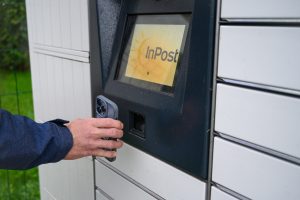
The company believes broader adoption of out-of-home delivery options, such as parcel lockers and collection points, could reduce missed deliveries and improve reliability.
Across the UK, InPost currently operates around 14,000 parcel lockers, covering roughly 50 per cent of the population. The network is set to expand further, with plans to reach around 19,000 lockers by the end of 2026.

Urban coverage is already significant. Around 75 per cent of residents in London, Manchester and Birmingham are within a seven-minute walk of an InPost out-of-home point, according to the company.
The longer-term ambition is even more ambitious. “Our guiding light is that everyone in the UK should be within five minutes’ walk of a parcel locker,” Selvey says.
He acknowledges that in rural areas, this figure will inevitably be harder to reach, but with partnerships with major supermarkets, such as Aldi, Lidl, Tesco Morrisons, Sainsbury’s Co-op and more, InPost’s locker network is continuing to “grow at pace”.
There is also a new goal for the business. “From a retail point of view, we’ve got really broad coverage now. But we’re now looking at [the location of our lockers] through the eyes of the customer.
“What we’re trying to understand is what the customer journey is on their everyday routines, whether that’s train stations or gyms or libraries or supermarkets, and we try and understand their journey, we want to get lockers in convenient locations for them.
“Our network needs to continue to grow to meet the huge growing demand of parcel lockers.”
For retailers, he argues, the first step is simpler: rethink how delivery is offered during the online checkout process.
“It starts with checkout design. The infrastructure is already there. What’s needed now is to give customers that choice.”
Until that happens, Selvey believes missed deliveries will remain a defining feature of UK ecommerce, and a persistent source of frustration for shoppers and retailers alike.
Click here to sign up to Retail Gazette‘s free daily email newsletter