
Scribbler: How to use the right balance of humour to cut through the noise

For smaller retailers, cutting through the noise is not about outspending bigger rivals or chasing every new channel. It is about being memorable.
Big InterviewMarketingNews

For smaller retailers, cutting through the noise is not about outspending bigger rivals or chasing every new channel. It is about being memorable.

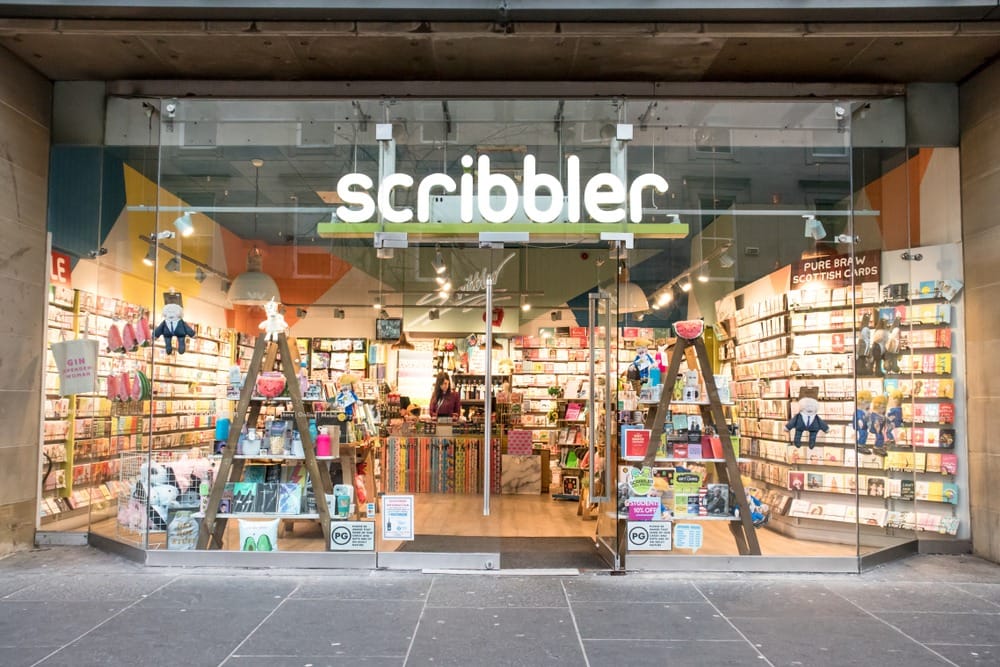
For greeting card and gift retailer Scribbler, that memorability has long come from humour – funny, on-trend and unapologetically rude (but never accidentally so). 

Humour is a powerful differentiator, but it is also one of the easiest things for a brand to get wrong. Push too far and you alienate customers.

Play it too safe and you fade into the background. In a crowded high street and an even noisier digital landscape, knowing where that line sits and when to move it becomes a commercial decision, not just a creative one. 

Scribbler has built its reputation by deliberately walking that edge. Its ranges are designed to provoke a reaction, spark conversation and, ideally, make people laugh out loud in-store.

But behind the irreverence sits a more considered question: how do you keep humour feeling sharp and relevant as culture shifts, trends accelerate and “good enough” creative becomes easier to produce at scale? 

In this Q&A, Aisling Crossland, Scribbler’s creative director, reflects on how the brand decides what is too risky and what is not, how instinct and evidence play off one another when buying new ranges, and why speed matters in a trend-led category.

She also shares her perspective on where AI can support creative teams – and where it risks stripping out the very human nuance that humour depends on. 

For retail marketers grappling with how to stand out without losing control of their brand voice, Scribbler offers a timely point of view. 

Scribbler’s humour is deliberately bold and sometimes risky. How do you decide where the line is between being irreverent and being commercially responsible – and has that line shifted in recent years?  

Aisling Crossland: Humour is a huge part of the Scribbler DNA, and we’re definitely known for pushing the boundaries in this area. Sometimes this comes with a little trial and error to work out what is/isn’t too risky for our customers.  

Luckily, we’ve got years of learnings (and sales data) under our belts, which helps us shape both our own ranges and the products we create for wholesale partners. We have our D2C website, as well as our stores, which can be a brilliant test bed for how far we can push the lines and still achieve sales.   

I wouldn’t say the line has shifted dramatically over the past few years – if anything, whenever we’ve tried to tone things down, customers have been quick to let us know they miss the ruder stuff. More often than not, those cheekier lines make a comeback because people are actively hunting for them in-store.  

At the end of the day, our goal is simple: make people laugh. Even if a product’s a bit too outrageous for everyone to buy, we’re always aiming to walk that fine line – bold and playful, but never setting out to offend or hurt anyone.  

What are the earliest signs that a brand’s humour is becoming stale or self-referential – and what do you do to keep creative work feeling genuinely fresh?  

Aisling Crossland: We can usually tell pretty quickly when a design (or the joke on it) is starting to wear thin – a dip in ROS is a clear sign the laughs aren’t landing like they used to. If it’s a former best-seller, we’ll often give the design a little refresh first to see if it sparks joy again. If not, we thank it for its service and gently retire it.  

The creative team work incredibly hard to stay ahead of the curve. Rather than relying on the usual trend-forecasting tools, we prefer to get out into the real world – markets, galleries, exhibitions, and pretty much any creative space we can get our hands on.  

A lot of our in-house designers also run their own brands, which isn’t something every company encourages – but we see it as a huge positive. It keeps them immersed in what’s happening right now (and often what’s coming next). On top of that, I spend a lot of time discovering new freelancers to work with, making sure our ranges stay fresh, exciting, and full of genuinely creative ideas.  

In a trend-led category, speed matters. How do you react quickly to cultural moments without diluting Scribbler’s long-term brand voice?  

Aisling Crossland: We’ve always had a knack for staying ahead of the curve by reacting quickly to what’s happening in pop culture, politics and everything in between. Our submissions portal is a big part of that – we’ve got over 250 designers on there at the moment, all sending in fresh ideas and new designs on a regular basis.  

Over the past few years, though, Tori (our Buying Manager) and I have been working closely together to be a bit more intentional about creating our own trending moments throughout the year – not just relying on the usual seasonal peaks. These moments feed into our product ranges, window displays and in-store storytelling.  

We were among the first to spot the cowgirl trend on the horizon and gave it centre stage with themed tables across all stores. We’ve also seen huge success with past trends like mushrooms, brunch club vibes and more.

Whenever we can, we head to trade shows both in the UK and internationally, keeping an eye on what’s emerging elsewhere before it makes its way to our shores.  

Retail marketers are under pressure to be data-led. How do you use data without letting it flatten bold ideas or safe-guard creativity out of existence?  

Aisling Crossland: We’re lucky to have a brilliant merch team who know our sales data inside out. From a creative point of view, we use this data at the start and end of every range to look at what’s worked, what hasn’t, and make sure we’re building the strongest possible collections for our customers.

As we’re a trend-led business, we use creativity to drive innovation and design, and pair this with data to back up our decisions – of course sometimes we just need to take a gamble on designs we think bring something new and exciting, even if there isn’t the historical data to support it.

If you just relied on data alone the ranges wouldn’t develop, but without data, you wouldn’t have the sales from other best selling lines to allow you to take a punt on something new and exciting.  

The merch and buying teams, though, are living in the data day to day. Once final designs leave the creative studio, they use those insights to decide which products we go big on – and they keep a close eye on performance once everything lands in stores. That way, if something flies off the shelves and exceeds expectations, we can move quickly and top it up while the momentum’s there.  

AI is everywhere in marketing conversations. Where has AI been genuinely useful for Scribbler so far – and where does it fundamentally not belong?  

Aisling Crossland: We’re big believers in adapting and embracing new technology – and yes, that does slightly controversially include AI. Within the creative department, we’ve started using it as a tool inside Adobe to speed up things like image editing. Jobs that once meant hours in Photoshop and square eyes can now be done far more efficiently.  

Personally, I think it’s a fantastic tool, but that’s very much where I draw the line. For us, AI is there to streamline processes and enhance designs we’ve already created – not to replace the thinking, creativity or human point of view behind them. The initial idea, concept and humour still firmly sit with the designer, exactly where they should.  

 Humour relies on nuance and cultural timing. What are the hard limits of AI when it comes to comedy and creative tone?  

Aisling Crossland: For products I think the creative and lines very much need to originate from real people. That human input is what makes them relatable and actually funny. Plus there’s always a bit of a grey area when AI is coming up with lines, you never quite know where it’s pulling its references from.  

That said, as I mentioned earlier, it can be a genuinely helpful tool in other areas. We use it to help tidy up marketing copy like emails, press releases and the odd caption, or to sense-check whether something sounds like us before it goes out into the world. Our copywriters are still very much at the heart of all of this; AI just helps speed things up, not replace the thinking behind it.  


 As AI makes it easier to produce “good enough” creative at scale, does distinctive brand personality become more important – or harder to protect?  

Aisling Crossland: As a creative myself, I completely understand the nerves around AI becoming more advanced – it’s cheaper, faster, and improving all the time.

But when I look at current trends, I actually see the opposite reaction happening too: a real hunger for tangible things made by real people. Nostalgia and handmade, tactile products are having a big moment, and after so much screen time, customers are feeling very real digital fatigue.  

 Our brand has always championed great, independent design – and for us, that means working with real-life designers. One of the biggest joys as a business is seeing independent creatives who’ve grown over the years tell us that being stocked by Scribbler was their first big retail break. That’s something no computer can replace.  

In a world of constant campaigns, discounts and content, what does cutting through the noise realistically look like for a smaller retail brand?  

Aisling Crossland: For a smaller retail brand, cutting through the noise doesn’t mean having bigger discounts or being louder than bigger competitors – it means being focused and consistent.

This looks like choosing a clear niche, a distinctive point of view, and a consistent creative idea that shows up the same way across channels, rather than chasing every campaign or discount moment.   

For a retailer like ours, heavy and frequent discounting to keep up with others on the highstreet just isn’t financially viable, so we take a more disciplined approach: limiting sales to January and summer to clear old stock, while using considered mechanics like multi-buys – such as 3-for-2 on roll wraps or 4 for £9.99 on cards – that still offer value but encourage customers to buy more rather than simply pay less.  

 What do larger retailers typically get wrong when they try to use humour or personality in their marketing?  

Aisling Crossland: As a company customers expect humour from us, and come to us for products that push the boundaries of what is on the riskier side. For over 40 years this has been at the heart of our brand, and although we do get the odd complaint, our loyal customers know what to expect from us.  

We’ve seen some larger retailers adopting more and more humour over the past few years, and even in our own ranges, which we wholesale to other retailers, we’ve been pleasantly surprised to see their customers love our humour too.

However, we’ve also seen larger retailers get some big backlash for going too risky and alienating their existing customers. It’s a fine line between attracting new customers without upsetting the loyal ones.

 For marketers working in retail right now, what is the one thing you think they should protect – even when budgets are tight and AI and performance pressures are rising?  

Aisling Crossland: Retail marketers should protect their distinctive brand voice and creative thinking, even when budgets are tight and AI and performance pressures are rising.

As automation makes marketing faster and cheaper, it also makes it more uniform, pushing brands towards all feeling the same and focused on short-term gains like discounts.  

Protecting the history of your brand, where you started to where you are now, a journey that celebrates the humans behind the brand, the loyal customers along the way, and entices new customers through fresh creative, but consistent messaging and values.

An example of this, looking at Scribbler, is how humour has always been at our core, from the products we sell all the way to the people we hire; a sense of humour is key.

The designs might look different from what they did when we started out 40+ years ago, but the products put the same smile on people’s faces that they always did.   

Click here to sign up to Retail Gazette‘s free daily email newsletter

Big InterviewMarketingNews

Leave a Reply

Your email address will not be published. Required fields are marked *

Fill out this field
Fill out this field
Please enter a valid email address.

Scribbler: How to use the right balance of humour to cut through the noise

For smaller retailers, cutting through the noise is not about outspending bigger rivals or chasing every new channel. It is about being memorable.

For smaller retailers, cutting through the noise is not about outspending bigger rivals or chasing every new channel. It is about being memorable.

For greeting card and gift retailer Scribbler, that memorability has long come from humour – funny, on-trend and unapologetically rude (but never accidentally so). 

Humour is a powerful differentiator, but it is also one of the easiest things for a brand to get wrong. Push too far and you alienate customers.

Play it too safe and you fade into the background. In a crowded high street and an even noisier digital landscape, knowing where that line sits and when to move it becomes a commercial decision, not just a creative one. 

Scribbler has built its reputation by deliberately walking that edge. Its ranges are designed to provoke a reaction, spark conversation and, ideally, make people laugh out loud in-store.

But behind the irreverence sits a more considered question: how do you keep humour feeling sharp and relevant as culture shifts, trends accelerate and “good enough” creative becomes easier to produce at scale? 

In this Q&A, Aisling Crossland, Scribbler’s creative director, reflects on how the brand decides what is too risky and what is not, how instinct and evidence play off one another when buying new ranges, and why speed matters in a trend-led category.

She also shares her perspective on where AI can support creative teams – and where it risks stripping out the very human nuance that humour depends on. 

For retail marketers grappling with how to stand out without losing control of their brand voice, Scribbler offers a timely point of view. 

Scribbler’s humour is deliberately bold and sometimes risky. How do you decide where the line is between being irreverent and being commercially responsible – and has that line shifted in recent years?  

Aisling Crossland: Humour is a huge part of the Scribbler DNA, and we’re definitely known for pushing the boundaries in this area. Sometimes this comes with a little trial and error to work out what is/isn’t too risky for our customers.  

Luckily, we’ve got years of learnings (and sales data) under our belts, which helps us shape both our own ranges and the products we create for wholesale partners. We have our D2C website, as well as our stores, which can be a brilliant test bed for how far we can push the lines and still achieve sales.   

I wouldn’t say the line has shifted dramatically over the past few years – if anything, whenever we’ve tried to tone things down, customers have been quick to let us know they miss the ruder stuff. More often than not, those cheekier lines make a comeback because people are actively hunting for them in-store.  

At the end of the day, our goal is simple: make people laugh. Even if a product’s a bit too outrageous for everyone to buy, we’re always aiming to walk that fine line – bold and playful, but never setting out to offend or hurt anyone.  

What are the earliest signs that a brand’s humour is becoming stale or self-referential – and what do you do to keep creative work feeling genuinely fresh?  

Aisling Crossland: We can usually tell pretty quickly when a design (or the joke on it) is starting to wear thin – a dip in ROS is a clear sign the laughs aren’t landing like they used to. If it’s a former best-seller, we’ll often give the design a little refresh first to see if it sparks joy again. If not, we thank it for its service and gently retire it.  

The creative team work incredibly hard to stay ahead of the curve. Rather than relying on the usual trend-forecasting tools, we prefer to get out into the real world – markets, galleries, exhibitions, and pretty much any creative space we can get our hands on.  

A lot of our in-house designers also run their own brands, which isn’t something every company encourages – but we see it as a huge positive. It keeps them immersed in what’s happening right now (and often what’s coming next). On top of that, I spend a lot of time discovering new freelancers to work with, making sure our ranges stay fresh, exciting, and full of genuinely creative ideas.  

In a trend-led category, speed matters. How do you react quickly to cultural moments without diluting Scribbler’s long-term brand voice?  

Aisling Crossland: We’ve always had a knack for staying ahead of the curve by reacting quickly to what’s happening in pop culture, politics and everything in between. Our submissions portal is a big part of that – we’ve got over 250 designers on there at the moment, all sending in fresh ideas and new designs on a regular basis.  

Over the past few years, though, Tori (our Buying Manager) and I have been working closely together to be a bit more intentional about creating our own trending moments throughout the year – not just relying on the usual seasonal peaks. These moments feed into our product ranges, window displays and in-store storytelling.  

We were among the first to spot the cowgirl trend on the horizon and gave it centre stage with themed tables across all stores. We’ve also seen huge success with past trends like mushrooms, brunch club vibes and more.

Whenever we can, we head to trade shows both in the UK and internationally, keeping an eye on what’s emerging elsewhere before it makes its way to our shores.  

Retail marketers are under pressure to be data-led. How do you use data without letting it flatten bold ideas or safe-guard creativity out of existence?  

Aisling Crossland: We’re lucky to have a brilliant merch team who know our sales data inside out. From a creative point of view, we use this data at the start and end of every range to look at what’s worked, what hasn’t, and make sure we’re building the strongest possible collections for our customers.

As we’re a trend-led business, we use creativity to drive innovation and design, and pair this with data to back up our decisions – of course sometimes we just need to take a gamble on designs we think bring something new and exciting, even if there isn’t the historical data to support it.

If you just relied on data alone the ranges wouldn’t develop, but without data, you wouldn’t have the sales from other best selling lines to allow you to take a punt on something new and exciting.  

The merch and buying teams, though, are living in the data day to day. Once final designs leave the creative studio, they use those insights to decide which products we go big on – and they keep a close eye on performance once everything lands in stores. That way, if something flies off the shelves and exceeds expectations, we can move quickly and top it up while the momentum’s there.  

AI is everywhere in marketing conversations. Where has AI been genuinely useful for Scribbler so far – and where does it fundamentally not belong?  

Aisling Crossland: We’re big believers in adapting and embracing new technology – and yes, that does slightly controversially include AI. Within the creative department, we’ve started using it as a tool inside Adobe to speed up things like image editing. Jobs that once meant hours in Photoshop and square eyes can now be done far more efficiently.  

Personally, I think it’s a fantastic tool, but that’s very much where I draw the line. For us, AI is there to streamline processes and enhance designs we’ve already created – not to replace the thinking, creativity or human point of view behind them. The initial idea, concept and humour still firmly sit with the designer, exactly where they should.  

 Humour relies on nuance and cultural timing. What are the hard limits of AI when it comes to comedy and creative tone?  

Aisling Crossland: For products I think the creative and lines very much need to originate from real people. That human input is what makes them relatable and actually funny. Plus there’s always a bit of a grey area when AI is coming up with lines, you never quite know where it’s pulling its references from.  

That said, as I mentioned earlier, it can be a genuinely helpful tool in other areas. We use it to help tidy up marketing copy like emails, press releases and the odd caption, or to sense-check whether something sounds like us before it goes out into the world. Our copywriters are still very much at the heart of all of this; AI just helps speed things up, not replace the thinking behind it.  


 As AI makes it easier to produce “good enough” creative at scale, does distinctive brand personality become more important – or harder to protect?  

Aisling Crossland: As a creative myself, I completely understand the nerves around AI becoming more advanced – it’s cheaper, faster, and improving all the time.

But when I look at current trends, I actually see the opposite reaction happening too: a real hunger for tangible things made by real people. Nostalgia and handmade, tactile products are having a big moment, and after so much screen time, customers are feeling very real digital fatigue.  

 Our brand has always championed great, independent design – and for us, that means working with real-life designers. One of the biggest joys as a business is seeing independent creatives who’ve grown over the years tell us that being stocked by Scribbler was their first big retail break. That’s something no computer can replace.  

In a world of constant campaigns, discounts and content, what does cutting through the noise realistically look like for a smaller retail brand?  

Aisling Crossland: For a smaller retail brand, cutting through the noise doesn’t mean having bigger discounts or being louder than bigger competitors – it means being focused and consistent.

This looks like choosing a clear niche, a distinctive point of view, and a consistent creative idea that shows up the same way across channels, rather than chasing every campaign or discount moment.   

For a retailer like ours, heavy and frequent discounting to keep up with others on the highstreet just isn’t financially viable, so we take a more disciplined approach: limiting sales to January and summer to clear old stock, while using considered mechanics like multi-buys – such as 3-for-2 on roll wraps or 4 for £9.99 on cards – that still offer value but encourage customers to buy more rather than simply pay less.  

 What do larger retailers typically get wrong when they try to use humour or personality in their marketing?  

Aisling Crossland: As a company customers expect humour from us, and come to us for products that push the boundaries of what is on the riskier side. For over 40 years this has been at the heart of our brand, and although we do get the odd complaint, our loyal customers know what to expect from us.  

We’ve seen some larger retailers adopting more and more humour over the past few years, and even in our own ranges, which we wholesale to other retailers, we’ve been pleasantly surprised to see their customers love our humour too.

However, we’ve also seen larger retailers get some big backlash for going too risky and alienating their existing customers. It’s a fine line between attracting new customers without upsetting the loyal ones.

 For marketers working in retail right now, what is the one thing you think they should protect – even when budgets are tight and AI and performance pressures are rising?  

Aisling Crossland: Retail marketers should protect their distinctive brand voice and creative thinking, even when budgets are tight and AI and performance pressures are rising.

As automation makes marketing faster and cheaper, it also makes it more uniform, pushing brands towards all feeling the same and focused on short-term gains like discounts.  

Protecting the history of your brand, where you started to where you are now, a journey that celebrates the humans behind the brand, the loyal customers along the way, and entices new customers through fresh creative, but consistent messaging and values.

An example of this, looking at Scribbler, is how humour has always been at our core, from the products we sell all the way to the people we hire; a sense of humour is key.

The designs might look different from what they did when we started out 40+ years ago, but the products put the same smile on people’s faces that they always did.   

Click here to sign up to Retail Gazette‘s free daily email newsletter

Social


SUBSCRIBE TO OUR DAILY NEWSLETTER

  • This field is for validation purposes and should be left unchanged.
Big InterviewMarketingNews

Leave a Reply

Your email address will not be published. Required fields are marked *

Fill out this field
Fill out this field
Please enter a valid email address.

RELATED STORIES

Latest Feature


Menu


Close popup

Please enter the verification code sent to your email:
