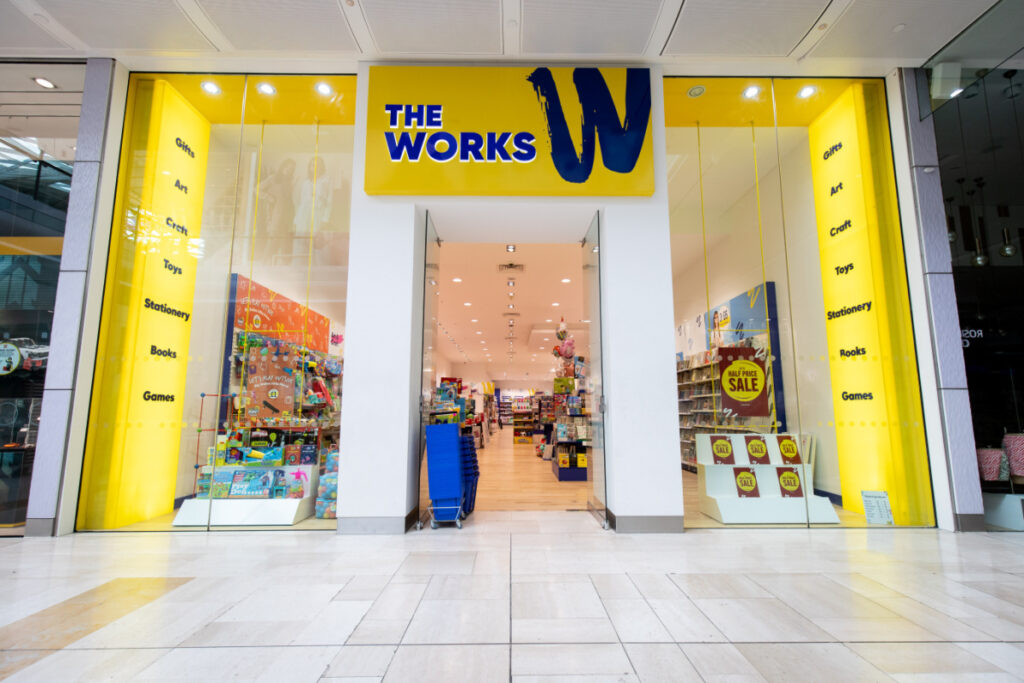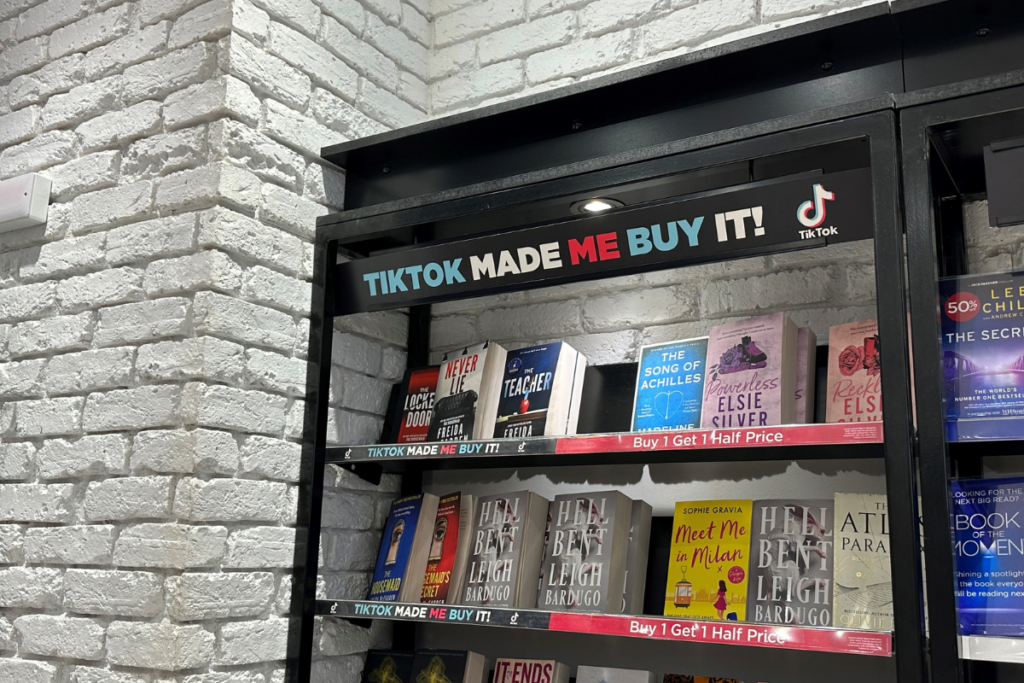



The Works is a business that is going against the grain, with its recent move to axe ecommerce operations and double-down on its store-led strategy.
The decision by the discount giant, which sells books, arts and crafts, toys, games and stationery, may seem like an unusual one as many brands increasingly invest in their online capabilities.
However, scrapping ecommerce makes sense for The Works, whose in-store sales comprise over 90 per cent of its total revenues.
And its latest strategic update certainly signifies that it knows what it’s doing. The brand highlighted positive trading across its store estate with like-for-like sales up 3.3 per cent year to date.
Despite this, CEO Gavin Peck assures that scrapping ecommerce was “not a decision we came to lightly” at a time when many retailers continue to invest in online.
Retail Gazette catches up with Peck to find out more about the thinking behind the decision, as well as its upcoming plans for shops.
Strength in stores
The Works is a stalwart of the UK high street, boasting an estate of more than 500 stores and serving hundreds of thousands of customers per week.
In its recent update, the business said “operational challenges experienced by two different third-party fulfilment partners” had “significantly impacted” its online channel’s performance in the last two financial years, “outweighing the progress made”.
The board went on to assess “a wide range of options” and determined that the channel was “no longer sustainable, with the optimal solution being to move to a non-transactional website”.

“The online channel has always been convenient for customers and we have made good progress with improving the web journey and the ranges that we have on there, but it has always been economically challenged.
“We’re selling quite a lot of relatively low-priced items and the fulfillment costs of having a second third party DC has just meant it’s always been economically challenging.”
Ditching ecommerce is expected to improve The Works’ profitability, with the group upgrading its medium-term outlook after the removal of online losses.
In its update, the business said it remained on track to deliver pre-IFRS 16 adjusted EBITDA of £11 million for FY26, in line with market expectations. On a continuing operations basis, guidance was restated at £13.5 million.
Why bricks-and-mortar?
In terms of what makes The Works best suited for physical stores, Peck says the company is a “really important part” of the 500 plus communities it serves.
He also notes that it has a lot of “novices” visiting stores who want to give its activities, like arts and crafts, a go “for the first time”.
“Going into a real specialist art and craft shop or trying to do it online can be quite overwhelming, you don’t know where to start,” he says.
“We’ve got three and a half thousand really engaged store colleagues who can explain what you need and what you can do.”
He adds: “Also, a lot of what we do is about bringing new products in all the time.
“That’s quite hard to do on a website and browse that newness, whereas by coming into a store and walking around you can see that newness, you can browse and you get that discovery element of coming into a store.”

“It would be naive to say never but as we stand today and certainly for the next number of years we’ve got a huge opportunity with our strategy to make further progress in our stores.
“There’s loads we can do around optimising the space of stores, continuing to improve that customer convenience, improving store standards, improving customer experience and opening new stores.”
He concludes: “At a point in time if we feel there’s significant demand and economics have changed, then we’d be daft not to revisit it.
“But at this moment in time, by removing what had been in the last few years a distraction and a financial strain on the business, we can now invest in the stores with confidence, we can open new stores with confidence with that capital freed up.”
Although the transition is expected to have a “small negative impact” on its cash position in FY26, The Works said it would be “broadly neutral” by the end of FY27, as closure costs are offset by “reduced working capital from lower inventory levels going forward”.
Longer-term, the decision to leave ecommerce is forecast to be cash flow positive.
New store ambitions
The Works has big ambitions for launching new stores and revamping old ones, with plans to launch five new sites in FY26 and an additional 10 in FY27.
The brand currently has 508 shops and Peck believes it can take this figure to 600 “quite comfortably” by opening across a range of locations.
He notes that retail parks are definitely an area it “under indexes in,” with its current figure in the format sitting at around 20.
“Part of the challenge there has been getting the right size units because historically they’ve been quite big boxes,” he says.
“But there are increasingly more opportunities to open stores of the size that we want. In the next few months we’ll open in Preston Deepdale retail park and in Glasgow Fort retail park.”
The CEO says there are also “a lot of good quality, decent sized towns” that it’s not in.
“One we’re looking at is East Grinstead, we’ll open there in the coming months.
“Likewise, we’re still quite underrepresented in some quite big city centres. We don’t currently have a store in Birmingham which is the local city to the support centre, so we’re looking at opening there.
“We’ve only got one in the centre of Manchester, so those 100 stores are across a wide range of different locations and formats.”

In terms of further strengthening this, Peck says: “The biggest opportunity for us is to grow our brand fame. We’ve got a lot of loyal customers but there’s still many people in the UK and Ireland who don’t know who we are or what we do.
“There’s a lot of work we’re doing around getting back out there to market our brand. We haven’t spent much on brand marketing in the past, but we’ll be marketing the brand, shouting about our great value, our fantastic ranges, all about screen free activities to try and win people back.”
He also highlights it will be continuing to improve its range by “bringing in constant newness so customers keep coming back”.
Peck adds that at the minute the business does “one size fits all” with its product ranges in stores. However, he says it is looking at tailoring its store ranges to different shopper demographics.
“In university towns, where typically art and stationery ranges are over indexed, we’re looking at giving them more of those ranges.
“In places where toys and games over index, typically in big shopping centres that are destinations for families, we’re thinking about how we give customers more of what they want in those locations.”
The Works certainly has its hands full despite scrapping its website sales. And if its performance continues down the same track, the gamble of axing ecommerce should pay off.
Click here to sign up to Retail Gazette‘s free daily email newsletter