


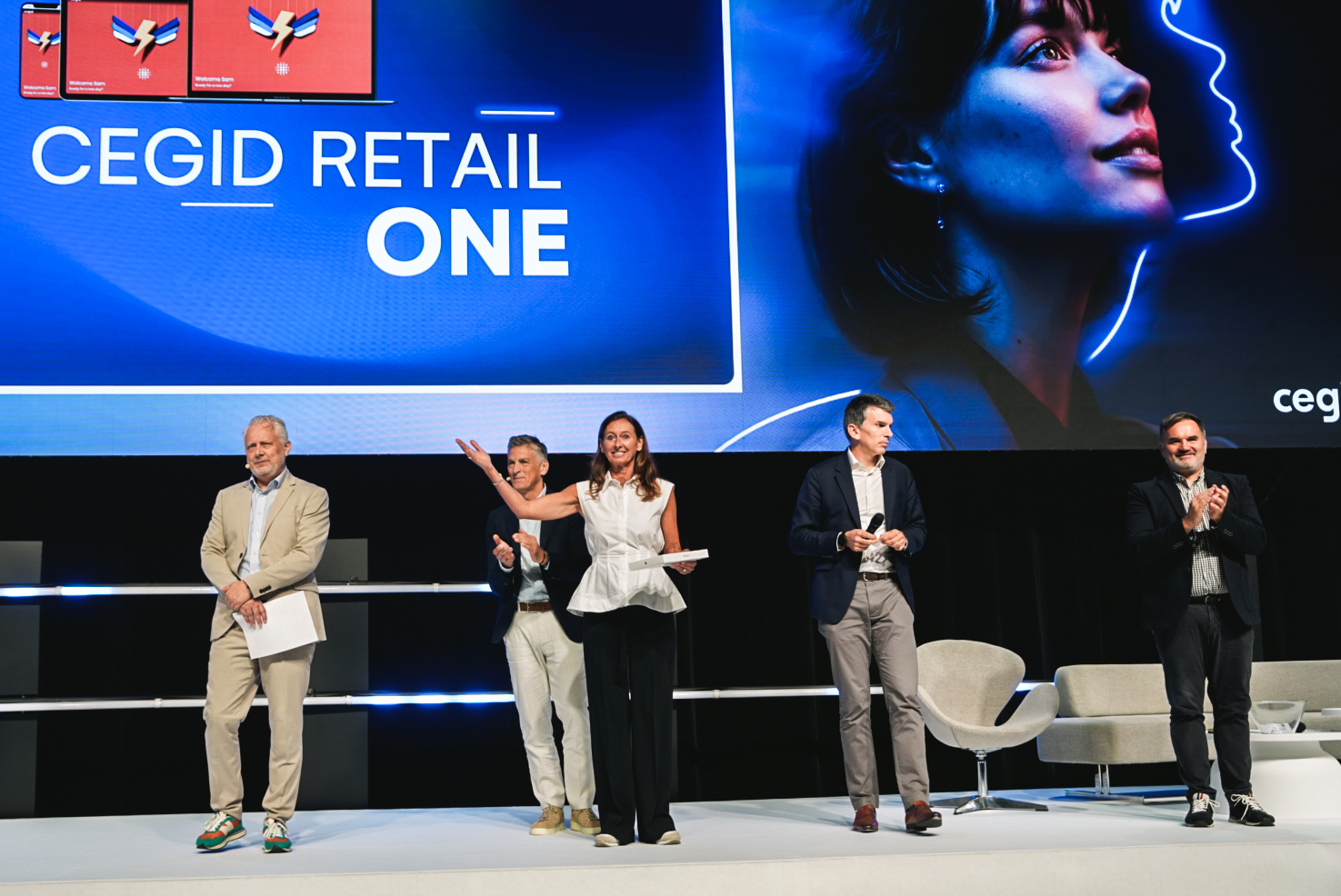
Cegid Connections Retail, Cegid’s global user conference, roared into Prague last month with a clear message for the industry. Retail doesn’t need more noise. What it does need, is sharper execution. But what does that actually look like?
The event brought together 400+ retail leaders from across the globe for two days of workshops, plenary sessions, networking, debate and practical insight. Attendees included titans of the industry such as LVMH, Moncler, GANT and L’Occitane, all of whom contributed to hashing out what a truly exemplary retailer looks like today, and in the future.
The mood was energetic, ambitious, yet truly grounded in the hard-honed realities and challenges that retailers are facing today. Artificial intelligence was, inevitably, one of the headline topics. But this wasn’t an event built around distant predictions or abstract technology. The real conversation was about how retailers can turn innovation into something useful on the shop floor, in the back office and across increasingly complex omnichannel operations.
For all the excitement around new tools, one message cut through repeatedly. Retailers are under pressure to simplify.
“Retailers really are focusing on doing the basics right,” said Laszlo Csibi, VP Cegid for North Europe. Across the event, he said conversations kept returning to operational discipline, clearer systems and technology that solves real pain points rather than adding another layer of complexity.
It’s a poignant point, considering the pace of change in retail has become relentless. Stores aren’t just places to sell but service hubs, fulfilment points, return centres, brand stages and data sources. Staff are being asked to deliver richer customer experiences while navigating more systems, more channels and more operational demands.
Innovation layered on top of that complexity can quickly become a problem in itself.
“It’s very easy to get excited about AI,” Csibi said. “But if you’re implementing it for tech’s sake rather than actually looking at your pain points, you’re getting caught up in the hype.”
That was one of the strongest themes from Prague. Retailers aren’t anti-innovation. Far from it. The event was packed with examples of ambitious brands investing heavily in technology to improve customer experience, colleague productivity and global consistency. But leaders were clear that the basics must come first.
“If you’ve got fragmented architecture and you’re spending a load of budget to keep everything speaking to one another, adding AI on top of that just becomes a mess,” Csibi added.
Why Cegid Retail One landed so strongly
Cegid’s answer to this challenge was the biggest talking point of the event. The company unveiled it’s historic new solution, Cegid Retail One, a unified platform designed to bring core store operations into a single interface.
By combining point-of-sale, inventory management, CRM, clienteling and task management, the solution aims to reduce the number of systems store teams need to use each day. The goal is simple. Less friction for colleagues, stronger visibility for retailers and a better experience for customers.
The reaction in Prague was immediate.
“It suddenly became the thing to talk about,” Csibi said, noting how quickly the idea resonated with retailers looking for a more practical route through complexity.
That response was telling. Retailers aren’t asking for technology that dazzles in a demo and then creates more work in-store. They want tools that make daily operations easier, faster and more consistent.
This is particularly urgent for global retailers, where inconsistent systems across markets can make it difficult to deliver the same standard of service everywhere.
Aboubakr Bekkali, CIO at L’Occitane, explained that the business operates around 3,000 shops and employs around 8,000 people. As those shops become more experience-led, he said the challenge is creating a more harmonised experience across countries.
“Our reality is that we don’t have only one information system. We have as many as we have countries,” he said, explaining that L’Occitane has been moving back towards common standards across checkout, customer relations and store data.
For L’Occitane, the value of a more connected store environment starts with being able to identify the customer quickly, understand their preferences and allow staff to personalise the experience without being tied to a fixed register.
Once again, the message was clear. The store of the future is not about replacing human service with technology. It is about giving store teams the tools and information they need to serve customers better.
LVMH and the rise of “quiet tech”
That same idea came through strongly from Franck Le Moal, CIO at LVMH.
The luxury group has been investing heavily in technology for the past five or six years, he said, because tech has become a strategic driver for modern retail businesses. But for LVMH, the aim isn’t to make technology the star of the show, but to support creativity, craftsmanship, service and operational excellence across the whole value chain.
Le Moal described this as “quiet tech”, technology that improves the experience without getting in the way.
That phrase captured the tone of the event. The most compelling ideas weren’t the loudest or the most space-age in design. They were the ones that helped retailers remove friction, improve resilience and give staff more time to do what technology cannot.
Cegid already plays a significant role across LVMH, supporting around 20 maisons and 2,000 stores within a wider global estate of around 6,000 stores. For a group of that scale, Le Moal said strong global partnerships are essential.
He also set out five major technology priorities for retail, including digital and omnichannel growth, a renewed focus on stores, data and AI, cyber resilience and the changing geopolitics of technology.
His point on stores was particularly powerful. LVMH has some of the most beautiful retail locations in the world, and the group wants to bring customers back into those experiences. But that cannot happen properly if store teams are slowed down by too many applications.
“We have 60,000 sales assistants throughout the world, and we have too many applications,” Le Moal said. “We need to go to this idea of a one-stop app.”
In some stores, he said sales assistants may be working across eight to twelve apps. That level of complexity makes it almost impossible to deliver the service luxury retail depends on without huge headaches and blockers.
The ambition is to free sales assistants from unnecessary admin so they can tell stories, build relationships and deliver richer experiences. In Le Moal’s words, “we want our people do what they do best.” The store needs to be effective, but it also needs to feel special.
AI that helps, not distracts
AI was still a major part of Cegid Connections Retail, but the discussion was refreshingly practical.
Walking tours and demonstrations showed how AI use cases are developing across retail, from inventory alerts and automated compliance checks to smarter task optimisation and better decision-making. The focus was not on replacing people. It was on giving teams better information and removing repetitive work.
Csibi said some attendees initially approached the AI sessions with caution.
“At the beginning it was almost like, ‘not another AI workshop’. But by the end it was, ‘wow, I didn’t know about that possibility’,” he said.
That shift summed up where many retailers now find themselves. They’re skeptical of hype, but open to AI where the use case is clear, measurable and connected to a genuine business problem.
There are also firm boundaries. Retailers, especially in premium and luxury, remain deeply protective of the human relationship between staff and customers.
“You cannot outsource relationships to AI,” Csibi said.
That was one of the sharpest takeaways from Prague. AI can support store teams, automate low-value work and surface better insights. But it cannot replace the judgement, empathy and storytelling that define great retail service.
Csibi also warned that some applications of AI risk creating more distraction rather than better service, particularly if chatbot-style functionality is pushed into store experiences without a clear purpose.
Omnichannel still has work to do
The event also underlined how much value remains locked inside better omnichannel execution.
One example shared at the event pointed to a six to seven per cent uplift in in-store sales through improved omnichannel capability. That figure shows that the biggest gains don’t always come from speculative innovation. They can come from making existing channels work together properly.
That means better stock visibility. Cleaner customer data. Faster service. More consistent clienteling. Easier returns. More useful store tasks. Stronger links between digital journeys and physical locations.
It also means reducing the integration burden that has built up across many retail businesses over time. Fragmented systems cost money, slow teams down and create security risks. They also make innovation harder because every new tool has to be stitched into an already crowded technology estate.
Integrated platforms offer a more stable foundation. They make it easier to scale, easier to protect the business and easier to give colleagues a clearer way of working.
The future of retail is practical
Cegid Connections Retail was a high-energy event, full of ideas, debate and ambition. But its strongest message was also its most practical.
Retailers don’t need to choose between innovation and operational discipline. They need both. AI, unified commerce and advanced store technology can all create value, but only when built on strong foundations.
That is why “getting the basics right” didn’t feel like a cautious message in Prague, but instead like a true growth strategy.
The retailers on stage were not talking about slowing down. They were talking about focusing their investment where it can make the biggest difference. They want simpler systems, better-connected stores, stronger data, more resilient operations and sales assistants who are free to spend more time with customers.
As Csibi put it, “there’s so much more potential and optimisation that we can do.” The challenge now is making sure that potential reaches the shop floor.
Click here to sign up to Retail Gazette‘s free daily email newsletter


