

As consumers expect groceries in minutes rather than days, retailers are discovering that on-demand fulfilment can’t simply be bolted onto old ecommerce operations. Deliverect’s Joe Heather argues the winners will be those who treat fulfilment as a distinct operational workstream, while integrating it through a unified technology layer.
For years, grocery delivery meant planning ahead. Customers filled a basket, booked a slot and waited for tomorrow, or perhaps later in the week, or even the week after. It was structured, scheduled and relatively predictable, if not acutely frustrating.
Then Covid changed the rhythm of retail.
Not only did shoppers become more comfortable buying groceries online, they became used to getting what they wanted almost immediately. Uber Eats, Deliveroo and Just Eat helped train consumers to think in minutes, not days. That expectation has now moved far beyond takeaway food.
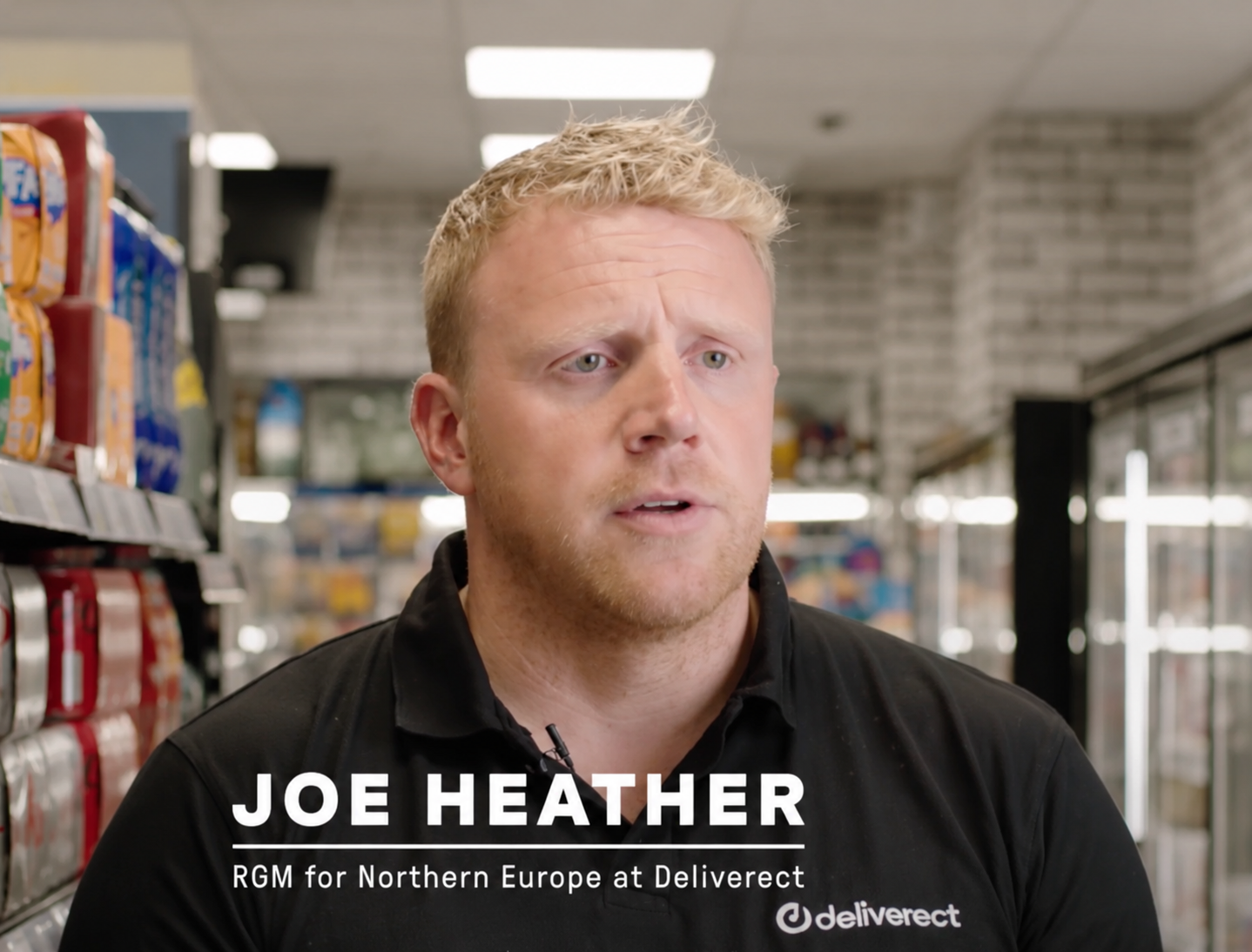
For Joe Heather, regional general manager for northern Europe at Deliverect, this shift has created one of the most important operational challenges in grocery and convenience retail.
“Scheduled delivery and on-demand delivery are two completely different operations,” he says. “With scheduled grocery, you can use wave, batch and zone picking, consolidating orders centrally building efficiency around larger baskets. With on-demand, a driver might be turning up in 10 minutes. You have to pick quickly, accurately and get that order to the right hand-off point.”
A scheduled grocery basket may be worth £80 to £100. An on-demand basket may be closer to £18 to £28. But the operational pressure can be just as intense, if not more so. The order still needs picking, substitutions still need handling, stock still needs updating, and customers still expect visibility from the moment they press buy.
Heather believes retailers are now wrestling with a shared question. How do they connect scheduled delivery, rapid delivery, marketplace orders and direct-to-consumer channels without creating chaos in-store?
His answer is, do not treat on-demand as a smaller version of traditional online grocery.
“The two have to be operationally separated, but integrated as part of the core system,” he says.
That is where Deliverect is positioning itself. Founded in 2018, the company built its reputation in food service by helping restaurants manage orders from multiple delivery platforms in one place. Its platform integrates with partners including Uber Eats, Deliveroo, Just Eat, NCR and Oracle, standardising incoming orders, centralising product and menu management and reducing the need for staff to juggle multiple tablets, apps and systems.
Now, that same logic is becoming increasingly relevant to retail.
In many stores, the reality of rapid delivery remains clunky. Orders arrive through different marketplace devices, staff move between apps and products need to be marked unavailable in multiple places or systems integrated to multiple channels. Drivers wait, sometimes patiently, sometimes not. Customers get substitutions they don’t want. Store teams, already stretched, inherit a new set of tasks that were never part of the traditional convenience retail model.
“If you worked in a convenience store, you used to merchandise, serve customers and maybe work the till,” says Heather. “Suddenly, this third task has come in. You’ve now got an external order that you have to pick.”
That third task is not going away. In fact, Heather argues it’s only becoming more important as younger consumers move through the market. “I call it the generation game,” he says. “Millennials, Gen Z, Gen Alpha, their expectation is: I’m on my phone, I order it now, and it arrives. A next-day slot already sounds old.”
The convenience store used to win because it was physically close to the customer. But the definition of convenience has changed. If a customer can order milk, eggs, bread and cheese from the sofa and pay a few pounds for delivery, the store’s proximity matters less than its ability to fulfil quickly and reliably.
This is why the in-store technology layer has become so important. Deliverect’s Quest application brings operational controls into one system, allowing staff to manage incoming orders, store closures, amendments, substitutions, and order prioritisation from a single device.
On the back end, Deliverect synchronises with existing store systems for product range, inventory, and pricing. Once an order has been handled through the Quest device, it is then injected into the store’s operating system for reconciliation, consolidating the entire end-to-end process into one streamlined workflow.
In retail, Heather says the goal is to reduce cognitive load for store teams.
“If you’ve got Uber, Deliveroo, Just Eat, Amazon in the future, Snappy Shopper or others, they may all have different ways of surfacing orders. We minimise that into one process. It has to be simple enough that thousands of store colleagues can pick it up and start using it straight away.”
This simplicity is particularly important as retailers expand across more channels. Heather expects consolidation among major marketplaces, but not a simpler channel landscape. In fact, he believes the number of digital touchpoints will grow.
Consumers will still browse visually through apps such as Uber Eats or Deliveroo. Retailers will still want customers using their own direct channels, such as supermarket apps and rapid delivery propositions. But new interfaces are emerging too. Voice assistants, AI agents and what Heather calls “intent-based purchasing”.
In this future, a customer may not open an app at all. They may ask Siri, Alexa, Gemini or ChatGPT to reorder a familiar basket, send flowers, buy a pizza or find the cheapest branded grocery item nearby.
“Intent-based purchasing is coming,” Heather says. “You might simply say: order me two pizzas for 7pm, or get me eggs, milk, bread and cheese from Waitrose. The transaction happens without browsing.”
That shift could have major implications for retail media and brand discovery. If AI agents begin influencing where customers shop and which products are surfaced, advertising models may change dramatically. Search, marketplace promotion, loyalty pricing and sponsored placement could all be reshaped as the interface between shopper and retailer becomes less visual and more conversational.
Heather sees this as another reason retailers need more flexible infrastructure. The future will not be about one channel replacing another, but about orchestrating multiple channels, with the channel mix constantly evolving.
The same applies inside the business. Heather believes AI will increasingly automate operational tasks such as adjusting store opening times, managing peak periods, updating product availability or changing preparation windows. Deliverect, he says, is not an AI-native business, but at its core the platform has become fully AI-powered, using orchestration tools and agents to automate work that would once have required manual intervention.
However, he is careful not to overstate where the market is today. Many AI use cases remain partial, experimental or unproven. The immediate challenge for retailers is more practical. Make on-demand fulfilment work properly at store level.
That challenge is already shaping major retail decisions. Heather points to Deliverect’s work with Asda, following a long tendering process, as an example of how quickly the market is moving. Features changed, marketplace requirements evolved and retail use cases became more sophisticated during the process.
For Deliverect, its advantage is history. The business has spent years integrating with delivery platforms across the restaurant and now retail sectors, processing millions of transactions and building relationships with the major channels.
“This isn’t new for us,” Heather says. “We’ve been doing on-demand marketplace consolidation for years. Because of the scale of our relationships, we get advance warning and advise on new feature releases, which means we can start building before they are fully released.”
The on-demand grocery market is still young, but customer expectations are already unforgiving. A delayed order, a poor substitution or a frustrated driver can quickly become a lost repeat purchase.
As Heather’s insight evidences, it’s clear that rapid delivery truly is no longer a side project; it’s already a core part of convenience.
Click here to sign up to Retail Gazette‘s free daily email newsletter