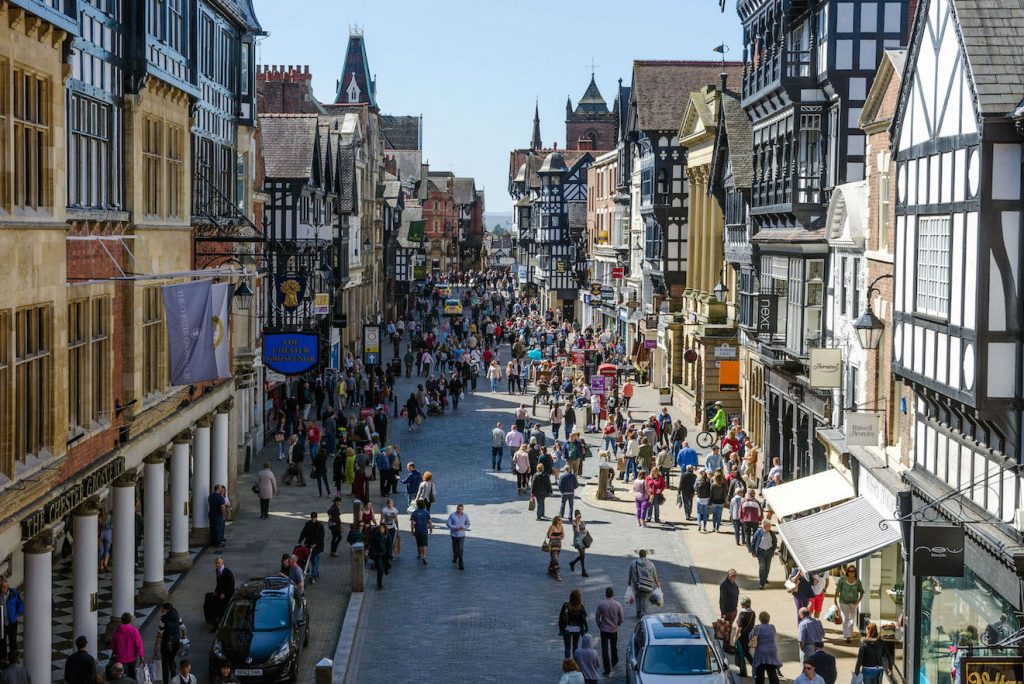


The government has pledged to crack down on illegal high street shopfronts as MPs warned that town centres were being undermined by organised crime, empty units and weaker footfall.
Speaking during a Westminster Hall debate on high street regeneration and unlawful storefronts, housing, communities and local government minister Nesil Caliskan said the government would publish a cross-government high street strategy later this year.
The strategy will be backed by £300m to support retail, leisure and hospitality businesses and help rethink the role of town centres.
Caliskan said the government was determined to address “both sides” of the high street challenge by supporting regeneration while tackling unlawful activity.
“Too many high streets face real challenges, from changing consumer habits to vacant units and declining footfall,” she said. “In some areas, those challenges are compounded by the rise of businesses used as fronts for criminal activity.”
The minister said high streets would not thrive if illegal businesses were allowed to “take hold”, pointing to concerns over premises being used for money laundering, tax evasion, illegal working and the sale of illicit goods.
The comments come after the Home Office launched a £30m crackdown on rogue barber shops, vape stores, mini-marts and sweet shops linked to organised crime.
The package includes £20m to strengthen national co-ordination and local enforcement, £6m to boost Trading Standards capacity in priority areas, and the creation of a new High Street Organised Crime Unit to bring together government, law enforcement and local partners.
The government is also consulting on extending the maximum duration of closure orders to 12 months, in a bid to stop suspect businesses reopening before investigations have concluded.
The National Crime Agency estimates that at least £12bn of criminal cash is generated in the UK each year, with £1bn laundered through high street businesses including mini-marts, barbers, vape stores and sweet shops.
Caliskan said hundreds of so-called businesses involved in illegal activity had already been targeted, with visits to thousands of premises, hundreds of arrests and millions of pounds of criminal proceeds seized.
The debate was secured by Conservative MP Bradley Thomas, who warned that many town centres were facing a “perfect storm” of changing retail habits, rising costs, weaker investment in the public realm and a narrowing mix of stores.
Thomas told MPs there were now believed to be at least 3,500 nail bars, 20,000 to 25,000 barber shops and 3,500 vape shops across the UK, although he said the figures could be under-reported.
He also cited Office for National Statistics data showing 530,000 shoplifting offences in 2025, up 20 per cent on the previous year and the highest level on record.
MPs from across parties raised concerns over the rise of low-grade retail, absent landlords, vacant units and the difficulty local councils face identifying who owns high street buildings.
Portsmouth North Labour MP Amanda Martin said councils often struggled to find out who owned premises, adding that there needed to be stronger transparency and due diligence around landlords.
Caliskan said the government was moving away from a “one-size-fits-all” approach and giving mayors, councils, businesses and residents more control over local regeneration.
She pointed to high street rental auctions, which allow councils to bring persistently empty properties back into use, and said £10m had been announced to support the expansion of the programme.
The government has also backed the Community Right to Buy with £61m of funding, while almost £6bn is being invested into Pride in Place programmes over the next decade.
Caliskan added that footfall remained central to high street recovery, with the government’s high streets innovation partnership set to work with selected places on mixed-use town centre models.
“Supporting high streets means government backing our high streets,” she said. “Each place, each town, high street and village, has a different personality and identity.”
The debate comes as retailers continue to warn that rising employment costs, business rates and weaker consumer confidence are weighing on town centre trading.
Caliskan said business rates remained a “long-standing issue”, but argued that new multipliers worth more than £1bn a year would benefit more than 750,000 properties.
She said viable businesses also depended on footfall, place-making, local authority support and public services being brought back into town centres.
“Business rates play a part,” she said. “But viable businesses depend on footfall, place-making of a high street and support from agencies such as the local authority and the public sector.”
Click here to sign up to Retail Gazette‘s free daily email newsletter