


Beauty is emerging as a growth engine while electronics remain a major draw. The opportunity lies in connecting gifting, innovation and value, without mistaking shopper interest for guaranteed sales.
A skincare gift set and a new television might once have occupied very different corners of the Christmas shopping list. This Black Friday, beauty and consumer technology are giving retailers two compelling reasons to compete for shoppers’ attention, and an increasingly interesting space where the categories meet.
Beauty is forecast to be the fastest-growing retail category over the UK Black Friday weekend, with cosmetics spending expected to rise 4 per cent to £868.5m. Technology and electronics, meanwhile, remain near the top of shoppers’ planned purchases.
The opportunity is not simply to put more products on promotion. With shoppers weighing festive gifts against bigger-ticket upgrades, retailers need to decide which categories lead their campaigns, how they demonstrate value and what will turn browsing into purchases.
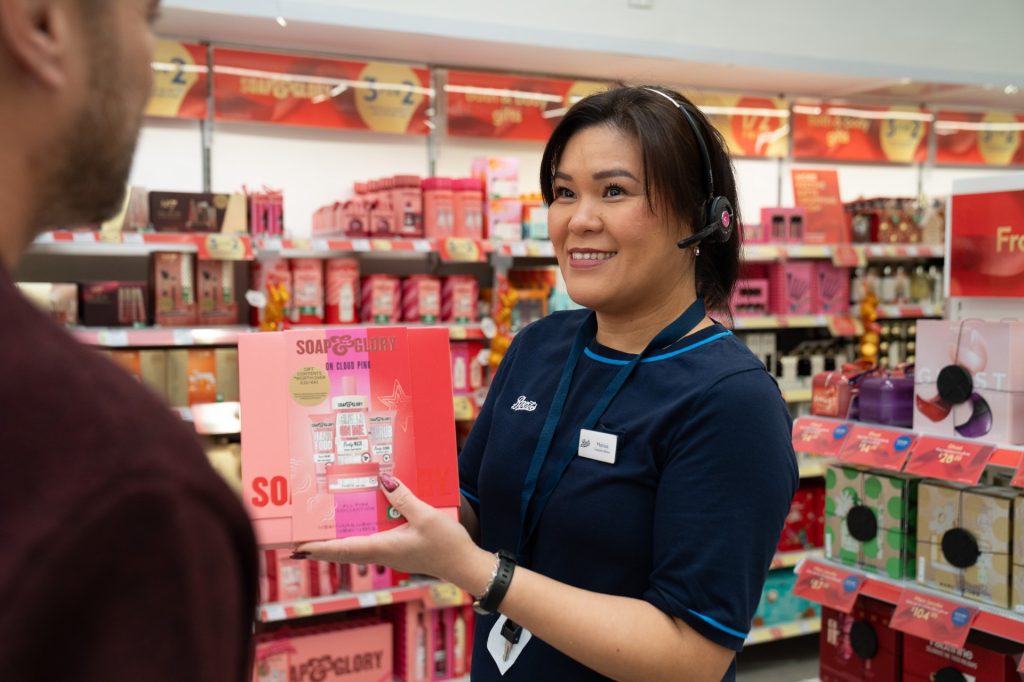
Boots’ predicted rise up the Black Friday search rankings offers one indication of that changing focus. MediaVision forecasts searches for the retailer will increase 17 per cent year-on-year to 1.78 million during Black Friday week, putting it level with Currys in joint fourth place.
That would bring a beauty-led retailer alongside one of the event’s traditional electronics heavyweights. This could highlight a shift in attention, even if it is not yet evidence of a shift in sales.
Beauty moves into the spotlight
According to VoucherCodes.co.uk, 45 per cent of Black Friday shoppers plan to buy beauty products, up from 39 per cent the previous year. Christmas gifting and the appeal of premium products give the category a role beyond the bargain-led purchase: shoppers can use the event to trade up as well as stock up.
MediaVision’s separate search forecasts reinforce the prospect of a strong seasonal uplift. Beauty is expected to record the biggest boost in search interest of any retail category, reaching 1.6 times the level of a typical week.
But category momentum will not be shared evenly. Alongside Boots’ forecast growth, Superdrug is expected to see searches rise 7 per cent to 527,000, while Sephora is tipped for an 8 per cent increase and Rituals an 18 per cent jump.
The outlook is weaker for Charlotte Tilbury, with searches predicted to fall 14 per cent, and for Cult Beauty and The Perfume Shop, where declines of 9 per cent and 8 per cent respectively are forecast. Sol de Janeiro could see search demand fall 45 per cent after its surge in popularity last year.
Those contrasts matter for brands deciding how much weight to place behind their Black Friday campaigns. A growing category does not remove the need to give shoppers a specific reason to choose one brand over another.
MediaVision senior manager Molly Goffin stresses that beauty’s reliance on social media trends and new product launches could make momentum difficult to sustain.
“Black Friday gives brands opportunity to convert existing interest into sales, but discounts alone won’t necessarily bring shoppers back year after year,” she explains.
“The brands best positioned to succeed are those giving customers reasons to engage beyond promotional periods, whether that’s through products people genuinely want, cultural relevance or strong sense of brand identity.”
Technology’s appeal is evolving
Electronics are not surrendering their place in the Black Friday mix. Currys is still forecast to attract 1.78 million searches during Black Friday week, despite a predicted 2 per cent decline. Amazon and Argos, whose ranges extend well beyond technology, are expected to retain first and second place with 7.19 million and 2.83 million searches respectively, although both are also forecast to see interest ease.
MediaVision chief executive Louis Venter adds: “Black Friday has traditionally been dominated by retailers offering big-ticket discounts, particularly in technology and electronics. But consumer interest is no longer concentrated in those categories alone.
“Brands that have built strong relationships with shoppers throughout the year are in a good position to capitalise when the sales period arrives.”
The overlap between beauty and technology offers a way to broaden the conversation. Argos’ 2026 Christmas campaign makes that connection explicit: Richard Ayoade, guided by mascots Connie and Trevor in Tales of Argos Past, discovers that the retailer’s offer extends beyond toys.
Choosing a light therapy face mask for his mother, he declares: “Nothing says Christmas like advanced skincare technology”. The campaign’s focus on products such as the Shark CryoGlow LED face mask brings the retailer’s “There’s More to Argos” message into beauty and wellness.
It is a useful illustration of how the two demand stories can reinforce one another. Beauty technology can be presented as a gift, a premium beauty purchase and a gadget, giving retailers more than one route into the same shopping mission.
Related Story
John Lewis’ Black Friday promotions show how a broad product range can serve both demand streams. The retailer is continuing to price match against 25 leading retailers under its Never Knowingly Undersold promise, making reassurance on price part of its pitch alongside individual offers.
Its technology selection spans televisions, laptops and coffee machines, as well as the Dyson Supersonic Travel Hair Dryer. The dryer is offered at £189.99, down from £249.99, in a Prussian Blue colour exclusive to John Lewis and Dyson — an example of beauty and technology sharing space within the promotional range.
Elsewhere, a Samsung 48-inch S95H OLED television comes with a £150 gift card, subject to terms and conditions. That is a different value proposition from a direct price cut, underlining why the mechanics of an offer matter as much as its headline message.
In beauty, John Lewis’ offers include the Elemis Radiance & Protection Skincare Gift Set at £100 with a stated value of £171, a Burberry Goddess festive fragrance set reduced 40% to £59.40, and a buy-one-get-one-free offer on Bobbi Brown Longwear Cream Shadow Sticks.
Together, the examples point to a merchandising opportunity built around shopping missions rather than rigid category boundaries: premium gifts, beauty upgrades and technology purchases can all feature in the same festive campaign. The challenge is to keep the value message clear, distinguishing a price reduction from a gift-card incentive, bundle valuation or multibuy.
Attention is only the starting point
The case for focusing on beauty and technology comes with an important qualification: shoppers’ interest does not guarantee that they will spend freely.
As reported earlier this month, separate Omnisend research found UK shoppers are expected to spend 32 per cent less across Black Friday and Cyber Monday this year, despite more consumers planning to participate.
Meanwhile, BRC figures show shoppers held back on big-ticket purchases in October while waiting for November discounts. That gives technology retailers a potential opening, but also raises the importance of convincing shoppers that an offer is worth acting on.
MediaVision’s forecasts measure UK Google search demand, not transactions. They cover 1,006 retail brands and 471 products, drawing on Black Friday trends between 2022 and 2025 alongside more recent consumer interest. They indicate which names may capture attention, rather than establishing which will deliver the strongest sales or margins.
The strategic implication is to give beauty greater prominence without overlooking technology’s established draw. Gifting-led edits and beauty-tech products offer ways to connect the two, while clear pricing and relevant offers can help make the case to shoppers with constrained budgets.
The uneven beauty forecasts are a reminder that being in a sought-after category is not enough. Black Friday can amplify demand already built through products, launches and customer relationships; it is a less certain substitute for that groundwork.
Beauty may be changing the Black Friday pecking order, but it need not displace consumer technology to do so. The opportunity for retailers is to bring both into focus — and turn seasonal attention into a convincing reason to buy.
Click here to sign up to Retail Gazette‘s free daily email newsletter