

In beauty, choice has become both the selling point and the problem. Shoppers can now access thousands of products, ingredient-led claims, influencer recommendations, clinical promises, TikTok trends and customer reviews in a matter of seconds. Yet for many, the result is not so much confidence, but confusion.
It’s this contradiction that Noli is trying to solve.
Founded by Maëlle Gasc and Amos Susskind, and backed by L’Oréal, Noli was born from questioning, in a category overflowing with products, why is it still so difficult for people to find what genuinely works for them?
For Gasc, co-founder and deputy CEO, the answer lies in the gap between beauty’s abundance and the individual customer’s ability to navigate it. “There are too many brands, too many products, too much noise,” she says. “The world doesn’t need another brand or another product. The question is, how do we help people make sense of it?”
Noli’s response is a personalised beauty platform built around an AI advisor, a curated product catalogue and a retail model that deliberately rejects sponsored product placement. Its ambition is to reshape the route to purchase around diagnosis, education and trust.
The company’s roots go back to a L’Oréal project exploring how the group could use the strength of its brand portfolio to address a customer pain point. Gasc, who had first encountered L’Oréal during an early consulting project before spending seven years in a digital scale-up, reconnected with the business as the concept was taking shape.
The opportunity, she explains, was to combine L’Oréal’s scientific expertise and beauty knowledge with a more agile, user-led start-up approach. “They had the project, they had the means, and they were receptive to a different way of doing things,” she says. “Noli was then set up as an independent startup, and we were free to confirm the user pain point, the business model and what the experience should look like.”
 That process started not with technology, but with listening. The team interviewed users about how they selected beauty products, what frustrated them online and why they felt uncertain when buying. The same themes came up repeatedly. Too much choice, difficulty finding relevant reviews, a lack of trust in influencers, and the specific challenge of buying skin and haircare products without being able to try them first.
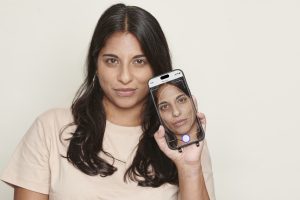
L’Oréal gave the green light in summer 2023. Six months later, Noli launched its first MVP: a functioning ecommerce site with an advisor that combined a questionnaire, a face scan and routine recommendations. Users could receive a personalised shop based on their answers, with match scores applied to products.
That first version was deliberately focused. Since then, the experience has evolved sharply. Budget preferences were added after users said price was a barrier. The journey was adapted when it became clear that not everyone wanted to buy a full routine. Most significantly, the advisor has become fully conversational, able to respond to a far wider range of prompts and needs.
“The shop itself hasn’t changed that much, because you still need retail fundamentals,” says Gasc. “But the advisor has changed a lot. The latest version is fully conversational and looks nothing like what we had at the beginning.”
The difference is clear in the current experience. A user can begin with a face scan, receive an analysis of their skin type and concerns, then ask for a specific product, such as a serum for hyperpigmentation. Noli will recommend a small selection of products, explain why each might be suitable, identify potential shortcomings and allow the customer to add a choice to basket.
Noli isn’t presenting AI as a magical layer on top of ecommerce, but trying to mimic what a strong beauty consultant might do in store: listen first, diagnose carefully, explain the reasoning and point out trade-offs.
For Gasc, this is where Noli’s stance on bias becomes central. The platform doesn’t sell sponsored recommendations and doesn’t allow brands to pay for prominence in the advisor. “There is no retail media,” she says. “If you are a brand, you cannot pay to be displayed to the consumer. We don’t have a revenue line for that at all.”
Instead, recommendations are built from product data, ingredient analysis, customer preferences, reviews and L’Oréal’s beauty knowledge graph. Gasc describes the early recommendation engine as almost “too unbiased”, built heavily around scientific logic before the team layered in the human realities that influence whether someone will actually use a product, being budget, brand preference, texture, smell and sensorial appeal.
“The scientific answer to a focus area is not always one product,” she says. “It is often a full routine that you apply for three or four months. But the routine also has to be appealing to the user.”
This is where beauty ecommerce becomes particularly complex. A product might be clinically appropriate, but if it smells wrong, clashes with foundation, feels unpleasant or fails to deliver any immediate sense of benefit, the customer may stop using it long before results appear. Noli’s job is to account for both the long-term science and the short-term reality of product use.
That requires data discipline. Before Noli could build its advisor, the team had to clean and enrich the product catalogue in detail: ingredients, fragrance, suitability for sensitive skin, active interactions, textures, descriptions and claims. The scientific data needed the same treatment.

This, Gasc argues, is the unglamorous truth behind useful AI. “People are looking for use cases for AI, but in many companies the data is not there, or it is messy,” she says. “Only when you have clean, enriched data can you put an advisor on top of it.”
Noli is also cautious about the limits of generative AI. Gasc is clear that large language models alone cannot yet provide reliable, unbiased beauty advice. They can hallucinate, rely on inconsistent sources and reproduce the biases of the data available to them. For a category that sits close to skin health, even if not medical advice, that is not good enough.
“It still requires scientific guardrails, a beauty knowledge graph, education and a catalogue of products organised in a very specific way,” she says. “AI cannot recommend in an unbiased way if you don’t put the right data at its disposal.”
The same logic applies to privacy. Noli’s face scan experience explicitly tells users that their image is not being stored. According to Gasc, that was already the company’s practice, but user feedback made it clear the reassurance needed to be visible in the journey.
“When you are a new company, especially one using AI, trust is fundamental,” she says. “We look at every opportunity to reassure the user.”
Noli collects more than 100 data points on users, but Gasc says this is used first and foremost to improve the experience, refine recommendations and personalise communication. The promise to brands is not access to personal data, but higher-level insight: where their products match customer needs, where there may be assortment gaps, and how well their portfolio serves concerns such as blemish-prone skin, wrinkles, textured hair or hyperpigmentation.
 That makes Noli a two-sided marketplace, but one with strict rules. New brands must be science-backed, ingredient-led and able to substantiate their claims. The platform is also looking for brands that fill gaps in the catalogue, improving coverage across different skin tones, hair types, concerns and preferences.
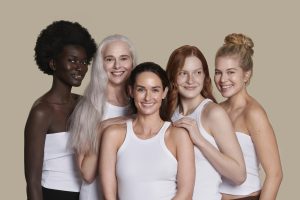
Inclusivity, vitally, is not a side issue. Noli’s face scan technology is powered by ModiFace, the L’Oréal-owned augmented reality and AI business, and has been trained on a broad set of skin data points. But diagnosis is only part of the challenge. A platform can only serve diverse customers properly if the product range is broad enough to meet their needs.
That’s one reason the brand expansion strategy matters. Better data doesn’t only help Noli recommend more accurately, but also helps the business understand where its own offer is incomplete.
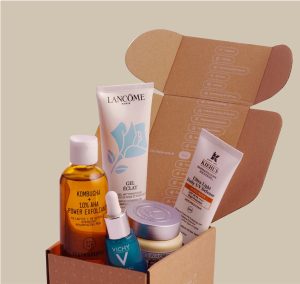
Beyond the advisor, Noli operates as a full retailer. Orders are fulfilled through a logistics centre in Portsmouth, with products delivered in branded packaging and supported by customer service. Post-purchase, the business surveys customers on satisfaction and product match, monitors repeat engagement and uses feedback to refine the advisor. Gasc says 97 per cent of buyers rate their recommendation as a good or excellent match, while the same proportion say Noli helps them buy with more confidence.
The commercial question now, is scale. Gasc believes AI itself can scale personalisation naturally. The harder work is operational, aka listing new products, enriching data, onboarding brands, creating new journeys and testing which acquisition routes work.
Noli is still focused first on the consumers who need it most: engaged beauty buyers who are actively searching, comparing and struggling to make confident decisions. But there are already signs of broader demand. Men account for around 20 per cent of Noli’s sales, despite not being actively targeted.
For Gasc, that suggests the service may be removing barriers that traditional beauty retail has never properly addressed. Some customers don’t know what to ask for. Some don’t want to walk into a department store and explain their skin concerns. Some simply want to explore in private, on their own terms.
“You can come to us and say, ‘I know nothing. I don’t know what to ask, but please steer me,’” she says.
That may be Noli’s most interesting proposition. It’s betting that the next phase of beauty retail will revolve around reducing cognitive load, earning trust and making the customer feel properly understood. As Gasc puts it: “We help the user find what is right for them. We kill the confusion, we bring clarity, and we help them buy what’s right.”
Click here to sign up to Retail Gazette‘s free daily email newsletter