

UK retailers face a fresh inflation squeeze following a warning from the Bank of England that higher energy costs, poor harvests and extreme weather could push food prices sharply higher over the coming months.
Bank of England governor Andrew Bailey has warned that the war in Iran and worsening weather conditions risk triggering another bout of inflation, piling further pressure on retailers and household budgets.
Speaking to MPs on the Treasury Committee, Bailey said risks to the inflation outlook remained tilted to the upside, with energy prices a particular concern as disruption around the Strait of Hormuz continues to affect global oil markets.
The knock-on effects could increasingly feed through to food prices as higher energy, transport and production costs work their way along retail supply chains.
Weather is also becoming a growing concern for policymakers.
Bailey said farmers were already reporting weaker yields across cereal crops including winter wheat, spring barley and oats following hot and dry conditions, while the emergence of a strong El Niño weather pattern could disrupt global supplies of commodities including rice, coffee, cocoa and palm oil.
The Financial Times reported that food inflation could approach five per cent next summer as the combined effects of higher energy prices and weaker agricultural production filter through to consumers.
Headline UK inflation is also forecast to rise again during the final months of the year, after reaching 2.9 per cent in July.
The warning comes as price pressures are already beginning to re-emerge across retail.
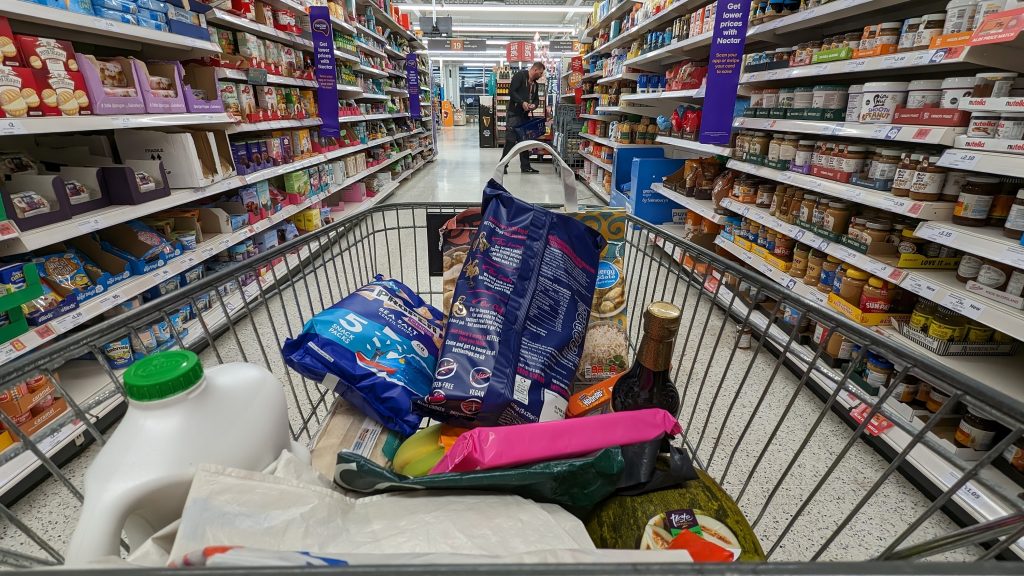
Latest British Retail Consortium figures showed shop price inflation accelerated to 1.5 per cent in August, its highest level in more than two years, while food inflation climbed from 2.2 per cent to 2.8 per cent.
Retailers have repeatedly warned that higher energy, logistics and supplier costs are becoming increasingly difficult to absorb without passing at least some of the increases on to shoppers.
The prospect of another jump in grocery prices will therefore add to concerns over consumer spending as the sector heads towards the crucial final months of the year.
Higher household energy and food bills could squeeze disposable incomes at the same time retailers face rising costs across distribution centres, stores and manufacturing supply chains.
The Bank of England has kept interest rates at 3.75 per cent, although financial markets are increasingly pricing in the possibility of another increase before the end of the year.
Bailey stressed that a rate rise was not inevitable, however, telling MPs that the Bank did not have a predetermined path for borrowing costs and would respond to how inflation and the wider economy develop.
Click here to sign up to Retail Gazette‘s free daily email newsletter