

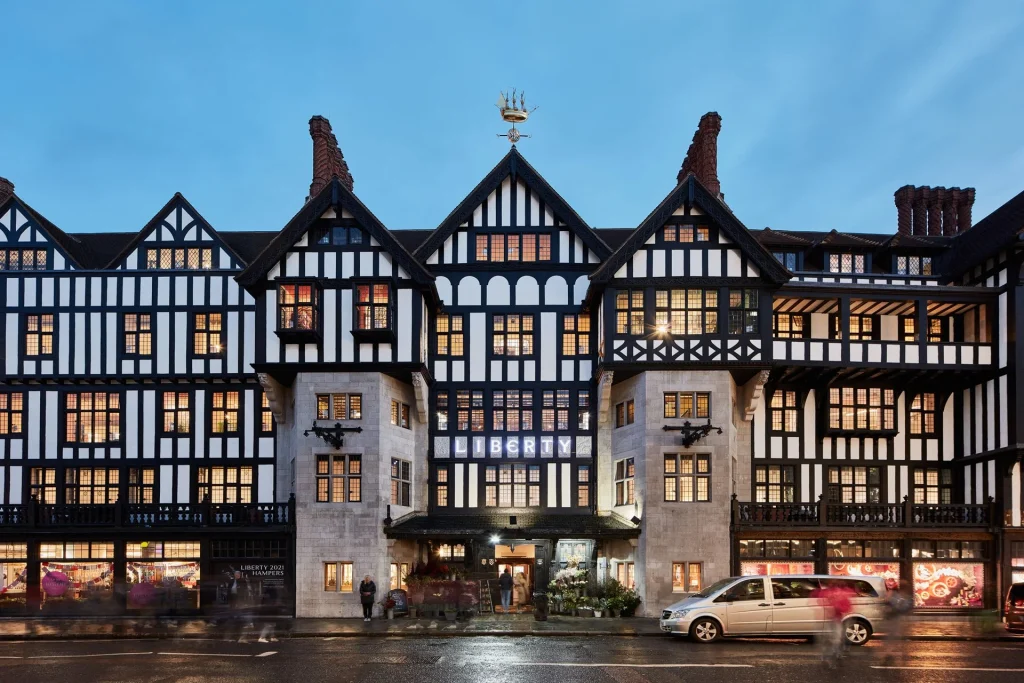
Topshop has confirmed Liberty as its first UK stockist, marking a major return for the British brand to the high street.
The announcement, teased via a social media video on 19 August, has sparked excitement and speculation across the retail industry.
The move comes after Topshop, now majority-owned by Heartland, with Asos retaining a minority stake, confirmed several European stockists earlier this year, including Printemps in France and Magasin du Nord in Denmark.
Until this week, the identity of the UK wholesale partner remained a closely guarded secret, fuelling weeks of debate about where the brand might land.
Liberty’s group buying and merchandising director, Lydia King, praised the collaboration and told Elle UK: “To be a part of [Topshop’s] return, when there’s so much nostalgia about the location, and the brand, and the cultural moment, is really exciting.”
She told the magazine that to mark the partnership, Topshop will take over Liberty’s main atrium hall with a huge installation “that really will stop customers in their tracks”.
Meanwhile, the full Liberty edit of clothes – which includes hero coats, sharp tailoring and cult denim from the new Topshop collection – will sit on the store’s second floor.
-
Related Story
-
Topshop’s choice of Liberty has prompted debate across the industry.
Former Asos head of retail and founder of Flourish Retail Sarah Johnson explains it is a smart move in terms of visibility.
“Partnering with Liberty certainly pays off for them, the focus is on Liberty, with Topshop driving extra footfall and buzz. But the bigger question is whether this is real reinvention for Topshop, or just nostalgia wrapped up with a higher price tag,” she says.
Johnson also highlights the importance of store adjacencies, noting: “In department stores, adjacencies really matter. Who you sit alongside shapes brand perception as much as footfall.
“The question is which brands have lost linear footage to make space for Topshop, and how long Liberty will allow that if the profit doesn’t stack up.”
Reflecting on Topshop’s previous flagship on Oxford Street, she adds: “We loved 214 before, but does the same nostalgia apply in a concession format? Let’s not forget Topshop didn’t disappear altogether – the product has been on Asos for the last five years – so is this really a comeback, or just a return to bricks and mortar?”
Finally, Johnson cautions that hype alone isn’t enough: “The launch will certainly create a lot of buzz, but the real test is what happens after that dies down.
“The product has to deliver, otherwise, it won’t last long term, and the space in store will be hard to justify.”
Meanwhile, GlobalData apparel analyst Chloe Tedford-Jones adds that the announcement was likely an “unexpected choice by many, and can be seen as limiting as there is only one physical store”.
“However, this choice may be deliberate, as it creates a controlled testing ground for its physical relaunch before the potential roll out of standalone stores.
She says “the association with Liberty’s luxurious setting gives Topshop the opportunity to elevate its image through visual merchandising.”
Tedford-Jones also explains that Liberty’s status as a popular tourist destination “will also allow Topshop to raise its awareness beyond the UK, which seems to fit with its broader strategy of rapidly building an international presence.”
Similarly, Melissa Minkow, global director of Retail Strategy at CI&T, expressed surprise at the pairing, suggesting Selfridges might align more naturally with Topshop’s target customer and price point.
“Considering Liberty’s reputation for heritage and luxury, the logic behind this decision could be motivated by a desire to elevate the brand,” she says.
“Topshop’s previous positioning was mid-price and trendier, whereas this decision could signal a new, more luxury and staple piece era for the brand. If that’s the case, it’s not the direction I would anticipate them being most successful.”
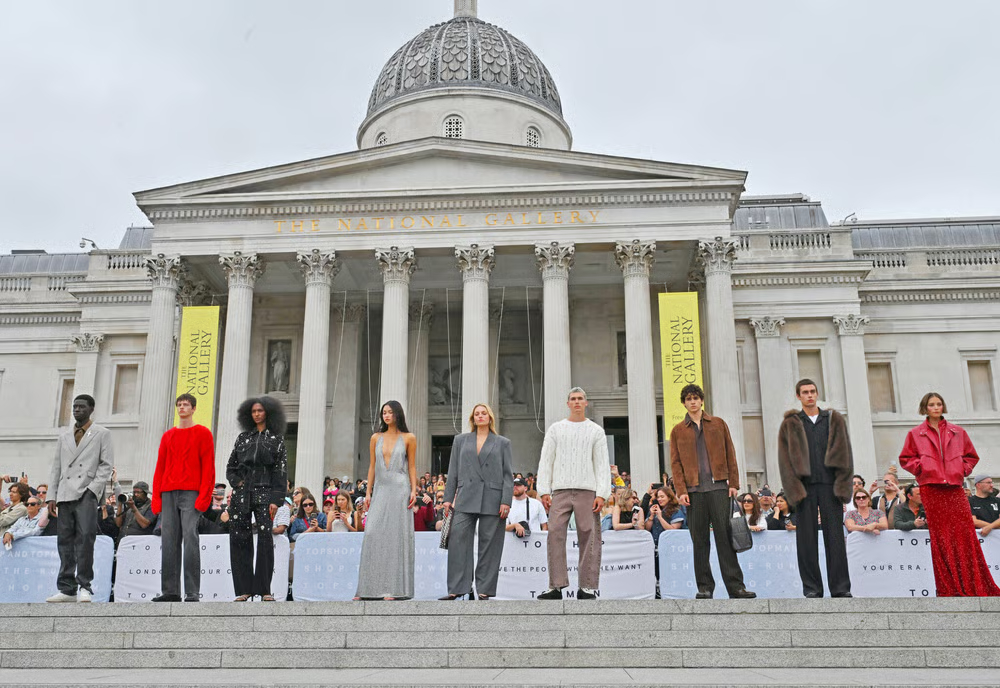
Minkow also noted that the fashion giant’s recent moves – including relaunching in stores down the line and hosting a runway show to much fanfare – demonstrate a clear desire to reconnect with consumers in person.

“Gen Z is especially appreciative of brick-and-mortar retail, so a store that is already in the usual consideration set for Gen Z would have made more sense to me. I’ll be very curious to see how far, creatively and experientially, they’re able to go in Liberty,” she adds.
Topshop’s return to the high street via Liberty signals both a nod to nostalgia and a test of how the brand can reinvent itself in a modern retail landscape.
For shoppers, the partnership promises an immersive experience combining heritage, style, and exclusivity.
With the full product range hitting the store’s atrium and second floor later this year, all eyes will be on whether this carefully curated approach can translate into long-term footfall, sales, and a renewed high-street legacy.
Click here to sign up to Retail Gazette‘s free daily email newsletter