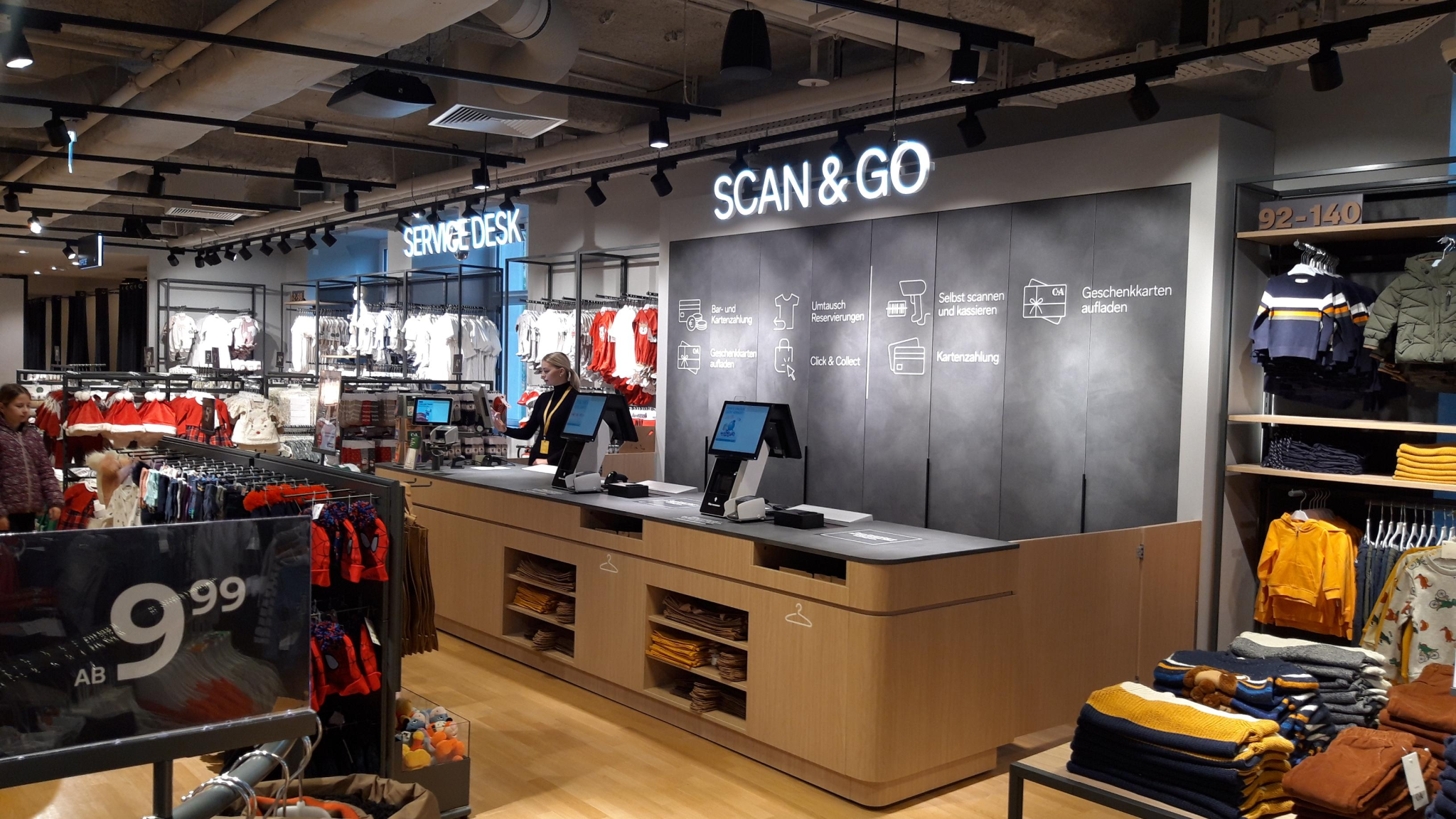
How can retailers create in-store experiences just as exciting as the fashion itself?

Feature ArticlesSponsored

Fashion retail has always relied on experience. The energy of the shopfloor, the visual appeal of the displays and the sense of discovery all play a huge role in drawing shoppers in. But for Aidan Harrison, head of retail UK&I at Diebold Nixdorf, the next stage of in-store evolution is about making stores themselves work more intelligently, to engage shoppers just as much as the product.

“We create retail environments that matter,” he says. That ambition is the core of Diebold Nixdorf’s approach to modern retail. For fashion brands in particular, where customer expectations are high and friction can quickly undermine the shopping journey, great opportunity lies in blending physical retail theatre with smart, connected technology that improves the experience for shoppers and staff alike.

Harrison points to flexibility as one of the defining principles behind the company’s work with retailers. Diebold Nixdorf focuses on creating modular checkout options and journeys that not only attract shoppers, but also allow store associates to work in more value-add ways. When labour efficiency, customer service and store performance all matter intensely, that flexibility is increasingly vital.

“We make implementing and integrating self-service checkout concepts easier and devoid of being locked into a single hardware and software vendor,” Harrison explains.

Retailers are under constant pressure to modernise, but they also want solutions that can adapt to their own store formats, operating models and customer expectations. For fashion retailers, where service needs can vary widely depending on store size, footfall and peak periods, rigid systems can create just as many problems as they solve. A more modular approach gives businesses room to evolve.

But Harrison is clear that the conversation shouldn’t stop at checkout. Some of the biggest in-store pain points still sit elsewhere in the journey, whether that’s stock visibility, shrink, service delays or friction between digital tools and the physical store environment.

“We tackle some of the biggest pain points inside the store like inventory shrink and checkout friction leveraging sophisticated AI technology and RFID solutions,” he says. That’s where intelligent store concepts begin to come into sharper focus. In the fitting room, for example, smart RFID-enabled experiences can help remove one of the most familiar frustrations in fashion retail.

A shopper tries something on, realises the size or colour is not right, and then has to interrupt the experience by heading back onto the shopfloor to find an alternative. With RFID embedded into products, smart mirrors can recognise what has been brought into the fitting room and suggest alternative sizes, colours or related items. The result is a more seamless experience for the customer and stronger upselling potential for the retailer.

On the shopfloor, the value of RFID extends further. Because each RFID price tag is linked to a unique SKU, it becomes much easier to identify products precisely and track their location or availability. Ceiling-mounted readers can help both shoppers and store associates find items faster, while also giving retailers access to real-time inventory visibility and heat mapping. In fashion, where availability can shape a purchase decision instantly, that level of accuracy can make a meaningful difference.
Mobility solutions add another layer of agility. Store associates equipped with mobile tools can carry out quick inventory checks, support customers more effectively and even use the device as a workstation or payment point when required. In peak periods, that can help reduce queues and improve service without placing extra strain on fixed parts of the store.

This all feeds into a bigger vision of how the physical store should operate.

“One of our key differentiators is the application of visual AI and RFID solutions at the point of interaction – combined with modular self service and Storevolution Advisory Services – to create better in-store experiences and remove loss and friction where they happen: in the aisles and at checkout,” Harrison says.

That emphasis on the point of interaction is a huge talking point in retail right now. Rather than treating innovation as something that happens behind the scenes, Diebold Nixdorf is focused on technology that actively improves the moments customers and associates experience in real time. Whether that’s locating stock faster, streamlining service or making checkout more adaptable, the aim is to make the store feel more responsive and less cumbersome.

The checkout journey remains a central piece of that. It’s the final touchpoint in the store experience and one of the easiest places for retailers to lose goodwill if queues are long or service options feel limited. Diebold Nixdorf’s model of “all lanes open, all of the time” is designed to address exactly that challenge.

With platforms such as the DN Series EASY ONE, retailers can configure lanes for assisted, semi-assisted or full self-service checkout, switching between formats according to need. That allows stores to use staff more efficiently, avoid wasted checkout space and keep the customer journey moving more smoothly.

Harrison also stresses that the value of these investments depends on how well they perform over time.

“We make sure that retailers are getting the most out of their technology investments by ensuring highest levels of system availability through world-class service that is proactive and predictive,” he says.

That focus on reliability is essential as, in modern retail, innovation has to be practical. A solution may be powerful on paper, but if it isn’t resilient, scalable and properly supported, it will struggle to deliver lasting value in-store. Diebold Nixdorf’s position is that retailers need both innovation and operational confidence if they are to make real progress.

Looking ahead, Harrison believes one of the most exciting developments in the market will be the rise of more advanced Intelligent Store scenarios.

“I expect to see more Intelligent Store scenarios,” he says. “These are stores that do not just react when a shopper enters. It is a physical space with a digital brain.” For him, that is where the conversation can be truly compelling. The technology itself matters, but the real point is what it enables.

“It’s powered by AI, computer vision, and IoT, but what matters is what it does for customers. The store ‘sees’ what’s happening on shelves, at checkout, in the aisles and then acts instantly to support shoppers and to fix problems before they become pain points.”

That’s particularly relevant for fashion retail, where the customer journey is shaped by emotion, convenience and immediacy in equal measure. The store of the future is more aware, more adaptive and better able to support both inspiration and efficiency at once.

Diebold Nixdorf will be bringing that vision to this year’s Retail Technology Show, where it plans to showcase next-generation in-store scenarios built around smart RFID technology, mobility solutions and flexible checkout.

The company will also highlight its extended AI platform solutions, including innovations designed to help combat shrink in free-flow retail environments with unstructured checkout zones. Drawing on live installations and pilot projects from around the world, the brand will share insights and success stories showing how AI is performing in self-service environments and helping shape the Intelligent Store concepts of tomorrow.

Retailers interested in seeing that thinking in action can visit Diebold Nixdorf at booth #P30 at the Retail Technology Show in London.

Click here to sign up to Retail Gazette‘s free daily email newsletter

Feature ArticlesSponsored

Leave a Reply

Your email address will not be published. Required fields are marked *

Fill out this field
Fill out this field
Please enter a valid email address.

How can retailers create in-store experiences just as exciting as the fashion itself?

Fashion retail has always relied on experience. The energy of the shopfloor, the visual appeal of the displays and the sense of discovery all play a huge role in drawing shoppers in. But for Aidan Harrison, head of retail UK&I at Diebold Nixdorf, the next stage of in-store evolution is about making stores themselves work more intelligently, to engage shoppers just as much as the product.

“We create retail environments that matter,” he says. That ambition is the core of Diebold Nixdorf’s approach to modern retail. For fashion brands in particular, where customer expectations are high and friction can quickly undermine the shopping journey, great opportunity lies in blending physical retail theatre with smart, connected technology that improves the experience for shoppers and staff alike.

Harrison points to flexibility as one of the defining principles behind the company’s work with retailers. Diebold Nixdorf focuses on creating modular checkout options and journeys that not only attract shoppers, but also allow store associates to work in more value-add ways. When labour efficiency, customer service and store performance all matter intensely, that flexibility is increasingly vital.

“We make implementing and integrating self-service checkout concepts easier and devoid of being locked into a single hardware and software vendor,” Harrison explains.

Retailers are under constant pressure to modernise, but they also want solutions that can adapt to their own store formats, operating models and customer expectations. For fashion retailers, where service needs can vary widely depending on store size, footfall and peak periods, rigid systems can create just as many problems as they solve. A more modular approach gives businesses room to evolve.

But Harrison is clear that the conversation shouldn’t stop at checkout. Some of the biggest in-store pain points still sit elsewhere in the journey, whether that’s stock visibility, shrink, service delays or friction between digital tools and the physical store environment.

“We tackle some of the biggest pain points inside the store like inventory shrink and checkout friction leveraging sophisticated AI technology and RFID solutions,” he says. That’s where intelligent store concepts begin to come into sharper focus. In the fitting room, for example, smart RFID-enabled experiences can help remove one of the most familiar frustrations in fashion retail.

A shopper tries something on, realises the size or colour is not right, and then has to interrupt the experience by heading back onto the shopfloor to find an alternative. With RFID embedded into products, smart mirrors can recognise what has been brought into the fitting room and suggest alternative sizes, colours or related items. The result is a more seamless experience for the customer and stronger upselling potential for the retailer.

On the shopfloor, the value of RFID extends further. Because each RFID price tag is linked to a unique SKU, it becomes much easier to identify products precisely and track their location or availability. Ceiling-mounted readers can help both shoppers and store associates find items faster, while also giving retailers access to real-time inventory visibility and heat mapping. In fashion, where availability can shape a purchase decision instantly, that level of accuracy can make a meaningful difference.

Mobility solutions add another layer of agility. Store associates equipped with mobile tools can carry out quick inventory checks, support customers more effectively and even use the device as a workstation or payment point when required. In peak periods, that can help reduce queues and improve service without placing extra strain on fixed parts of the store.

This all feeds into a bigger vision of how the physical store should operate.

“One of our key differentiators is the application of visual AI and RFID solutions at the point of interaction – combined with modular self service and Storevolution Advisory Services – to create better in-store experiences and remove loss and friction where they happen: in the aisles and at checkout,” Harrison says.

That emphasis on the point of interaction is a huge talking point in retail right now. Rather than treating innovation as something that happens behind the scenes, Diebold Nixdorf is focused on technology that actively improves the moments customers and associates experience in real time. Whether that’s locating stock faster, streamlining service or making checkout more adaptable, the aim is to make the store feel more responsive and less cumbersome.

The checkout journey remains a central piece of that. It’s the final touchpoint in the store experience and one of the easiest places for retailers to lose goodwill if queues are long or service options feel limited. Diebold Nixdorf’s model of “all lanes open, all of the time” is designed to address exactly that challenge.

With platforms such as the DN Series EASY ONE, retailers can configure lanes for assisted, semi-assisted or full self-service checkout, switching between formats according to need. That allows stores to use staff more efficiently, avoid wasted checkout space and keep the customer journey moving more smoothly.

Harrison also stresses that the value of these investments depends on how well they perform over time.

“We make sure that retailers are getting the most out of their technology investments by ensuring highest levels of system availability through world-class service that is proactive and predictive,” he says.

That focus on reliability is essential as, in modern retail, innovation has to be practical. A solution may be powerful on paper, but if it isn’t resilient, scalable and properly supported, it will struggle to deliver lasting value in-store. Diebold Nixdorf’s position is that retailers need both innovation and operational confidence if they are to make real progress.

Looking ahead, Harrison believes one of the most exciting developments in the market will be the rise of more advanced Intelligent Store scenarios.

“I expect to see more Intelligent Store scenarios,” he says. “These are stores that do not just react when a shopper enters. It is a physical space with a digital brain.” For him, that is where the conversation can be truly compelling. The technology itself matters, but the real point is what it enables.

“It’s powered by AI, computer vision, and IoT, but what matters is what it does for customers. The store ‘sees’ what’s happening on shelves, at checkout, in the aisles and then acts instantly to support shoppers and to fix problems before they become pain points.”

That’s particularly relevant for fashion retail, where the customer journey is shaped by emotion, convenience and immediacy in equal measure. The store of the future is more aware, more adaptive and better able to support both inspiration and efficiency at once.

Diebold Nixdorf will be bringing that vision to this year’s Retail Technology Show, where it plans to showcase next-generation in-store scenarios built around smart RFID technology, mobility solutions and flexible checkout.

The company will also highlight its extended AI platform solutions, including innovations designed to help combat shrink in free-flow retail environments with unstructured checkout zones. Drawing on live installations and pilot projects from around the world, the brand will share insights and success stories showing how AI is performing in self-service environments and helping shape the Intelligent Store concepts of tomorrow.

Retailers interested in seeing that thinking in action can visit Diebold Nixdorf at booth #P30 at the Retail Technology Show in London.

Click here to sign up to Retail Gazette‘s free daily email newsletter

Social


SUBSCRIBE TO OUR DAILY NEWSLETTER

  • This field is for validation purposes and should be left unchanged.
Feature ArticlesSponsored

Leave a Reply

Your email address will not be published. Required fields are marked *

Fill out this field
Fill out this field
Please enter a valid email address.

RELATED STORIES

Latest Feature


Menu


Close popup

Please enter the verification code sent to your email: