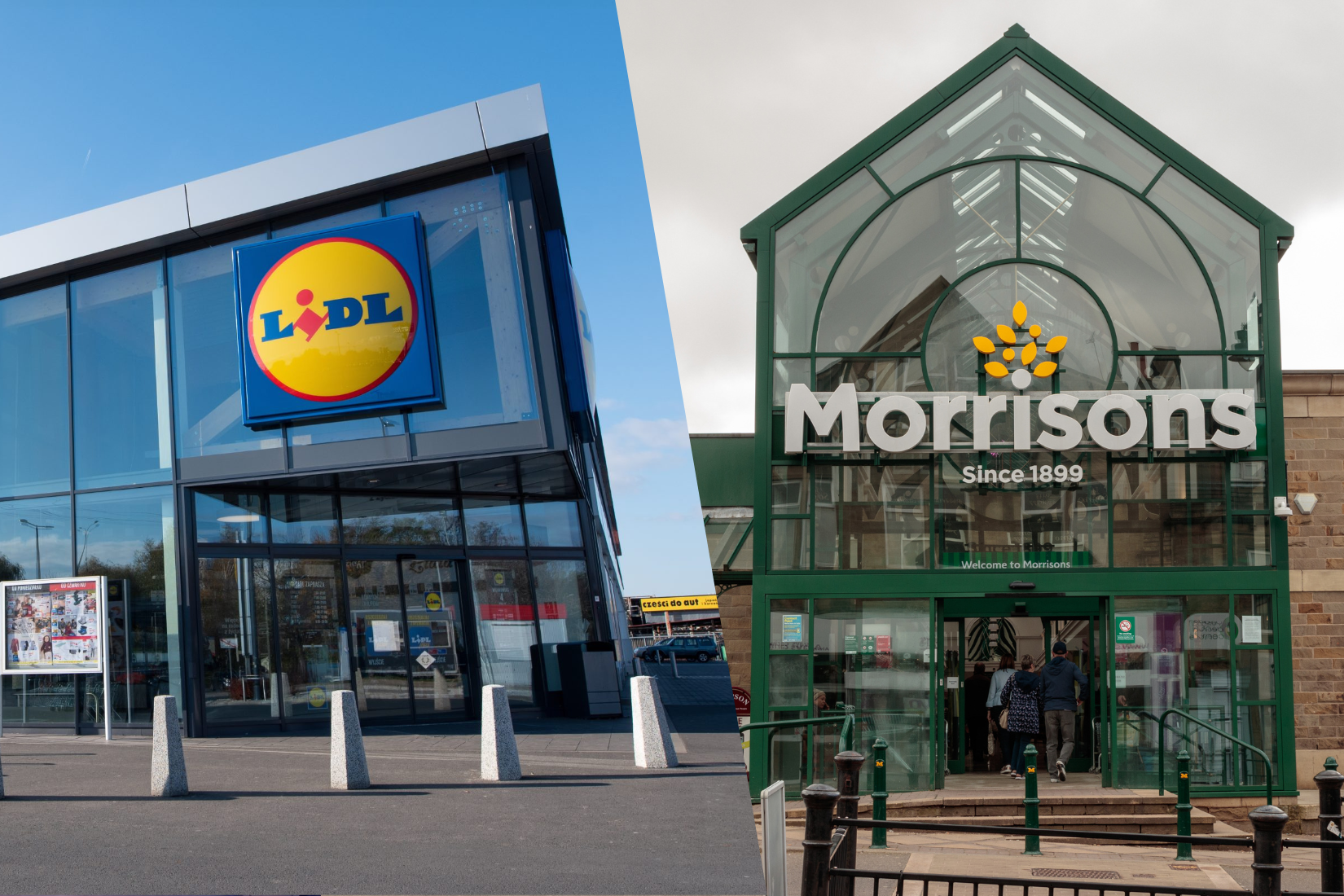
Lidl ties with Morrisons as discounter hits record market share

Ocado and Lidl were the fastest-growing UK grocery retailers in the latest quarter, as consumers continued to hunt for deals, according to data from Wordpanel by Numerator.
GroceryNewsResearch

Ocado and Lidl were the fastest-growing UK grocery retailers in the latest quarter, as consumers continued to hunt for deals, according to data from Wordpanel by Numerator.

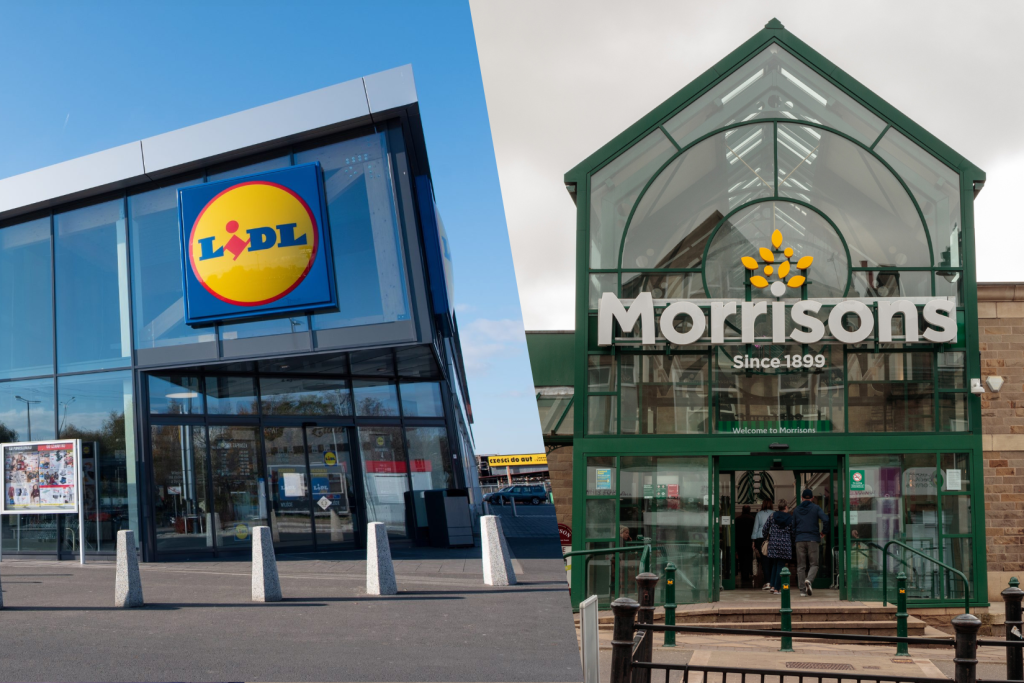
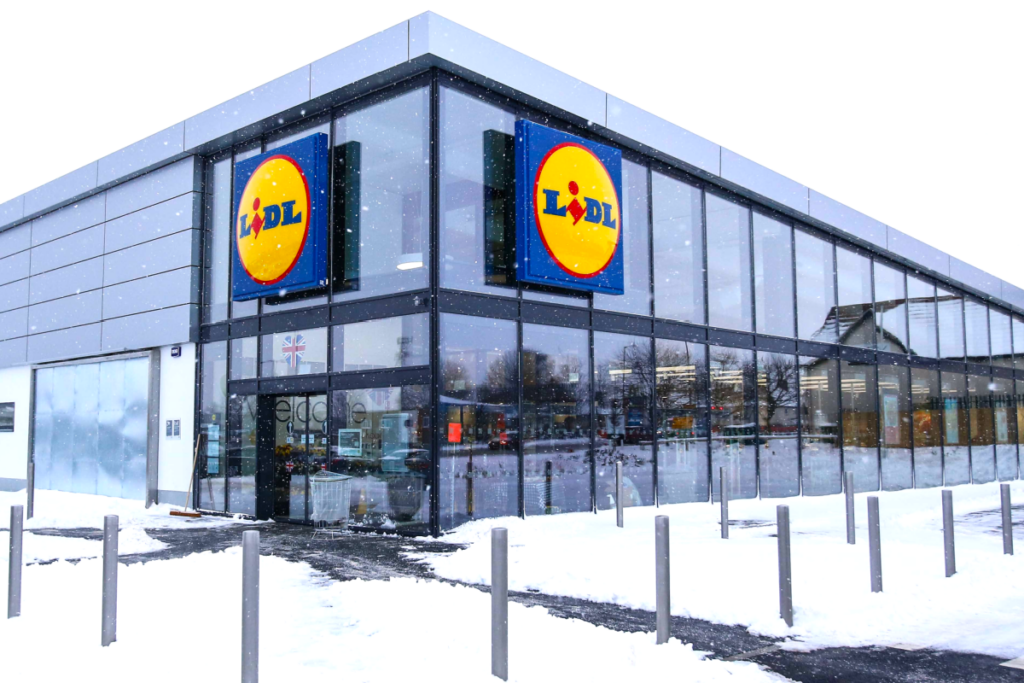
New figures for the 12 weeks to 19 April 2026 show Lidl sales rose by 8.8%, lifting its market share to a record 8.4%, up from 8.0% a year earlier.

The discounter added more than half a million shoppers over the period, more than any other retailer, once again bringing it side by side with rival Morrisons.

Wordpanel by Numerator. April 2026

Online grocer Ocado was the fastest growing overall, with sales up 11.3%, pushing market share to 2.2%, up 0.2 percentage points year on year.

Tesco and Sainsbury’s also maintained momentum following their recent full-year results. Tesco sales rose 4.3%, increasing market share to 28.1%, while Sainsbury’s sales climbed 4.5%, taking share to 15.5%.

Morrisons posted more modest growth of 1.1%, leaving it level with Lidl on 8.4% share, while Asda held 11.6% of the market.

Aldi’s sales increased 1.2%, with market share steady at 10.6%, while Iceland grew 2.1% to 2.3%. Co-op accounted for 5.1% of the take-home grocery market.

Among more premium retailers, Waitrose sales rose 3.8%, maintaining a 4.6% market share, while M&S food sales increased 7.3%.

Meanwhile, the data showed the wider grocery market remained subdued, with take-home grocery sales rising 0.9% in the four weeks to 19 April compared with the same period last year.

Like-for-like grocery inflation eased to 3.8%, suggesting disruption linked to the conflict in the Middle East had not yet significantly affected supermarket shelf prices in Britain.

However, shoppers remain price conscious. Wordpannel figures indicate spending on promoted products rose 7.8% year on year during the four-week period, while spending on full-price goods fell 0.2%, highlighting growing demand for discounts and deals.

“Concerns about the impact of the Middle East conflict on prices of everyday goods are front of mind for British households,” said Wordpanel by Numerator head of retail and consumer insights Fraser McKevitt. “Already feeling the squeeze at the petrol pump, shoppers are responding by turning to special offers in growing numbers when buying groceries.”

“The proportion of spending on promotions currently stands at 31.3%, having risen year on year every month since July 2023.

“Price cuts are driving this trend, with four in every five pounds spent on promotional items used on price reductions, rather than multi-buys, which tend to push up basket sizes.”

During its trading update last week, Sainsbury’s cautioned investors that disruptions from the Middle East war could lead to a drop in profit.

Click here to sign up to Retail Gazette‘s free daily email newsletter

GroceryNewsResearch

Leave a Reply

Your email address will not be published. Required fields are marked *

Fill out this field
Fill out this field
Please enter a valid email address.

GroceryNewsResearch

Share:

Lidl ties with Morrisons as discounter hits record market share

Ocado and Lidl were the fastest-growing UK grocery retailers in the latest quarter, as consumers continued to hunt for deals, according to data from Wordpanel by Numerator.

Ocado and Lidl were the fastest-growing UK grocery retailers in the latest quarter, as consumers continued to hunt for deals, according to data from Wordpanel by Numerator.

New figures for the 12 weeks to 19 April 2026 show Lidl sales rose by 8.8%, lifting its market share to a record 8.4%, up from 8.0% a year earlier.

The discounter added more than half a million shoppers over the period, more than any other retailer, once again bringing it side by side with rival Morrisons.

Wordpanel by Numerator. April 2026

Online grocer Ocado was the fastest growing overall, with sales up 11.3%, pushing market share to 2.2%, up 0.2 percentage points year on year.

Tesco and Sainsbury’s also maintained momentum following their recent full-year results. Tesco sales rose 4.3%, increasing market share to 28.1%, while Sainsbury’s sales climbed 4.5%, taking share to 15.5%.

Morrisons posted more modest growth of 1.1%, leaving it level with Lidl on 8.4% share, while Asda held 11.6% of the market.

Aldi’s sales increased 1.2%, with market share steady at 10.6%, while Iceland grew 2.1% to 2.3%. Co-op accounted for 5.1% of the take-home grocery market.

Among more premium retailers, Waitrose sales rose 3.8%, maintaining a 4.6% market share, while M&S food sales increased 7.3%.

Meanwhile, the data showed the wider grocery market remained subdued, with take-home grocery sales rising 0.9% in the four weeks to 19 April compared with the same period last year.

Like-for-like grocery inflation eased to 3.8%, suggesting disruption linked to the conflict in the Middle East had not yet significantly affected supermarket shelf prices in Britain.

However, shoppers remain price conscious. Wordpannel figures indicate spending on promoted products rose 7.8% year on year during the four-week period, while spending on full-price goods fell 0.2%, highlighting growing demand for discounts and deals.

“Concerns about the impact of the Middle East conflict on prices of everyday goods are front of mind for British households,” said Wordpanel by Numerator head of retail and consumer insights Fraser McKevitt. “Already feeling the squeeze at the petrol pump, shoppers are responding by turning to special offers in growing numbers when buying groceries.”

“The proportion of spending on promotions currently stands at 31.3%, having risen year on year every month since July 2023.

“Price cuts are driving this trend, with four in every five pounds spent on promotional items used on price reductions, rather than multi-buys, which tend to push up basket sizes.”

During its trading update last week, Sainsbury’s cautioned investors that disruptions from the Middle East war could lead to a drop in profit.

Click here to sign up to Retail Gazette‘s free daily email newsletter

Social


SUBSCRIBE TO OUR DAILY NEWSLETTER

  • This field is for validation purposes and should be left unchanged.
GroceryNewsResearch

Leave a Reply

Your email address will not be published. Required fields are marked *

Fill out this field
Fill out this field
Please enter a valid email address.

RELATED STORIES

Latest Feature


Menu


Close popup

Please enter the verification code sent to your email: