

The next Clubcard moment? How agentic AI is already revolutionising retail

agentic AI thomas Hill
CommentInsightSupply Chain

By former Asda Pricing lead, HyperFinity CCO and co-founder Thomas Hill.

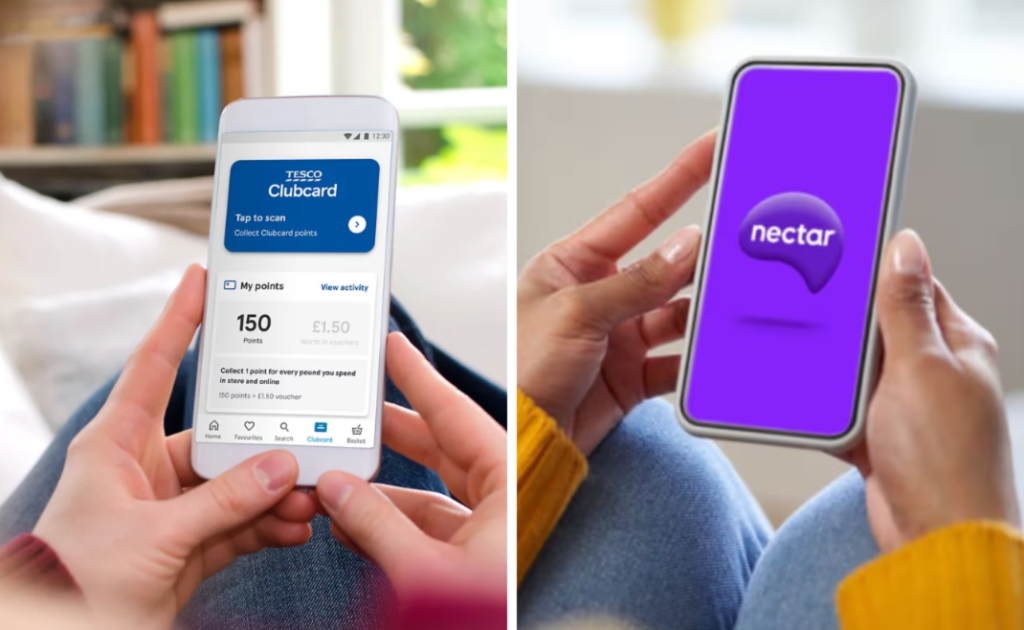
 More than 30 years ago, Tesco launched its Clubcard. It was a revolutionary example of a retailer collecting data from consumers on a huge scale to offer personalised discounts and loyalty benefits. The scheme has been widely replicated across most retail outlets, but, decades later, Clubcard still reigns as the most-valued loyalty scheme.

The ability for Tesco to intricately understand how consumers spend their money and what discounts they best respond to has enabled it to maintain this position. But one of its differentiators has been turning its customer data into actionable intelligence, using these insights to inform its ongoing strategy for growth – and this has put it in a prime position to use advancements like AI and analytics.

While loyalty programmes are now ubiquitous, for many supermarkets, proving their ROI remains a tall order. A lack of a clear and unified view of customer behaviour and its commercial impact mean pricing decisions can miss the mark and contribute to margin leakage or missed opportunities. So, the challenge is turning schemes from a reward mechanism into a growth lever.

Yet behind the scenes, the next revolution is already underway. Agentic AI is quickly remodelling how retailers access insights, personalise schemes and make merchandising decisions. Instead of commercial teams only responding to AI suggestions, AI agents can recommend actions backed by data and intelligence that decision makers can act upon at pace, rather than putting a brief into the analytics function, getting a ticket and waiting weeks for a response. Crucially, they democratise access to customer insights beyond analyst teams alone and into the hands of decision makers.

With the right foundations in place, the grocery retailers using it for their decision-making might just form the next Clubcard moment.


Agentic AI: what it does, and how much it has been adopted in the sector

Most people currently using AI will be interacting with large language models or AI assistants  like ChatGPT and Claude and using answers from the prompts they provide to inform their decision-making. Agentic AI is the next evolution of this. An AI agent can work through a commercial question like an analyst would, asking followups and moving from a vague starting point to a specific, actionable answer that is grounded in a company’s data.

So, in a grocery retail context, an AI agent might have the goal of monitoring competitor pricing and flagging changes to commercial teams. Another AI agent might be analysing margin on an ongoing basis and, through connecting data from stock, pricing and promotions, suggest why it may have shifted across a category. In this sense, an AI agent becomes much more than a generative AI chatbot – it’s an active assistant working alongside commercial teams.

What this does is improve the current operating model. Currently, analysts hold the data and commercial teams will brief them – but getting answers often takes time. As a result, the CEO gets frustrated waiting and ends up spending lots of money on consultants. But by democratising both data and intelligence to decision makers through agentic AI, loyalty data can now put the customer at the heart of decision-making and alert merchants to an issue long before they would have seen it.

Retail is one of the best-placed sectors to gain value from its capabilities now. It explains why, according to a PwC study from earlier this year, agentic AI adoption is happening “at a pace of up to four times faster than traditional e-commerce”. What’s more, a fifth of retailers “have already deployed agents along the value chain”, while one in two “are already assessing agentic AI”.

The technology is gaining momentum. But its purpose isn’t to replace commercial analysts. What it actually does is make their work even more valuable.


The analyst bottleneck

Analysts play a fundamental role in retail businesses. Using their skill, judgement and contextual awareness, they can give raw data a commercial outlook that is able to drive decisions and improve business performance. But their time shouldn’t be wasted on questions from teams that an AI agent could answer in a few seconds.

What many retailers currently face is a bottleneck created by an inundation of requests. There is a structural issue, where every enquiry goes through the analyst. A category manager after insights into why X isn’t performing as well as Y will be in the same line as a request from the CFO for complex margin analysis requiring their expert interpretation.

This is the symptom of a broader company-wide problem. Loyalty data is a highly valuable asset for retailers, but it largely resides with analysts while commercial decisions happen elsewhere. The result of this is a slower, more disconnected decision-making model. Category managers, pricing teams, loyalty leads and so on all have to request insights from analysts. In the time it takes them to receive a response, the opportunity may have already gone.


Delivering useful insights across the business

Agentic AI significantly reduces this traffic; it redefines the analyst workflow by providing commercial teams with immediate responses. If a team simply needs a diagnostic answer to whether something is a problem or not, an AI agent can provide this response. The analyst is then able to prioritise the work that genuinely needs their attention – spotting opportunities, identifying nuance – and, subsequently, can deliver better insights.

For commercial teams, the difference between a useful answer and a misleading one is context, with the system understanding factors like whether a product is part of the core range and if the customer is new, loyal or cherry picking. This contextual awareness is what enables customer insights to be democratised across the business. It means a pricing team can ask where personalised pricing could improve ROI, or a category manager can find out where in their range is underperforming with loyal customers.

Building this context comes from an agentic intelligence layer. Rather than simply repeating the data back, this layer will interpret the question through the language of the supermarket and its commercial context – margin, price, promotions, customer value etc. It’s this intelligence that turns data into decision-ready insight, giving teams answers they can act on. So, for supermarkets, it’s not about simply adopting agents but encoding the most intelligence into how these agents work.

Moreover, the more business systems agents have access to, the better insights they can provide analysts. And when a commercial analyst has an agentic tool that has the right data foundations to enhance their work, companies can gain substantial efficiency gains.


The retailers using agentic AI will steal a lead in the market

Imagine agentic AI in a loyalty situation. An analyst could set a goal for an agent to find out why certain loyalty deals land more than others. The agent could then analyse metrics like promotions, pricing and customer habits and continuously feed back on the impact of different schemes.

While it’s not as front-facing as a Clubcard, when framed in this way, agentic AI could deliver innovative changes to how loyalty schemes are carried out – and the product of that could form the next Clubcard moment. It might be a different idea altogether. What matters is how quickly and accurately retailers can act. Behind the scenes, Clubcard 2.0 is the democratisation of retail and loyalty insights.

Every day, supermarkets and retail teams face a range of decisions that shape performance, and all too often, the answers, from the data, the analysis, come too late – the chance has passed them by and a competitor has already taken advantage of the situation. But if teams can get these answers in near real time, they can make decisions on boardroom questions before the meeting finishes, or take action as trends unfold.

This is the new value of loyalty. Not just points or rewards, but accessible customer data that drives better strategic decisions across the business. The agentic revolution is just getting started.

Click here to sign up to Retail Gazette‘s free daily email newsletter

CommentInsightSupply Chain

Leave a Reply

Your email address will not be published. Required fields are marked *

Fill out this field
Fill out this field
Please enter a valid email address.

The next Clubcard moment? How agentic AI is already revolutionising retail

agentic AI thomas Hill

By former Asda Pricing lead, HyperFinity CCO and co-founder Thomas Hill.

 More than 30 years ago, Tesco launched its Clubcard. It was a revolutionary example of a retailer collecting data from consumers on a huge scale to offer personalised discounts and loyalty benefits. The scheme has been widely replicated across most retail outlets, but, decades later, Clubcard still reigns as the most-valued loyalty scheme.

The ability for Tesco to intricately understand how consumers spend their money and what discounts they best respond to has enabled it to maintain this position. But one of its differentiators has been turning its customer data into actionable intelligence, using these insights to inform its ongoing strategy for growth – and this has put it in a prime position to use advancements like AI and analytics.

While loyalty programmes are now ubiquitous, for many supermarkets, proving their ROI remains a tall order. A lack of a clear and unified view of customer behaviour and its commercial impact mean pricing decisions can miss the mark and contribute to margin leakage or missed opportunities. So, the challenge is turning schemes from a reward mechanism into a growth lever.

Yet behind the scenes, the next revolution is already underway. Agentic AI is quickly remodelling how retailers access insights, personalise schemes and make merchandising decisions. Instead of commercial teams only responding to AI suggestions, AI agents can recommend actions backed by data and intelligence that decision makers can act upon at pace, rather than putting a brief into the analytics function, getting a ticket and waiting weeks for a response. Crucially, they democratise access to customer insights beyond analyst teams alone and into the hands of decision makers.

With the right foundations in place, the grocery retailers using it for their decision-making might just form the next Clubcard moment.


Agentic AI: what it does, and how much it has been adopted in the sector

Most people currently using AI will be interacting with large language models or AI assistants  like ChatGPT and Claude and using answers from the prompts they provide to inform their decision-making. Agentic AI is the next evolution of this. An AI agent can work through a commercial question like an analyst would, asking followups and moving from a vague starting point to a specific, actionable answer that is grounded in a company’s data.

So, in a grocery retail context, an AI agent might have the goal of monitoring competitor pricing and flagging changes to commercial teams. Another AI agent might be analysing margin on an ongoing basis and, through connecting data from stock, pricing and promotions, suggest why it may have shifted across a category. In this sense, an AI agent becomes much more than a generative AI chatbot – it’s an active assistant working alongside commercial teams.

What this does is improve the current operating model. Currently, analysts hold the data and commercial teams will brief them – but getting answers often takes time. As a result, the CEO gets frustrated waiting and ends up spending lots of money on consultants. But by democratising both data and intelligence to decision makers through agentic AI, loyalty data can now put the customer at the heart of decision-making and alert merchants to an issue long before they would have seen it.

Retail is one of the best-placed sectors to gain value from its capabilities now. It explains why, according to a PwC study from earlier this year, agentic AI adoption is happening “at a pace of up to four times faster than traditional e-commerce”. What’s more, a fifth of retailers “have already deployed agents along the value chain”, while one in two “are already assessing agentic AI”.

The technology is gaining momentum. But its purpose isn’t to replace commercial analysts. What it actually does is make their work even more valuable.


The analyst bottleneck

Analysts play a fundamental role in retail businesses. Using their skill, judgement and contextual awareness, they can give raw data a commercial outlook that is able to drive decisions and improve business performance. But their time shouldn’t be wasted on questions from teams that an AI agent could answer in a few seconds.

What many retailers currently face is a bottleneck created by an inundation of requests. There is a structural issue, where every enquiry goes through the analyst. A category manager after insights into why X isn’t performing as well as Y will be in the same line as a request from the CFO for complex margin analysis requiring their expert interpretation.

This is the symptom of a broader company-wide problem. Loyalty data is a highly valuable asset for retailers, but it largely resides with analysts while commercial decisions happen elsewhere. The result of this is a slower, more disconnected decision-making model. Category managers, pricing teams, loyalty leads and so on all have to request insights from analysts. In the time it takes them to receive a response, the opportunity may have already gone.


Delivering useful insights across the business

Agentic AI significantly reduces this traffic; it redefines the analyst workflow by providing commercial teams with immediate responses. If a team simply needs a diagnostic answer to whether something is a problem or not, an AI agent can provide this response. The analyst is then able to prioritise the work that genuinely needs their attention – spotting opportunities, identifying nuance – and, subsequently, can deliver better insights.

For commercial teams, the difference between a useful answer and a misleading one is context, with the system understanding factors like whether a product is part of the core range and if the customer is new, loyal or cherry picking. This contextual awareness is what enables customer insights to be democratised across the business. It means a pricing team can ask where personalised pricing could improve ROI, or a category manager can find out where in their range is underperforming with loyal customers.

Building this context comes from an agentic intelligence layer. Rather than simply repeating the data back, this layer will interpret the question through the language of the supermarket and its commercial context – margin, price, promotions, customer value etc. It’s this intelligence that turns data into decision-ready insight, giving teams answers they can act on. So, for supermarkets, it’s not about simply adopting agents but encoding the most intelligence into how these agents work.

Moreover, the more business systems agents have access to, the better insights they can provide analysts. And when a commercial analyst has an agentic tool that has the right data foundations to enhance their work, companies can gain substantial efficiency gains.


The retailers using agentic AI will steal a lead in the market

Imagine agentic AI in a loyalty situation. An analyst could set a goal for an agent to find out why certain loyalty deals land more than others. The agent could then analyse metrics like promotions, pricing and customer habits and continuously feed back on the impact of different schemes.

While it’s not as front-facing as a Clubcard, when framed in this way, agentic AI could deliver innovative changes to how loyalty schemes are carried out – and the product of that could form the next Clubcard moment. It might be a different idea altogether. What matters is how quickly and accurately retailers can act. Behind the scenes, Clubcard 2.0 is the democratisation of retail and loyalty insights.

Every day, supermarkets and retail teams face a range of decisions that shape performance, and all too often, the answers, from the data, the analysis, come too late – the chance has passed them by and a competitor has already taken advantage of the situation. But if teams can get these answers in near real time, they can make decisions on boardroom questions before the meeting finishes, or take action as trends unfold.

This is the new value of loyalty. Not just points or rewards, but accessible customer data that drives better strategic decisions across the business. The agentic revolution is just getting started.

Click here to sign up to Retail Gazette‘s free daily email newsletter

Social


SUBSCRIBE TO OUR DAILY NEWSLETTER

  • This field is for validation purposes and should be left unchanged.
CommentInsightSupply Chain

Leave a Reply

Your email address will not be published. Required fields are marked *

Fill out this field
Fill out this field
Please enter a valid email address.

RELATED STORIES

Latest Feature


Menu

Get Inside Matalan

A supply chain case study delivered to your inbox in three emails. The 3 elements Matalan changed to impact its bottom line..

Matalan Supply Chain Programme Form

  • This field is for validation purposes and should be left unchanged.


Close popup

Please enter the verification code sent to your email: