Uniqlo owner raises profit outlook after Q3 surge

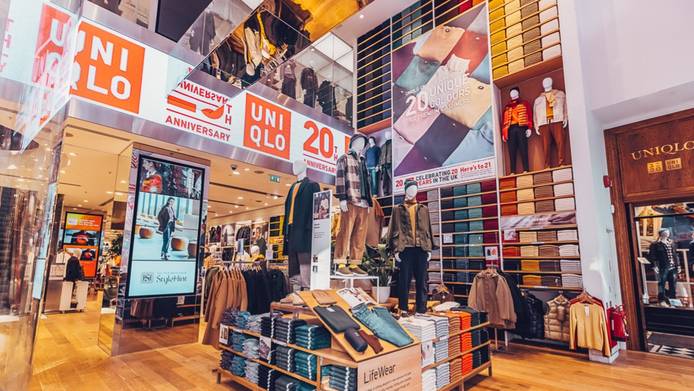
Uniqlo ramps up UK presence
FashionNews

Uniqlo owner Fast Retailing has raised its full-year profit forecast after third-quarter operating profit jumped 45.7 per cent.

The business posted operating profit of ¥213.79bn (£1.3bn) in the three months to 31 May, up from ¥146.74bn a year earlier.

The performance came in well ahead of analyst expectations, with the business now forecasting full-year operating profit of ¥730bn, up from its previous guidance of ¥700bn.

Fast Retailing is on track for a fifth consecutive year of record earnings, despite disruption to supply chains and logistics linked to conflict in the Middle East.

The group, which owns Uniqlo, GU, Theory, PLST, Comptoir des Cotonniers and Princesse tam.tam, has been boosted by stronger trading in Japan and continued growth across its international markets.

In Japan, sales have been supported by a tourism boom as the weak yen encourages overseas shoppers to spend. Meanwhile, Uniqlo has continued to expand its footprint across Europe and North America as it looks to reduce its reliance on China, which remains its largest overseas market.

Fast Retailing is widely seen as a bellwether for consumer spending in Japan and mainland China, where it has almost 900 stores.

However, growth in China has slowed amid weaker consumer sentiment, prompting the retailer to close stores and restructure parts of the business.

Fast Retailing chief financial officer Takeshi Okazaki said earlier this year that conflict in the Middle East was complicating air freight from production bases in Southeast Asia, while sustained rises in oil prices could increase costs for synthetic fibres.

Extreme weather has also become a growing issue for fashion retailers, as longer periods of heat in Europe and North America disrupt traditional seasonal calendars and shift demand away from some ranges.

Fast Retailing has been pushing further into Western markets in recent years as part of its long-term global growth strategy.

It now has more than 2,500 Uniqlo stores worldwide, having grown from a single shop in Hiroshima in 1984. Its European and North American expansion has become increasingly important as the business looks beyond China for its next phase of growth.

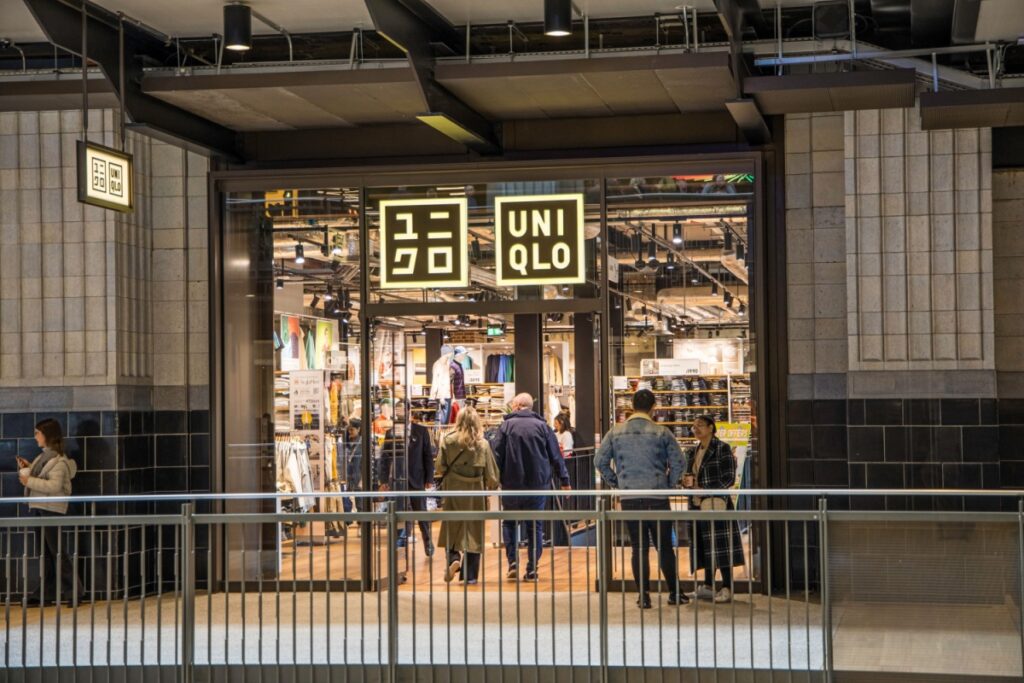
In the UK, Uniqlo is continuing to open new stores, with sites in Cambridge and Manchester’s Trafford Centre planned for 2026, followed by Leeds in 2027.

The brand has also been investing in larger, higher-profile locations as it looks to build awareness beyond London and strengthen its position in the UK fashion market.

Fast Retailing said earlier this year that Uniqlo’s international division had delivered strong first-half growth, with revenue up 22.4 per cent and business profit rising 37.4 per cent.

At the time, it said North America and Europe continued to generate high levels of growth, helped by strong demand for winter ranges, sweatshirts, bottoms and year-round products.

Click here to sign up to Retail Gazette‘s free daily email newsletter

FashionNews

Leave a Reply

Your email address will not be published. Required fields are marked *

Fill out this field
Fill out this field
Please enter a valid email address.

FashionNews

Share:

Uniqlo owner raises profit outlook after Q3 surge

Uniqlo ramps up UK presence

Uniqlo owner Fast Retailing has raised its full-year profit forecast after third-quarter operating profit jumped 45.7 per cent.

The business posted operating profit of ¥213.79bn (£1.3bn) in the three months to 31 May, up from ¥146.74bn a year earlier.

The performance came in well ahead of analyst expectations, with the business now forecasting full-year operating profit of ¥730bn, up from its previous guidance of ¥700bn.

Fast Retailing is on track for a fifth consecutive year of record earnings, despite disruption to supply chains and logistics linked to conflict in the Middle East.

The group, which owns Uniqlo, GU, Theory, PLST, Comptoir des Cotonniers and Princesse tam.tam, has been boosted by stronger trading in Japan and continued growth across its international markets.

In Japan, sales have been supported by a tourism boom as the weak yen encourages overseas shoppers to spend. Meanwhile, Uniqlo has continued to expand its footprint across Europe and North America as it looks to reduce its reliance on China, which remains its largest overseas market.

Fast Retailing is widely seen as a bellwether for consumer spending in Japan and mainland China, where it has almost 900 stores.

However, growth in China has slowed amid weaker consumer sentiment, prompting the retailer to close stores and restructure parts of the business.

Fast Retailing chief financial officer Takeshi Okazaki said earlier this year that conflict in the Middle East was complicating air freight from production bases in Southeast Asia, while sustained rises in oil prices could increase costs for synthetic fibres.

Extreme weather has also become a growing issue for fashion retailers, as longer periods of heat in Europe and North America disrupt traditional seasonal calendars and shift demand away from some ranges.

Fast Retailing has been pushing further into Western markets in recent years as part of its long-term global growth strategy.

It now has more than 2,500 Uniqlo stores worldwide, having grown from a single shop in Hiroshima in 1984. Its European and North American expansion has become increasingly important as the business looks beyond China for its next phase of growth.

In the UK, Uniqlo is continuing to open new stores, with sites in Cambridge and Manchester’s Trafford Centre planned for 2026, followed by Leeds in 2027.

The brand has also been investing in larger, higher-profile locations as it looks to build awareness beyond London and strengthen its position in the UK fashion market.

Fast Retailing said earlier this year that Uniqlo’s international division had delivered strong first-half growth, with revenue up 22.4 per cent and business profit rising 37.4 per cent.

At the time, it said North America and Europe continued to generate high levels of growth, helped by strong demand for winter ranges, sweatshirts, bottoms and year-round products.

Click here to sign up to Retail Gazette‘s free daily email newsletter

Social


SUBSCRIBE TO OUR DAILY NEWSLETTER

  • This field is for validation purposes and should be left unchanged.
FashionNews

Leave a Reply

Your email address will not be published. Required fields are marked *

Fill out this field
Fill out this field
Please enter a valid email address.

RELATED STORIES

Latest Feature


Menu


Close popup

Please enter the verification code sent to your email: