
Boohoo boss says retailer is ‘fighting back’ as Debenhams turnaround makes gains

Discount RetailEcommerceFashionNews

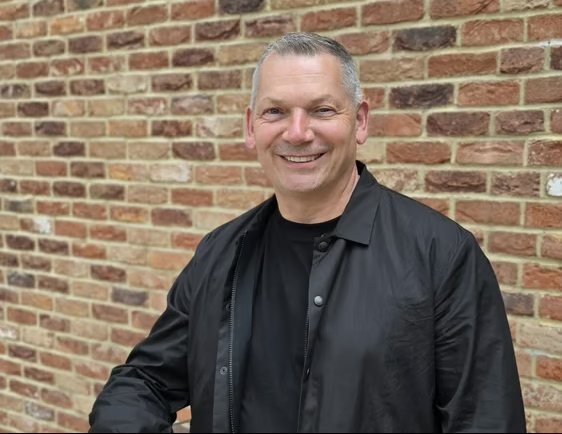
Boohoo boss Dan Finley has admitted the fashion group has “not been at its best” but insisted it is fighting back as its Debenhams-led turnaround begins to gain traction.

Speaking to The Times, the Debenhams Group chief executive said there was still a “big chunk” of UK shoppers who needed to be reminded that the former department store was still trading, after Boohoo bought the brand out of administration in 2021 and relaunched it as an online-only business.

Finley, who left JD Sports to lead Debenhams before being promoted to group chief executive in late 2024, described his first months in the top job as a “baptism of fire”.

His comments come as the retailer, formerly known as Boohoo Group, attempts to move away from its fast-fashion roots and rebuild itself around a capital-lite, stock-lite marketplace model.

Debenhams has become the blueprint for that wider overhaul, with the brand now offering products from around 25,000 partner brands across fashion, beauty and home.

The group has since rolled the model out across its wider portfolio, including PrettyLittleThing, Boohoo, BoohooMan and Karen Millen, as it looks to reduce stock risk, cut costs and improve profitability.

Debenhams Group said last month that its turnaround was “firmly on track” after adjusted EBITDA jumped 35 per cent to £53.3m in the year to 28 February 2026.

However, the business remains under pressure. Revenue fell 24.7 per cent to £917m during the year, while pre-tax losses narrowed to £108.3m from £326.4m.

The Debenhams brand was one of the stronger performers, with gross merchandise value rising 11.6 per cent to £730m and adjusted EBITDA up 38.5 per cent to £34.8m.

PrettyLittleThing also returned to profit on an adjusted EBITDA basis, swinging from a £1m loss the year before to a £14m profit.

The group said all of its brands were now profitable on the same measure, following warehouse consolidation, a cost reset, a technology replatform and a wider simplification of the business.

Trading has also improved since year-end. Debenhams Group reported a 0.5 per cent rise in gross merchandise value in the first quarter, with May up around eight per cent year on year.

Finley has also been forced to navigate continued tension with Mike Ashley’s Frasers Group, the retailer’s largest shareholder, which has previously pushed for board changes and opposed elements of the turnaround strategy.

The business has also been working to repair its reputation following the Leicester supply chain scandal in 2020, with Finley telling The Times that greater transparency and supplier oversight remained part of the wider rebuild.

Despite the headwinds, Finley said the group still had a major opportunity to re-engage UK shoppers who had lost sight of Debenhams since it disappeared from the high street.

The chief executive is targeting a return to growth over the next two to three years as the group looks to prove its marketplace-led model can deliver a sustainable recovery.

Click here to sign up to Retail Gazette‘s free daily email newsletter

Discount RetailEcommerceFashionNews

Leave a Reply

Your email address will not be published. Required fields are marked *

Fill out this field
Fill out this field
Please enter a valid email address.

Boohoo boss says retailer is ‘fighting back’ as Debenhams turnaround makes gains

Boohoo boss Dan Finley has admitted the fashion group has “not been at its best” but insisted it is fighting back as its Debenhams-led turnaround begins to gain traction.

Speaking to The Times, the Debenhams Group chief executive said there was still a “big chunk” of UK shoppers who needed to be reminded that the former department store was still trading, after Boohoo bought the brand out of administration in 2021 and relaunched it as an online-only business.

Finley, who left JD Sports to lead Debenhams before being promoted to group chief executive in late 2024, described his first months in the top job as a “baptism of fire”.

His comments come as the retailer, formerly known as Boohoo Group, attempts to move away from its fast-fashion roots and rebuild itself around a capital-lite, stock-lite marketplace model.

Debenhams has become the blueprint for that wider overhaul, with the brand now offering products from around 25,000 partner brands across fashion, beauty and home.

The group has since rolled the model out across its wider portfolio, including PrettyLittleThing, Boohoo, BoohooMan and Karen Millen, as it looks to reduce stock risk, cut costs and improve profitability.

Debenhams Group said last month that its turnaround was “firmly on track” after adjusted EBITDA jumped 35 per cent to £53.3m in the year to 28 February 2026.

However, the business remains under pressure. Revenue fell 24.7 per cent to £917m during the year, while pre-tax losses narrowed to £108.3m from £326.4m.

The Debenhams brand was one of the stronger performers, with gross merchandise value rising 11.6 per cent to £730m and adjusted EBITDA up 38.5 per cent to £34.8m.

PrettyLittleThing also returned to profit on an adjusted EBITDA basis, swinging from a £1m loss the year before to a £14m profit.

The group said all of its brands were now profitable on the same measure, following warehouse consolidation, a cost reset, a technology replatform and a wider simplification of the business.

Trading has also improved since year-end. Debenhams Group reported a 0.5 per cent rise in gross merchandise value in the first quarter, with May up around eight per cent year on year.

Finley has also been forced to navigate continued tension with Mike Ashley’s Frasers Group, the retailer’s largest shareholder, which has previously pushed for board changes and opposed elements of the turnaround strategy.

The business has also been working to repair its reputation following the Leicester supply chain scandal in 2020, with Finley telling The Times that greater transparency and supplier oversight remained part of the wider rebuild.

Despite the headwinds, Finley said the group still had a major opportunity to re-engage UK shoppers who had lost sight of Debenhams since it disappeared from the high street.

The chief executive is targeting a return to growth over the next two to three years as the group looks to prove its marketplace-led model can deliver a sustainable recovery.

Click here to sign up to Retail Gazette‘s free daily email newsletter

Social


SUBSCRIBE TO OUR DAILY NEWSLETTER

  • This field is for validation purposes and should be left unchanged.
Discount RetailEcommerceFashionNews

Leave a Reply

Your email address will not be published. Required fields are marked *

Fill out this field
Fill out this field
Please enter a valid email address.

RELATED STORIES

Latest Feature


Menu


Close popup

Please enter the verification code sent to your email: