

Waste & Resources Action Programme (WRAP) has teamed up with eBay, pre-loved platform Reskinned and four UK fashion retailers to test how second-hand trading can become a viable part of the retail business model. The findings could help unlock a £2.3bn resale opportunity for UK brands.
Resale has become an increasingly prominent part of the fashion industry’s sustainability agenda, but turning consumer interest in pre-loved clothing into a commercially viable retail proposition remains a challenge.
While platforms such as Vinted, Depop and eBay have helped bring second-hand shopping into the mainstream, retailers are still working out how to incorporate resale into their own business models. From collecting and processing used garments to finding buyers and generating sufficient returns.
Now, a new pilot from environmental action organisation WRAP is seeking to provide retailers with the evidence needed to make that transition.
Working alongside eBay UK, resale specialist Reskinned, M&S, Nobody’s Child, Oliver Bonas and N Brown Group, WRAP has tested different approaches to resale. The collaboration aims to examine how businesses can make the model commercially, environmentally and operationally successful.
The initiative uses a consistent measurement framework built around five key performance drivers, allowing the partners to compare results across different product categories, stock profiles and customer audiences.
The findings offer retailers a practical starting point for assessing where resale opportunities exist within their businesses and what needs to happen before they commit to further investment.
WRAP estimates that UK fashion brands could unlock £2.3bn in resale revenue, highlighting the potential for second-hand trading to become more than a peripheral sustainability initiative.
However, capturing that opportunity requires retailers to understand the economics of resale and how it fits into their existing operations.
Moving beyond sustainability ambitions
Resale provides an opportunity to extend the life of products already in circulation while creating additional customer touchpoints and potentially generating revenue from merchandise beyond its initial sale.
It also responds to changing shopping habits, with consumers increasingly comfortable purchasing pre-owned products and looking for more affordable ways to access established brands.
Yet there is a considerable difference between consumer interest in second-hand fashion and building a resale operation that can work at scale.
Unlike conventional retail, where products move from supplier to warehouse to customer, resale introduces additional stages into the supply chain.
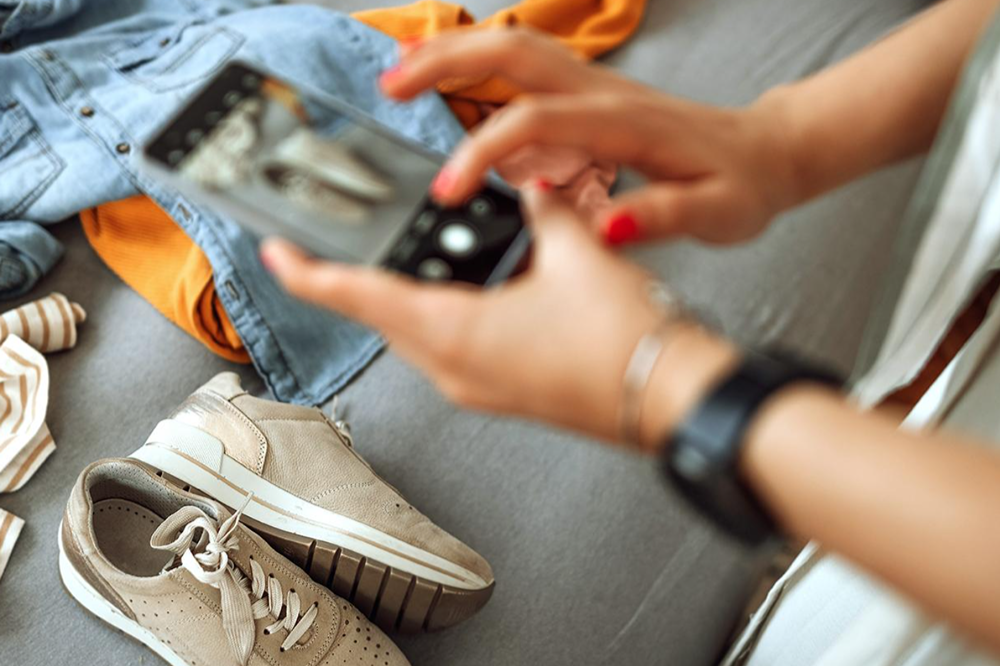
Retailers must establish how garments are collected, assessed, cleaned, repaired, photographed, listed and dispatched. They also need to decide who manages those processes, which products are suitable for resale and how much value can realistically be recovered.
These considerations can make the economics particularly challenging for businesses selling lower-priced clothing, where the cost of processing an individual garment can quickly erode its resale value.
WRAP’s pilot is therefore significant because it looks beyond the environmental case for circular fashion and examines the practical considerations involved in making resale work for different retail businesses.
The involvement of four brands with different customer bases and product propositions also provides an opportunity to understand why a single resale model may not be suitable for every retailer.
Different retailers, different approaches
The participating businesses bring contrasting perspectives to the project.
M&S has already taken steps to establish resale as part of its wider circularity strategy through its Another Life initiative.
In August 2025, the retailer launched its first dedicated resale service through an official M&S store on eBay, powered by Reskinned.
Customers can send pre-loved clothing, footwear and accessories to the resale partner, with items suitable for another owner being professionally cleaned, repaired and listed online.
Customers receive a £5 voucher towards a £35 spend at M&S.com when their return includes at least one M&S-labelled item. Garments unsuitable for resale are instead repurposed or recycled.
The service builds on M&S’s long-standing relationship with Oxfam, through which more than 36 million items had been donated by the retailer’s customers since 2008.
The move see M&S expand its approach from collecting unwanted clothing to actively bringing suitable products back into circulation.
Meanwhile, Nobody’s Child has also used eBay and Reskinned to establish a resale proposition.
The womenswear brand began collecting pre-loved garments before making them available through eBay, using the partnership to combine its own brand identity with an established marketplace and specialist garment-processing capabilities.
“The programme helped us look at resale beyond any single measure of success,” explains Philippa Grogan, head of sustainability at Nobody’s Child
“By bringing commercial, customer and environmental metrics together, the individual impact report and collective findings gave us a clearer view of the value resale and takeback can create, and how these models can support both our circularity goals and wider business priorities such as regulatory compliance and customer engagement.”
Oliver Bonas has developed a takeback and resale proposition through Reskinned, allowing customers to exchange unwanted clothing and accessories for a discount on future purchases.
Returned products are refreshed and made available through its pre-loved shop, while items unsuitable for resale are repurposed or recycled.
The inclusion of N Brown Group (home of Jacamo) alongside these retailers adds another perspective to the pilot, bringing a different customer and product profile into the comparison.
Together, the businesses demonstrate the range of ways retailers can approach resale, whether through an established third-party marketplace, a dedicated pre-loved shop or a takeback scheme designed to encourage customers to return products.
Related Story

The commercial case for second-hand
One of the biggest questions for retailers is whether resale can generate enough value to justify the additional operational complexity.
A report from PwC, Circular fashion: Making resale a reality, highlighted the financial challenges facing the sector.
It found that retailers and brands typically retain around 25 per cent to 40 per cent of an item’s original selling price when it enters the secondary market, while resale costs can reach at least £5 to £7 per item outside charity retail channels.
This creates a clear divide between products that can support profitable resale and those where the costs of handling, processing and selling outweigh the potential returns.
Higher-value products can offer greater scope to recover value, while lower-priced fashion presents a more difficult proposition.
The WRAP pilot’s consistent measurement approach is designed to help businesses understand these differences rather than assuming that resale will deliver the same results across every category.
It also provides a way to assess whether different approaches are attracting the right customers and generating sufficient demand to support continued investment.
A successful resale proposition could help retailers retain a connection with customers even after they have finished wearing a product, while encouraging others to discover the brand through more accessible price points.
Proving the environmental benefits
Alongside the commercial opportunity, retailers must also be able to demonstrate that resale is delivering genuine environmental improvements.
Keeping clothing in circulation for longer does not automatically mean that every second-hand purchase replaces a new one. Some customers may buy pre-owned products in addition to, rather than instead of, buying new clothing.
This distinction is important when businesses assess the environmental impact of their circularity initiatives and make claims about the emissions savings they deliver.
WRAP has previously explored this through its Displacement Rates Untangled research, which established a methodology for measuring how frequently circular activities prevent the purchase of new products.
The research found that buying second-hand clothing displaced a new purchase in 64.6 per cent of cases, meaning that around three in five pre-loved purchases replaced an equivalent new item.
The study drew on 7,061 consumer survey responses involving resale platforms Depop, eBay and Vestiaire Collective.
Its findings provide retailers with a more robust way of understanding the environmental value of resale, moving beyond simply counting the number of garments collected or sold.
It also reinforces the need to consider resale as part of a wider circular strategy, alongside product durability, repair, reuse and recycling.
What comes next for retailers?
The WRAP pilot comes as the fashion industry faces growing pressure to reduce waste and rethink its reliance on a traditional linear model of production and consumption.
Resale offers retailers and brands one potential route to achieving this while opening up additional commercial opportunities.
However, the findings also highlight why businesses need to establish a clear understanding of their own customers, products and operating capabilities before attempting to scale.
The right approach for a premium fashion brand may look very different from that of a value retailer, while the economics of reselling clothing will differ from footwear or accessories.
Partnerships with established resale platforms and specialist operators could help reduce the operational burden, allowing retailers to test demand without having to build an entirely new infrastructure themselves.
The involvement of eBay and Reskinned in WRAP’s work demonstrates the role that collaboration can play in connecting retailers with the expertise and marketplace reach required to make resale work.
Kirsty Keoghan, EU GM, eBay notes: “The growth of resale is creating new channel opportunities for brands to meet customers where they are, while creating new routes for inventory across all conditions. While many brands are testing resale, what’s been missing is real-world evidence on what drives performance and enables scale.
“This partnership brought together eBay’s marketplace reach and expertise, as the home of pre-loved branded fashion, and Reskinned’s operational capabilities, with WRAP’s independent measurement and convening power.
“Together, we’ve built a stronger evidence base on the levers that can help resale perform commercially, operationally and environmentally — giving brands greater confidence to invest in resale and scale successfully.”
Click here to sign up to Retail Gazette‘s free daily email newsletter