

After a decade of decline, and more than a few false dawns, talk of a department store revival is back on the agenda.
But this time, says Interpath Advisory managing director and global head of consumer Stuart Reid, the difference is less about nostalgia and more about data, discipline and supply chain control.
“It’s the culmination of a few things,” he explains. “Footfall is down overall, but it’s concentrating in prime locations. Where retailers are investing in the right sites, they are seeing double-digit sales uplifts.”
That shift in concentration is key. While the wider retail landscape remains challenged, certain hotspots, London, major cities, prime high streets and resilient retail parks, are showing what he describes as “green shoots”.
Department stores in those locations benefit from longer dwell times, often 45 minutes or more, creating what he calls an “ecosystem” effect: even if customers don’t buy everything in store, they often convert later through the brand’s online channel.
The message is not that every department store is back, but it’s that some are.
Prime locations, real capital
The retailers seeing results have one thing in common: they have created the financial headroom to invest.
After a bruising period of inflation and cost pressure, many businesses focused hard on head office efficiencies, sourcing strategies and supplier renegotiations. Those that managed to unlock capital are now reinvesting in their estates.
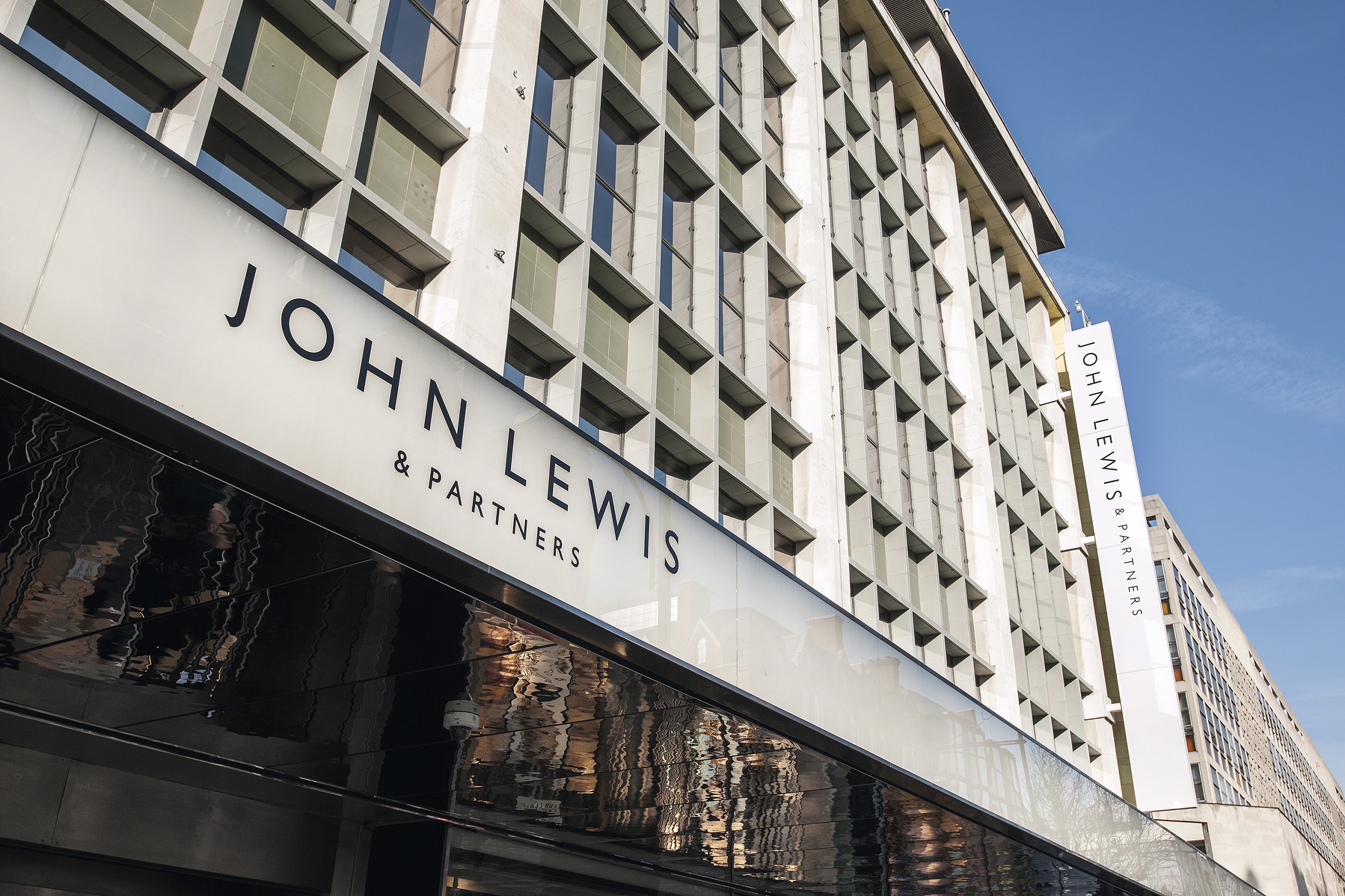
Reid points to the well-publicised investment programmes at Marks & Spencer and John Lewis as examples of retailers showing they “care about the store”, refreshing and relocating sites rather than retreating from them. Last year, M&S announced it was accelerating its store rotation and renewal programme, with 16 new, nine extended and 12 renewed shops in a £300m investment.
“The general theme is where we’ve seen investment into stores in the right locations, you get significant results in terms of visits and spend,” he says.

That doesn’t mean the recovery is evenly spread. With British Retail Consortium (BRC) data showing total UK footfall down 0.8 per cent compared to 2024, older shopping centres and weaker town centres remain under pressure. Estate decisions, he stresses, are now hyper-local.
“It’s all about ultra-localised understanding,” he says. “There are great locations. There are locations where you’ll break even. And there are those where the footfall isn’t there.”
Here, data modelling becomes a supply chain tool as much as a property one, assessing demographic shifts, trading patterns and space productivity to decide whether to refresh, reconfigure or exit. In some cases, space optimisation might mean increasing concessions or adjusting the balance between owned and third-party brands to sweat the asset harder.
But for non-prime locations, survival hinges on getting omnichannel right. “The best retailers think of stores as part of a seamless experience and don’t worry about where consumers ultimately buy,” Reid says. “It’s about having the right brand and experience, then converting however the customer shops.”
That changes the role of inventory. Continuity lines can be centrally optimised using demand data across online and store channels. Seasonal or fashion-led lines require sharper predictive capability to avoid markdown risk and margin leakage.
“If your supply chain is set up with good order management and effective store delivery, you can keep stock at a minimum level in store and minimise that risk,” he says.
Lead times, minimum order quantities and overall stock ownership all come under scrutiny. The objective is clear: reduce capital tied up in inventory without compromising availability.
Experience, but measured
Retailers are experimenting with complementary leisure and hospitality to drive footfall, from beauty pop-ups to food partnerships. Reid believes operational costs can be appraised case by case; the harder challenge is proving the upside.
“Experimentation is important, but you have to create proof points,” he says. The key is controlled trials. Retailers should track average basket value, participation in online sales around trial stores, and wider halo effects. Some data will be automated; some will require manual feedback gathering. The aim is to “fail fast or succeed fast” and build a robust evidence base.
One example he cites from outside traditional department stores is the garden centre sector, where operators are introducing lifestyle elements such as paddle courts to attract new audiences. Large sites give them licence to experiment, and, crucially, to measure what works.
AI: more back office than front of house
If store revival is one side of the story, the other is what happens behind the scenes.
“We don’t really understand the full capability of AI yet,” Reid says. “The retail landscape is relatively immature when it comes to technology and back office processes.”
While public debate often focuses on chatbots and automated store interactions, he sees the real value in supply chain execution.
“Supply chain is a huge candidate for being AI-powered, and in fact it already is to an extent,” he says. “We’ve been using algorithms to decide stock allocation for decades. But the quality is so much higher when it’s AI-powered and fed real-time data.”
The upside is significant: fewer stock-outs, higher availability and better margin protection. The challenge is migrating from legacy systems without rebuilding from scratch.
Yet Reid is clear that AI should augment, not replace, human judgement. He describes a fashion brand using AI to generate proof-of-concept images for new designs, eliminating months of physical sampling and shipping before sign-off.
“That takes time out of the supply chain without disrupting the human side,” he says. “It’s about speed and efficiency, not removing creative input.”
Consumers, he adds, remain wary of “pure AI design”. Human curation and interaction still matter, particularly in physical retail.
Beyond the efficiency plateau
After years of squeezing head office costs, some argue retail has hit an efficiency plateau. Reid disagrees that the next phase will be more painful.
“It actually generates more opportunity,” he says. “The harder unlock is to point these techniques at growth and grow your way out of an issue.”
That means using improved forecasting, availability and working capital management to generate cash, and reinvesting it rather than cutting deeper. The best retailers, he argues, have protected the consumer offer while freeing up “oxygen” to refresh stores and trial new concepts.
There is a risk, however, if efficiency is handled bluntly.

“If you do it in the wrong way, yes,” he says, when asked whether relentless cost-cutting can erode differentiation. “But consumers recognise quality and value. It’s about range architecture, good, better, best and innovation.”
He acknowledges that recent years have brought consolidation and range rationalisation. Survival mode may have narrowed choice. The opportunity now is to reset fundamentals and reintroduce thoughtful differentiation.
A recurring theme in Reid’s thinking is end-to-end visibility. “My passion is having a full view on the true profitability of a product or service,” he says. That includes working capital impact, not just margin percentage.
It’s not about making every line profitable in isolation, but understanding portfolio performance, and overlaying that with customer data to guide capital deployment.
He believes many retailers still underuse granular data in store viability decisions and supplier collaboration. Breaking down silos between trading, supply chain and finance is essential if the revival narrative is to translate into sustainable profitability.
So is this really a comeback?
Reid is careful with his language. Among other challenges, footfall remains down year on year, with many towns still struggling. The revival he describes is selective, “very specific areas that are hotspots”.
But the principle is transferable. “If you can free up the funds to invest, you will see a return in people coming into your stores and ultimately purchasing more products,” he says.
In other words, the department store revival is not about turning back the clock. It is about supply chain precision, disciplined capital allocation and using technology to make old formats work harder. Those that can do that may yet prove that physical retail’s best days are not entirely behind it.
Click here to sign up to Retail Gazette‘s free daily email newsletter