

As the world becomes increasingly digital, it would be easy to assume that cash demand from supermarket bureaux de changes is waning in this day and age.
However, cash is actually witnessing a resurgence among holidaymakers, according to Fexco managing director Simon Phillips, with the payment method becoming particularly popular with younger shoppers.
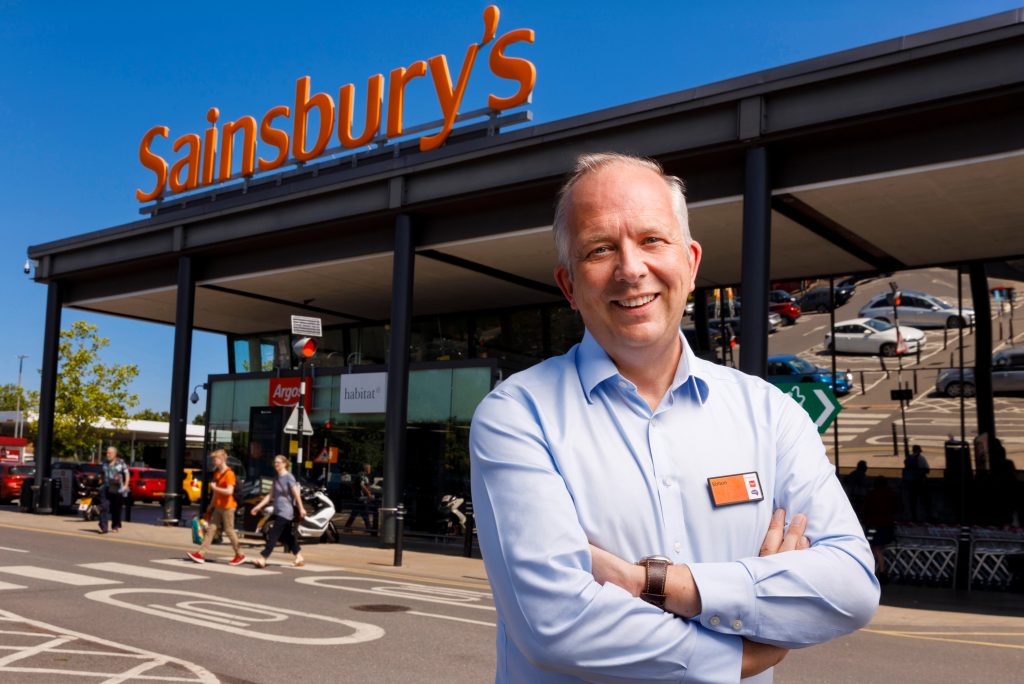
Phillips is Fexco’s retail foreign exchange managing director and is also responsible for 226 Sainsbury’s Travel money branches, which are all in the supermarket’s physical stores, as well as 220 No1 Currency outlets. Fexco acquired Sainsbury’s travel money arm last year.
Retail Gazette chats to the managing director to find out what’s behind the cash resurgence and how retailers can leverage this opportunity.

According to a report by Swedish cash handling company Loomis in January, cash use in the UK has steadily declined over the past decade, with the payment method accounting for under 10 per cent of all payments by 2024.
However, it highlights that this trend “may be levelling off,” with data from building societies and industry bodies revealing that cash withdrawals and usage had risen for the third year in a row.
A 2026 report from market research firm Mintel also claims that cash remains “the most popular spending method among overseas UK holidaymakers” with “usage highest among older age groups, driven by long-established spending habits and wariness over digital solutions”.
Phillips says there are “a couple of drivers” behind why cash is seeing a resurgence among holidaymakers.
“The biggest one is, let’s face it, is that the economy is tight,” he says.
“People have a bit less money to spend, and one of the ways that individuals can help manage their expenses, which is a bit old school, is actually running with cash to help budget. And that’s particularly useful when you’re on holiday.
“So we’ve seen individuals recognising that to help them not worry about their spending on holiday, they would use cash as a basis.”
When it comes to younger shoppers, the exec notes that in the last six to 12 months it has seen research that Gen Z are “looking at cash differently, even at home domestically”.
“People have been doing these credit and debit card free weekends and living on cash,” he says.
“That has been about budgeting and being a bit more self aware and a bit more involved with the flow.
“Because I don’t know about you, but when I tap, tap, tap my card everywhere, it can be a little challenging to know what my bill is going to be. Whereas with cash, you kind of know what’s coming out.”
Additionally, Phillips highlights that the cash resurgence is not just about consumers, but about retailers, particularly those overseas from the UK.
“Card processing costs are expensive. You buy your goods with cash, you buy your supplies with cash. It means you’re losing less of your income to the supply chain. Again, when things are a bit tough, that’s helpful,” he says.

An opportunity for supermarkets
Supermarkets have become increasingly popular places to collect travel money over the years.
Phillips explains: “What has happened over the last decade is that supermarkets in particular have become quite a destination for picking up travel money.
“20 years ago you wouldn’t have found anywhere to get your travel money in a supermarket or any other retailer outside of perhaps the bank or a post office.
“Now, you can go and do your weekly shop and pick up your travel money.”
He adds: “It’s not going to be for every single type of retailer because you need footfall, but travel money is a great product to get people into your stores.”
In terms of Fexco’s own operations, the exec highlights that its work with other business models such as greengrocers and chemists involves those companies using foreign exchange as a “secondary product”.
“This isn’t to serve their existing customers but it’s to bring customers in,” he says.
“We do that through the pre-order mechanism. So that footfall is of course a lot of existing Sainsbury’s customers in the case of Sainsbury’s but equally it could be someone whose nearest place to pick up travel money happened to be a Sainsbury’s.
“That is then a fantastic opportunity for the partner to cross sell. That’s what the good retailers will do.”
Citing a cross selling example from Sainsbury’s own operations, Phillips notes: “I was in Bristol Sainsbury’s last week and sure enough there were loads of sun tan lotion products near to the area where the travel money bureaux was.
“So if you’re picking up your travel money, there’s an opportunity to buy your sun cream ahead of the travel.”

Travel money bureaus “important” to Sainsbury’s
As a part of supermarket operations that are often overlooked, many consumers may not think of travel money bureaus as being a particularly significant part of their model.
However, Phillips highlights that its travel money bureaus in supermarkets serve “millions of customers a year”.
“Over a quarter of those customers are pre-ordering and collecting in-store. So, some of those will be existing Sainsbury’s or Nectar customers that are coming in and others will be being pulled in.”
He also points out: “Sainsbury’s were really, really clear with us on how important they see having bureaus as part of their product offering is.”
This sentiment was echoed by Sainsbury’s chief financial officer Bláthnaid Bergin at the time of its acquisition to Fexco, where she described its travel money service as “a service our customers value” and “a well-established part of our offer”.
Phillips concludes: “Of course when they were debanking, I guess they could’ve just said we’ll take the space back and sell something else.”
“They’re a smart bunch, so I reckon they probably know that it’s important to their footfall.”
Click here to sign up to Retail Gazette‘s free daily email newsletter