

Frasers Group has landed one of British retail’s most famous names for around £40m. But buying Harvey Nichols may prove the easy part. From repairing supplier relationships to deciding which stores survive, the deal could become the biggest test yet of Mike Ashley and Michael Murray’s luxury ambitions.
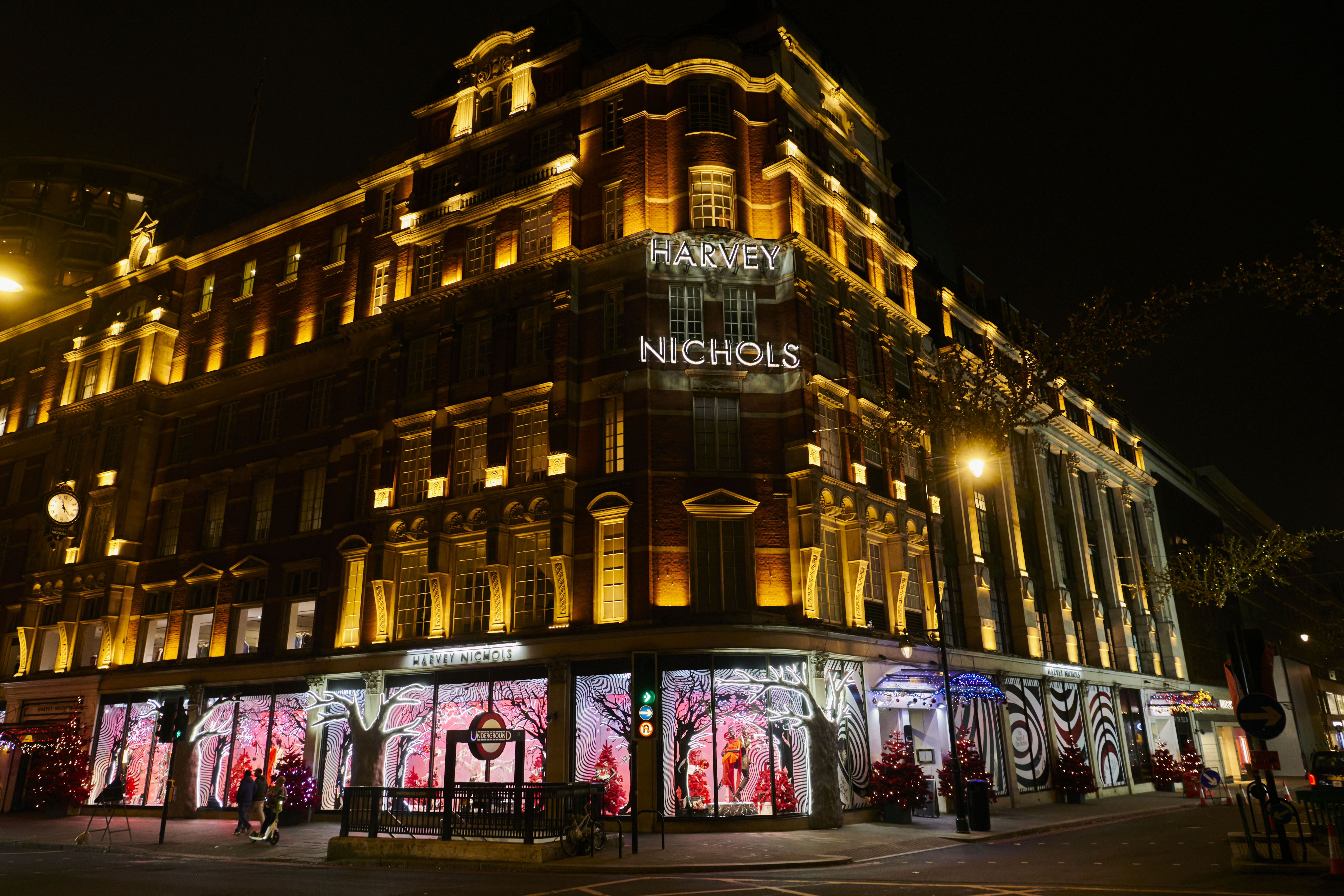
The entrepreneur, who built his fortune selling discounted trainers and tracksuits through Sports Direct, now finds himself controlling Harvey Nichols, the 195-year-old department store synonymous with Knightsbridge, designer fashion and Absolutely Fabulous.
And Ashley appears to have no intention of tiptoeing into the world of luxury. He has promised “Dunkirk spirit” as Frasers pushes deeper into the sector, brushing aside lingering doubts over whether the man who mastered discount retail can successfully operate at the opposite end of the market.
Frasers completed its acquisition of Harvey Nichols on Thursday through a pre-pack administration, paying roughly £40m according to the Financial Times. The deal brings six UK stores, Knightsbridge, Manchester, Birmingham, Bristol, Leeds and Edinburgh, alongside its ecommerce operation, existing stock and more than 1,000 employees into the Frasers empire. International franchise agreements are also included, while discussions continue over Dublin. The OXO restaurant business was sold separately.
But this is not simply another distressed retailer being added to Ashley’s sprawling collection.
Harvey Nichols could become the missing piece in Frasers’ increasingly ambitious attempt to build a luxury retail powerhouse.
A £40m ticket to the luxury big league
On the surface, Harvey Nichols and Sports Direct make unlikely stablemates.
But today’s Frasers Group looks very different from the business Ashley built around discount sportswear.
Under chief executive Michael Murray, Ashley’s son-in-law, the group has spent years pursuing its so-called Elevation Strategy, pouring money into higher-end Sports Direct stores while simultaneously expanding Flannels and building a portfolio of luxury investments and businesses.
It owns American luxury retailer The Webster, has built stakes in the likes of Burberry and Mulberry, and has made an aggressive push for Hugo Boss. The addition of Harvey Nichols means Frasers now controls a luxury department store network numbering more than 90 locations.
For the Gucci, Prada, Dior and Moncler-type brands Frasers wants to work with, the group is becoming an increasingly difficult distribution partner to ignore. Frasers said the Harvey Nichols acquisition would deepen its relationships with leading global luxury brands, explicitly naming Gucci, Moncler, Burberry, Prada and Dior.
Harvey Nichols therefore offers Frasers heritage, prestige and access.
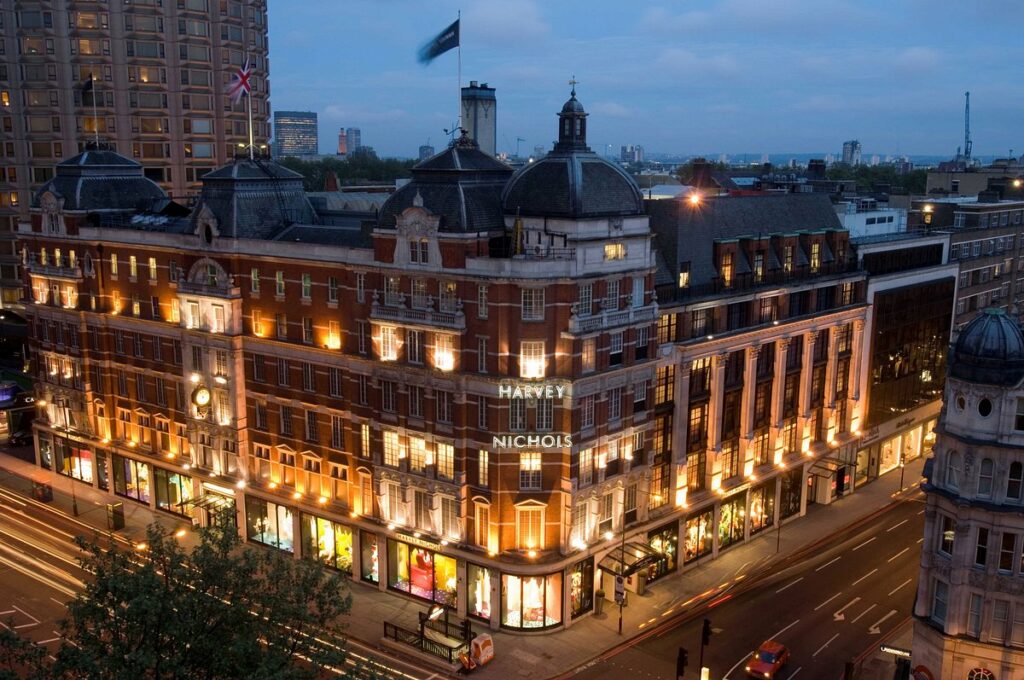
The Knightsbridge flagship in particular gives it something Flannels has never quite possessed, a globally recognised luxury department store sitting in one of the world’s most important luxury shopping districts.
That could prove extremely valuable as Frasers attempts to convince the industry that its transformation from bargain hunter to luxury operator is real.
Why Harvey Nichols needed a rescue
Frasers has not, however, bought a business at the height of its powers.
Harvey Nichols has struggled for years as weaker luxury spending, rising costs, declining footfall and the abolition of tax-free shopping for international visitors weighed on the department store sector.
It has recorded five consecutive years of losses, while its regional expansion has failed to deliver the returns once hoped for. Revenue fell from £216.6m to £204.9m in the year to March 2024 as pre-tax losses widened to more than £35m.
More recent accounts made the urgency still clearer. The retailer warned it required either a buyer or further funding to continue, with its accounts prepared on a non-going-concern basis as the business searched for a rescue.
Sir Dickson Poon’s family, which bought Harvey Nichols in 1991, ultimately called time on 35 years of ownership and advisers FTI Consulting began looking for a buyer.
Next entered the race. Gordon Brothers, the investment firm behind Poundland, also bid. Frasers eventually emerged victorious.
And £40m may only be the entry fee.
Prospective buyers had reportedly been warned that as much as £60m could be required to transform Harvey Nichols, with some retail sources suggesting the final investment needed could be substantially greater.
What happens to the stores?
Frasers has wasted little time signalling that sentimentality will not dictate what happens next.
The group said Harvey Nichols requires “significant restructuring”, including a review of its store portfolio, organisational structure, operating model and cost base.
Murray has also made clear that Frasers is prepared to operate a smaller Harvey Nichols in the short term if that produces a more sustainable business. That puts a sizeable question mark over parts of its regional estate.
Knightsbridge looks strategically invaluable. Edinburgh may also have a strong case for remaining Harvey Nichols. But Manchester, Birmingham, Leeds and Bristol inevitably face scrutiny as Frasers examines whether every location works under the existing model.
Reports have previously suggested that some regional Harvey Nichols stores could eventually be converted into Frasers or Flannels locations, although no such plans have been formally confirmed.
It would hardly be unfamiliar territory; Frasers bought House of Fraser out of administration in 2018 and has since dramatically reduced its estate while developing smaller and more premium Frasers department stores.
Murray has previously gone as far as declaring that the traditional department store model is “broken”, arguing that enormous, underinvested stores have become commercially unsustainable. Frasers’ answer has been smaller footprints, tighter brand edits and much more investment in presentation.
Harvey Nichols may now provide the ultimate laboratory for that philosophy.
The Matchesfashion problem
However, there is one name hanging heavily over the deal: Matchesfashion. Frasers bought luxury ecommerce retailer Matches for £52m at the end of 2023, only to place the business into administration just months later after saying it had consistently missed its targets.
The collapse shocked the luxury industry and left some suppliers facing substantial losses.
That experience makes the repeated references to Harvey Nichols’ brand partners in Frasers’ acquisition announcement particularly significant. The group stressed that both businesses were committed to supporting suppliers and maintaining relationships throughout the transition.
Luxury retail runs on more than purchasing power. Brands fiercely protect distribution, positioning and discounting. Getting the right collections from the right fashion houses, and convincing those houses that their products will be presented appropriately, can be just as important as footfall or store productivity.
Ashley himself appears acutely aware of the criticism.
The billionaire insists the group’s approach to luxury has evolved and that Frasers understands the importance of scarcity and protecting brands rather than simply cutting prices to shift stock.
Harvey Nichols will test that claim like no acquisition before it.
Click here to sign up to Retail Gazette‘s free daily email newsletter