


British home improvement retailer B&Q has been shortlisted in the sustainability category at the Retail Gazette Awards, following a year of work to cut emissions and encourage more sustainable home improvement.
Retail Gazette caught up with B&Q head of sustainability Samantha Dyer ahead of the awards to discuss how the retailer is trying to make sustainability part of everyday commercial decisions, from how it buys products and works with suppliers to how customers heat their homes and care for their gardens.
Q: “B&Q has cut its Scope 1 and 2 emissions by 50.7 per cent. What has made the biggest difference, and what comes next?”
A: “It’s been a combination of things, particularly in logistics and our stores. We’ve been looking at how we can reduce the miles travelled across our delivery network, using AI models to make journeys more efficient. We’ve also moved some of our diesel trucks to hydrotreated vegetable oil, or HVO, and we’re continuing to explore electric vehicles.
“In our stores, it’s about being smarter with energy. We’re looking at how we heat buildings, making sure we’re not using more heat than we need, preventing heat from escaping and installing more solar panels. We’re also starting to electrify heating in some stores.
“But Scope 3 is the bigger challenge. It accounts for more than 98 per cent of our total emissions, so we need to look at the whole supply chain: how products are sourced and made, and how customers use them at home. That includes continually improving the energy efficiency of the products we sell.”
Q: “You’ve introduced Carbon Literacy training for your buying teams. Has it changed how they deal with suppliers?”
A: “Yes, it’s been a really good journey. The training starts with the basics of how carbon emissions are created, then gets into what buyers can actually do about them.
“It helps them identify where the biggest impacts are in the products they buy and ask suppliers more targeted questions about how they’re reducing emissions. That might be about manufacturing, packaging or what happens to a product at the end of its life.
“The biggest difference is giving buyers the confidence to have those conversations themselves. My team is there to support them, but sustainability becomes much more powerful when it’s part of their everyday decisions, rather than something managed separately.”
Q: “Refurbished tools, paint takeback and plant pot recycling are all part of your circularity drive. Which has the greatest potential to grow?”
“I’d say refurbished tools. We’ve got the operation in place with our partner, iForce, where returned tools are checked, cleaned, repaired where necessary and prepared for resale. We can put them back on the market rather than lose the value in those products.
“The customer reviews have been really positive, and we’re already looking at other categories, including showers and taps. There’s a lot of potential to expand the model.
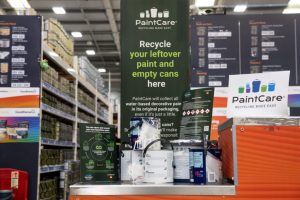
“Paint takeback is exciting for a different reason. The trial has shown encouraging results, both in terms of customers bringing paint pots back and the practicalities of collecting them in stores and sending them for recycling.
“At the moment, we’re enabling the pots to be recycled. The real ambition is to develop infrastructure that can recycle the paint itself, too. That will need enough volume to justify the investment, which is why collaboration across the industry is so important.”
Q: “Are suppliers finding it difficult to keep up with B&Q’s sustainability ambitions?”
“The vast majority of suppliers we speak to are keen to take action. I think the frustration sometimes is that it’s not always a quick win.
“These projects can be complicated. Every product and supplier has its own challenges, and sometimes you have to start from scratch to work out what the right solution looks like.
“But we’ve shown time and again that when there’s a willingness to work together, we can usually find a way forward. There will be obstacles along the way, but they’re not insurmountable.

Q: “Sustainable products account for 67.3 per cent of sales participation. How do you persuade customers to make greener choices when money is tight?”
“We try to make sustainability part of a better product, rather than something that automatically adds cost. Take water-saving taps: you can have a product that uses less water without necessarily paying more for it.
“Where there is an upfront cost, it’s about showing customers what they could save over time. Energy-efficient products and insulation, for example, might require an initial investment, but they can help reduce household bills.
“At our Cheltenham store, we’re testing different ways of communicating those benefits. We want customers to see the whole-life cost, rather than judging a product purely on its price on the shelf.”
Q: “Looking ahead, what will make the biggest difference to B&Q’s sustainability targets? And what would you like to see the wider industry do?”
“Taking customers with us is going to be crucial. So much of our carbon footprint comes from how our products are used in people’s homes, so we need to help customers make the switch to energy-efficient and water-saving products. Moving from petrol-powered to battery-powered tools is another opportunity.
“I’m also really interested in biodiversity and what we can do to encourage more wildlife into people’s gardens. At our Cheltenham store, we have a sustainable showcase garden with bee and bug hotels, ponds, pollinator plants, bird boxes and water butts. The feedback from customers has been fantastic.
“Gardens can help create corridors between larger natural areas, and we have an opportunity to show people how even their own outdoor space can make a difference. I’d love to see us do more in this area and bring those ideas to more stores.
“We’re also proud that 99.7 per cent of our wood and paper comes from responsibly managed forests through FSC or PEFC certification. That’s an important part of our history, but we want to keep pushing further. Protecting nature and ecosystems is something we need to continue working at.”
Click here to sign up to Retail Gazette‘s free daily email newsletter