

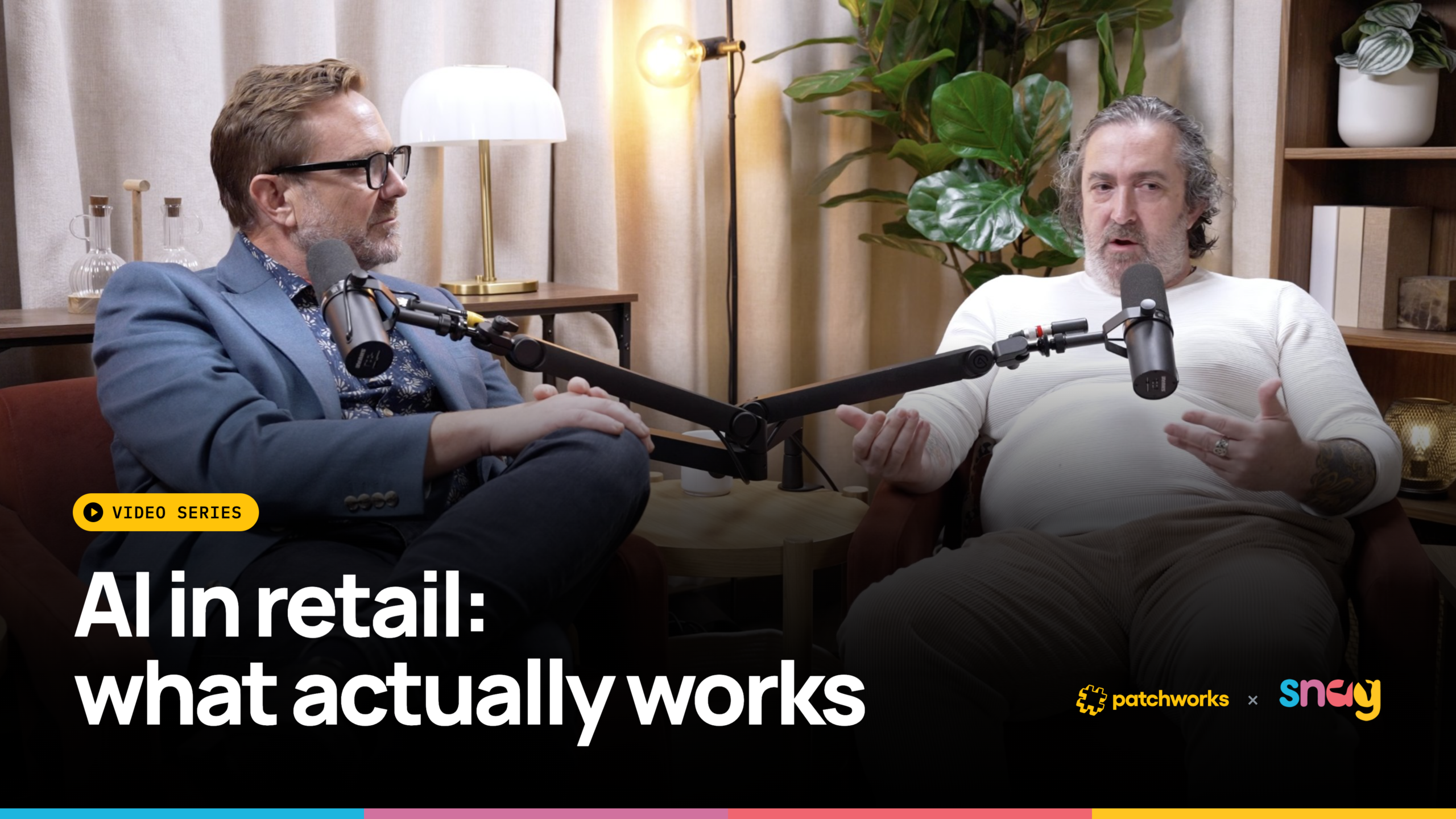
In a three-part video series from Patchworks, Snag CTO Tom Martin discusses where AI has earned its place in the business, and why he remains sceptical of some of its promises…
Preparing a product launch across six online stores used to take a day of Tom Martin’s week. With AI helping the team work across its connected systems, that same prep now takes minutes.
It’s the sort of result that makes retail leaders pay attention, although Martin, tights retailer Snag’s co-founder and CTO, is just as willing to discuss the expense and effort involved in achieving it. Having changed how his own business operates, he has little patience for the more extravagant promises made on the technology’s behalf.
“I’ve never seen a technology that is more overhyped and at the same time more transformational,” he says.
Snag’s experience helps explain that assessment. It’s used AI and connected systems to update more than 14,000 products in a single operation, yet it has neither cut jobs nor found that adopting the technology automatically means spending less.
In AI in retail: what actually works, Martin joins Patchworks CEO Jim Herbert for three video conversations about those experiences, with Retail Gazette content director Kieran Howells hosting the final episode. Together, they examine the decisions behind Snag’s results and what other retailers should consider before committing their own budgets.
Getting the systems talking
Serving customers in more than 100 countries through six Shopify storefronts and five warehouse management systems, Snag has plenty of experience of the administrative burden that accompanies growth.
The company has never operated its own servers or employed in-house developers, leaving its technical team to contend with a collection of software services that needed to exchange product and order information. Keeping that information moving absorbed time that could otherwise have gone into developing the business.
For retailers whose launch schedules still depend on someone working through several applications, the problem will sound familiar. Having the products and commercial plans ready counts for little if preparing the systems takes another day.
Patchworks connects Snag’s commerce and operational systems, while AI gives its team a different way to work with them. Martin explains how requests made in plain English become instructions those systems can carry out, alongside the difficulties Snag encountered when putting that approach into practice.
His account gives retailers considering similar projects a closer look at the work involved, particularly where access restrictions or inconsistent data complicate an apparently straightforward request.
Making the numbers work
The financial discussion is equally candid, with Herbert describing the unexpected bills some teams have faced after taking AI agents into production.
“It’s not cost-out for us; it’s cost-shifting,” says Martin, whose experience challenges the assumption that faster processes necessarily come cheaper.
The episodes explore why the way a task is performed can substantially affect its running costs, especially when repeated across a large catalogue. Martin also discusses where Snag chooses not to use AI and what happens to a team’s workload when familiar bottlenecks disappear.
The trio brings those questions into the management discussion in the final episode, examining accountability and the pressure retailers feel to keep up. For leaders weighing their next investment, the series offers a chance to hear how an operational retailer has approached decisions they may soon face themselves.
Watch the three-part series and explore AI in retail: what actually works.
Click here to sign up to Retail Gazette‘s free daily email newsletter